REVIEW · ANTALYA
From Antalya: Roman Ancient Sites & Manavgat Waterfall Tour
Book on GetYourGuide →Operated by Payless Turizm · Bookable on GetYourGuide
Ancient theatres and waterfalls in one long day. This tour connects Perge’s Roman ruins to Aspendos’ still-used theatre, then winds down in Side and the Kursunlu Waterfall area, all with a guide who puts the places into context. I love how the day feels structured without feeling like you’re being rushed through history. One catch: entrance fees and drinks are not included, so you’ll want a little extra money on hand.
I’d also plan for a long day outdoors and lots of walking. It’s not listed as suitable for people with mobility impairments and it’s not meant for adults over 70, so check that before you book.
In This Review
- Key highlights you’ll actually care about
- A classic Antalya day trip: how the route makes sense
- Pickup, pace, and why 9 hours can feel full (but fair)
- Perge: where the “Antalya Museum finds” story starts
- Aspendos Theatre: the rare ancient site that still has a stage life
- Side old town: Apollo Temple views and marble-column strolling
- Kursunlu Waterfall: the 18-meter reset button
- Lunch and the small costs that can surprise you
- Who should book, and who should skip this style of day
- Should you book this Antalya Roman + Waterfall tour?
- FAQ
- How long is the tour from Antalya?
- What’s included in the price?
- Are entrance fees included?
- What about drinks?
- Which languages is the live guide available in?
- What should I bring?
- Is the tour suitable for everyone?
Key highlights you’ll actually care about
- Perge first: a major Roman city stop, often the most photo-friendly (and most people wish they had more time there).
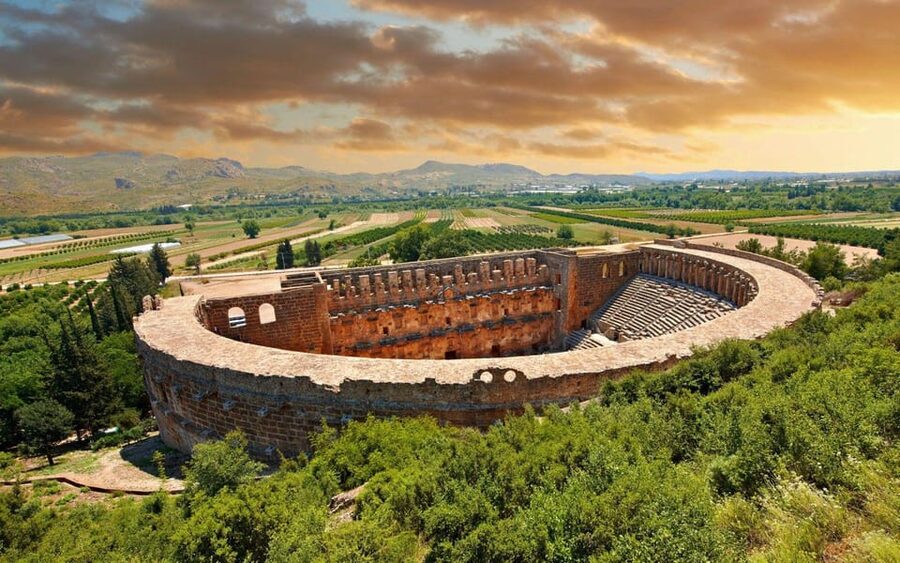
- Aspendos theatre: one of the best-preserved theatres in Anatolia, still used for shows and concerts.
- Side views: temple ruins, a theatre, marble columns, and Mediterranean scenery.
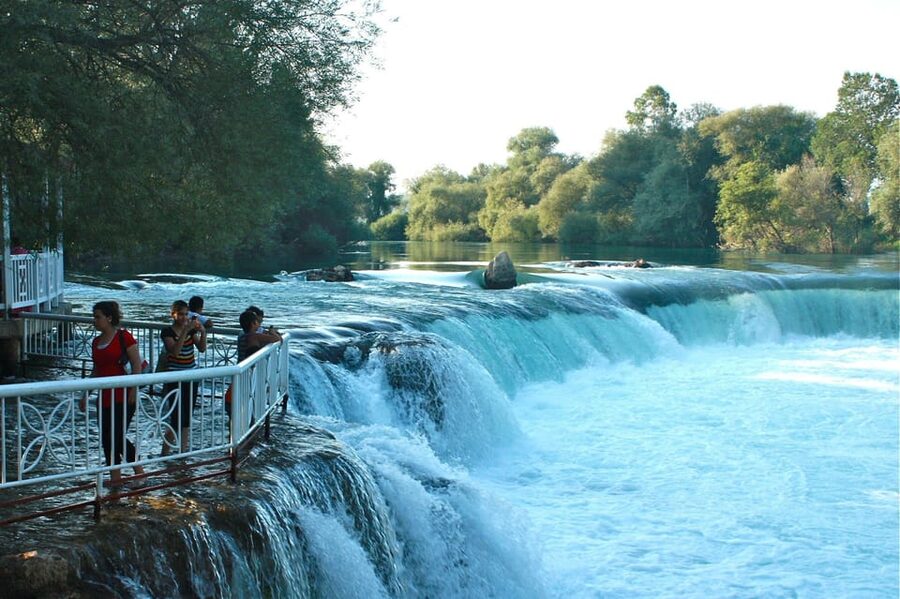
- Kursunlu Waterfall (18 meters): emerald water in a national park with real splash-and-photo potential.
- A guide with personality: names like Fatma, Kerem, and Cengiz show up in feedback for clear, funny, engaging explanations.
A classic Antalya day trip: how the route makes sense
This is the kind of full-day outing that works because it groups big hits in a smart order. You start with Perge, move to Aspendos, then head to Side, and finish at Kursunlu Waterfall before returning to Antalya in the afternoon. The logic matters: the ruins become less “museum-like” as the day goes on, and the waterfall gives you a wind-down moment after archaeological concentration.
You’ll also like the tour format. You’re not just dropped at sites. A professional guide rides with you and explains what you’re seeing, so you’re not standing in front of stones thinking, Cool… stones.
Price-wise, $77 per person can feel like a bargain once you remember what’s included: hotel pickup and drop-off, a guided tour, an A/C bus, and open buffet lunch. The main tradeoff is that you’ll pay entrance fees separately and you won’t have drinks included, so budget a bit beyond the headline price.
One more detail worth noting: the tour is available on any day of the week, and it starts in the morning with pickup. Exact start times can vary, but the structure stays the same.
You can also read our reviews of more tours and experiences in Antalya.


Pickup, pace, and why 9 hours can feel full (but fair)
You should expect a full 9 hours from start to finish, with pickup in the morning and return to your Antalya hotel in the afternoon. That’s a long day, but it’s the practical kind: you get four major stops plus lunch, so you’re not wasting time “between” things.
The pacing is generally well-managed, and you’ll have time to enjoy each place rather than a frantic, whistle-stop sprint. Still, the first site is big. Perge takes time, and if you like to linger—read inscriptions, walk slowly, take a lot of photos—you may wish for a bit more free wandering time at the beginning. It’s not a dealbreaker, just a heads-up for your expectations.
Also, the bus ride back to Antalya can be long depending on traffic. I’d treat the journey as part of the experience rather than something to resent, because the payoff is in the sites.
Perge: where the “Antalya Museum finds” story starts
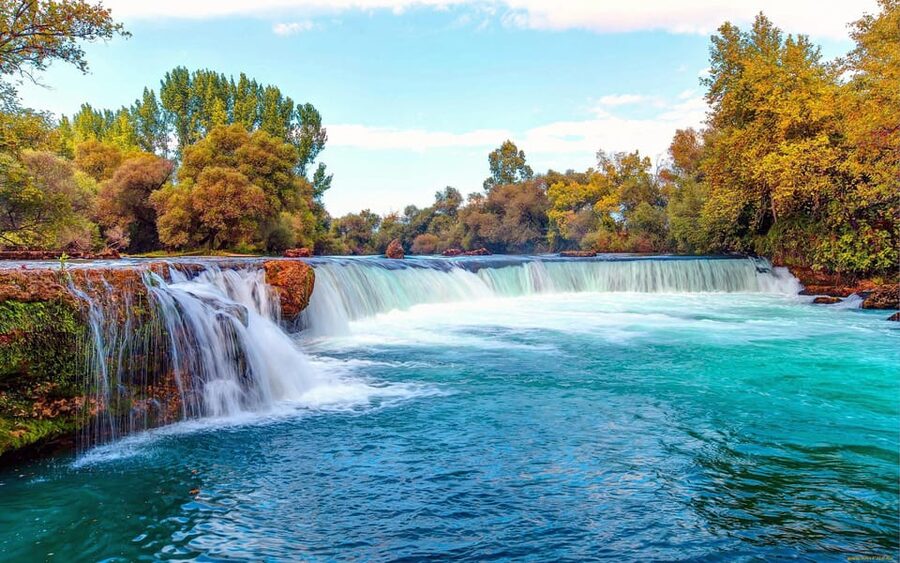
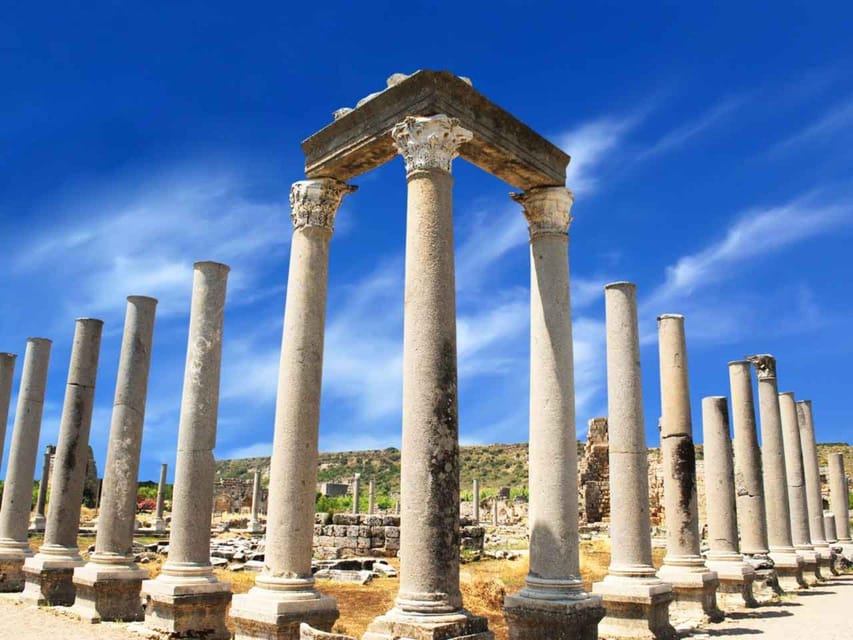
Perge is the first stop, and it’s a strong choice because it sets the tone for the whole day. This ancient settlement is famous for its Roman-era remains, and it’s also directly tied to what you can see back home at the Antalya Museum—many statues found there have their roots in Perge.
What I like about starting at Perge: it’s not only impressive, it’s explainable. With your guide’s commentary, you’ll understand what you’re walking through and why it matters, instead of just spotting columns and thinking you’ve seen it all before.
When you arrive, give yourself permission to slow down for the first part of your walk. Perge is expansive, and the city feels like a place that would have been alive with movement, not a quiet ruin. The guide typically threads the story together—when the settlement developed and how it fits into the bigger Roman world.
A practical tip: bring your sunscreen and hat early. Perge isn’t a “pop in and out” site, and the sun can be relentless by midday. Keep your camera ready, because the angles here reward patience.
Possible consideration: because Perge is so large, you might feel a bit of time pressure if you want long, unbroken exploration. If you’re the kind of person who could happily spend two hours in a single ruin, just know that the day is built to fit multiple major locations.
Aspendos Theatre: the rare ancient site that still has a stage life
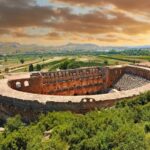
Aspendos is the highlight that tends to stick with people. You’ll see one of the best-preserved ancient theatres in Anatolia, and here’s the unusual part: it’s still being used for shows and concerts. So when you stand there, you’re not just looking at a structure—you’re imagining an audience, real sound, and actual performance.
Your guide’s job matters a lot at Aspendos, because the theatre reads differently when you understand its design. You’ll likely get explanations about how the seating, acoustics, and Roman construction worked together. It turns your visit from a sightseeing moment into a “wow, this was built to function” experience.
What I’d do when you’re there: take a few minutes to look back across the seating and then change your viewpoint a couple times. The theatre has that classic “geometry” effect—once you notice the layout, everything becomes clearer. If you can, position yourself so you’re getting the best view from within the site rather than only from the edges.
This stop is also where the day feels most magical, because it connects the past to the present. You’re seeing an ancient building that isn’t just preserved behind fences; it’s still doing its original job in some form.
Side old town: Apollo Temple views and marble-column strolling
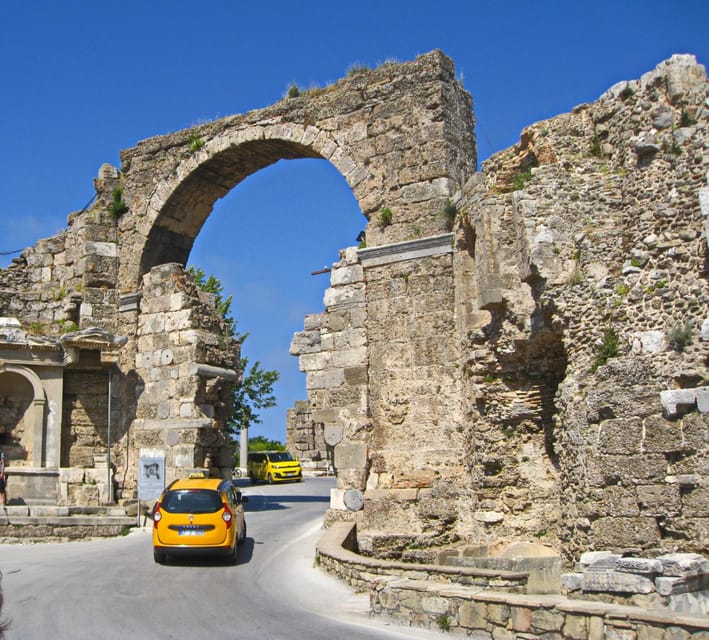
After lunch, you’ll head to Side, which is a coastal ancient city with a layered feel. This is where you can trade pure archaeology for atmosphere. Expect an Apollo Temple area, theatre remains, marble columns, and—importantly—views over the Mediterranean.
Side works well for your attention span because it changes as you move. You’re not only looking down alleys of ruins; you’re also looking outward at the sea. That makes the ruins feel less like a stop on a checklist and more like a place with setting.
One of the best ways to enjoy Side is to wander a little off the busiest lines once your guide finishes the key explanations. Even within a guided day, there’s usually room to step slightly to the side and look around. I like this part because it’s where you can find calmer corners and let the location do its thing.
What to watch for: photo spots. The marble and sea views mix well, so if your camera is charged and you’ve got your hat ready, you’ll get the kind of shots that look more like memory than like documentation.
Kursunlu Waterfall: the 18-meter reset button
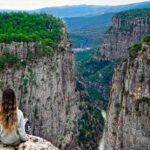
The last stop is Kursunlu Waterfall, located in a national park. It drops from an 18-meter height and is known for emerald-colored water—exactly the kind of visual contrast you need after hours of stone and shadow.
This is your break from the temples and theatres. The sound is immediate. If you want a few minutes where your brain just switches off, this is that place. It’s also a great photo stop, because the waterfall and surrounding scenery give you options: wide shots with the falls in context, or tighter images where water texture becomes the subject.
Practical advice: keep your waterproof camera option in mind. Water splashes up closer than you’d think, especially if you get near enough to hear it clearly.
One more reality check: the waterfall stop is usually shorter than the archaeological ones, because the day has to return you to Antalya. That doesn’t mean it’s not worth it; it just means treat it as a reset, not as a full hike.
Lunch and the small costs that can surprise you
The tour includes an open buffet lunch at a local restaurant. People tend to rate this as solid, and it’s the kind of included meal that makes the day easier. You’re not choosing between your ruins time and hunger time—you eat, recharge, and get back on the bus.
Drinks aren’t included, and entrance fees aren’t included either. That’s the part that catches some people off guard. So if you’re budgeting, I’d plan for:
- Entrance fees for the Perge/Aspendos/Side and waterfall stops (amount varies by site).
- Drinks with lunch and anywhere else you stop for water.
Because the tour says to bring cash, I’d carry some in addition to card if you can. It’s the simplest way to avoid the last-minute scramble for tickets, snacks, or bottled water.
Is it still good value at $77? In my view, yes—especially if you’re spending the day learning with a guide and you’d rather not coordinate transfers between four sites yourself. The guided commentary and hotel pickup alone usually cover a lot of the “stress cost” of independent travel.
Who should book, and who should skip this style of day
This tour is ideal if you want a high-impact classic route from Antalya: Roman cities, a theatre that still hosts events, and a nature finale. I’d especially recommend it if you’re the type who likes explanations—architecture, planning, and context—more than just wandering without direction.
You’ll also enjoy it if you like a group vibe. Feedback describes mixed nationalities in the group, and that tends to make the bus ride more fun than quiet.
Two clear “skip” signals are listed:
- People with mobility impairments should not take this tour.
- People over 70 are not suitable for this outing.
If you’re traveling with kids: the guide will ask children to present valid passports at the entrance of museums to validate their age. That’s worth sorting ahead of time so you’re not dealing with paperwork on the spot.
Finally, this tour isn’t set up for strollers—baby strollers are not allowed. If that affects you, look for a more accessible alternative.
Should you book this Antalya Roman + Waterfall tour?
If you want a single day that covers Perge, Aspendos, Side, and Kursunlu Waterfall with hotel pickup, guided interpretation, and lunch included, I think it’s a smart booking. You’re paying for convenience plus real context, and the sites are good enough that you won’t feel like you overdid it—especially if you’re hungry for Roman-era sights.
I’d only hesitate if you hate long days, you need lots of slow time at the first ruin stop, or you’re sensitive to extra costs once you reach the entrances and need to buy drinks.
FAQ
How long is the tour from Antalya?
The duration is 9 hours.
What’s included in the price?
Hotel pick-up and drop-off, an open buffet lunch, a full A/C bus, and a guided tour are included.
Are entrance fees included?
No. Entrance fees are not included.
What about drinks?
Drinks are not included.
Which languages is the live guide available in?
The live tour guide is available in English, German, Russian, and Italian.
What should I bring?
Bring sunglasses, a sun hat, camera, sunscreen, a waterproof camera, and cash.
Is the tour suitable for everyone?
It is not suitable for people with mobility impairments, and it’s also not suitable for people over 70. Baby strollers are not allowed, and children may be asked to show valid passports at museum entrances.