REVIEW · NUR SULTAN
Astana: KarLag and Karaganda – Private USSR history tour
Book on Viator →Operated by Astana Horizons · Bookable on Viator
A Soviet history day trip with real weight. This private tour from Nur-Sultan connects Karaganda’s Soviet-era landmarks with the KarLag Museum at Dolinka, where the story of Stalin-era labor camps is told with care. I love the thorough KarLag Museum visit and I love the way the Karaganda stops keep moving—just enough time to see the big sights without turning it into a never-ending marathon. The only real drawback is the emotional heaviness plus a long day (about 10–11 hours) that will feel long even if the schedule is efficient.
You also get practical perks that make it easier to pull off: pickup is offered, it’s just your group, and the tour runs on a mobile ticket. When the guide is Amir, the pacing stays clear and the explanations land—one review specifically calls out how well he guided the day and how the visit worked even with kids.
One more thing to plan for: this experience needs decent weather, and the road trip takes time. If the weather is bad, you’ll be offered a different date or a full refund, so it’s worth booking with that in mind.
In This Review
- Key highlights you should clock before you go
- KarLag and Karaganda: why this pairing makes sense
- Getting from Nur-Sultan: time on the road and how to plan your day
- Shalkyma Concert Hall and the Yuri Gagarin–Abay Kunanbayev alley
- K. Stanislavskiy Drama Theatre: Soviet theater as civic pride
- Monument Mining Glory and the Karaganda phrase you’ll notice twice
- The KarLag Museum at Dolinka: what you’re really going for
- Lunch break in Karaganda: a real pause, not a token meal
- Price and value: is $199 a fair deal for 10–11 hours?
- Who this USSR history tour fits best
- The guide makes a difference: Amir’s role in the flow
- Should you book this Astana Horizons tour?
- FAQ
- How long is the tour?
- Where does the tour start in Karaganda?
- Is pickup offered?
- Is this tour private?
- Is admission included for the KarLag Museum?
- How long is the museum visit?
- How far is the KarLag Museum from Karaganda?
- What about the other Karaganda stops—do they cost extra?
- Is lunch included?
- What if the weather is bad?
- Is there free cancellation?
Key highlights you should clock before you go
- A private, full-day format that keeps you from getting stuck waiting around in a crowd
- KarLag Museum at Dolinka for a focused, moving look at political repression
- Karaganda landmarks with fast photo time, so you still see plenty without rushing the museum
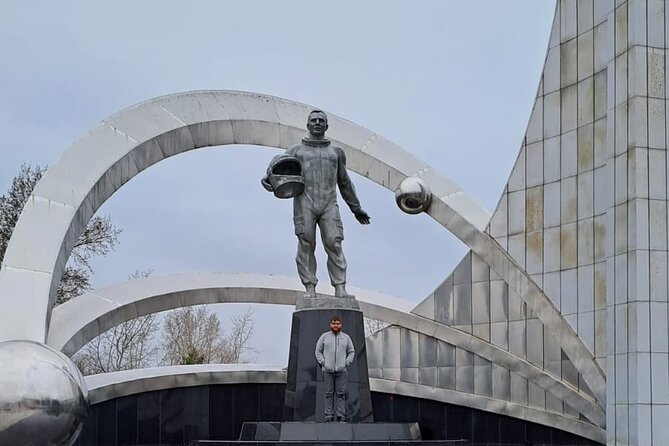
- Soviet-era architecture and monuments tied to local identity (miners, drama, and Gagarin)
- Lunch included at a Russian restaurant, which is a smart break in a long schedule
KarLag and Karaganda: why this pairing makes sense
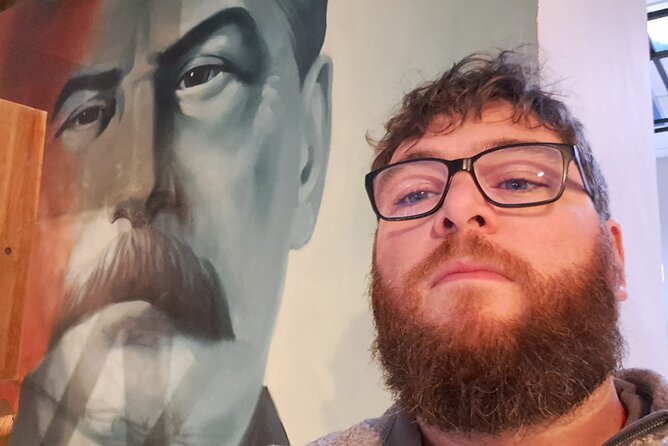
Karaganda is one of those industrial cities where history isn’t stuck behind glass. It grew as a coal-mining center, and a lot of the city’s Soviet-era monuments reflect that work-and-state vibe: theaters, grand public buildings, and slogans built to be remembered.
Then there’s the KarLag story, centered at the Dolinka settlement. That museum is the core of the day—about 30 minutes from Karaganda—so the tour doesn’t just show you Soviet architecture. It gives you the human context behind it: how political repression used forced labor as a system.
Put together, the city stops and the museum stop work like two lenses. In Karaganda, you get the visible symbols. At Dolinka, you get the documented suffering those symbols helped enable. You’ll leave with a fuller picture, even if it’s a day that makes you think more than it makes you smile.
Getting from Nur-Sultan: time on the road and how to plan your day
This tour runs from Nur-Sultan to Karaganda, with travel time included in the total duration. Expect about 10 to 11 hours overall, and plan for a long day that starts with city sights and ends with the museum.
Karaganda is about 2.5 hours from Astana/Nur-Sultan by road, and the Dolinka museum adds another stretch. The good news: the schedule is structured so the city part is mostly short stops, which helps you recover from the travel time without losing time you might want for the museum.
Practical advice: dress for comfort and wear shoes you can stand in. You’ll do multiple exterior monument stops for photos, then sit through a museum visit that’s likely to run the emotional length of the day. Bring water if you’re the type to forget until it’s too late—your lunch break will help, but it won’t replace hydration.
Also keep expectations grounded: this isn’t a slow wandering tour. It’s a guided route built to cover key Soviet-era landmarks plus one serious destination.
Shalkyma Concert Hall and the Yuri Gagarin–Abay Kunanbayev alley
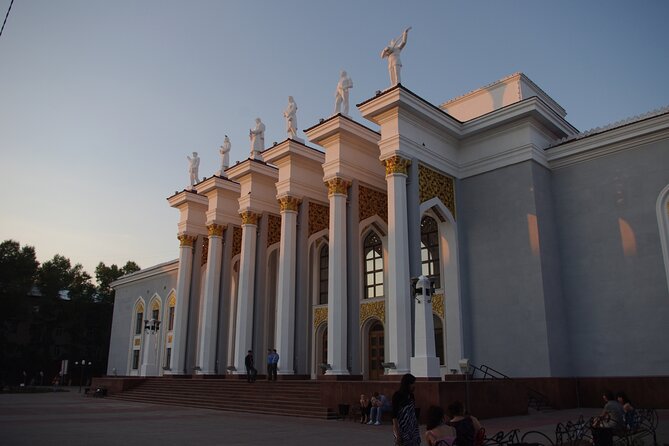
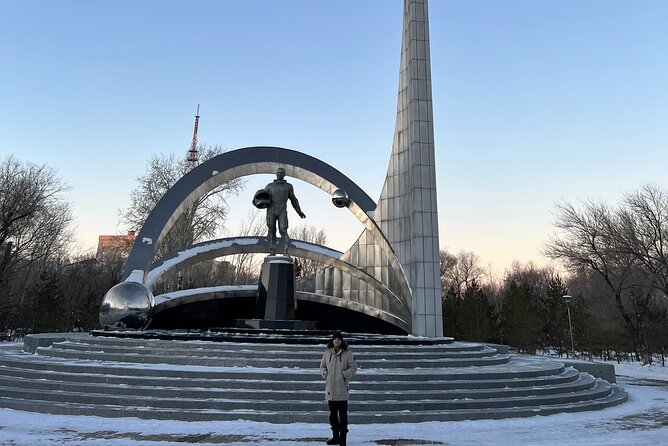
Your day kicks off at Shalkyma Concert Hall, a fitting opening because it connects pop culture, Soviet pride, and Kazakh literary identity in one area. Right nearby, you’ll see Yuri Gagarin’s monument, tying the city’s Soviet-era imagination to the era of space ambition.
You’ll also spot a monument to poet Abay Kunanbayev, located in an alley setting. That detail matters. It’s not only Soviet symbolism. It reminds you that Kazakhstan’s cultural identity has its own backbone, even when Soviet themes take the spotlight in public spaces.
This stop is short—about 20 minutes—and admission is free. Think of it as a quick orientation moment: you get names, themes, and visual anchors before you move into the deeper Soviet-era architecture and the labor-camp memorial.
Tip: if you care about photos, this is a good time to position yourself and shoot from a couple angles. Later, your time gets more precious because the museum becomes the main event.
K. Stanislavskiy Drama Theatre: Soviet theater as civic pride
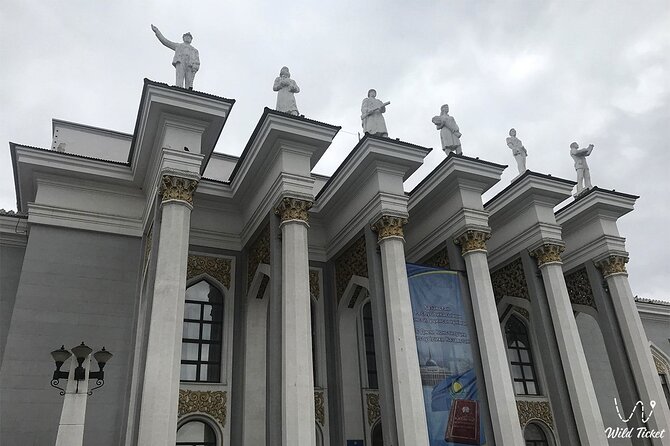
Next up is the K. Stanislavskiy Drama Theatre. This is one of the early Russian drama theaters in Kazakhstan, opening its doors in 1930—a date that gives you a sense of how early Soviet cultural influence took public form in the region.
What I like about this stop is that it’s not just about buildings. It’s about intent. Theaters were often treated like civic centers where ideology and culture could share the same stage. Even if you don’t watch a show that day, seeing the venue helps you understand why Soviet-era cities invested in performance spaces.
This stop is brief—about 10 minutes—and admission is free. That makes it easy to fit into the schedule without feeling like you’re missing the point.
If you’re the kind of traveler who likes to connect art and politics, pause for a minute and look at the overall look of the building rather than only scanning for the best photo spot. The scale and design choices are part of what the guide will connect to the day’s larger theme.
Monument Mining Glory and the Karaganda phrase you’ll notice twice
Karaganda has a strong miner identity, and you’ll see it at the Monument Mining Glory. It’s positioned opposite the Miners’ Palace of Culture, so you get that neat pairing: work and the institutions built around it.
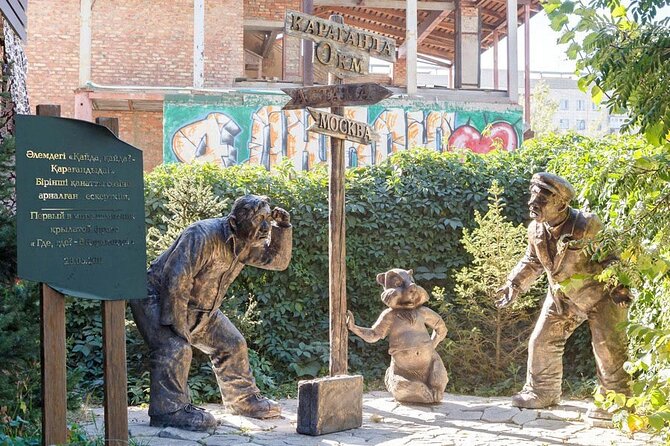
Then comes a monument tied to a phrase many Russian speakers recognize: Gde-gde? V Karagande! (Where-where? In Karaganda!). The tour treats it with a careful twist. Yes, it’s used as a familiar, almost humorous catchphrase—but its origin is linked to the infamous KarLag labor camp.
That combination is powerful in a strange way. It shows how language can carry trauma and then get reused as a joke later. The monument gives you a chance to think about how communities process dark history over time.
This segment includes a longer stop—about 30 minutes for the monument area and around 1 hour for the Karaganda phrase monument. If you like your history with context, this is one of the most interesting parts of the city tour. You’ll get time to read the meaning and let it sink in.
One practical note: plan for quick walking between points. This isn’t a long-distance hike, but you’ll be moving enough to justify comfortable shoes.
The KarLag Museum at Dolinka: what you’re really going for
The star of the day is the KarLag Museum of Political Repression Victims’ Memory of the Dolinka Settlement. It’s located about 35 km outside Karaganda, roughly 30 minutes away by road.
This is where the tone shifts. The museum is described as a vast memorial space, and it focuses on Stalin’s labor camps. You’re not just looking at a few exhibits—you’re getting a deep, detailed presentation of a dark chapter of Soviet history, and the museum visit runs about 2 hours with admission included.
Here’s how to prepare in a way that actually helps: decide ahead of time how you want to handle it emotionally. This kind of history can be heavy even when it’s presented thoughtfully. If you’re traveling with kids, it helps to remind them they don’t need to process everything at once. You can also pause and take notes on what you want to remember later—facts, dates, or the names of places.
Why this stop is so valuable: it turns the “Soviet city” part into something more honest. Without it, the monuments can feel like decoration. With it, they become part of a system—one that affected real people.
This is also the reason the tour keeps the Karaganda city stops relatively short. You’ll want that longer time and calmer pace for the museum.
Lunch break in Karaganda: a real pause, not a token meal
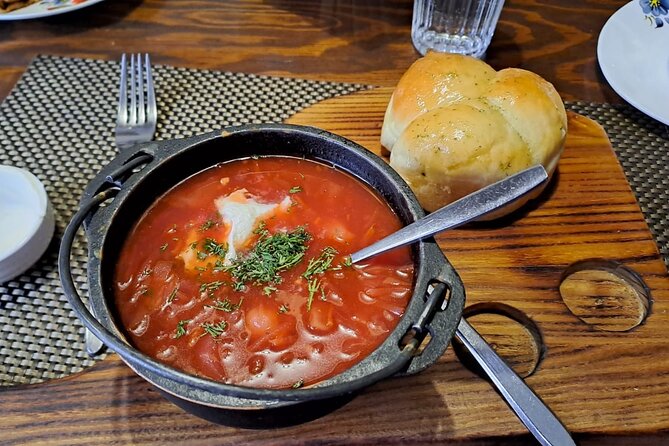
Between monuments and the museum, you’ll enjoy a delicious lunch at a Russian restaurant. Lunch isn’t just filler here—it’s a functional reset. After time spent standing outside and then heading toward a heavy memorial, you’ll appreciate sitting down, eating something filling, and cooling your brain for a bit.
One review highlights the lunch as particularly tasty, and I think that’s exactly what you want from a full-day history tour. If food is decent, you’ll stay more patient and attentive for the museum portion that follows.
If you have dietary needs, the schedule doesn’t list specifics, so you’ll want to ask in advance when you book. Keep expectations simple: lunch is included, but you might not get every flexible option unless you confirm.
Price and value: is $199 a fair deal for 10–11 hours?
At $199 per person, you’re paying for a private, full-day plan with transportation, guided time, and an included museum admission.
Here’s the value logic as I see it:
- You’re not just paying for entry tickets. You’re paying for the guide to connect the monuments, phrase meanings, and museum themes into one coherent story.
- The museum portion is included, and that’s the most time-consuming and emotionally central stop.
- You’re also getting convenience: pickup offered and the tour runs on a mobile ticket, so you’re not stuck coordinating separate transport for a far-out museum.
- Because it’s private, you’re less likely to get lost in the pacing of strangers and more likely to get direct attention.
Could you do this cheaper by yourself? Sure, if you’re comfortable with independent driving and museum timing. But if you’re traveling from Nur-Sultan and you want to see Karaganda without turning your day into logistics homework, this price starts to look reasonable.
The only thing to weigh is that it’s a long day. If you dislike staying out for most of the day, you might feel the time cost more than the money cost. If you’re okay with a full schedule and ready for a serious museum, it’s a solid value.
Who this USSR history tour fits best
This tour is a good match if you want Soviet-era context without scattershot sightseeing.
It fits especially well for:
- People who like guided explanations tying monuments to real stories
- Travelers who want a serious memorial experience but still want to see Karaganda’s major sights in the same day
- Families who want a structured outing; one review specifically says children enjoyed it, which suggests the guide can help keep the day organized
You might think twice if:
- You get overwhelmed by heavy historical material
- You prefer short days with lots of free time, not a schedule where most city stops are quick photo-and-go moments
The guide makes a difference: Amir’s role in the flow
One standout from the experience is how well the day is guided. Amir is mentioned as very good and able to explain things in a way that makes the schedule work. That matters because Soviet history can feel like a stack of names, dates, and places unless someone ties it together.
In a tour like this, the best guides do two things:
1) They help you keep moving through the city part without losing meaning
2) They help you slow down at the museum so it doesn’t feel rushed
If you want a day that feels organized rather than chaotic, you’ll be glad the tour’s tone is handled by the guide.
Should you book this Astana Horizons tour?
If you’re heading to Nur-Sultan and you want more than quick photo stops in Central Kazakhstan, this one earns a booking. The KarLag Museum is the heart of the day, and the Karaganda stops are used to build context rather than distract you.
I’d book it if you’re okay with a long day and you’re ready for heavy history presented in a structured, respectful way. I’d skip it if you want something light, flexible, and low-emotion.
FAQ
How long is the tour?
The tour runs about 10 to 11 hours, including travel time.
Where does the tour start in Karaganda?
The city portion starts at Shalkyma Concert Hall in the Karaganda area.
Is pickup offered?
Yes. Pickup is offered.
Is this tour private?
Yes. It’s a private tour/activity, with only your group participating.
Is admission included for the KarLag Museum?
Yes. Admission to the KarLag Museum of Political Repression Victims’ Memory of the Dolinka Settlement is included.
How long is the museum visit?
The museum stop is about 2 hours.
How far is the KarLag Museum from Karaganda?
It’s about 35 km outside Karaganda, and the drive is described as roughly 30 minutes.
What about the other Karaganda stops—do they cost extra?
The listed city stops have free admission (Shalkyma Concert Hall area, K. Stanislavskiy Drama Theatre, Monument Mining Glory, and the Monument to Expression Gde-Gde? V Karagande!).
Is lunch included?
Yes. Lunch is included, and it’s described as being at a Russian restaurant.
What if the weather is bad?
This experience requires good weather. If it’s canceled due to poor weather, you’ll be offered a different date or a full refund.
Is there free cancellation?
Yes. You can cancel for a full refund up to 24 hours in advance.