REVIEW · ATHENS
Athens to the birthplace of Olympic games & medieval Monastery
Book on Viator →Operated by EASYEXPERIENCES · Bookable on Viator
A day that starts in Athens ends at the very start of the Olympics. This private full-day trip strings together Corinth Canal, the archaeological wonders of Olympia, and a choice between a monastery-side cave experience or beach time at Kakovatos. It’s built for people who want more than a quick stop and prefer a smoother, human-paced day.
I especially like the way the route mixes big “wow” sights with calm, local moments. The Olympia visit focuses on the stadium, temples, and museum highlights, and the monastery option adds real texture: coffee, water, olives, and stories tied to the Lousios Gorge. You also get helpful comfort perks—an air-conditioned vehicle, bottled drinks, and beach towels.
One thing to plan for: it’s a long day, about 14 hours, plus the Olympia admission ticket costs extra (€20 per person). And you have to choose at the monastery stop, so you’re not doing both the cave/monastery time and swimming.
In This Review
- Key things to know before you go
- The big picture: a 14-hour Athens-to-Olympia route that feels doable
- Corinth Canal stop: a short break with a long backstory
- Olympia: stadium, temples, and museum details you’ll actually remember
- The highlights that matter at Olympia
- The small catch: the ticket cost
- Holy Monastery and the Great Cave of Gortynia: the quiet option with strong atmosphere
- What makes the cave/monastery time memorable
- A good practical consideration
- Kakovatos Beach option: swimming and lunch time by the sea (and what to plan for)
- What’s included vs. what isn’t at the beach
- My advice for this choice
- Private-group perks: why max 7 changes how the day feels
- What’s included, what’s extra, and how to budget like a pro
- Included
- Not included
- The price math
- Getting the best experience out of your day
- Should you book this Athens to Olympia and Monastery day trip?
- FAQ
- FAQ
- What time does the tour start, and how long is it?
- Is pickup from Athens included?
- What languages is the tour offered in?
- Is this a private tour?
- Do I get a ticket on my phone?
- How much is the Olympia admission fee?
- What are the two options during the monastery stop?
- What’s included in the price?
- Is lunch included?
- Can I cancel for a full refund?
Key things to know before you go
- A private group capped at 7 keeps the pacing more flexible than large coach tours
- Two stop choices: Great Cave of Gortynia/monastery or Kakovatos Beach swimming and lunch time
- Olympia admission is extra (€20 per person), but the site time is the centerpiece
- Corinth Canal is a quick, scenic hit with history going back to 602 BC
- Comfort included: air-conditioning, bottled water, soda, and beach towels
The big picture: a 14-hour Athens-to-Olympia route that feels doable
This tour is a proper full-day commitment, roughly 14 hours, starting at 7:30 am. That length matters because you’re trading an easier day at Athens for a focused trip to one of Greece’s most meaningful sites. If you’re okay with long-distance driving and early starts, you’ll likely love the payoff.
The private setup helps here. Your group goes together in a minivan, and the day is arranged to keep you from feeling rushed between stops. You’ll also get a mobile ticket, and pickup details are sent by email the day before so you can get your bearings fast.
You can also read our reviews of more tours and experiences in Athens.

Corinth Canal stop: a short break with a long backstory
Your first major photo moment is the Corinth Canal. It’s not just a pretty cut through the landscape; the idea of a passage dates back to 602 BC, while the canal you see today was finally built in 1890. Even if you only get a brief stop, it’s the kind of place where the scale makes the history land.
The schedule gives you about 10 minutes, and that’s enough for a viewpoint stop and a few quick photos without eating the whole morning. The one practical note: it’s a busy kind of stop, so if you’re sensitive to crowds at viewpoints, keep your patience handy.
Olympia: stadium, temples, and museum details you’ll actually remember
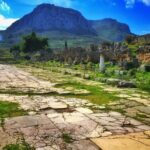
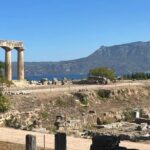
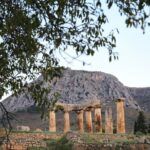
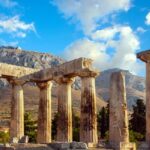
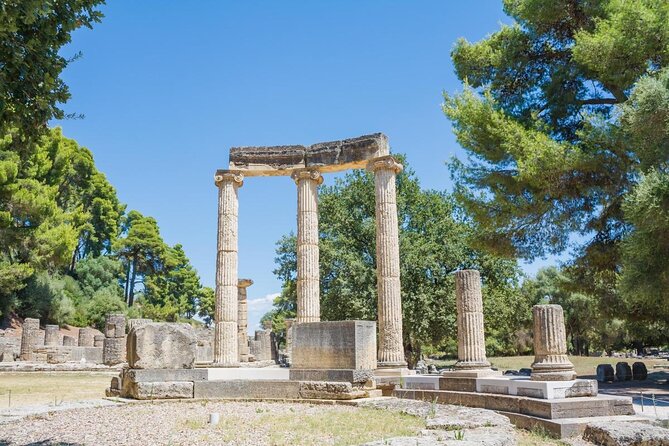
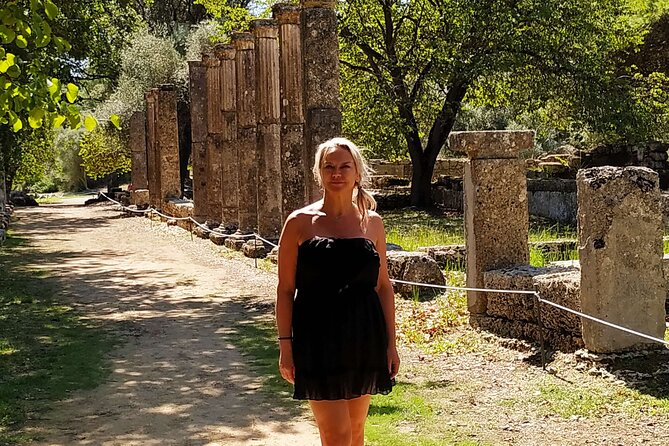
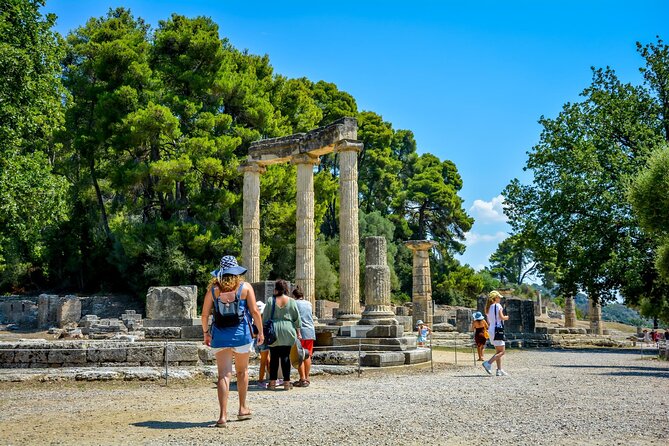
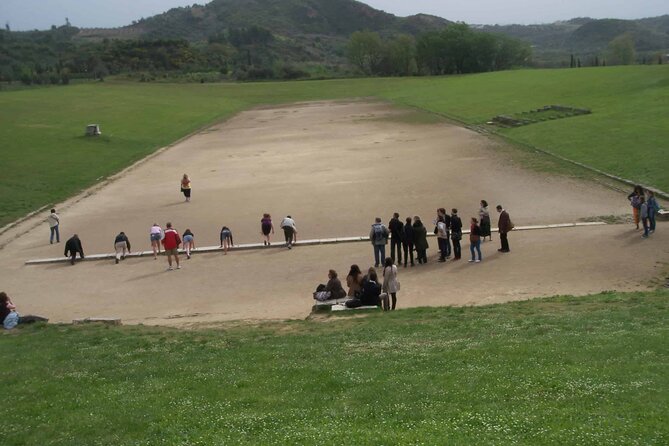
After the canal, the day’s main event is the Archaeological Site of Olympia. This is the place where the Olympic Games began, with the stadium used from 776 BC to 393 AD—about 12 centuries of athletes, honor, and ceremony.
You’ll get around 2 hours at the site, and the way this stop is framed helps you see Olympia as more than one monument. You’re not just looking at ruins in the abstract; you’re guided through key structures, including the stadium (45,000 seats) and major temples like Hera and Zeus.
The highlights that matter at Olympia
What I like about this Olympia plan is that it points you to the “core pieces,” not random walking. Expect to see:
- The stadium tied directly to the games’ legendary timeline
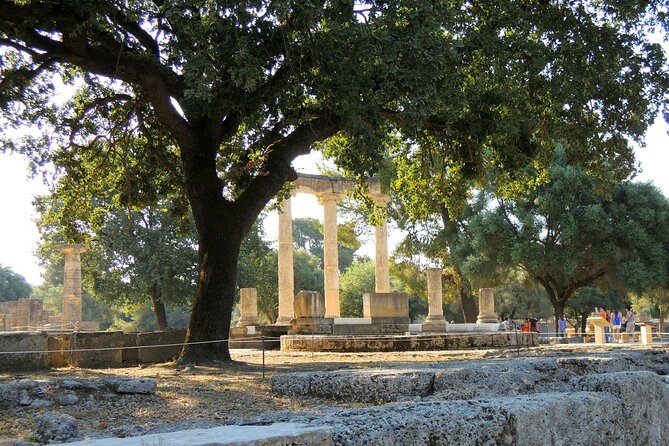
- The Temples of Hera and Zeus, the religious center of the site
- The Philippion, plus the Council House
- The Laboratory of Pheidias
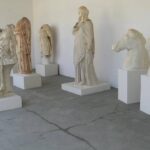
- And inside the museum, the Helmet of General Miltiades, associated with the 490 BC victory over the Persians
The small catch: the ticket cost
Olympia admission is not included, and the fee listed is €20 per person. I see this as normal for a major archaeological site, but it’s still the kind of line-item that can surprise you if you’re comparing day-trip prices. Plan to budget for it so the rest of the day feels like one smooth package.
Holy Monastery and the Great Cave of Gortynia: the quiet option with strong atmosphere
At the monastery stop, the tour gives you a real choice. Your time here can go in one of two directions, and this one leans spiritual and scenic: the Holy Monastery of Saint John the Forerunner, with the Great Cave of Gortynia visit option.
This part of the itinerary is about 1 hour, but the details are vivid. The monastery area is described as having been built during the 12th century by monks connected to nearby hermitages, and it sits on a rock in the Lousios Gorge. That setting is a big part of why this stop feels different from just visiting a carved-out viewpoint.
What makes the cave/monastery time memorable
You’ll notice the mix of old-world practicality and heavy history:
- A small courtyard with a stone-built fountain (1748)
- A heavy door marked with holes from Turks’ bullets (1779)
- 16th-century frescoes in parts of the interior and surrounding rock
- Monks who offer worshippers coffee, refreshing water, and olives
Then there’s the human side: you’re not just looking at stone. The monastery has a significant library, and the monks practice work tied to tradition, including iconography and sewing of ecclesiastical vestments. If you like moments that feel slower and more local, this option is the one.
A good practical consideration
This isn’t the stop for people who want a beach-style break. It’s more about stillness, views of the gorge, and heritage atmosphere. If you’re heat-sensitive or prefer sea air, the beach option might feel more comfortable.
Kakovatos Beach option: swimming and lunch time by the sea (and what to plan for)
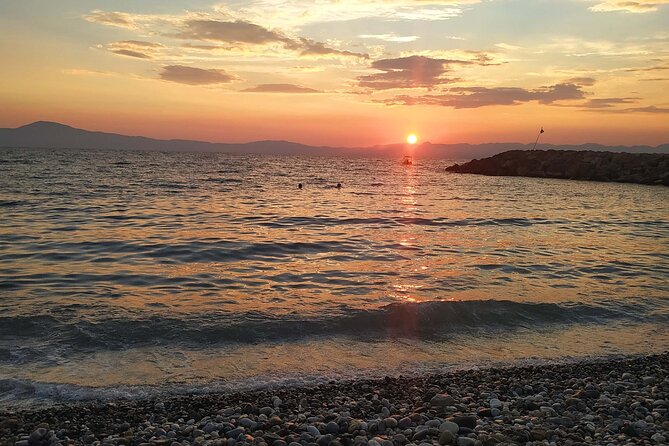
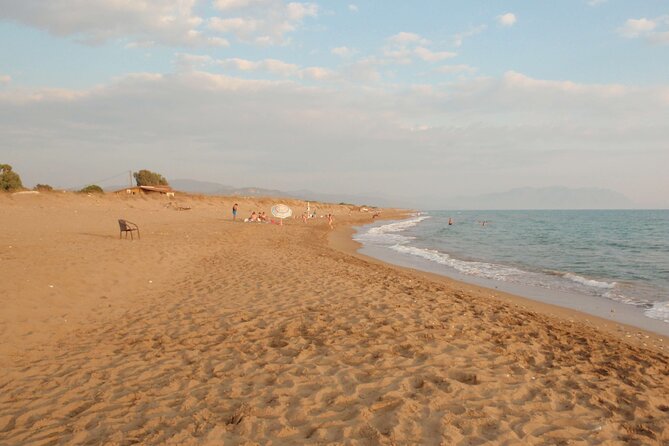
If you choose the other option, your time shifts from monastery/cave to Kakovatos Beach, near ancient Olympia. The schedule gives you about 2 hours here, with time set aside for swimming and lunch close to the sea.
The tour notes that swimming is a summer-season thing, so timing matters. If you’re traveling outside peak warm months, you might still enjoy the beach break, but the swimming piece may be less appealing depending on conditions.
What’s included vs. what isn’t at the beach
You do get practical support for the beach portion: towels are included, and you’ll have drinks on board. What’s not included is lunch. So even though lunch time is part of the plan, you should budget for it during your beach break.
My advice for this choice
Pick this option if you want to balance the long history day with a sensory reset—salt air, a swim if conditions allow, and an easy meal near the water. It’s also the best match if you’re traveling with someone who finds archaeological sites mentally tiring after a few hours.
Private-group perks: why max 7 changes how the day feels
The tour is private, limited to your group (up to 7), and run in an air-conditioned vehicle. That matters for two reasons.
First, you don’t have to watch the day unfold around strangers’ schedules. You can keep your attention where you want it, whether that’s asking questions at Olympia or getting a little extra time for photos.
Second, you get more of the guide-to-you feel. The experience is described as having excellent guides, with examples of guides like Pan and Thasos showing up in past groups. The common thread is personality: the pace stays friendly, the day feels flexible, and small touches like coffee show up rather than disappearing into a rigid timetable.
What’s included, what’s extra, and how to budget like a pro
This is where I think the tour’s value makes sense.
Included
- Air-conditioned vehicle
- Bottled water and soda/pop
- Towels for the beach
- Mobile ticket
- The beach admission/timing (beach portion is covered in the plan)
Not included
- Archaeological Site of Olympia admission: €20 per person
- Lunch
The price math
The price is listed as $842.88 per group (up to 7). If you fill the group, you’re splitting the cost in a way that can bring the per-person price into a reasonable range for a private full-day run from Athens. If it’s just you and one or two people, the fixed cost is the trade-off, so you’ll want to be sure the private pacing and the included vehicle comforts are worth it for your style of travel.
Getting the best experience out of your day
Because the day is long, a few small choices can make a big difference.
Start thinking early: 7:30 am is not “we’ll wake up when we wake up.” Wear comfortable shoes for Olympia. Bring a sensible layer for changing weather—coastal time at Kakovatos can feel different from inland stone and open ruins.
If you’re choosing between options, be honest about what you need most. The monastery/cave stop is for people who like traditions, workmanship, and that lived-in feeling of a functioning religious site. The beach option is for people who want movement and a break from archaeological walking.
Either way, you’re connecting major sites that are far apart into one clean day with logistics handled for you.
Should you book this Athens to Olympia and Monastery day trip?
Book it if you want a private, high-value day that hits Olympia properly, not just as a box-ticking stop. The combination of Corinth Canal, an Olympia visit focused on the stadium/temples/museum, and the choice between Gortynia/monastery time or Kakovatos Beach makes it flexible for different travel moods.
Skip it (or rethink the choice) if you hate long driving days, since it’s about 14 hours total. Also factor in the Olympia ticket (€20 per person) and that lunch isn’t included, so your final budget will be slightly higher than the base price.
FAQ
FAQ
What time does the tour start, and how long is it?
It starts at 7:30 am and runs for about 14 hours.
Is pickup from Athens included?
Yes. Pickup is offered, and the details are sent by email the day before the tour.
What languages is the tour offered in?
The tour is offered in English.
Is this a private tour?
Yes. It’s private, and only your group participates, up to 7 people.
Do I get a ticket on my phone?
Yes. You’ll receive a mobile ticket.
How much is the Olympia admission fee?
The Archaeological Site of Olympia ticket is not included and costs €20.00 per person.
What are the two options during the monastery stop?
You choose between visiting the Great Cave of Gortynia/monastery or going to Kakovatos Beach for swimming and lunch time.
What’s included in the price?
Included items are bottled water, soda/pop, an air-conditioned vehicle, and towels for the beach.
Is lunch included?
Lunch is not included, even though lunch time is part of the beach option.
Can I cancel for a full refund?
Yes, free cancellation is offered. You can cancel up to 24 hours in advance for a full refund.