REVIEW · ATHENS
Acropolis, Parthenon & Athens Old City Heritage Walking Tour
Book on GetYourGuide →Operated by Key Tours · Bookable on GetYourGuide
Ancient Athens hits fast when you start early. This walking tour takes you from the Theatre of Dionysus up to the Parthenon area, then down through Plaka’s lanes with clear commentary via wireless audio. I especially like how the guide turns stone monuments into stories you can picture, and how the early timing helps you see the Acropolis before the day swells with crowds.
Two things I love: first, you get a licensed guide with structured stops—so you’re not wandering and guessing what you’re looking at. Second, the wireless audio devices make a real difference on windy paths and inside busy zones, so you don’t miss the good bits.
One consideration: it’s moderate-to-strenuous walking, with a demanding climb to the Acropolis, so bring water and plan for a lot of stairs and sun.
In This Review
- Key highlights you’ll feel the moment you join
- Entering the Acropolis with early access and fewer regrets
- Meeting at Key Tours and getting oriented fast
- Theatre of Dionysus to Herodes’ Odeon: where Athens first learned to put on a show
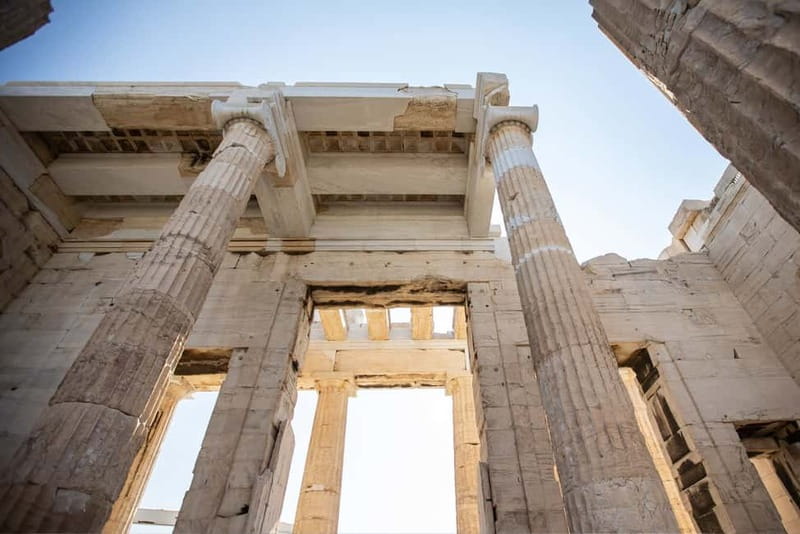
- Propylaea and Temple of Athena Nike: learning the “front door” of the Acropolis
- The Parthenon climb: why your guide’s stories matter on the way up
- Parthenon and Erechtheion: reading two monuments like a legend
- Photo stop plus free time at the Acropolis: use it well
- Anafiotika and Plaka’s cobblestones: Athens after the temple glow
- Tower of the Winds, Bathhouse of the Winds area, and Roman Athens before Monastiraki
- The audio system and guide pacing: how the tour keeps you from getting lost
- What the 210 minutes feels like in real life
- Who should book this Acropolis and Plaka walking tour
- Price and value: $34 that buys clarity, not just entry
- Should you book this tour?
- FAQ
- How long is the Acropolis, Parthenon & Athens Old City Heritage Walking Tour?
- How much does the tour cost?
- Where do I meet for the tour?
- Is the entrance ticket to the Acropolis included?
- What languages are available for the guide?
- Does the tour use audio devices?
- Is this tour suitable for wheelchair users or people with mobility impairments?
- What should I bring?
- Where does the tour end?
Key highlights you’ll feel the moment you join
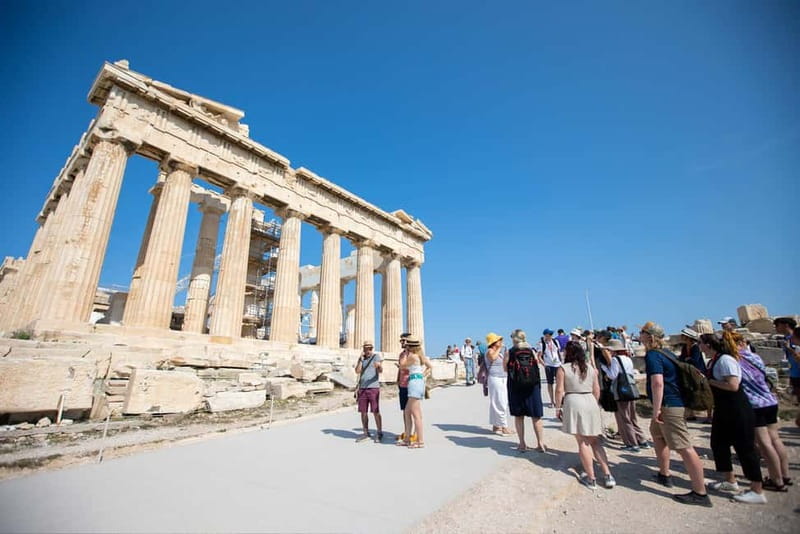
- Early Acropolis access to make crowds and heat more manageable
- Wireless audio devices so you hear the guide clearly at every stop
- Parthenon, Erechtheion, Propylaea, Temple of Athena Nike explained in plain, memorable stories
- Anafiotika and Plaka cobblestones for that postcard Athens feeling with real context
- Bathhouse of the Winds / Tower of the Winds area and nearby Roman landmarks on the way toward Monastiraki
- Guides with real performance energy, like Michael and Panagiota
Entering the Acropolis with early access and fewer regrets
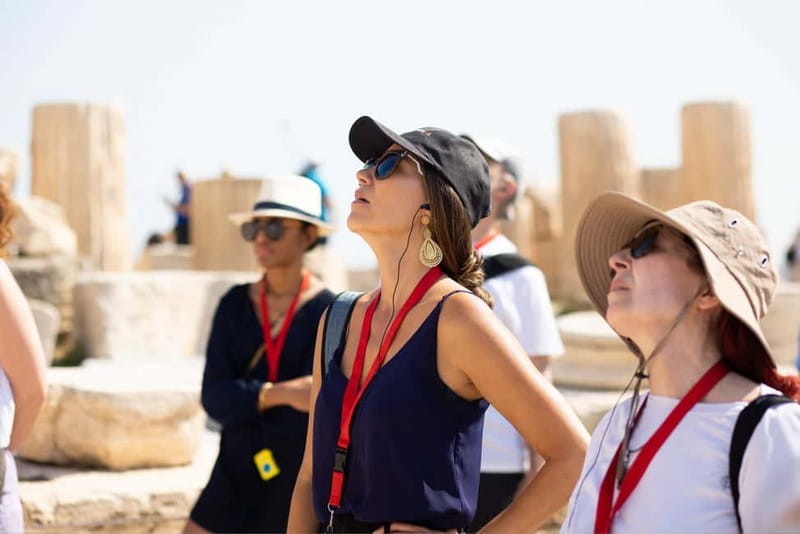
The Acropolis is one of those places where timing matters. Going early helps you get better viewing angles, and you feel less rushed while the light is still kind to the stones—and your legs.
You’ll meet at the Key Tours office, then set off with your group on a route that starts on the south slope. From there, the day builds logically: theatre first, then ceremonial entry points, then the big-name monuments.
Even with the crowds that always show up, the pacing is designed to keep you moving forward without losing the thread. That’s the difference between just seeing ancient ruins and actually understanding why they mattered.
You can also read our reviews of more walking tours in Athens


Meeting at Key Tours and getting oriented fast
The start is practical, but it can feel busy depending on how many groups are leaving at once. One common theme I’d plan for: the meeting area can be loud, so keep an eye out for your group as you sort out where you stand.
Once the tour starts, you’ll get a clear sense of where you’re going next and how long you’ll spend at each stop. You also won’t be stuck guessing how to handle timed entry—because if you select the ticket-included option, entrance is handled for you.
One extra tip that comes up again and again: arrive with comfortable shoes, and don’t wait until you feel thirsty to start drinking.
Theatre of Dionysus to Herodes’ Odeon: where Athens first learned to put on a show
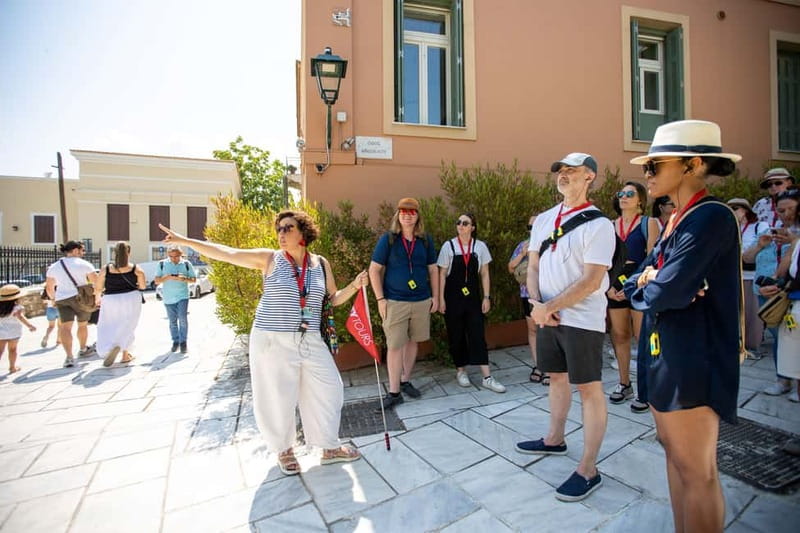
Your first major stop is the Theatre of Dionysus, often described as the birthplace of ancient drama. Instead of treating it like a quick photo-op, you’ll get the setting first—how performances, civic life, and religion braided together here.
From there, the route continues toward the Odeon of Herodes Atticus. This section gives you a useful mental map: the Acropolis wasn’t just about temples; it was also tied into public culture and gatherings that shaped daily life.
The walking between stops is short and intentional. You’re meant to arrive at each site with context already in your head, not blank-canvas confusion.
Propylaea and Temple of Athena Nike: learning the “front door” of the Acropolis

As you move up, you’ll reach the Propylaea, the grand gateway into the sanctuary area. This is where I like the tour structure best: you’re taught to look at the building like a piece of civic theatre—arrival, ritual, and symbolism all rolled into architecture.
Next is the Temple of Athena Nike. Even if you only glance quickly on your own, the guide’s commentary helps you notice what’s significant about its role and placement. This is a smart warm-up before the Parthenon and Erechtheion, because it teaches you what to watch for.
If you’re the type who likes to take photos, this is also where you’ll start spotting the best angles as the city opens up below you.
The Parthenon climb: why your guide’s stories matter on the way up
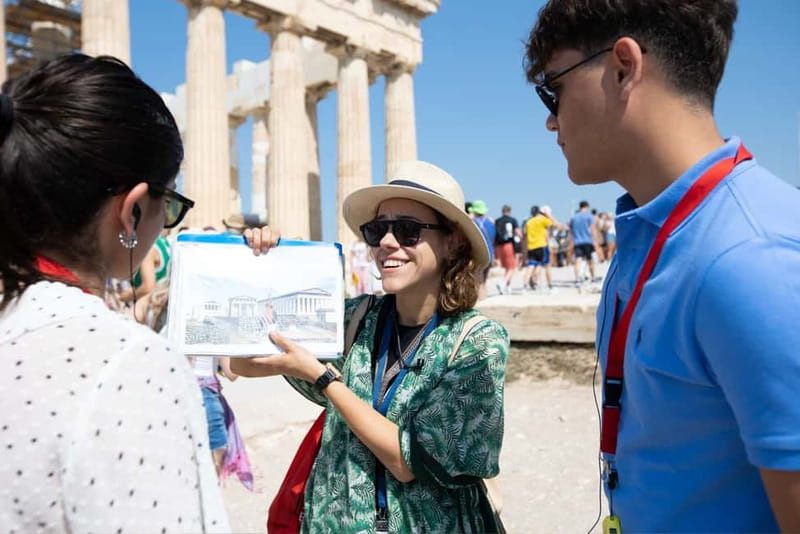
The ascent is the hardest part of the day, especially in summer. The tour’s moderate difficulty label isn’t a marketing phrase—expect a demanding climb, lots of sun exposure, and the need for steady pacing.
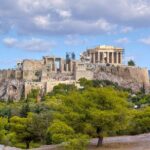
But that climb is also part of the experience. As you ascend the historic path, you get panoramic views over Athens’ hills and key landmarks, including areas like Filopappou, Mars Hill, and the Pnyx (you’ll hear what they mean and where they fit).
You’ll also pass sights you might not notice without help, including views toward the Ancient Agora and even the National Observatory of Athens. That matters because Athens can feel like one big blur unless you’re given landmarks to anchor your bearings.


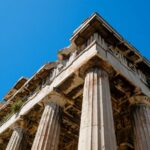
Parthenon and Erechtheion: reading two monuments like a legend
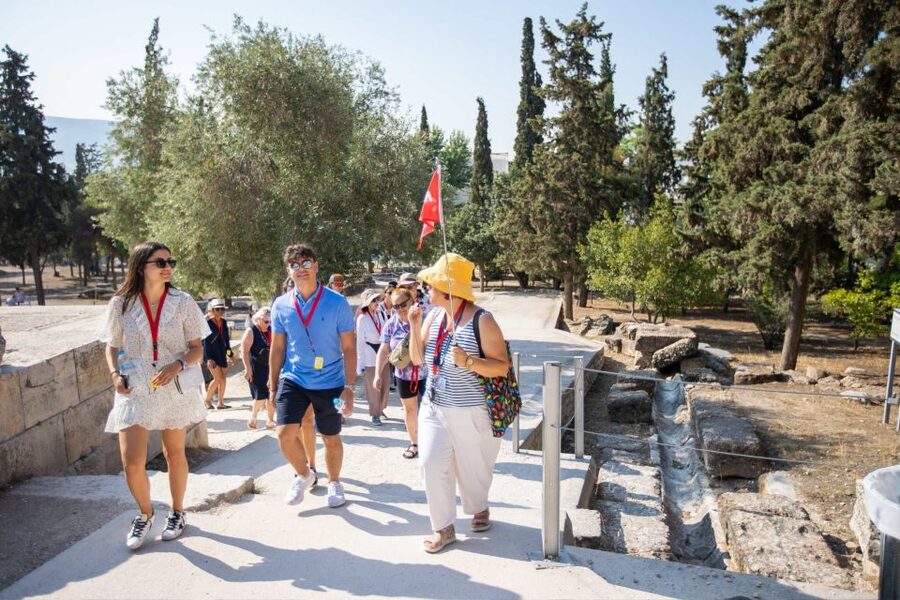
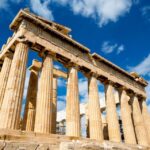
The Parthenon stop is the obvious star, but the best value is how you’re guided through it. You don’t just get dates—you get the logic behind the structure, why people associated it with power and identity, and how its role shifted over time.
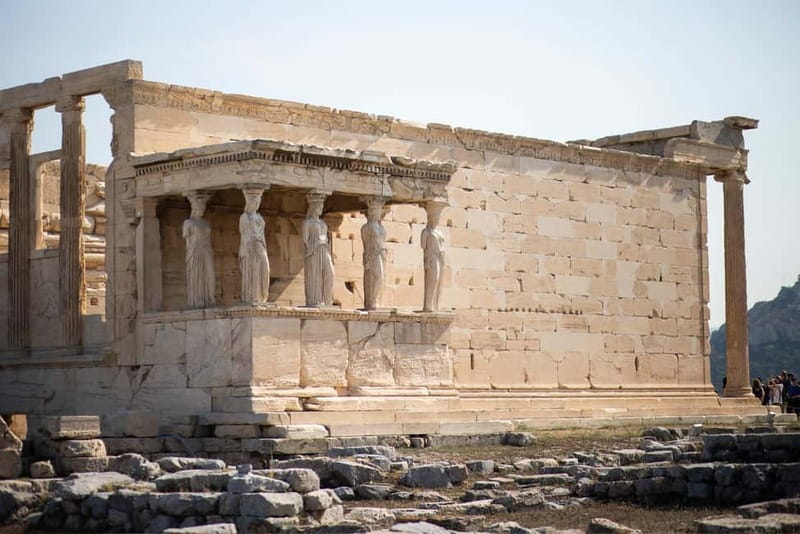
After that comes the Erechtheion. This is the stop where you start appreciating the Acropolis as a layered complex instead of one single building. The guide helps you understand why the Erechtheion is talked about differently than the Parthenon—and how its details connect to the myth and ritual landscape.
You’ll likely feel that moment when your eyes stop skipping and start collecting details. That’s when the buildings transform from distant icons into something you can actually read.
Photo stop plus free time at the Acropolis: use it well
You get a photo stop with free time, including a dedicated window at the Acropolis of Athens. This is where you can switch from listening to doing your own looking.
My advice: don’t use the time to chase every viewpoint at once. Pick one or two spots for photos, then turn around and look back down the path you climbed—this helps you connect where you started to where you now stand.
It’s also a good time to check your energy. The tour continues with more walking, including down toward Plaka.
Anafiotika and Plaka’s cobblestones: Athens after the temple glow
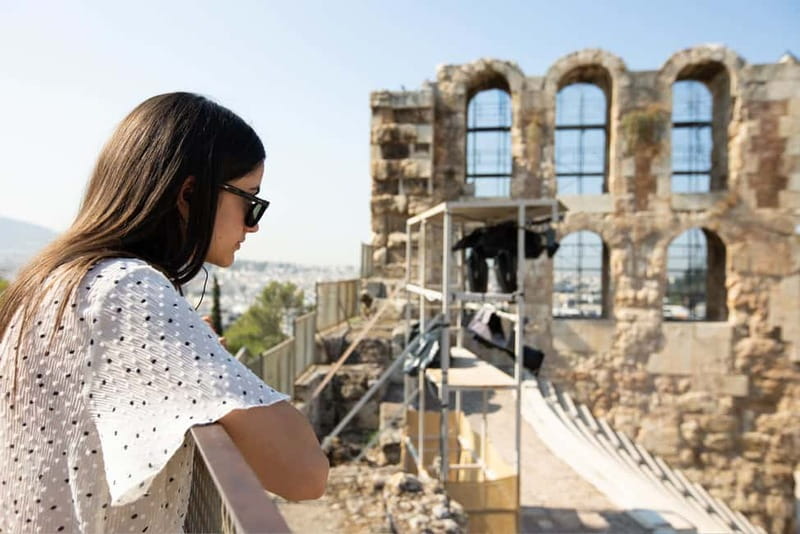
After the monument zone, you’ll move toward Anafiotika and then into Plaka’s cobblestone streets. This shift is more than scenery—it changes the pace from heat-soaked climbing to slower, human-scale wandering.
Anafiotika is the kind of place where you’ll want to pause, because the alley structure and views feel different from the wide Acropolis platforms. It’s a nice reset: you get a quieter Athens vibe while still staying close to major historic sites.
When you enter Plaka, the guide’s commentary helps you notice hidden layers you’d normally miss. You’re not just strolling for ambiance; you’re walking through a neighborhood shaped by centuries of reuse.
Tower of the Winds, Bathhouse of the Winds area, and Roman Athens before Monastiraki
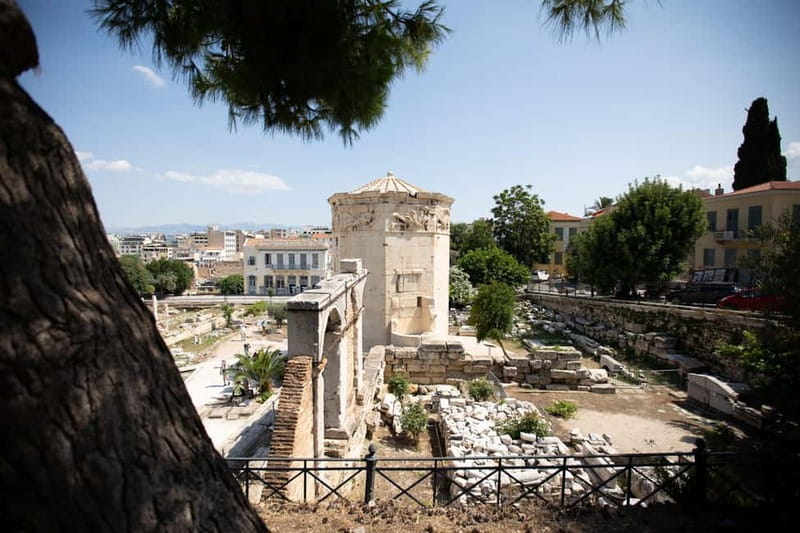
The tour’s old-town portion doesn’t only stay in the ancient “headline” lane. You’ll head through spots connected to Roman Athens and tech-in-history themes, with stops that include the Tower of the Winds and the Bathhouse of the Winds area.
Then you’ll see Roman Forum-related areas and move toward Hadrian’s Library. These are useful because they show continuity: Athens didn’t go quiet after the classical peak. The layers build.
You’ll also pass by or visit key religious and museum sites tied to the city’s later eras, including the Fethiye Mosque Museum and the Tzisdarakis Mosque. Hadrian’s Library fits nicely here too, giving you a sense of how the Romans honored and repurposed the city’s legacy.
The walk ends around Monastiraki Square. By then, you’ll feel like you’ve stitched together the Acropolis story with what came after.
The audio system and guide pacing: how the tour keeps you from getting lost
This tour stands or falls on how well you hear the guide. The wireless audio devices are a big reason it works, especially when you’re near crowds or moving through open areas where voices carry poorly.
The best guides also manage group flow—keeping you together during climbs, controlling where the group stops, and giving clear timing. That’s been a strong point across multiple guides, including Michael, Kiki, and Panagiota (often called Yoda for short), who are described as consistently organized and engaging.
You’ll also notice good pacing: enough time for photos, enough explanation to make the buildings connect, and shade or rest stops when possible. One traveler even pointed out how the guide actively managed sun exposure during the climb, which is exactly what you want in summer.
And yes, some guides bring personality. I like that the tour can be both informative and entertaining without turning into a lecture marathon.
What the 210 minutes feels like in real life
210 minutes is a solid block, but your day may feel like two experiences: the Acropolis portion and the Plaka/old-town portion. The climb is the hard work; the later streets feel easier and more spacious, even if they’re still crowded.
In some cases, the Acropolis segment can run a bit shorter than you expect depending on how the day moves. If you prefer slow and unhurried, plan your expectations around flexibility once you’re inside the monument zones.
The good news: the structure still holds. You’re not doing random wandering—you’re moving through a set sequence that builds toward the biggest monuments and then pulls you into the neighborhood story.
Who should book this Acropolis and Plaka walking tour
This is a great fit if you want:
- A guided understanding of the Parthenon and Erechtheion without needing to study for months first
- Better-than-average photo time because the route is managed
- A clear narrative from ancient drama to Roman remnants to Plaka’s old streets
It’s also ideal for first-time Athens visitors. You’ll leave with a mental map, not just a memory of impressive stones.
Skip it if:
- You have mobility impairments or use a wheelchair (the tour is not suitable)
- You dislike strenuous uphill walking, especially in summer heat
- You’re traveling with pets, baby strollers, or large bags (these aren’t allowed)
Price and value: $34 that buys clarity, not just entry
At $34 per person, this tour is priced like a value-focused way to see the highlights with less friction. The real cost-saver isn’t only that you might skip the ticket line—it’s that you’re buying a licensed guide who helps you understand what you’re seeing.
If you select the entrance-ticket option, the Acropolis entrance ticket is included. That helps the math make sense, because timed entry can be one of the biggest “time drains” in Athens.
Even if you’re comfortable navigating on your own, you’ll likely enjoy this more with the guidance—because the storytelling turns long walks into meaningful stops. And with wireless audio, you’re not straining to hear over crowds.
Should you book this tour?
Yes—book it if you want the cleanest path through the Acropolis highlights plus Plaka’s historic streets, with a guide who knows how to keep the group moving and the details clear. The early access and audio devices are especially worth it when you’re traveling in high season.
If you’re sensitive to heat and uphill climbing, choose a morning start and come prepared with water, a hat, and good shoes. And if stairs are a no-go for you, look for a different format, because this route is designed around moderate difficulty.
If you want Athens that feels connected—Theatre of Dionysus to Monastiraki—you’ll get that here.
FAQ
How long is the Acropolis, Parthenon & Athens Old City Heritage Walking Tour?
The total duration is 210 minutes.
How much does the tour cost?
The price is listed as $34 per person.
Where do I meet for the tour?
Meet at the Key Tours office.
Is the entrance ticket to the Acropolis included?
It depends on the option you select. If you choose the entrance-ticket option, an Acropolis entrance ticket is included. If you choose the option without entrance tickets, you need to purchase your tickets at the time slot before you enter with your group.
What languages are available for the guide?
The live tour guide operates in Spanish and English.
Does the tour use audio devices?
Yes. Wireless audio devices are included so you can hear the commentary clearly.
Is this tour suitable for wheelchair users or people with mobility impairments?
No. The tour is not suitable for people with mobility impairments or wheelchair users.
What should I bring?
Bring a passport or ID card, comfortable shoes, sunglasses, a sun hat, and water.
Where does the tour end?
The tour comes to an end at Monastiraki Square.