REVIEW · BRISTOL
Bristol Harbourside History Tour
Book on GetYourGuide →Operated by Wrong Turn Tours · Bookable on GetYourGuide
Bristol’s harbour stories walk right beside you. I love how Tim brings the Harbourside past to life, and I also like that the tour is interactive, with questions encouraged instead of a lecture-only vibe. One small drawback: the meeting spot is specific, so you’ll want to double-check the red buoy location before you start.
This is a human-led tour (not an app), and it’s built for a comfortable 90 minutes of mostly flat walking, about 1.8 km. Along the way, you’ll connect what you see today—ships, buildings, statues, and waterfront energy—with the big moves that shaped Bristol over centuries.
If you’re the kind of traveler who enjoys details but also wants context, this works. For $16, it’s strong value because you’re getting local storytelling plus plenty of time to ask questions, and you’ll finish near a cafe for coffee and pastries (not included) where you can linger.
In This Review
- Key highlights you shouldn’t miss
- Walking the Harbourside for 90 Minutes: what the route feels like
- Meeting Under The Stars: finding the red buoy with a blue notebook
- Bristol in 90 minutes: the 700-year harbour story you’ll hear
- Engineering feats and maritime power: how the harbour worked
- More than ships: slavery, Cabot controversy, and local culture threads
- Small-group pacing with plenty of questions: why it feels worth $16
- Where the tour ends: coffee after the walk (and what to do next)
- Who should book this Bristol Harbourside History Tour?
- Should you book this tour or not?
- FAQ
- How long is the Bristol Harbourside History Tour?
- Where do we meet for the tour?
- Is the tour guided by a person or an app?
- How far do we walk?
- Is the tour wheelchair accessible?
- Does the tour run in bad weather?
- Is coffee or food included at the end?
- What are the cancellation and pay-later options?
Key highlights you shouldn’t miss
Tim keeps the energy up and makes the harbour feel personal
You’ll get an interactive walkthrough that welcomes questions
The route covers about 1.8 km of mostly flat ground
You’ll hear Bristol’s maritime story and why it mattered for centuries
Expect more than ships: politics, slavery, Cabot, and local culture threads
Walking the Harbourside for 90 Minutes: what the route feels like
The tour is designed to be an easy, doable walk. You’ll cover just over 1.1 miles (1.8 km) with mostly flat ground, plus some occasional cobblestones and a road crossing. In plain terms: it’s not a slog, but you still shouldn’t wear brand-new shoes or flip-flops if you’re prone to slippery soles.
Because the pace is comfortable and the group stays small (up to 10 people), the walk feels more like a guided stroll than a rushed sightseeing stampede. I like this format when I’m in a city I think I already know. You get enough movement to see the space clearly, but you’re not sprinting between stops to feel like you “checked boxes.”
The big practical takeaway: if you’ve got even mild mobility limits, this is set up to be manageable. It’s also wheelchair accessible, which means the route is chosen with that in mind. The tour still runs come rain or shine, so your clothing matters. Bring a light waterproof layer, and if it’s wet, give extra attention to footing on older sections with cobblestones.
Finally, the timing works well even if you’re doing other Bristol plans that day. Ninety minutes is long enough to learn something real, but short enough that you won’t feel like you lost your whole afternoon.
Meeting Under The Stars: finding the red buoy with a blue notebook
Your guide will be by the red buoy, in front of the floating restaurant called Under The Stars. You’ll recognize them because they’ll have a blue notebook in hand. That’s a wonderfully specific detail, and it also answers the one thing I’d flag: don’t treat it like a vague “near the waterfront” meeting point.
If you’re arriving on foot, take an extra minute to locate the buoy before you start looking for the group. In a place with lots of dock edges and waterfront spots, that extra step saves stress. I’d rather spend 60 seconds confirming the meeting point than spend the first 10 minutes drifting along the harbour wondering if you’re in the right place.
Once you’re together, the tour gets rolling quickly. The guide keeps things friendly and chatty while moving between stops, so you don’t have that awkward “waiting for the narration to start” feeling.
Tip: if you’re traveling with someone who often gets impatient on walks, this is where you can set expectations—because the tour starts right on the water’s edge, not in a distant meeting hall.
Bristol in 90 minutes: the 700-year harbour story you’ll hear
What makes this tour stand out is the way it connects modern Bristol Harbourside to a long timeline of trade, engineering, and change. You’re not just shown the harbour. You’re guided through why it mattered.
The story starts with the harbour’s build-out and early role as a launch point for the scramble to the New World. You’ll hear how the harbour captured two rivers—and how that shaping of waterways helped Bristol become a major maritime player. That kind of “how the city physically works” explanation is exactly what helps the waterfront stop looking like scenery and start looking like infrastructure.
Then comes the bold engineering angle. The tour includes the claim that Bristol built the world’s first ocean liner—and Tim ties that into the broader maritime story so it doesn’t feel like a random trivia fact. You’ll also learn what life was like at the harbour during its peak, not only in terms of ships, but in terms of the labour and daily rhythm that fed a port city.
And then the timeline doesn’t stop at the past. You’ll hear how the harbour later remodeled into a modern destination for tourists and locals alike—and, importantly, what it took to keep it relevant as larger deepwater ports grew.
This is the part I really appreciate: the tour doesn’t treat the harbour as a museum. It treats it as a living system that had to adapt—or risk being bypassed.
Engineering feats and maritime power: how the harbour worked
Ships and docks can look straightforward until someone explains the logic behind them. This is where Tim’s approach really shines. You’ll spend time looking at harbour structures, vessels, and the kinds of details people often ignore when they’re just taking photos.
The tour emphasizes the practical reasons behind major changes: how Bristol’s harbour was designed and built, how water access shaped shipping routes, and how engineering decisions affected what ships could do there. When the guide points something out, it comes with context about what it enabled. That makes the visuals stick.
I also like that the tour doesn’t only focus on the famous end-of-story achievements. You’ll get the early groundwork—how the harbour was built, how the rivers were handled, and why that mattered for centuries of movement and trade. It’s a strong way to learn the city because you’re using your eyes while you’re learning, not only relying on words.
If you’re a person who loves architecture, industrial details, or “how things were built,” this part of the walk will feel extra satisfying. The harbour has plenty of hard edges—cranes, dock surfaces, maritime buildings—and the guide uses those features like signposts for the bigger narrative.
One more small but meaningful point: the guide keeps it at a comfortable walking pace. That matters for engineering stories because you need time to both listen and look around.
More than ships: slavery, Cabot controversy, and local culture threads
Bristol Harbourside isn’t only about ships and trade wins. The tour also touches heavier subjects and city debates, and it does it in a way that fits the walk rather than turning into a classroom.
You’ll hear about slavery and how Bristol’s maritime connections connect to that history. You’ll also cover the Cabot controversy and city politics—meaning the tour frames the harbour as something shaped by people making arguments, funding decisions, and long-term choices.
What I found helpful is that the guide connects these themes to what you can see around you. When a topic like this shows up without context, it can feel tacked on. Here, it’s woven into why the harbour developed the way it did and why the city still thinks about it today.
Then, just when the tour could become too heavy, Tim also brings in local culture. In the orbit of the route, you’ll get references and pointers related to Banksy and the local Shawn the Sheep studio. That mix works because it gives you a bridge from the hard past to how Bristol talks about itself now.
Bottom line: this isn’t a one-note history tour. It’s a city story tour—maritime, yes, but also political and cultural.
Small-group pacing with plenty of questions: why it feels worth $16
At $16 per person, the big value isn’t just the price tag. It’s the format: a live guide, small group size (limited to 10), and a pace that leaves room for conversation.
Most people don’t buy a walking tour because they want to stand in silence for 90 minutes. This one is built for interaction. You’ll be encouraged to ask questions, and Tim doesn’t shut things down or rush you to the next stop. That approach is a huge part of why the experience gets such consistently strong feedback.
Tim’s style also matters. He’s described as friendly and chatty between stops, and you’ll feel that he cares about Bristol. That matters because passion often translates into clearer explanations and better “why this matters” links between places.
There’s also a practical comfort angle: because the group stays small, you’re not stuck behind tall people or stuck with a guide who can only address the front row. You’re more likely to get answers that actually fit your interests—whether you’re focused on ships, buildings, statues, or the city’s darker chapters.
If you’re someone who likes to learn at a human scale, this fits perfectly. If you hate questions and prefer to listen only, it can still work—but I’d recommend bringing at least one curiosity with you so you can steer the conversation a bit.
Where the tour ends: coffee after the walk (and what to do next)
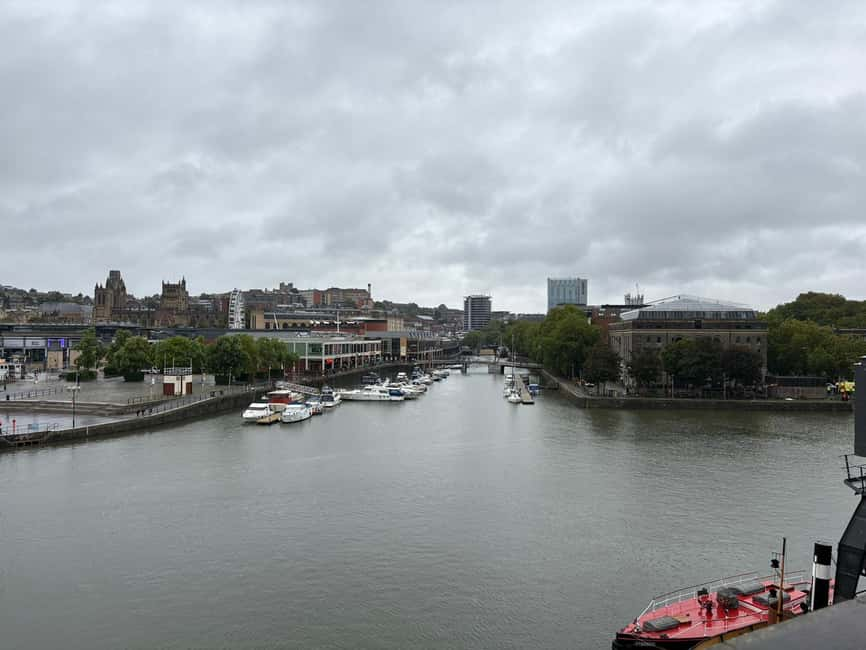
The tour wraps with a cafe at the end. It’s a chance to sit down, take in the Harbourside view, and regroup. Coffee and pastries are available there, but they’re not included in the tour price.
I like this finish because it gives your brain time to sort through what you learned. After 90 minutes of history and context, a short pause makes the stories feel less abstract. Plus, it’s a natural moment to decide what you want to explore next based on what Tim highlighted during the walk.
If you’re trying to plan your day, think of this tour as your orientation. You’ll come away with a clearer sense of what you can comfortably see on your own after—especially the spots that you might otherwise have passed without noticing.
Who should book this Bristol Harbourside History Tour?
This tour is best for you if:
- You want a guided walk with real storytelling, not an app-based audio track.
- You’re curious about Bristol’s harbour from engineering to trade, and also how it connects to modern Bristol.
- You’re happy walking about 1.8 km on mostly flat ground with some cobbles and a short road crossing.
- You like asking questions and getting answers as you go.
It’s also a great choice for first-time Bristol visitors who want a strong overview without spending half a day in transit. And because it runs in rain or shine, it can work when the weather tries to ruin everyone’s plans.
Should you book this tour or not?
Book it if you want a compact, person-led history walk that helps you see the Harbourside instead of just looking at it. The $16 price is a strong value for a live 90-minute guided experience, especially with the small group limit and interactive format.
Don’t book if you hate walking in light-to-moderate uneven surfaces (those occasional cobblestones matter) or if you need a highly structured stop-by-stop itinerary with exact monument names. This is more about flexible conversation and guided storytelling than a checklist.
Also, do yourself a favor: arrive early enough to find the red buoy near Under The Stars. Once you start, the rest is smooth, but the meeting point is specific enough that a quick check saves time.
FAQ
How long is the Bristol Harbourside History Tour?
It lasts about 90 minutes.
Where do we meet for the tour?
Meet your guide by the red buoy, in front of the floating restaurant Under The Stars. The guide will have a blue notebook.
Is the tour guided by a person or an app?
It’s led by a live, English-speaking human guide.
How far do we walk?
The walk is just over 1.1 miles (about 1.8 km) and is mostly flat.
Is the tour wheelchair accessible?
Yes, it is wheelchair accessible.
Does the tour run in bad weather?
Yes, it goes ahead in rain or shine.
Is coffee or food included at the end?
There’s a cafe at the end where you can buy coffee and pastries, but they are not included in the tour price.
What are the cancellation and pay-later options?
You can cancel up to 24 hours in advance for a full refund, and you can reserve now and pay later to keep your plans flexible.