REVIEW · BOGOTA
Candelaria Unveiled: Cool-tural Heritage Walking Tour
Book on GetYourGuide →Operated by Timeless Journeys · Bookable on GetYourGuide
Bogotá’s colonial heart walks with you in La Candelaria. I love the way this tour links streets to real Colombian stories, and I love the local recommendations you pick up for where to eat and what to do after your walk. One watch-out: at 150 minutes, the pace is brisk, so it may feel tight if you want hours of slow wandering.
You start at the Monumento a Policarpa Salavarrieta, then roll through key spots that shape modern Bogotá. Guides from Timeless Journeys (including Sharik and Jorge, based on recent tour experiences) keep things clear in English or Spanish, and you get a sense of how Chorro de Quevedo fits into the city’s beginning.
In This Review
- Key highlights at a glance
- Why La Candelaria feels like a guided “story map”
- Meeting at Monumento a Policarpa Salavarrieta
- La Concordia Market: culture you can feel in your hands
- Callejón del Embudo: a cobblestone street with a past shape
- Chorro de Quevedo: where Bogotá begins (and why the spot matters)
- Teatro Colón and the cultural backbone of modern Bogotá
- Gabriel García Márquez Cultural Center: where literature meets the street
- Plaza de Bolívar: Bogotá’s civic center in real space
- Churches and Policarpa’s story at Casa de La Pola and Iglesia San Ignacio
- Finishing at Museo Botero: the art moment after the walking
- Price and value for a 2.5-hour La Candelaria walk
- Pace, comfort, and the one thing to plan around
- Who should book this tour, and who should skip it
- Should you book Candelaria Unveiled?
- FAQ
- How long is the Candelaria Unveiled walking tour?
- Where is the meeting point?
- What languages is the tour offered in?
- What sites will we visit?
- Is entrance to attractions included?
- Is the tour wheelchair accessible?
- Is there free cancellation?
- Who is the tour not suitable for?
Key highlights at a glance
- A tight 150-minute route that covers major landmarks without turning into a full-day marathon
- La Candelaria street stories tied to Colombia’s colonial architecture and early Bogotá
- Market-to-monument pacing, from La Concordia Market to Plaza de Bolívar
- Botero Museum as the finish point, so art lands right after the history
- Practical city recommendations for restaurants, clubs, and activities
Why La Candelaria feels like a guided “story map”
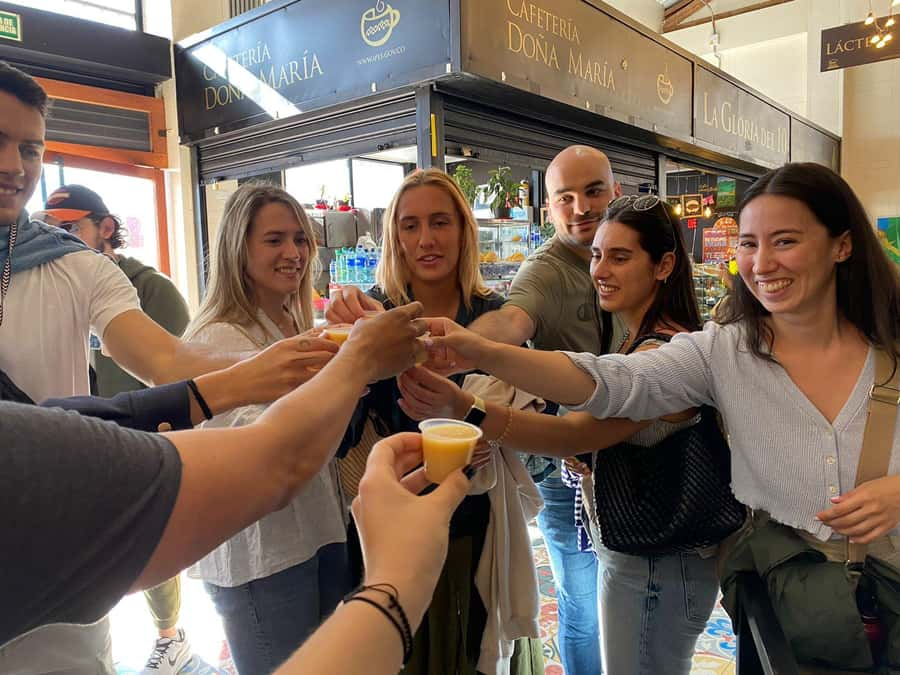
La Candelaria is one of those parts of Bogotá where the buildings aren’t just pretty backdrops. They’re part of the plot. This walking tour is built for that. You move from one scene to the next—market culture to colonial streets, revolution-related landmarks to major civic squares—so you don’t just see sights. You understand why they’re there.
What I like most is the balance. You get architecture and history, sure. But you also get the “how to use Bogotá” angle, including recommendations for places to eat and go out. That mix matters on a first trip, when you’re trying to avoid the tourist-trap loop.
At 150 minutes, it’s not a slow sightseeing stroll. It’s paced like a proper guided walk with frequent stops, short explanations, and enough movement to keep your head clear.
You can also read our reviews of more tours and experiences in Bogota.
Meeting at Monumento a Policarpa Salavarrieta
The tour starts in front of the Monumento a Policarpa Salavarrieta. That choice is smart because Policarpa is one of the best entry points into Colombia’s liberation story. You’re not beginning with a random landmark—you’re beginning with a name that connects to the country’s political history.
If you’re coming in from another part of the city, give yourself a little time to arrive early. The tour is short, so being late can shrink what you actually see. Once you meet up, the guide sets the direction and the walking flow, which helps you feel oriented in a neighborhood that can be easy to misread on your own.
La Concordia Market: culture you can feel in your hands
La Concordia Market is where the tour becomes more than architecture. It’s tradition in everyday form—farmers, craft shops, and a market atmosphere that shows how people live, not just how they ruled.
This stop works for two reasons. First, it gives you a sensory reset after a lot of city history talk—your brain has a new “entry point.” Second, it helps you see Bogotá as a living city, not a museum. Even if you don’t buy anything, walking through a market scene makes the later colonial streets feel more connected to real life.
You’ll get a guided tour here, so you’re not just scanning stalls. You’re learning what you’re looking at and how it fits into the broader cultural context.
Callejón del Embudo: a cobblestone street with a past shape
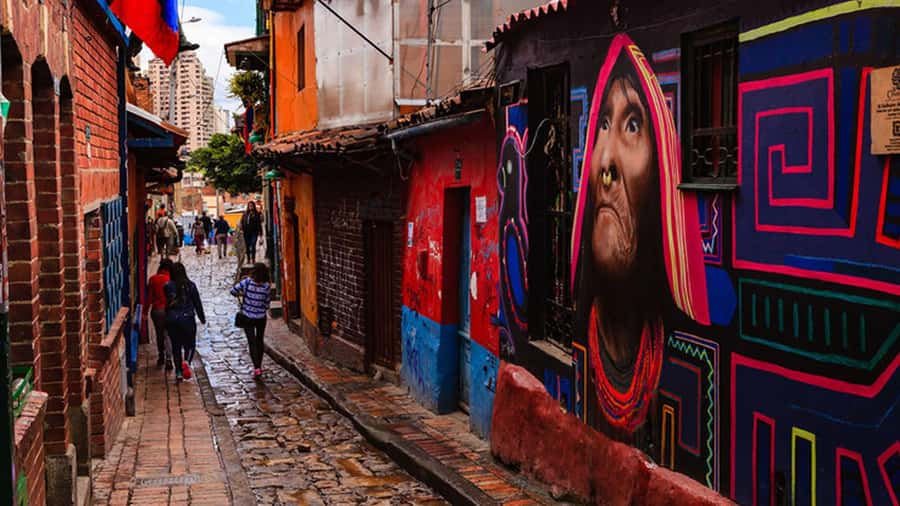
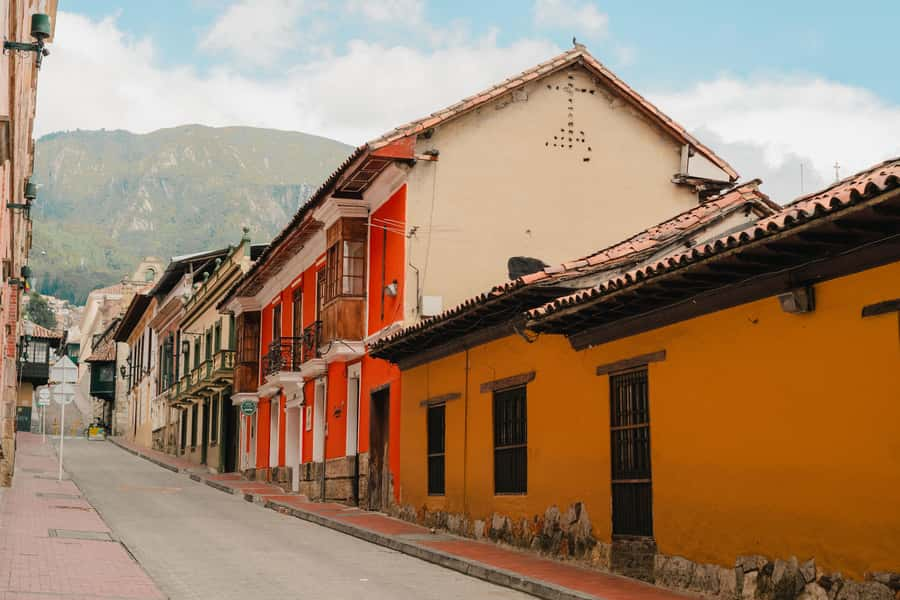
Next comes Callejón del Embudo, a cobblestone street shaped like a funnel. It’s the kind of detail you’d miss if you were rushing or taking photos without listening.
The interesting part is the connection to geography: it used to be the edge of the ancient Quebrada de San Bruno. That means you’re seeing a street form that still carries an older landscape underneath the built environment. This is exactly what a good walking tour does—it teaches you to read the city’s “layers,” where modern streets reflect earlier natural features.
Practical takeaway: cobblestones mean your shoes matter. And because this is a walking tour, you’ll want to be comfortable standing and moving through small streets.
Chorro de Quevedo: where Bogotá begins (and why the spot matters)
Chorro de Quevedo is tied to the founding of Bogotá in 1538 by Gonzalo Jiménez de Quesada. This is the tour’s anchor moment—when you go from background history to a core origin point.
What you gain here isn’t just a date. It’s perspective. When you hear about the founding tied to the physical location, the rest of the neighborhood stops feeling like separate attractions. The buildings, plazas, and churches start to feel like they formed around power, faith, commerce, and settlement patterns.
This is also one of the spots where the guide’s pacing really helps. You get time to look, then you get the explanation, then you’re on your way—so it doesn’t turn into a lecture with no visuals.
Teatro Colón and the cultural backbone of modern Bogotá
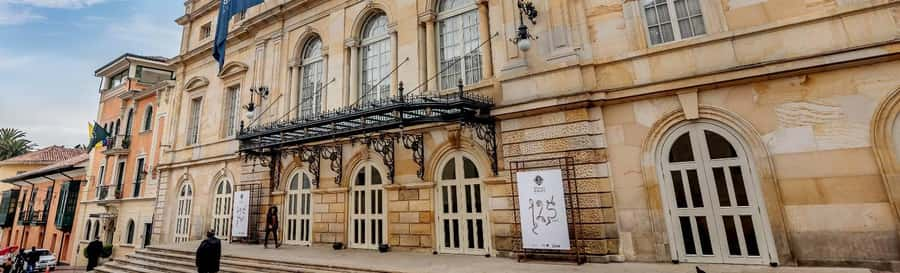
From the historical streets, the tour moves into more cultural territory with Teatro Colón. Even if you don’t plan to attend a performance, the theater gives you a lens on Bogotá’s arts side.
This stop helps connect two time periods: the colonial environment outside and the modern cultural life that grew around it. It’s one of the ways you see Bogotá as a city that keeps changing, not a place stuck in the past.
If you’re an art-and-architecture person, you’ll likely enjoy how the guide links what you’re seeing to the city’s bigger identity.
Gabriel García Márquez Cultural Center: where literature meets the street
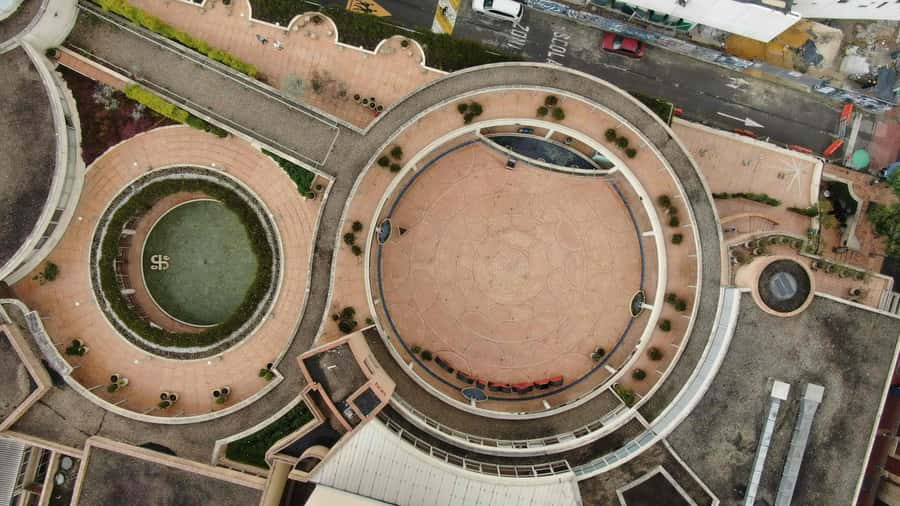
You’ll also visit the Gabriel García Márquez Cultural Center. The name alone signals why this matters in Colombia. But on this tour, the point isn’t just celebrity. It’s that Colombia’s cultural identity didn’t stop with colonial monuments—it continues through literature and modern institutions.
This is the part of the walk where you may start noticing themes repeating: civic pride, cultural memory, and the way public spaces shape community life. The cultural center works like a bridge between the older plazas and the museum-focused finish.
Plaza de Bolívar: Bogotá’s civic center in real space
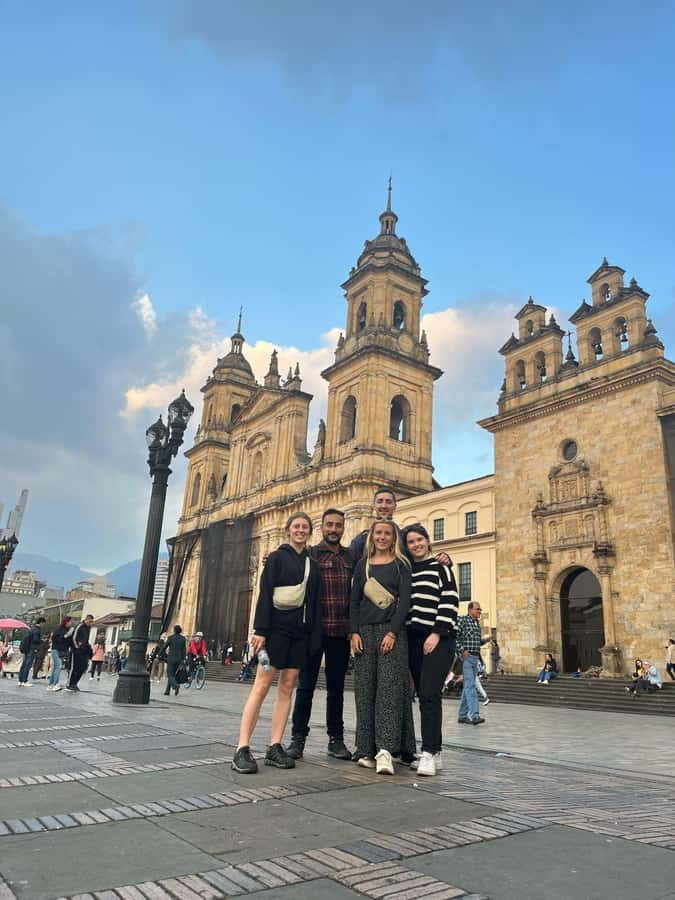
Plaza de Bolívar is the heart of Bogotá, and the tour treats it that way. You’re surrounded by major buildings and political symbolism, including the Palace of Justice and the National Capitol.
I like this stop because it’s practical. After walking narrower streets, you suddenly stand in open space. That shift makes it easier to understand Bogotá’s layout and power geography. You’re seeing how the city organizes itself around governance and national identity.
Listen closely here, especially if your Spanish is limited. The guide’s explanations (in English or Spanish) help you connect what you see to what it represents, so you don’t just read plaques—you actually understand their place in the city.
Churches and Policarpa’s story at Casa de La Pola and Iglesia San Ignacio
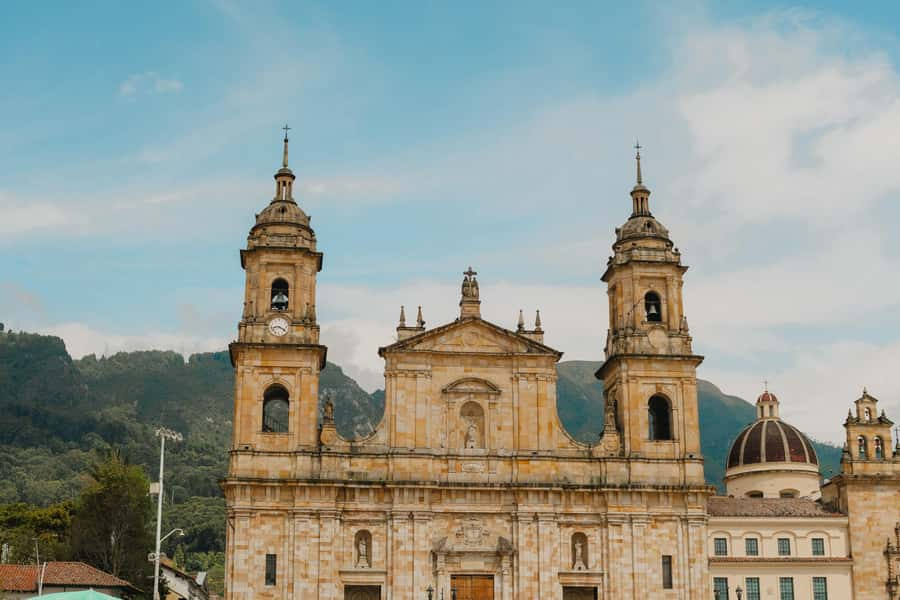
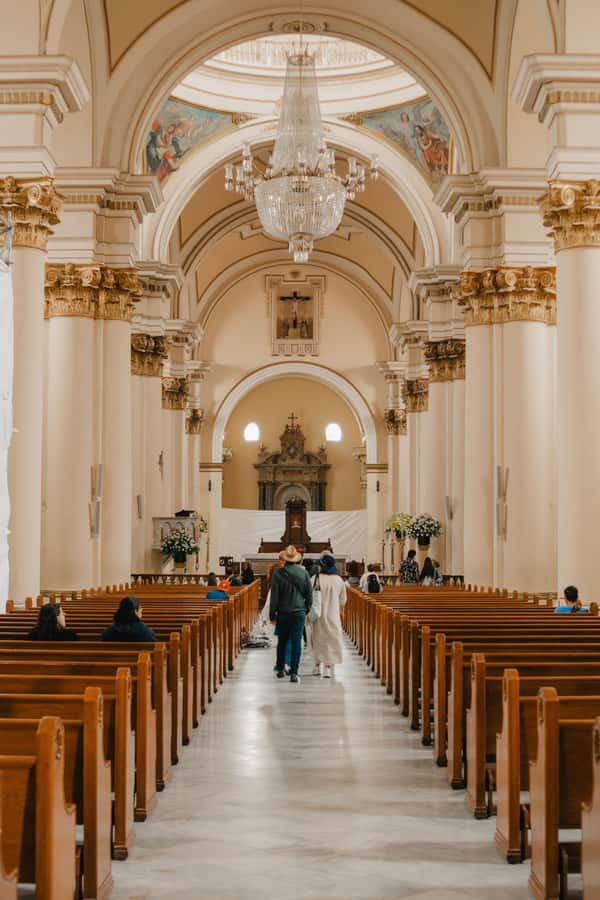
The tour includes revolutionary history with Casa de La Pola, tied to Policarpa Salavarrieta, a heroine of the liberation campaign. You also visit Iglesia San Ignacio, a Catholic religious temple built in the 17th century.
That pairing works well. It shows how faith and power lived side by side in the colonial era, and how revolutionary memory later shaped what people still talk about. Policarpa’s story gives you a human angle to the larger political changes, while the 17th-century church grounds you in the architectural time period.
If you love biographies and turning points, Policarpa is likely to be one of the highlights. It’s much easier to remember a date once you know a person connected to it.
Finishing at Museo Botero: the art moment after the walking
The walk ends at the Botero Museum (Museo Botero), after a visit that’s clearly designed as a finish line. You get the best of both worlds: history outdoors, then art indoors with a calmer pace.
Why this matters: if you do it in reverse—art first, streets second—your brain can struggle to connect what you see outdoors to anything emotional. Here, the museum finish acts like a payoff. It gives you a chance to slow down and process what you learned while also keeping the same theme: identity, culture, and memory.
The tour experience is built to flow into this stop. Even if you’re not a hardcore museum person, Botero Museum is a good place to land because it’s a natural continuation of the tour’s cultural focus.
Price and value for a 2.5-hour La Candelaria walk
The price is $16 per person for about 150 minutes, and that’s the kind of deal that makes sense if you value guidance. You’re not just paying for someone to point at buildings. You’re paying for interpretation—how the story connects from the founding at Chorro de Quevedo to revolutionary figures like Policarpa and the civic scope of Plaza de Bolívar.
Also, some museum and church entrances are included, which helps the value stack. The tour doesn’t claim every entrance is covered, but you do get at least part of that cost advantage rather than everything being optional add-ons.
In practical terms, for this price, the best value is for first-timers and repeaters alike:
- First-timers get structure and context fast.
- Repeaters get a fresh way to look at familiar corners.
Pace, comfort, and the one thing to plan around
This isn’t a slow “take your time” tour. It’s a guided walk with stops, and the duration suggests you’ll be moving consistently. That can be perfect if you like momentum. It’s not ideal if you get frustrated when you can’t linger.
Also, since parts of the route include cobblestone streets like Callejón del Embudo, wear shoes that handle uneven surfaces. You’ll thank yourself after the second or third stop.
One more balancing note: there have been rare cases where the tour didn’t happen as expected due to a guide not showing up. That’s uncommon, but it’s worth being punctual, arriving a bit early at the meeting spot, and keeping your confirmation details handy.
Who should book this tour, and who should skip it
I think this works best if you:
- Want a guided orientation to La Candelaria and Bogotá’s major landmarks
- Like history that connects to real places, not just names and dates
- Appreciate practical recommendations for where to eat and what to do later
- Plan to visit the Botero Museum anyway, since the tour ends there
It may be less ideal if you:
- Prefer to wander on your own without a timed route
- Need very long breaks at each stop
- Are looking for a tour that’s designed for people over 95, since it’s not suitable for that age group
The good news is that it’s wheelchair accessible, so it’s built with at least some mobility considerations in mind.
Should you book Candelaria Unveiled?
If you want a compact, guided way to understand La Candelaria—markets, founding mythology, revolutionary stories, civic monuments, and an art finish at the Botero Museum—this is an easy yes for most visitors. The $16 price is a big part of why I’d recommend it: you get interpretation and some entrances without needing to build an entire day from scratch.
I’d book it especially if you’re short on time and want your walking route to make sense. If you’re the kind of person who loves asking questions, you’ll likely enjoy the experience as guides like Sharik and Jorge have done before—answering questions and keeping the route moving in a way that feels organized, not chaotic.
FAQ
How long is the Candelaria Unveiled walking tour?
The tour lasts 150 minutes.
Where is the meeting point?
Meet in front of the Monumento a Policarpa Salavarrieta.
What languages is the tour offered in?
The tour is offered in English and Spanish.
What sites will we visit?
You’ll explore stops such as La Concordia Market, Callejón del Embudo, Chorro de Quevedo, Teatro Colón, Bolívar Square, the Gabriel García Márquez Cultural Center, and the Botero Museum. Other included context stops may include places like Casa de La Pola, Palacio San Carlos, Iglesia San Ignacio, and Manzana Cultural.
Is entrance to attractions included?
Entrance to some museums and churches is included.
Is the tour wheelchair accessible?
Yes, the tour is wheelchair accessible.
Is there free cancellation?
Yes. You can cancel up to 24 hours in advance for a full refund.
Who is the tour not suitable for?
It is not suitable for people over 95 years old.