REVIEW · BOGOTA
Historical tour Bogota
Book on Viator →Operated by Free Tour Bogota - Agencia de viajes Oaca Colombia · Bookable on Viator
Bogotá’s story is best on foot, and this three-hour historical walk threads together the city’s roots, El Dorado legend, independence, and the Bogotazo as you wander Candelaria (plus La Concordia and Las Aguas). I love how the route is built around real places you can still see today, and I love the way the guide connects big events to everyday Bogotá life. One consideration: it’s still a walking tour if the weather turns, so pack an umbrella and wear grippy shoes.
I also like the practical setup: it’s a small group (up to 30), you get a mobile ticket, and most stops are quick sight-and-story moments rather than long museum battles. You start in La Candelaria at Cra. 7 #11-10 and end near Av Jimenez de Quesada #6-71, with the final finish at Rosario Square.
This tour is aimed at helping you understand Bogotá fast, not just collect photos. You’ll hear about indigenous life before the capital, why chicha became a target, and how culture shows up through art and writers like Fernando Botero and Gabriel García Márquez.
In This Review
- Key highlights to notice before you go
- Entering Bogotá’s Historic Center: Candelaria, La Concordia, Las Aguas
- What You’ll Learn: Indigenous Roots, El Dorado, Independence, and the Bogotazo
- Plaza de Bolívar de Bogotá: The Power-Building Start of the Walk
- Teatro Colón Bogotá: A Quick Stop With Big Historical Gravity
- Museos del Banco de la República: Botero’s Name, the Cultural Block, and Why It Matters
- Chorro del Quevedo: Bogotá’s Foundation Square and the Chicha Prohibition Story
- Plaza de Mercado La Concordia: Where You Can Try Chicha and Local Juices
- Eje Ambiental: Monserrate Views and García Márquez Social Spots
- Jorge Eliécer Gaitán Monument: The Bogotazo Connection
- Plazoleta del Rosario Finale: Emerald Market Vibes and Where to Go Next
- Is the $19.77 Price Good Value for a 3-Hour History Tour?
- Who Should Book This Bogotá Historical Tour (and Who Might Not)
- Should You Book This Tour or Skip It?
- FAQ
- What is the duration of the Bogotá historical tour?
- Where does the tour start and where does it end?
- Is admission included for the stops?
- What’s included in the tour price?
- Are snacks or drinks included?
- Does the tour run in bad weather?
- How big is the group?
- Is free cancellation available?
Key highlights to notice before you go
- A landmark-by-landmark story of Bogotá that covers indigenous roots, colonization, independence, and the Bogotazo.
- Careful pacing for a 3-hour center walk, with frequent short stops so it never feels like nonstop lecturing.
- Botero and García Márquez are treated as more than names—you’ll connect them to places and people in the city.
- Candelaria to La Concordia to Las Aguas in one pass, so you get a broad feel for the historic center.
- Chicha history plus market time, with the option to try the drinks and snacks on your own.
- Guides bring the material to life, and names like Paula, Jennifer, Ricardo Jiménez, Diane/Diana, and Rodrigo show up in standout experiences for their friendly, organized delivery.
Entering Bogotá’s Historic Center: Candelaria, La Concordia, Las Aguas
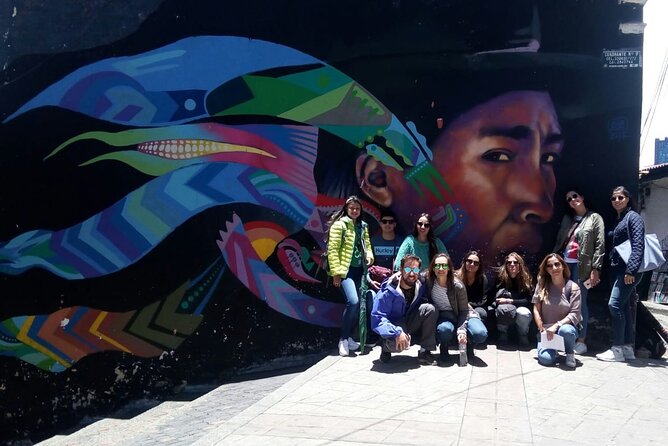
This tour is designed for your first (or second) day in Bogotá. You’ll cover the heart of the city on foot, focusing on the historic center’s main squares and key landmarks. The “why” is the point here: each place is used to explain a chapter of Bogotá’s story, from pre-colonial life to modern national identity.
You’ll move through areas commonly associated with Bogotá’s older core—Candelaria, plus stops that pull you toward Las Aguas and La Concordia. That matters because it keeps the city feeling connected. You’re not jumping across town; you’re learning how neighborhoods and history overlap in the same streets.
Most of the time, you’ll be standing outside, looking in one direction or another while the guide ties it to what came next. It’s efficient, but it also means you should bring a little curiosity for street-level details—corners, façades, and public spaces.
What You’ll Learn: Indigenous Roots, El Dorado, Independence, and the Bogotazo
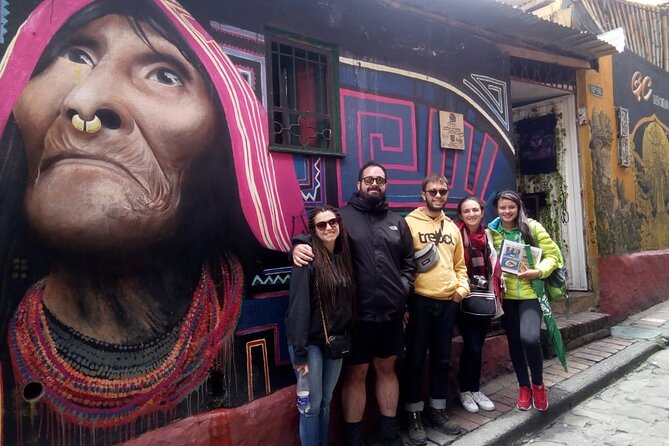
The tour’s themes are broad on purpose. You’ll start with the origins of the capital and the indigenous tribe that inhabited Bogotá before colonization took over the story. From there, you’ll follow the legend trail—El Dorado—and see how myth and power shaped what people believed about the region.
Then it shifts into Colombia’s timeline: colonization, independence, and the events that defined the country later. One of the heavier parts is the Bogotazo, tied to the violence that followed. The guide doesn’t just drop terms; the stops are meant to make those ideas feel tied to real locations you can point to on a map.
You’ll also get cultural anchors that keep this from being only political history. Fernando Botero shows up through discussion of his influence in Bogotá culture, and García Márquez comes in through the idea of social life and literary imagination in the city. Even education, art, gastronomy, and architecture get woven into the walk so you finish with a sense of daily Bogotá—not just textbook facts.
Plaza de Bolívar de Bogotá: The Power-Building Start of the Walk
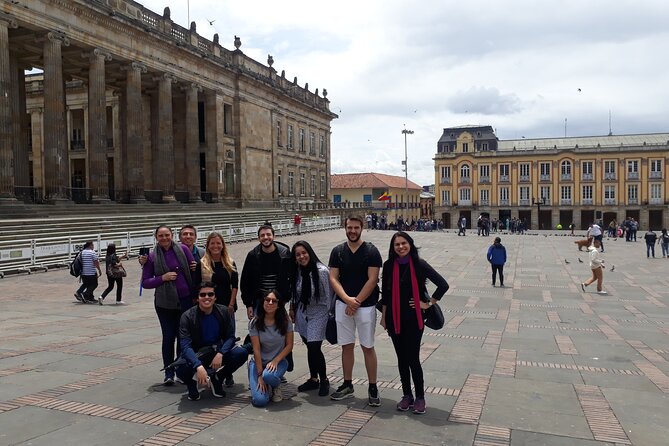
Plaza de Bolívar is the classic opening for a reason. You’ll spend about 30 minutes here, and it sets up how Bogotá began as a capital city. This is where the most important buildings come into view, and the guide uses the scene to explain how the city organized authority and public life around the plaza.
Practical note: it’s an easy stop to absorb because the space is open and you’re not constantly navigating crowds of side streets. Even if you’re tired after a flight or a day of wandering, this is a place where you can pause and reset.
What I like about starting here is the clarity. You quickly learn the city’s “center of gravity,” and later stops make more sense because you understand the original structure.
Teatro Colón Bogotá: A Quick Stop With Big Historical Gravity
Next comes Teatro Colón Bogotá, where you’ll have about 15 minutes. This isn’t treated as just a pretty building. You’ll connect it to Simón Bolívar’s presence, which gives the theater a historical weight beyond performances.
That short timing can feel perfect if you’re doing Bogotá as a walking city. You get the moment, you learn the meaning, and you keep moving. If you tend to get restless in long museum stops, this kind of quick landmark-and-story sequence fits better.
The only downside is the brevity. If you’re hoping for an in-depth look at the building itself or performances, you’ll likely want a separate plan for a longer visit. But as a historical orientation, it works.
Museos del Banco de la República: Botero’s Name, the Cultural Block, and Why It Matters
You’ll spend around 15 minutes at the Museums del Banco de la República area, and the key detail is that it’s presented from outside. The goal is to show you why this cultural block matters and how it connects to the wider story of the neighborhood.
Fernando Botero comes into the conversation here. Even if you’ve seen his art elsewhere, this stop helps you understand why he’s such a recognizable part of Bogotá’s cultural identity. It also gives you a better sense of how art and public institutions sit side by side in the city.
This is one of the stops that feels like a “bridge.” You move from plazas and political anchors into cultural and artistic context. If you’re the type who likes to understand how a city thinks and expresses itself, you’ll appreciate this shift.
Chorro del Quevedo: Bogotá’s Foundation Square and the Chicha Prohibition Story
Plaza del Chorro del Quevedo is about 20 minutes and focuses on Bogotá’s foundation themes. You’ll learn why this square is important, and the guide also brings in a fascinating cultural history: chicha and why it was prohibited.
This is the kind of stop that adds texture. It’s not only about who ruled or when borders shifted. It’s about what people drank, what communities practiced, and how authorities tried to control everyday life.
If you’re curious about Colombia beyond the postcard, this is a great moment. You’ll leave with a more human understanding of the city—one where culture and rules clash in real ways.
Plaza de Mercado La Concordia: Where You Can Try Chicha and Local Juices
La Concordia is another about 20 minutes, and it’s where the tour turns more “local.” You’ll be in a market square setting, which gives you a different tempo than the formal plazas.
At this stop, you can drink chicha, have a traditional Colombian juice, or buy a souvenir. The important part for budgeting is that drinks and purchases are not included, so you’ll be making your own choices here.
I like that this stop acknowledges the senses of travel. History is great, but it sticks better when you also experience the smells, chatter, and food culture that shaped daily life. If you’re hungry, this is a good time to get a small taste—just keep an eye on timing so you can stay with the group.
Eje Ambiental: Monserrate Views and García Márquez Social Spots
About 15 minutes at Eje Ambiental gives you a view toward Monserrate. The guide also explains how to get to this hill, which is useful because Monserrate is a major Bogotá destination and not always easy for first-timers to plan.
This stop also connects to Gabriel García Márquez, including the idea of a square where he used to go for social meetings. Some versions of the experience also highlight the García Márquez cultural space area, which makes the connection feel less abstract.
This is a strong stop for two reasons: you get a viewpoint angle, and you connect literature to place. Even if you’re not a hardcore book person, the concept helps you understand Bogotá as a city of ideas, not just traffic and altitude.
Jorge Eliécer Gaitán Monument: The Bogotazo Connection
You’ll spend around 20 minutes at the Jorge Eliécer Gaitán monument. The guide explains who Gaitán was and why he mattered, and then ties that importance directly to the Bogotazo and the broader violence in Colombia.
This is one of the more serious sections of the walk. It’s not a “fun facts” stop, and that’s a good thing. Bogotá’s modern identity is tied to these turning points, and placing them at a monument helps the story feel real rather than distant.
If you’re sensitive to heavy history, pace yourself here. The tour is structured so you don’t get stuck too long in one topic, but you’ll still want a moment to absorb what you’re hearing.
Plazoleta del Rosario Finale: Emerald Market Vibes and Where to Go Next
The walk ends at Plazoleta del Rosario after about 20 minutes at the final stop. This area is known for its emerald market, and you’ll learn what the tour is pointing at when it comes to informal stone markets.
The finale is also where you get practical help. You’ll receive recommendations for restaurants and ideas for what to do during the rest of your stay in Bogotá. For many people, this is the most valuable part of a first-day tour: you learn the story and then you get help turning that knowledge into plans.
Also, because the tour finishes in this area, it’s easier to continue exploring nearby without having to re-map your evening from scratch.
Is the $19.77 Price Good Value for a 3-Hour History Tour?
At $19.77 per person, this tour lands in the “cheap and useful” category for Bogotá. The reason it feels like value isn’t only the price. It’s the structure: you get a guide, multiple central stops, and free admission for the key viewing points listed for each location.
You’re also paying for orientation. If you’ve ever wandered a city center without context and felt like you were just walking in circles, a tour like this prevents that. You’ll leave knowing the roles of Candelaria’s streets, the meaning of major plazas, and how art and writers fit into Bogotá’s public spaces.
Group discounts are included, and with a maximum of 30 travelers, you can usually expect a more manageable pace than huge bus-style tours. And because it uses a mobile ticket, you should be able to show up cleanly without hassle.
Bookings can be made ahead (on average about a week in advance), so if your schedule is tight, lock it in early rather than hoping for last-minute availability.
Who Should Book This Bogotá Historical Tour (and Who Might Not)
This is a good pick if you want a clear introduction to Bogotá’s history and culture without committing to a full-day itinerary. It’s also great if you like learning through walking—seeing buildings and plazas while someone explains what they mean.
It’s especially useful if you’re interested in the intersection of culture and politics: indigenous roots, colonization, independence, and later events like the Bogotazo, plus how artists and writers show up in the city.
I think it’s less ideal if you need a tour with heavy museum time. Several key stops are presented from outside, and this experience stays focused on streets, squares, and landmark context rather than deep indoor exhibits.
Finally, it suits travelers with moderate physical fitness. You’re walking through the center, and while the pacing is designed to avoid exhaustion, you’ll still want decent shoes and a weather plan.
Should You Book This Tour or Skip It?
Book it if you want to understand Bogotá’s center quickly: why the plazas matter, how chicha history fits into the story, and how figures like Botero and García Márquez connect to real locations. The pacing also appeals to first-timers because it’s long enough to feel like you learned something, but short enough that you can still enjoy the rest of your day.
Skip it if you already know Bogotá well and you’re only looking for in-depth museum visits or long, inside-the-building experiences. This one is built for orientation and context, not for hours of ticketed indoor time.
If you can only choose one “history” activity early in your trip, this is a smart starting point. You’ll finish the walk with a clearer map in your head and better plans for what to do next around Rosario Square.
FAQ
What is the duration of the Bogotá historical tour?
It lasts about 3 hours.
Where does the tour start and where does it end?
It starts at Cra. 7 #11-10 in La Candelaria and ends at Av Jimenez de Quesada #6-71 in La Candelaria, with the final finish at Rosario Square.
Is admission included for the stops?
The listed stops are free to access, and you are shown the areas of interest from the viewing points described.
What’s included in the tour price?
You get a tourist guide and the guided tour of the center’s areas of interest.
Are snacks or drinks included?
No. Snacks, drinks, and meals are not included, though you can buy or try items at certain stops.
Does the tour run in bad weather?
It will not be cancelled due to bad weather, so it’s recommended to bring an umbrella.
How big is the group?
The tour has a maximum of 30 travelers.
Is free cancellation available?
Yes, you can cancel for a full refund up to 24 hours in advance. If you cancel later than that, the amount you paid will not be refunded.