REVIEW · DIJON
Dijon: Private Walking Tour – Discover History & Heritage
Book on GetYourGuide →Operated by TOUR FRANCE EXPERIENCE · Bookable on GetYourGuide
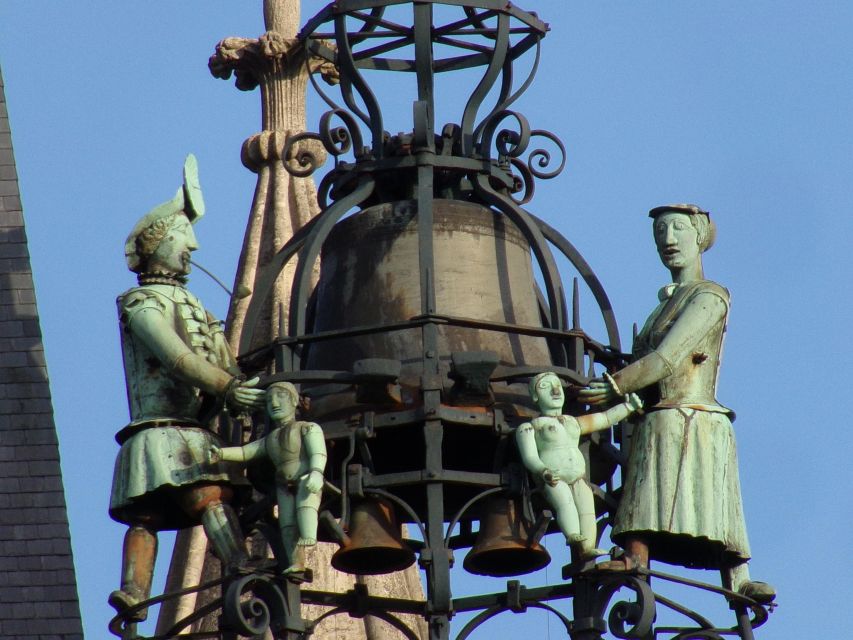
Dijon has a secret in plain sight. This private 2-hour walk is built around the Parcours de la Chouette (Owl’s Journey), where the city’s symbol clicks into place block by block. I especially like the way you get hands-on lore, including the chance to touch an owl for good fortune, and I love spotting Notre-Dame’s jacquemart details up close. One possible drawback: at $235 per person, it can feel pricey if you just want a quick stroll.
Because it’s private, your guide can steer the pacing toward what you care about, and you’ll hear the kinds of explanations you simply don’t get from a map. Options are English, French, and German, and you start right at Place Notre-Dame with your guide holding a sign with your name.
In This Review
- Key highlights you will actually use
- Where the tour starts: Place Notre-Dame and an easy first win
- Notre-Dame church: Gothic architecture and the jacquemart bell
- Touching Dijon’s owl: the Parcours de la Chouette idea
- Walking the historic center: how the route turns into meaning
- Outside the Ducal Palace: Burgundy power in plain sight
- Place François Rude: medieval and Renaissance facades, plus the Eiffel connection
- Price and value: what $235 buys you in real terms
- Private guide perks: customization, pacing, and language options
- Who this tour suits best (and who should skip it)
- Practical tips for a smooth Owl’s Journey
- Should you book this Dijon private walking tour?
- FAQ
- Where do I meet the guide?
- How long is the tour?
- Is this tour private?
- What language options are available?
- What’s included in the price?
- Are entry tickets included?
- Is transportation included?
- Is there a luggage limit?
- Is the tour suitable for mobility impairments?
- Are there cancellation options?
Key highlights you will actually use
- Owl lore you can follow on the Parcours de la Chouette route
- Notre-Dame Gothic focus plus the bell-striking jacquemart
- Ducal Palace exterior with context about Burgundy power and today’s town hall/museum use
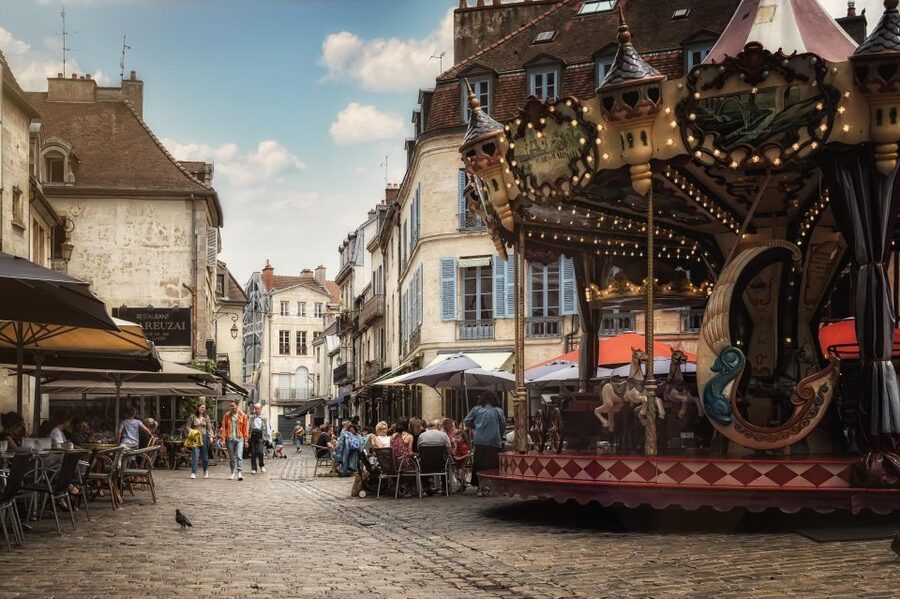
- Place François Rude: medieval and Renaissance facades, a fountain, and an Eiffel carousel connection
- A guide-driven walk where the route can be adjusted to your interests
Where the tour starts: Place Notre-Dame and an easy first win
I like tours that help you start smart, not late. Here, you meet at Place Notre-Dame, outside the tourism office, and your guide is meant to be holding a signboard with your name. That sounds small, but it matters in a busy old center: you can get going right away without wandering.
From the first minutes, you’re set up to understand Dijon as a place with symbols, not just buildings. The guide’s job isn’t to recite dates. It’s to connect the dots between landmarks and the city’s identity—especially the owl.
Notre-Dame church: Gothic architecture and the jacquemart bell
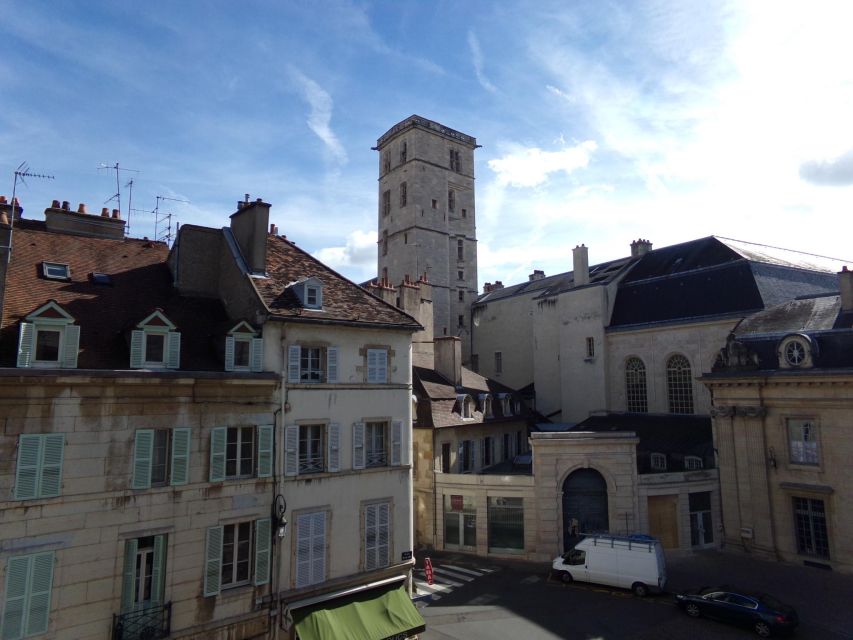
The 13th-century Church of Notre-Dame is one of those stops where the street-level details reward close looking. You’ll take in the Gothic architecture, and you’ll also focus on an element that turns a façade into a small storybook.
Look for the jacquemart, the bell-striking automaton that hits a large bell with a hammer. Even if you’ve seen similar figures elsewhere, this is a fun Dijon-specific moment because it’s tied to the rhythm of the city—bells used to shape daily life, not just mark time.
Practical note: this is a walking tour, and what you’re shown is largely exterior-focused. So if your goal is interior ticket time, you should plan on enjoying the church from the outside and using your own schedule for any deeper access later.
Touching Dijon’s owl: the Parcours de la Chouette idea
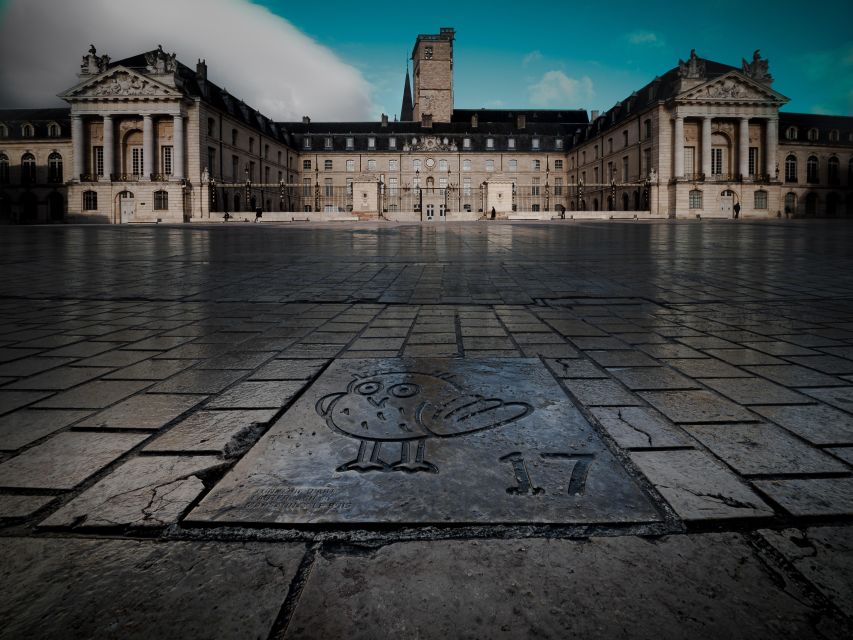
The tour follows the Parcours de la Chouette, and that’s the heart of why this experience feels different. Instead of doing a generic highlights loop, you’re tracing how Dijon’s owl symbol is woven into the historical center’s corners and viewpoints.
One of the most memorable elements is the simple action you’re invited to take: you can touch the owl figure lying on the Notre-Dame church for good fortune. That’s the kind of cultural detail that sticks. It’s not just symbolism for photos; it’s an explanation-led tradition that helps you understand why the owl became the city’s emblem.
If you like travel that turns sightseeing into story, this approach works. You’re not just looking at sights; you’re learning how people in Dijon historically explained themselves—through emblems, rituals, and repeated motifs you can still find today.
Walking the historic center: how the route turns into meaning
This is a private walking tour, so the experience is meant to feel like a guided conversation with the city. You’ll stroll charming streets in the historical center while your guide explains the background behind Dijon’s symbols and landmarks.
What I like about this format is the pacing. In a two-hour window, you don’t want to sprint across town. This tour stays focused enough that you can actually notice the textures—stone, facades, street layout—while the guide adds context.
Also, it’s not a one-size-fits-all script. You can customize the time to your interests. If you care more about symbolism, you’ll spend more time on the owl narrative. If architecture calls to you, you can linger around Gothic lines and civic landmarks a bit more. That flexibility is a big part of the value equation here.
Outside the Ducal Palace: Burgundy power in plain sight
One of Dijon’s big draws is the Palace of the Dukes of Burgundy, and the tour gives you the chance to see it in context without turning it into a ticket-driven marathon. You’ll discover the exterior of this monument, which dates back to the 14th/15th century.
Here’s why that matters: the Ducal Palace isn’t only a pretty old building. It’s the kind of structure that tells you how power was organized when Burgundy mattered politically and culturally. Seeing it from outside helps you place it in your mental map—then later, if you choose to go in on another day, you’ll understand what you’re looking at.
Today, the palace houses the city’s town hall and a museum. Even if you don’t enter during this walk, that detail changes how you look at it. It’s not a frozen relic; it’s still part of how Dijon functions.
Place François Rude: medieval and Renaissance facades, plus the Eiffel connection
After the palace area, the tour rounds out with a stop that feels both picturesque and informative: Place François Rude. This is the kind of square that works well in a short guided window because it combines architecture, public space, and stories in one place.
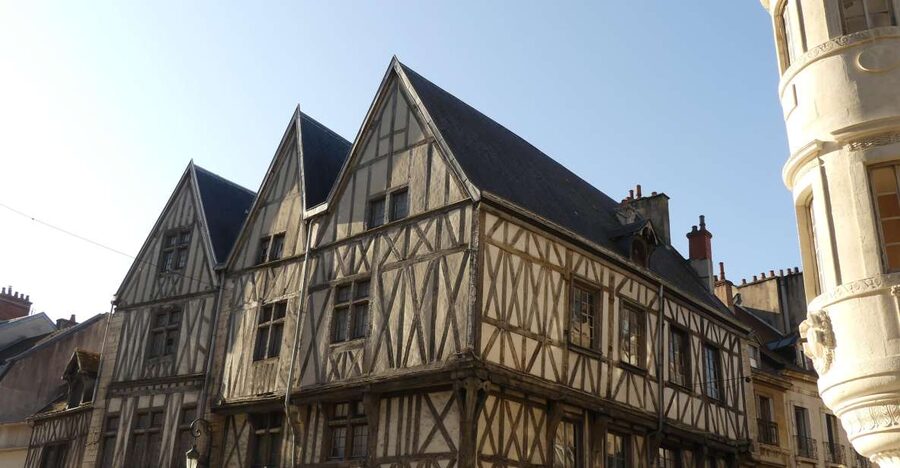
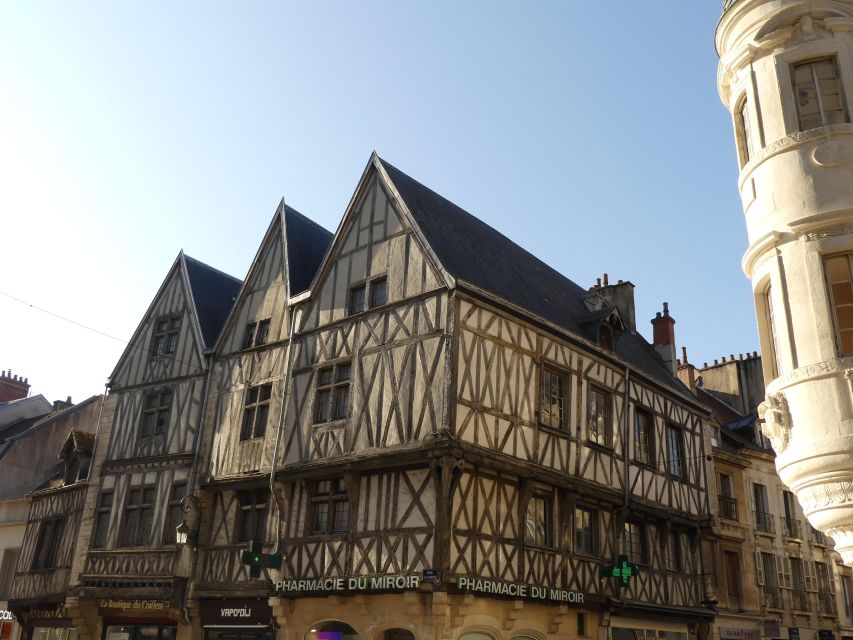
You’ll see houses from the Middle Ages and the Renaissance, which is a useful reminder that cities grow in layers. One side of the square can feel older, another can feel like a different era’s mood, and your guide helps you notice what changed and why it matters.
Don’t skip the details you’re told to look for: there’s a fountain, and there’s also a carousel featuring reproductions of Gustave Eiffel. The Eiffel tie-in is specific and fun, too—he was born in Dijon in 1832. It’s a satisfying little modern culture link at the end of an old-center route.
Price and value: what $235 buys you in real terms
At $235 per person for a 2-hour private walk, the price is the first thing to question. You’re not paying for a bus ride or included museum entry—you’re paying for a local guide and a focused route.
So ask yourself what you’re buying with your money:
- If you want to follow a route with context—especially the owl symbolism and specific architecture details—then a guide makes the whole experience feel twice as long.
- If you’d rather wander on your own and only skim the basics, you may not feel great about the cost.
One useful clue is the kind of guidance this tour tends to attract. Local guides such as Sylvain and Fred are described in past experiences as personable and able to connect history, literature, and even word origins. That matters because it changes the way you remember places. You’ll likely leave with more than photos—you’ll leave with explanations.
Private guide perks: customization, pacing, and language options
A private walking tour is about control. Here you get:
- A guide who can customize the tour according to your interests and needs
- A focused two-hour schedule, rather than a long day of hopping between distant sights
- English, French, or German narration, so you can choose the language that lets you actually follow the story
That customization is especially useful in Dijon because the city can be experienced in different ways. You might be there for architecture, for symbolism, or for civic history. This tour can lean toward what you want most while keeping the walk efficient.
Who this tour suits best (and who should skip it)
This is a great fit if you:
- Like guided storytelling and city symbols you can track in the streets
- Want a short, high-context intro to Dijon’s historical center
- Care about Gothic architecture details and the jacquemart bell automaton
- Prefer a private format with flexible pacing
It may not be ideal if you:
- Only want a self-guided highlights loop with minimal explanation
- Need long breaks or a non-walking schedule
- Are traveling with large luggage or bags, since luggage/large bags aren’t allowed
Also, this tour isn’t suitable for people with mobility impairments, so you’ll want to look for an alternative format if that applies.
Practical tips for a smooth Owl’s Journey
This is a walking tour in a historic center, so simple planning helps:
- Wear comfortable shoes. You’ll be moving for the full two hours.
- Keep your hands free. The tour includes a moment where you’ll touch an owl figure on the Notre-Dame church for good fortune, so you’ll appreciate having nothing cumbersome.
- Bring curiosity. The guide’s best moments are the explanations that make you look twice at what you thought you already understood.
Should you book this Dijon private walking tour?
I’d book this if you want Dijon with meaning, not just sights. The combination of the Owl’s Journey, Notre-Dame’s Gothic details, the jacquemart, and the civic storyline around the Ducal Palace gives you a tight route with strong payoff. The Eiffel carousel and Place François Rude add a satisfying human-scale ending.
I’d pause if the price feels high for you. Two hours is short, and the value depends on whether you’ll really use a guide for interpretation. If you’re the type who enjoys symbols, architecture details, and learning how word and story connect to place, this tour is likely worth it.
If you want, tell me your travel dates and what you care about most—architecture, symbolism, or Burgundian history—and I’ll suggest what to prioritize during your two hours.
FAQ
Where do I meet the guide?
You meet outside the tourism office on Place Notre-Dame, and the guide is expected to be holding a signboard with your name.
How long is the tour?
The tour lasts 2 hours.
Is this tour private?
Yes, it’s a private walking tour.
What language options are available?
The live guide is available in English, French, and German.
What’s included in the price?
It includes a private walking tour and a local tour guide.
Are entry tickets included?
No. Entry tickets are not included.
Is transportation included?
No. Transportation is not included.
Is there a luggage limit?
Yes. Luggage or large bags are not allowed.
Is the tour suitable for mobility impairments?
No. It’s not suitable for people with mobility impairments.
Are there cancellation options?
Yes. Free cancellation is available up to 24 hours in advance for a full refund.