REVIEW · QUEDLINBURG
Quedlinburg UNESCO World Heritage Group Tour (private)
Book on GetYourGuide →Operated by Die freundliche Quedlinburger Stadtinfo · Bookable on GetYourGuide
Quedlinburg feels like a living postcard of Germany, and this private walk is one of the best ways to see why. I love the half-timbered streets and historic churches up close, and the Schlossberg section where the big sights and views come together fast. One key catch: the tour runs with a German-only guide, so you’ll want enough German comfort (or be okay with gesturing and visual cues) if language is an issue for your group.
In just 2 hours, you’ll cover a lot of ground without turning it into a sprint. The route is built around the town center and the hill above it, starting right in front of the Quedlinburger city information office on the market square (the sign is green), with a guide who helps you spot details you might otherwise walk past.
If you’re traveling with kids, this setup is hard to beat: children and young people up to 16 go free, and the guide also includes practical restaurant-style recommendations for where to eat after the walk.
In This Review
- Key highlights worth your attention
- Your 2-hour Quedlinburg plan: market square to Schlossberg
- Town Hall, St. Benedikti, Schuhhof, and the medieval streets you’ll remember
- Half-cave museum and the “why” behind Quedlinburg’s look
- Blasii church and the half-timbered variety you can actually spot
- Klopstock House and the Lyonel-Feininger Museum on the Schlossberg climb
- St. Servatii Collegiate Church and castle gardens: what you’ll see from outside
- Food recommendations included: how to use the tour after it ends
- Price and value: $117 per group up to 12, and free under 16
- German-only guide and pacing: a practical consideration
- Terrain, timing, and weather: what to expect day-of
- Who should book this Quedlinburg private tour?
- Should you book this private Quedlinburg UNESCO tour?
- FAQ
- How long is the Quedlinburg UNESCO World Heritage private tour?
- How much does the tour cost for a private group?
- Where does the tour start?
- What language is the live tour guide?
- Does this tour include entry into St. Servatii Collegiate Church?
- Is the tour weather dependent?
- What kind of walking surfaces should I expect?
- Is the tour suitable for children?
- What’s included in the tour besides sightseeing?
Key highlights worth your attention
- A UNESCO old-town tour with a real hill climb to Schlossberg in only 2 hours
- Schlossberg landmarks named on the route, including Klopstock House and the Lyonel-Feininger Museum
- Half-timbered architecture focus, plus stops tied to famous people from Quedlinburg
- Food recommendations included, so you don’t leave hungry or aimless
- Skip-the-ticket-line format plus a live guide in German
- Free for visitors up to age 16, making it unusually good value for families
Your 2-hour Quedlinburg plan: market square to Schlossberg
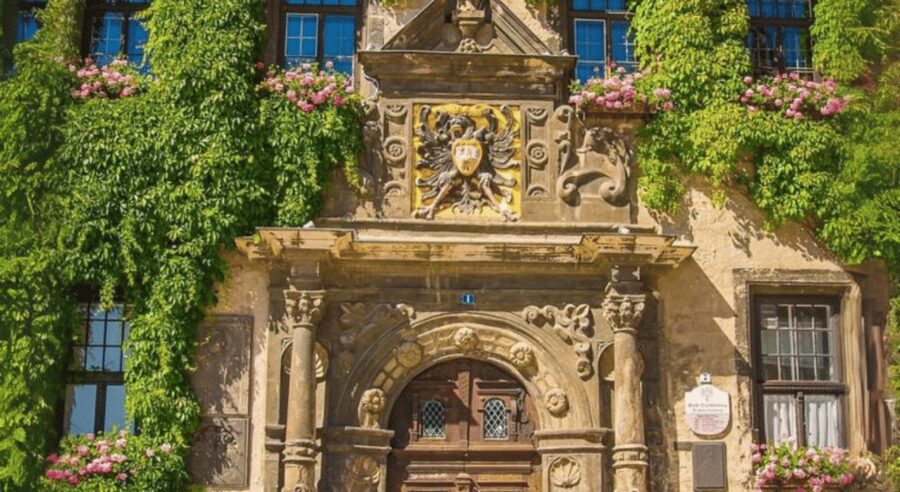
This is a classic Quedlinburg route, but smartly paced. You meet the guide at the Quedlinburger Stadtinformation right in front of the building on the market square (look for the green city-info sign). From there, the tour moves through the old town first, then up to the Schlossberg, where the most dramatic, story-heavy sights sit.
Because it’s private, you’re not stuck in a slow line behind strangers or rushing through at a pace that doesn’t fit your group. The tour is designed for a single 2-hour window, which matters if you’re touring Northern Germany on a tight schedule and want the “wow” without losing the whole morning or afternoon.
Expect walking on cobblestones, and you should be prepared for a steeper section on the Schlossberg. It’s not a dealbreaker, but it’s the kind of terrain where comfortable shoes win.
Town Hall, St. Benedikti, Schuhhof, and the medieval streets you’ll remember
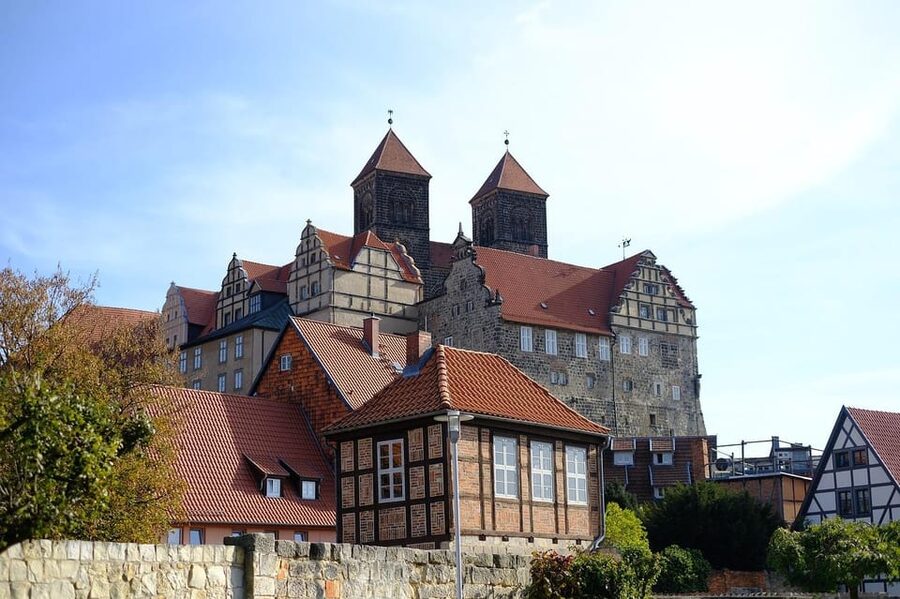
The old-town portion is built around landmarks that anchor the city’s layout. You start near the market area and work your way past the impressive town hall, then onward to the market church of St. Benedikti. Even if you’ve seen dozens of German town halls and church spires, Quedlinburg has a way of making them feel specific—like they belong to this exact place, not a template.
A standout part of this route is how it treats streets and architecture like evidence. You’re not just told what you’re looking at; you get prompted to notice how the old center formed, how the buildings relate to the town’s history, and why certain spots became important.
Stops like the Schuhhof and the named stop called the Hell (it’s part of the tour route) also help you connect the dots. They break up the bigger monuments and keep the tour grounded in the places where daily life would have played out. That’s what makes these short historic walks feel satisfying instead of like a checklist.
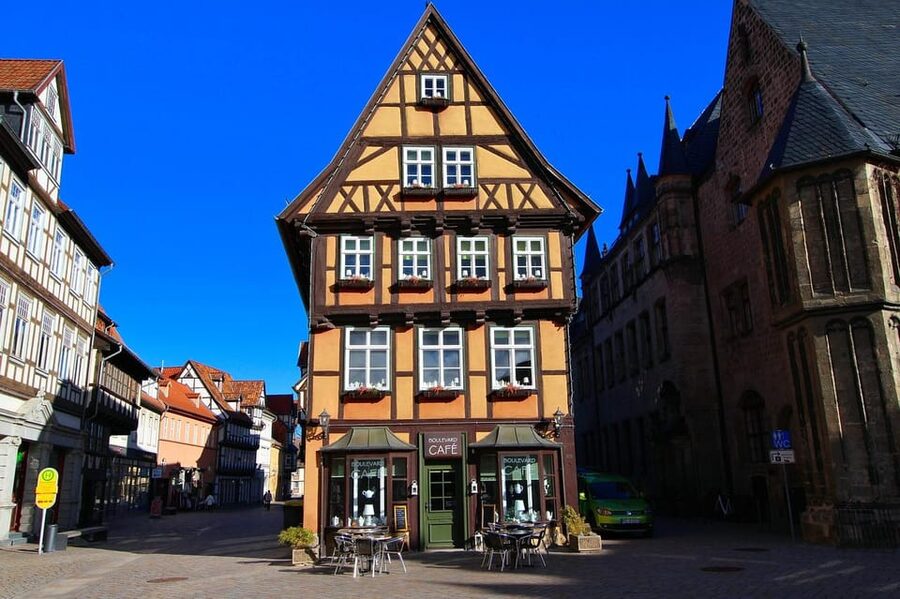
If you’re someone who likes half-timbered houses (and you’re probably here for that), this section sets you up well. By the time you reach the hill above, you’ll have a better eye for what you’re seeing.
Half-cave museum and the “why” behind Quedlinburg’s look
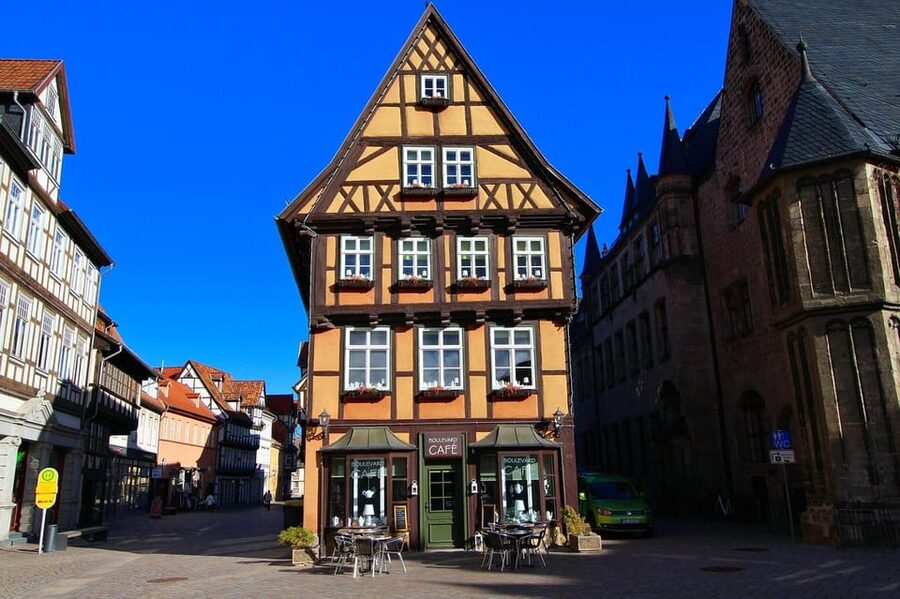
Quedlinburg is famous for its older architecture, especially the half-timbered style, but the best tours explain the “why.” Here, the included stop at the half-cave museum adds context that you can’t get from photos alone.
Even without stepping inside everything, the tour gives you an idea of how people used their surroundings and resources over time. That matters in Quedlinburg because the city’s age is part of what you see. The tour frames it as stretching back over 1,100 years, so each stop feels like a time marker rather than random pretty buildings.
One thing I like about putting this kind of context inside a walking tour is that you’re still moving. Instead of sitting through a lecture, you experience the story while you can look up at the shapes of the houses and the angles of the streets.
If you prefer museum-style time (quiet galleries and slow reading), you might still want extra time in Quedlinburg beyond this 2-hour route. But as a first orientation, this museum stop helps the walk click.
Blasii church and the half-timbered variety you can actually spot
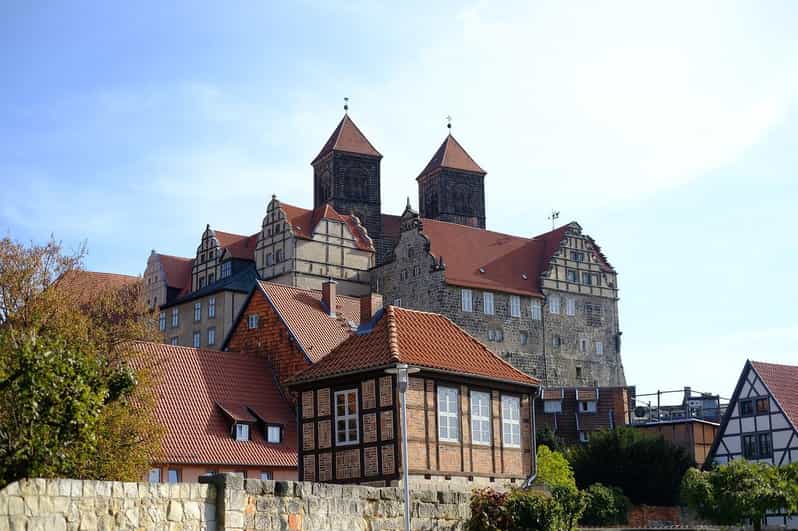
Midway through the old-town walk, you hit the Blasii church, another anchor that gives the city a strong religious and civic rhythm. Churches in older German towns weren’t only about worship; they often shaped how communities organized themselves and how money, power, and local identity developed.
What keeps this from feeling repetitive is that the tour keeps pointing out the variety of half-timbered art. That’s the detail that’s easy to miss when you’re self-guided: not all timber framing is “the same look.” On a guided walk, you can compare patterns, building proportions, and the way designs change as you move through different streets.
You’ll also learn about famous personalities from Quedlinburg, which helps the architecture feel less like frozen decoration and more like a setting where real people lived.
As a practical note: if you’re traveling with someone who hates stairs or long uphill grinds, the old-town portion is the gentler part. You’ll do the harder terrain later on the Schlossberg.
Klopstock House and the Lyonel-Feininger Museum on the Schlossberg climb
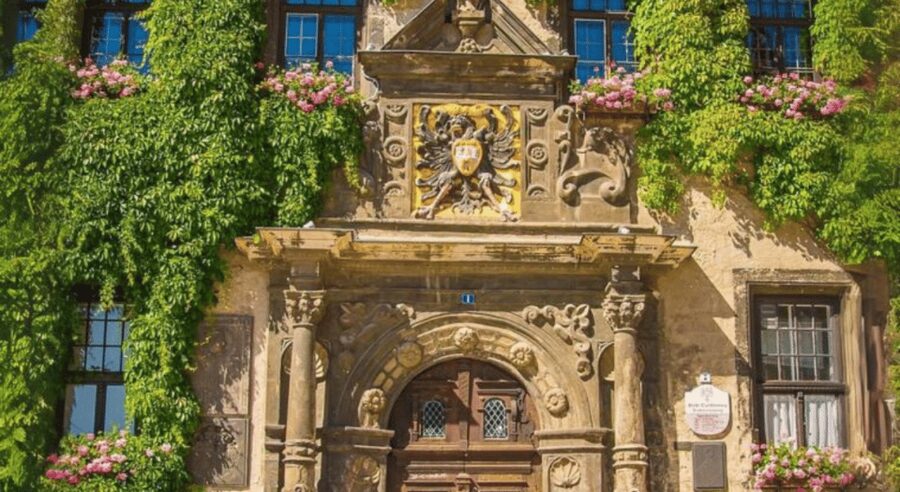
Once the tour shifts up toward Schlossberg, the city starts to feel bigger, and the architecture starts to tell a more dramatic story. You’ll go along the route past Klopstock House and the Lyonel-Feininger Museum, then toward the castle gardens area.
Even if you don’t plan to spend hours inside museum spaces, this kind of guided naming matters. It helps you understand why the museum and the preserved houses are placed where they are, and how cultural life connects to the hilltop setting.
This is also where you get one of the tour’s biggest benefits: you’re working from the perspective of someone who can connect landmarks with meaning. That’s especially useful in Quedlinburg, where a “pretty street” can quickly become a “why does this building look like that?” street once a guide points you in the right direction.
And yes, this is where the tour’s terrain earns its reputation. Cobblestones plus a steeper climb means you’ll want to pace yourself and take the short pauses your guide suggests.
St. Servatii Collegiate Church and castle gardens: what you’ll see from outside
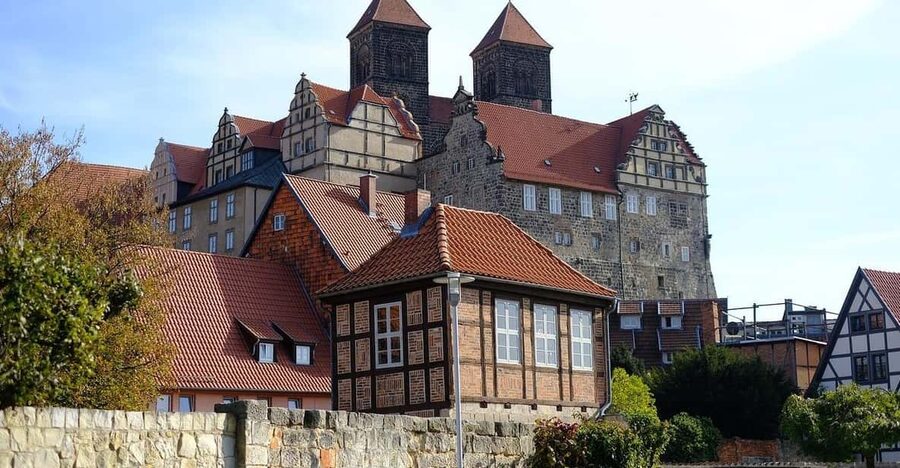
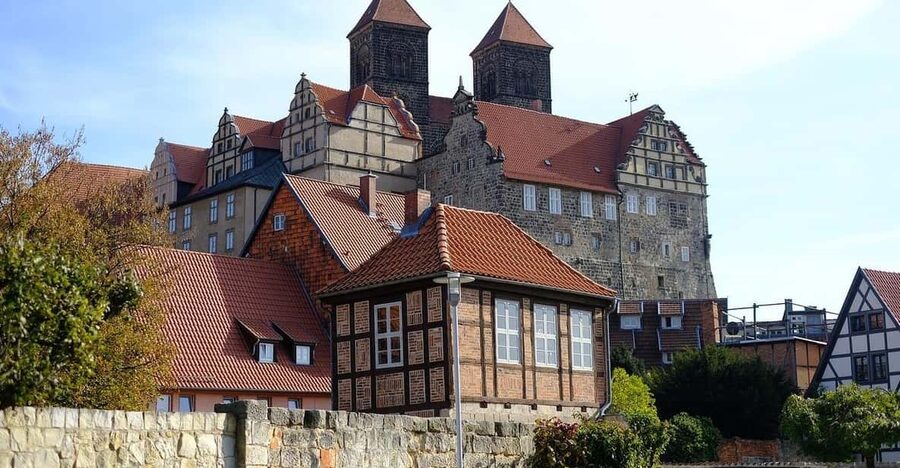
The highlight of the Schlossberg is the area around the St. Servatii Collegiate Church. This stop is a big one, and it’s clearly the emotional peak of the tour.
Important detail: the tour includes the Schlossberg tour and the collegiate church area, but you do not visit the church interior. So you’re appreciating the structure from outside and through the surrounding points of view rather than doing a full inside sightseeing stop.
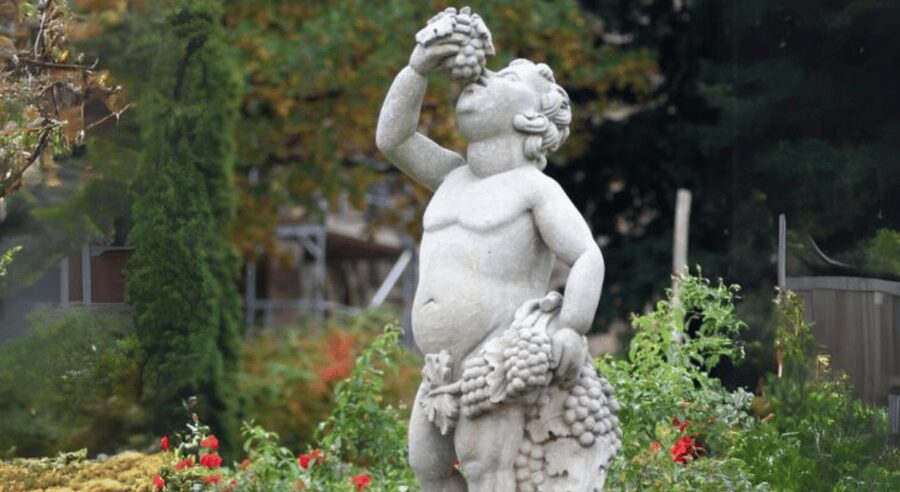
The castle gardens also play a role here. They help break the climb with space and sightlines, so the hilltop doesn’t turn into one long wall of stone and stairs. It’s a classic travel rhythm: monument, perspective, then a calmer pause before the next landmark.
Food recommendations included: how to use the tour after it ends
One of the small-but-useful inclusions is a guide presentation of culinary hotspots and recommendations. That can sound generic, but in practice it’s helpful because you’re walking a UNESCO old town where menus can vary a lot block by block, and tourist traps can lurk close to the best scenery.
After a 2-hour history walk, you don’t want to waste time hunting for a solid meal. This part of the tour is meant to solve that problem quickly. Ask follow-up questions if you can—if you’re craving something specific (quick lunch, local dishes, coffee and cake), this is the moment to align expectations with the guide’s local knowledge.
Price and value: $117 per group up to 12, and free under 16
Let’s talk money in a way that helps you decide.
The tour price is $117 per group up to 12 people for a 2-hour private experience. If you bring a full group of 12, that comes to about $9.75 per person. Even with fewer people, it can still be good value compared with per-person guided tours, especially since you’re getting a live guide, a set route of key sights, and the skip-line element.
The pricing becomes even more attractive for families because it’s free for children and young people up to 16. That’s the kind of discount that can change whether you spend €10-20 on everyone’s “small must-do tour,” or whether you skip it and lose the orientation.
So who wins on value? Families, small friend groups, and anyone who wants a guide to keep the stops focused instead of you trying to assemble Quedlinburg on your own with a map and guesses.
German-only guide and pacing: a practical consideration
This tour is live guided in German, and that’s the biggest decision factor you should plan around. If your group includes non-German speakers, you’ll rely on visuals, gestures, and the guide’s ability to explain through pointing and pace.
There’s also a note worth taking seriously: guides can vary in delivery speed and clarity. One named guide, Klaus, has been highlighted for lots of stories and enthusiasm, but another past experience criticized pronunciation, general presentation, and kid-friendliness. Translation: your enjoyment may depend on how well the guide’s style matches your group.
If you’re traveling with young kids, or if you’re sensitive to fast talking, consider this carefully. The itinerary is easy to enjoy with the eyes, but the history meaning depends on your ability to follow the spoken explanation.
Terrain, timing, and weather: what to expect day-of
This tour runs in all weather conditions—rain or shine—so bring a jacket you’ll actually want to wear. With cobblestones, wet weather can make footing feel different, so keep shoes grippy.
You’ll also be walking outdoors enough that you should plan for short photo pauses and quick wind/rain breaks. The time window is fixed at 2 hours, so there’s no slow wandering. The guide keeps the flow moving while still hitting the key targets.
The Schlossberg portion is the one to watch: it includes a steeper section, so plan a slower pace if someone in your group gets tired on uphill routes.
Who should book this Quedlinburg private tour?
I’d point you here if you:
- Want a fast, high-impact UNESCO orientation that still includes meaningful stops
- Love half-timbered architecture and want help noticing the differences
- Prefer a private group where you can ask questions and keep the tour aligned with your interests
- Are traveling as a family, especially since kids up to 16 are free
- Want practical help with where to eat afterward, not just sightseeing
I’d think twice if you:
- Need an English-language guide
- Want a long museum-style day (this is a 2-hour walk with select included sites)
- Have mobility limits that make cobblestones and a Schlossberg climb hard to manage
Should you book this private Quedlinburg UNESCO tour?
If you’re aiming to understand Quedlinburg quickly and accurately, I think this is a strong choice—especially for families and small groups. The route covers the old town anchors (town hall, key churches, medieval streets), then takes you up to Schlossberg for the big panoramic payoff around St. Servatii and the castle gardens.
You’ll feel the value most if you can use the German guide (or you’re comfortable with visual learning). The other reason to book: it’s structured, short, and ends with helpful food recommendations, so your time after the tour won’t be chaotic.
If you’re comfortable with a German-only experience and you don’t mind cobblestones and a climb, this private format gives you exactly what you want in Quedlinburg: history you can see, and a guide who helps it make sense.
FAQ
How long is the Quedlinburg UNESCO World Heritage private tour?
The tour lasts 2 hours.
How much does the tour cost for a private group?
It costs $117 per group for up to 12 people.
Where does the tour start?
Meet the guide just in front of the Quedlinburger Stadtinformation (city information office) on the market square, identifiable by the green sign.
What language is the live tour guide?
The tour guide speaks German.
Does this tour include entry into St. Servatii Collegiate Church?
No. The church interior is not included; the tour covers the area from outside.
Is the tour weather dependent?
No. It operates in all weather conditions, rain or shine.
What kind of walking surfaces should I expect?
You’ll walk on cobblestone paths and there is a steeper section on the Schlossberg.
Is the tour suitable for children?
Yes. It’s free for children and young people up to 16 years old.
What’s included in the tour besides sightseeing?
You’ll get an old town route covering major landmarks and a Schlossberg route, plus a presentation of culinary hotspots and recommendations.