REVIEW · NARA
World Heritage Kyoto & Nara Uji Authentic Matcha Experience
Book on Viator →Operated by Japan Panoramic Tours · Bookable on Viator
Nara and Uji in one smooth day. You’ll go from Todai-ji and Nara Park deer to a hands-on matcha workshop in Uji, all led by an English-speaking guide on an air-conditioned coach.
I like that the English-speaking guide turns big sites into clear stories without wasting your day, and I like that key admissions and the matcha-making session are built in. That means less planning and fewer “what do we do next?” moments.
The one real catch is walking. You’ll handle stairs and hills at multiple stops, so comfortable shoes matter and this isn’t ideal if you can’t keep moving for long stretches.
In This Review
- Key things that make this tour work
- Why Nara and Uji are a smart combo for one day
- Meeting point, start time, and the bus comfort you’ll feel
- The route into Nara: quick touring with real context
- Kasuga Grand Shrine: start at a centerpiece
- Nara Park and the deer: cute, classic, and a little serious
- Nandaimon (Great South Gate): a short stop with strong impact
- Todai-ji Temple and the Great Buddha: scale you can’t fake
- The World Heritage palace site: why it’s worth including
- Lunch in Uji by the river: a real reset before matcha
- Byodoin Temple and the Phoenix Hall: the 10 yen moment
- Matcha making in a historic tea shop: the hands-on payoff
- Byodoin Omotesando: tasting matcha sweets like a local
- Walking pace, footwear, and what can catch you off guard
- Price and value: what $129.25 buys you (and what it doesn’t)
- Who this tour is best for
- Should you book this Nara and Uji day trip?
- FAQ
- Where is the meeting point and what time does the tour start?
- Does the tour include Wi-Fi or audio guidance?
- How long is the tour?
- What admissions are included?
- Is matcha making included, and what do I do?
- Is lunch provided, and can it be vegetarian?
- Are there places to taste matcha sweets?
- Do I need hotel pickup?
- Is there a lot of walking?
Key things that make this tour work
- World Heritage hits in both Nara and Uji, with guided stops at major temples and shrine areas
- Matcha making in Uji: you prepare your own bowl and learn how to drink it the traditional way
- Nara Park deer time with a chance to see the famous 1,400 deer close up
- Comfort-first transport: air-conditioned bus, Wi-Fi onboard, and multilingual audio guidance
- Good structure for a short trip: an 8.5-hour day that covers a lot without feeling like a sprint
- Smaller group size (up to 38) helps the guide keep track of everyone
Why Nara and Uji are a smart combo for one day
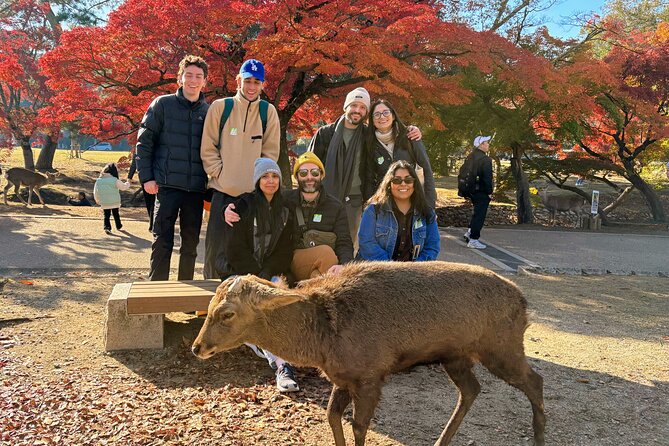
If your Kyoto base is short on time, this route makes sense. You get the classic “Japan postcard” moments in Nara—giant temple scale and the deer park—then you shift to Uji for the tea culture side of Kansai.
What I like is the rhythm. You start with shrines and public spaces, then move into major temple architecture, then finish with food and hands-on matcha. It feels balanced: sacred sights, playful deer encounters, and a final payoff you can taste.
You can also read our reviews of more historical tours in Nara
Meeting point, start time, and the bus comfort you’ll feel
The day starts at Tully’s Coffee – Kyoto Avanti, with a 7:50 am departure. That early start is part of the value: you cover Nara’s highlights the same day and still reach Uji for the matcha portion.
You’re not doing this in a cramped van. The tour uses an air-conditioned vehicle, and there’s Wi-Fi on board plus multilingual audio guidance in English, Spanish, French, Italian, German, Portuguese, and Ukrainian. Translation support is a big deal when you’re walking through temples and trying to understand what you’re looking at.
One note that helps your day go smoothly: the tour ends back at the meeting point, and hotel pickup and drop-off aren’t included. If you’re staying outside central Kyoto, plan your morning train or walk so you arrive on time—late arrivals don’t join midway.
The route into Nara: quick touring with real context
On the way out of Kyoto, the coach passes Fushimi Castle and the Heijo Palace area. Even if you aren’t stepping out at every road-side stop, that matters because it frames where Nara’s story connects to Kyoto-era geography.
This is one of the most practical parts of a full-day coach tour: you trade personal scheduling stress for momentum. Instead of trying to coordinate buses and walking time between landmarks, you let the route do the hard work.
Kasuga Grand Shrine: start at a centerpiece
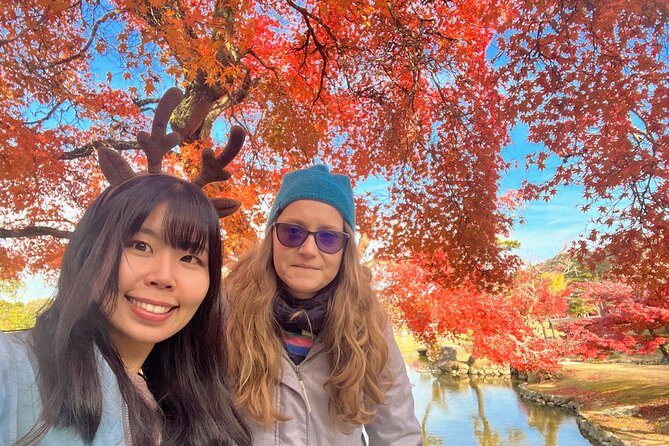
Your first stop is Kasuga Grand Shrine for about 30 minutes, and admission is free. This is a solid opening because it’s a major Nara shrine tied to the city’s identity. You’re there early enough to avoid feeling rushed, with time to walk around and orient yourself before the larger sites.
What to watch for: don’t treat this like a quick photo break. Give yourself a moment to slow down, read what you can, and let the guide explain what makes this shrine important in Nara’s world.
Nara Park and the deer: cute, classic, and a little serious
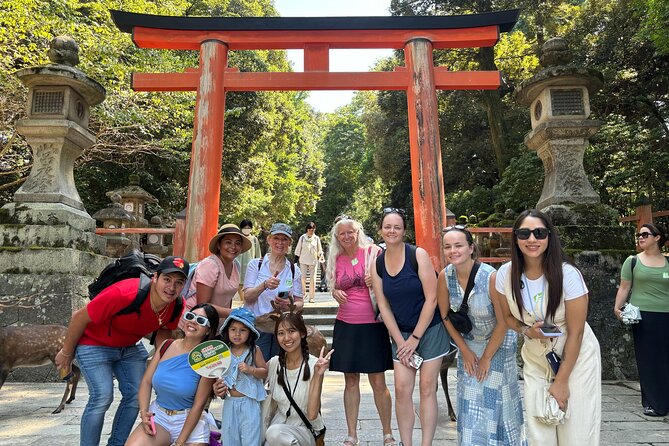
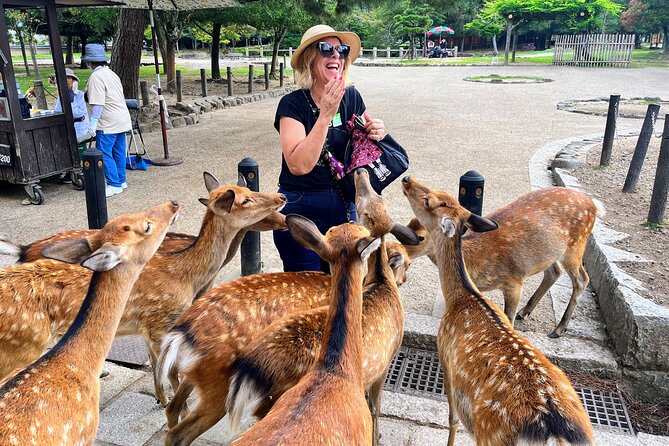
Next is Nara Park for around 30 minutes, also free. This is where you meet the headline attraction: about 1,400 deer living in the park area.
Yes, they’re adorable. And yes, they’ll get close. Based on on-the-ground tips shared by past groups, I’d plan for one practical reality: you’ll likely want to bring yen to buy deer crackers, and you should feed them calmly without turning your back on the interaction.
A few etiquette reminders that keep things safe:
- Keep crackers secured until you’re ready to feed.
- Don’t wave food around like it’s a toy.
- If they come close, stay steady. Some people find the deer can give a firm pinch if you’re not paying attention while feeding.
If you want a tip for photos: put your phone away for the first minutes. Watch the flow, then step into position once you see how the deer move around the paths.
Nandaimon (Great South Gate): a short stop with strong impact
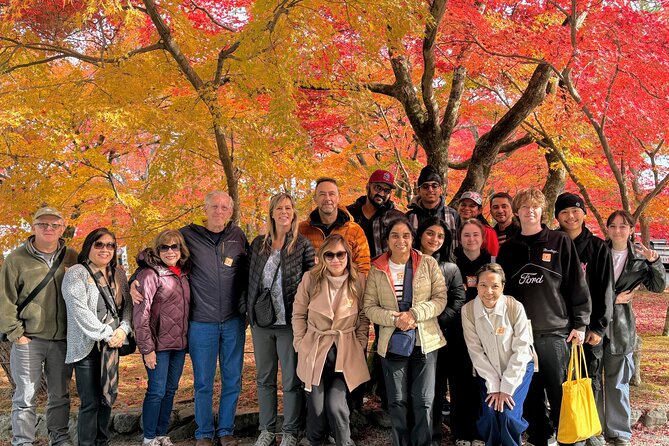
You’ll also see Nandaimon, the great South Gate, for about 5 minutes. Admission is free.
Even with a short time window, gates like this are useful because they act like an architectural “threshold.” The best strategy here is simple: walk in, look up, then let your guide place it in context—why the gate matters and what it signals about the temple complex beyond.
If you’re thinking this sounds too quick, remember the day is built around pacing: Todai-ji is where the time expands.
Todai-ji Temple and the Great Buddha: scale you can’t fake
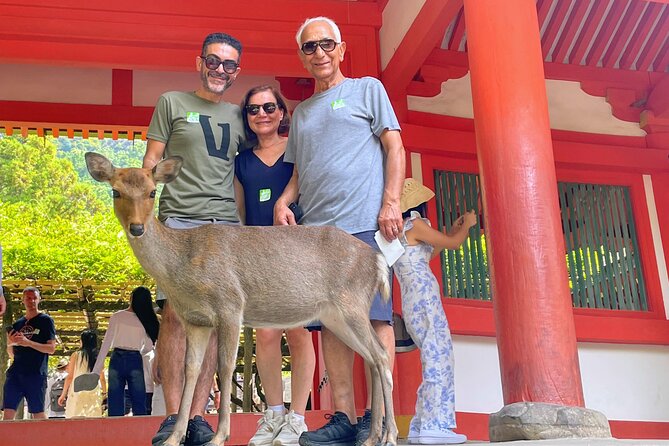
Todai-ji is one of the main reasons people do a Nara day trip. You’ll spend about 40 minutes here, with admission included.
What makes Todai-ji special is the sheer physical statement. The temple houses the Great Buddha of Nara, and it’s known as one of the world’s largest wooden buildings. Even if you’ve seen temple photos before, that scale hits differently in person.
Here’s how to get the most out of your time without burning out:
- Focus on the “big picture” first: where the main hall sits and how the structure dominates the area.
- Then use your guide’s explanations to connect what you’re seeing to why it matters.
- Leave room to glance around the grounds after the main viewing area—those in-between moments often become your favorite photos.
And because this is a coach tour, you won’t be stuck wandering with a dead phone battery trying to figure it out alone. The guide keeps the flow moving, but you still get time to look.
The World Heritage palace site: why it’s worth including
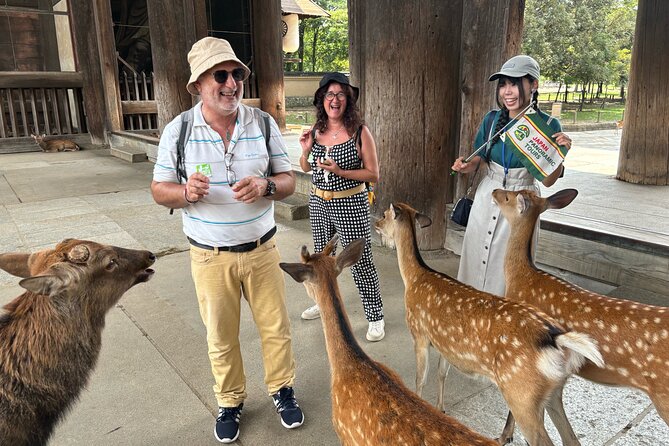
A palace site is included as one of the World Heritage Sites of Nara. Even if you’re not spending as long here as you do at Todai-ji, that inclusion matters because it rounds out Nara beyond temples.
Instead of treating Nara as only a religious stop, you get a sense of how the city’s political and cultural life shaped the monumental sites you’re seeing today. It’s the “how the pieces fit” part of the day.
If your schedule is tight, this kind of World Heritage framing is exactly what you’re paying for. Otherwise, you might see beautiful buildings but miss the bigger picture connecting them.
Lunch in Uji by the river: a real reset before matcha
After Nara, you head to the Uji area. Lunch is about 50 minutes at a restaurant along the Uji River, and you can choose a traditional Japanese set meal. A vegetarian option is available if you indicate it when making your reservation.
This part is more than food—it’s your break before the matcha workshop. You’ll feel the difference between rushing lunch and sitting down. The set meal format also reduces decision fatigue, especially if you’re hungry after a morning of walking and deer encounters.
One practical heads-up: the restaurant may change due to operational reasons. If you’re picky about dietary needs, aim to handle vegetarian requests ahead of time—arrangements can be made up to 2 days before the tour date.
Byodoin Temple and the Phoenix Hall: the 10 yen moment
Your next Uji stop is Byodoin Temple for about 40 minutes, with admission included.
Byodoin is famous for the Phoenix Hall, a structure so iconic it’s depicted on the 10 yen coin. Seeing it in person gives you that “I’ve seen this before” recognition, but with real-world scale and detail.
How to experience it well:
- Don’t sprint through the viewing area.
- Let your guide point out what makes the hall distinctive.
- If you’re a photographer, give yourself a short moment to wait for lighter crowds to pass through the area.
This stop tends to feel like the calm midpoint of the day, right after lunch and before you start tasting sweets.
Matcha making in a historic tea shop: the hands-on payoff
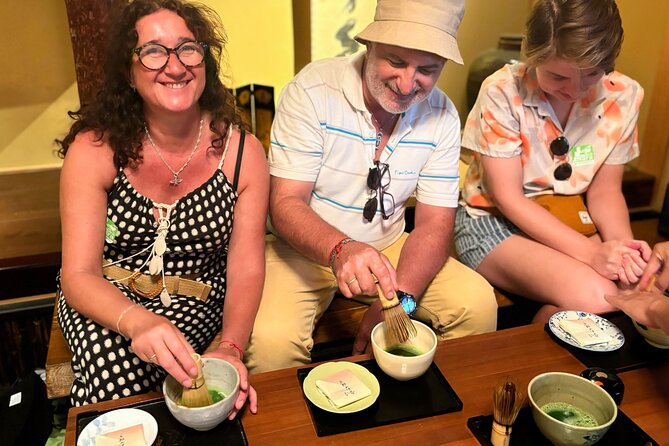
Now comes the tour’s signature moment: a matcha-making experience at a historic tea shop with over 500 years of tradition. You’ll spend about 30 minutes there, and admission is included.
This is not a quick demonstration. You prepare your own bowl of matcha and learn the proper traditional way to drink it. The best part is that you leave with a sensory memory—smell, texture, and taste—rather than just a photo of a cup.
What to expect during the workshop:
- Guided steps for making matcha.
- Time to taste what you made.
- A reset in focus, because it’s easier to remember a process than a list of facts.
If you want to impress your future self later, take note of what you notice first: aroma, color, and how the flavor feels on your tongue. Matcha is one of those “tiny details” drinks—your brain catches them when you’re making it, not just watching.
Byodoin Omotesando: tasting matcha sweets like a local
After making matcha, you’ll get a walk around Byodoin Omotesando for about 30 minutes. This is your chance to taste matcha sweets.
This is a smart finish. You already understand the tea now, so desserts feel connected rather than random. If you’re trying to pace your shopping, I’d treat this like a browsing window: pick one or two treats, not five.
Also, since this is walk-and-taste time, keep your energy for the final stretch. The day ends back at the meeting point, and you’ll want to feel good on the way out.
Walking pace, footwear, and what can catch you off guard
This tour includes a fair amount of walking. The details matter: you’ll walk including stairs and hills at each place, and joining late isn’t feasible.
I’d plan for two types of effort:
- Short uphill or stair bursts inside temple areas.
- Extra walking from where the bus parks to the actual entrance of historic sites.
For shoes, think sturdy, grippy soles. Bring water if you can. And if you’re planning to feed deer, consider wearing clothing that can handle close contact.
Heat can also change the experience. In hotter weather, you’ll feel the walking more than usual. The air-conditioned bus helps, but you still spend time outside at major stops.
Price and value: what $129.25 buys you (and what it doesn’t)
At $129.25 per person, you’re paying for speed, guidance, and included experiences—not just transport. Here’s what you get for that cost:
- An air-conditioned coach with Wi-Fi onboard
- A professional English-speaking guide
- Admissions for Todai-ji Temple and Byodoin Temple
- The Uji matcha-making experience
- Japanese-style lunch if you select it (vegetarian option available)
That’s meaningful value if you’re short on time or new to the area. Two temple admissions and a workshop alone can be the backbone of the pricing, and the bus + guide ties it together so you don’t lose hours figuring out connections.
What isn’t included: food and drinks unless specified, and there’s no hotel pickup/drop-off. You’ll still spend a bit on on-site extras (like deer crackers if you want them).
Who this tour is best for
This is a great fit if:
- You want a structured full day with minimal planning.
- You’re into a mix of World Heritage sites and hands-on food culture.
- You’d rather ride an AC bus and let someone handle the routing.
It’s less ideal if:
- You strongly dislike walking stairs/hills.
- You need lots of quiet, slow time and don’t like the rhythm of group touring.
- You want a totally independent day where you can roam at your own pace without scheduled stops.
One more tip: the guide style can shape the experience a lot. Past groups have praised guides like Den, Sakura, Ciel, Yuta, Nanami, At-chan, Mai, Keigo, Harry, and Tommy for keeping things friendly and moving smoothly. You won’t control who you get, but it’s a good sign that the tour tends to run with personality and clear explanations.
Should you book this Nara and Uji day trip?
If you’re doing Kyoto for the first time or you only have a limited number of days, I’d seriously consider it. You get a clean route through major Nara icons, plus an Uji tea experience that feels hands-on and memorable.
Book it if you want:
- Less stress than DIY transit planning
- Built-in admissions and a matcha workshop
- A day that balances structure with time to look around
Hold off if:
- Your mobility is limited or walking long stretches is a problem.
- You’re the type who wants to linger for hours in one place with no schedule.
- You prefer to control every detail yourself.
If that sounds like you, this tour can be a strong value way to experience Nara and Uji without turning your day into a logistics project.
FAQ
Where is the meeting point and what time does the tour start?
You meet at Tully’s Coffee – Kyoto AvantiJapan (Kyoto Avanti, 1st floor) at 7:50 am.
Does the tour include Wi-Fi or audio guidance?
Yes. There is Wi-Fi on board and multilingual audio guidance is available on the bus, including English.
How long is the tour?
The duration is about 8 hours 30 minutes.
What admissions are included?
Admission is included for Todai-ji Temple and Byodoin Temple.
Is matcha making included, and what do I do?
Yes. You’ll do a matcha-making experience in Uji, where you prepare your own bowl and learn how to drink it in the traditional way.
Is lunch provided, and can it be vegetarian?
Lunch is a Japanese-style set meal along the Uji River if you select it. A vegetarian option is available and must be indicated in advance.
Are there places to taste matcha sweets?
Yes. You’ll walk around Byodoin Omotesando and taste matcha sweets.
Do I need hotel pickup?
No. Hotel pickup and drop-off aren’t included. You return to the meeting point at the end.
Is there a lot of walking?
Yes. The tour includes walking with stairs and hills at multiple stops, so it’s not recommended if you can’t walk long distances. The group size is also limited to a maximum of 38 people.