REVIEW · ATLANTIC COAST
Discovery of Moroccan Culinary Heritage, History and Secrets
Book on Viator →Operated by Moroccan Culinary Arts Museum · Bookable on Viator
A Marrakech cooking class that doesn’t feel like a show. You start in a restored riad with 34 kitchen stations, meet the team, then get hands-on with Moroccan bread, spices, and classic dishes. It’s short, focused, and built around learning what makes Moroccan food taste like Moroccan food.
I particularly like the way the lesson connects bread, herbs, and technique. You’ll do bread making, see the bread oven area, and also meet the people tied to the spice supply. One thing to keep in mind: classes can run with a French or English interpreter, and there can be moments where the language you book doesn’t match what you get, so it’s worth checking ahead if that matters.
In This Review
- Key highlights you’ll actually care about
- A Marrakech riad kitchen classroom, built for learning
- How the bread lesson turns a side dish into a skill
- The spice stop: where flavor starts before the pan
- Cooking with the Dada: tajines, couscous, and the real method
- Moroccan tea ceremony: the reset before tasting
- The museum component: more than a pretty room
- Lunch, tasting, and the wine question (optional, and noted)
- Price and value: why $69.79 can make sense here
- Who this experience fits best
- Should you book it?
- FAQ
- How long is the experience?
- Where does the tour start?
- What is included in the price?
- Are alcoholic beverages included?
- Does the class focus on any specific Moroccan dishes?
- Is this a large group?
- What language is available?
- What is the cancellation policy?
- Is the location easy to reach?
Key highlights you’ll actually care about
- Second-floor cooking setup with 34 stations so you’re not stuck watching from the back.
- Bread making demo plus a bread-oven visit, so you understand the role bread plays in daily Moroccan meals.
- Spice dosing lessons led by the Dada, with an herb/spice stop tied to where flavors come from.
- Moroccan tea ceremony that resets the pace before tasting your dishes.
- Optional Moroccan wine tasting alongside the food, with alcohol rules noted as not included in the base listing.
A Marrakech riad kitchen classroom, built for learning
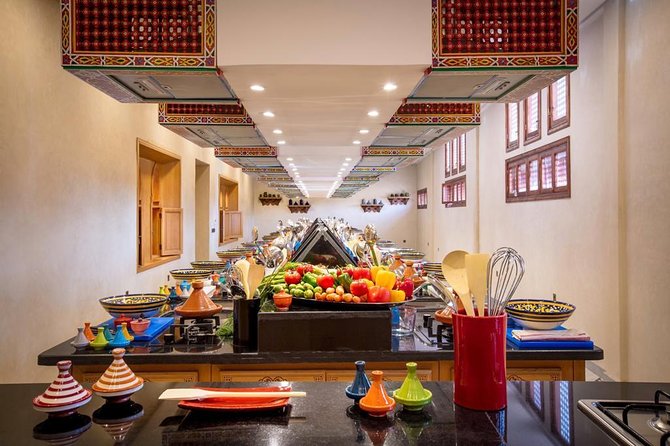
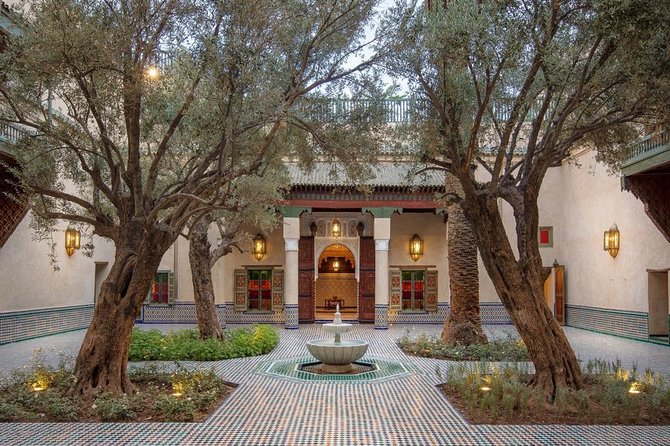
This experience takes place at the Moroccan Culinary Arts Museum in Marrakech, inside one of the city’s beautiful restored riads. The big promise is practical cooking knowledge, not just a history lecture. After check-in at the museum reception, you head to the second floor where the class setup is ready for teaching.
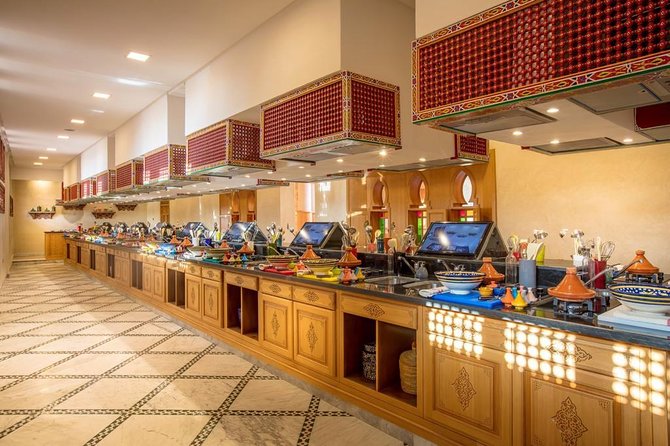
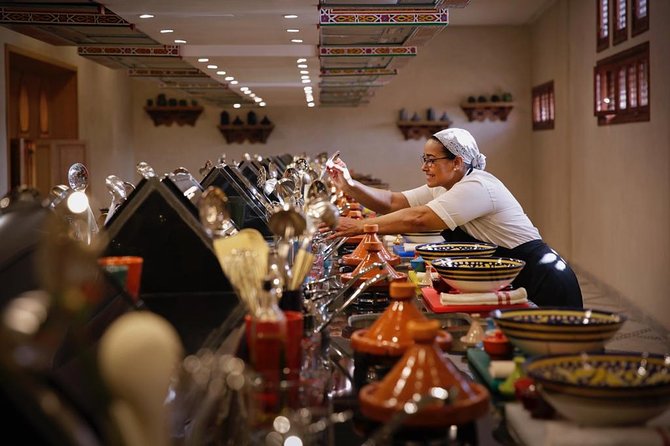
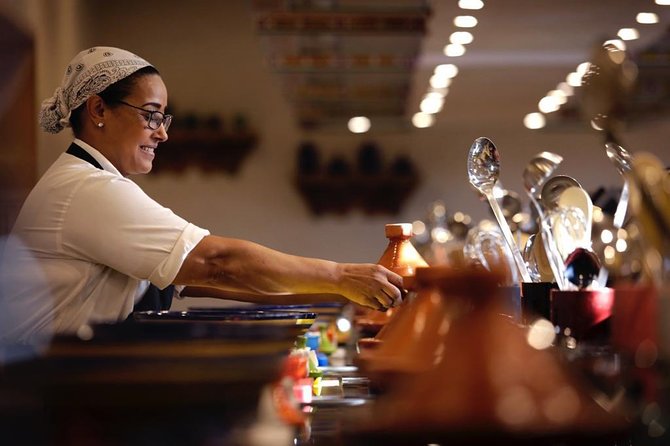
What makes this appealing is the scale and layout. With 34 kitchen stations, the space is designed so a group can cook rather than hover around a single counter. You’re also introduced to Moroccan cuisine in a Moroccan living-room style area, which helps it feel cultural instead of industrial.
The tone is also family-friendly. Several visitors mention the museum and class work well for mixed ages, including a 12-year-old pairing the museum visit with the cooking session. If you’re traveling with someone who wants to eat, not just tour, this format tends to land well.
How the bread lesson turns a side dish into a skill
Moroccan bread is everywhere: in morning spreads, in meals, and in the way food gets shared. That’s why the bread making part is more than a cute demo. It’s a foundation lesson for understanding Moroccan meals as a system.
You’ll start with a Moroccan bread making demonstration, then you visit the bread oven area as part of the process. That stop matters because it shows you that bread isn’t just ingredients and heat. It’s timing, the environment, and the hands-on workflow of baking.
A couple of visitors specifically got excited about bread-related questions. They wanted to understand what the everyday bread is and how it gets made, and this kind of stop usually answers that faster than any guidebook. If you plan to cook at home, bread is one of the most transferable takeaways because it teaches technique and feel.
The spice stop: where flavor starts before the pan
Moroccan cuisine has a reputation for being complex, but the trick is that it’s also learnable. The class is built around secrets of dosing spices and using herbs correctly, not just memorizing a recipe.
Part of the morning/lesson experience includes a visit to the herbalist of the district where the spices come from. Even without getting too technical, seeing the source side of ingredients helps you understand why different dishes taste different in different regions. Moroccan food is regional in its spice balance, and that’s the kind of detail that sticks.
What I like about this structure is that it turns seasoning from a guessing game into a method. When the Dada and team talk about dosing spices, you’re learning the logic behind flavor, not just the list of spices. That means your tajine or couscous at home has a better chance of tasting right.
Cooking with the Dada: tajines, couscous, and the real method
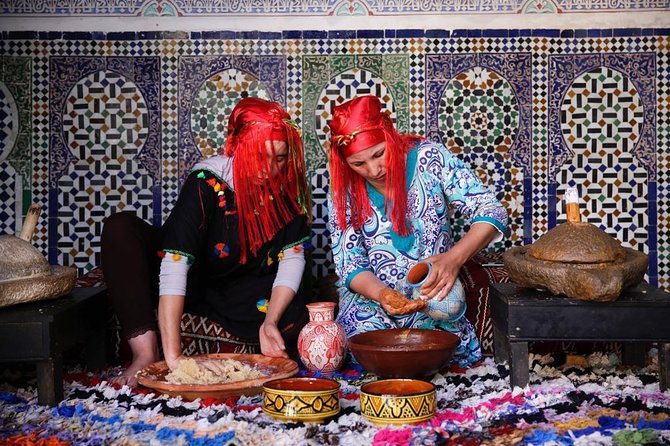
The heart of the experience is the cooking class taught by A Dada, a traditional cook who guides you through how Moroccan dishes come together. You’ll work at the stations, cook what you make, and then enjoy your food later at the terrace.
This is the part that gets top praise again and again. People highlight the kitchen as professional grade for teaching, with clear support from staff. The best sign is how often visitors say instructions are clear and the meals they prepared were excellent.
You can expect classic Moroccan cooking focuses such as tajines and couscous, plus other traditional techniques that help you understand how Moroccan dishes are built. Even when the course is only around two hours, it’s not just a quick tasting. It’s a structured class with steps you can remember.
Here’s a practical note: one review mentioned a mismatch in language expectations, with an English booking but French being used. You might find that interpreter language can depend on scheduling. If you strongly prefer English, contact or confirm when booking, so you don’t spend half the class watching someone translate your questions instead of asking them yourself.
Moroccan tea ceremony: the reset before tasting
A Moroccan meal has rhythm. You don’t just eat straight through. That’s why the Moroccan tea ceremony belongs in the middle of this experience.
You’ll do the tea ceremony as part of the program, then move into tasting your prepared dishes. It’s a small step, but it changes the feeling of the class. It gives you a beat to slow down, look around, and smell what’s coming next.
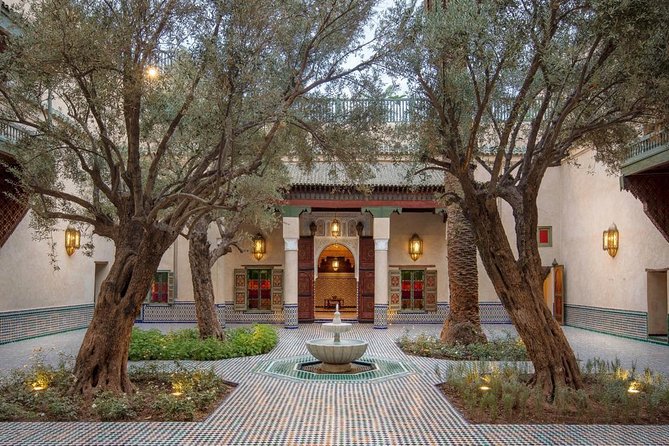
This is also where you get to practice the social side of Moroccan hospitality. Many reviews mention warm reception at arrival, tea offered early, and a calm courtyard vibe. That matters in Marrakech, where the city can feel nonstop. Here, the tea helps the experience breathe.
The museum component: more than a pretty room
Even if your goal is the cooking class, I’d still treat the museum part as part of your learning. The Moroccan Culinary Arts Museum is in a restored riad that some visitors compare in spirit to the Bahia Palace area, but with its own quiet feel.
Expect an organized setup with lots of visual teaching. Reviews mention displays with pictures and information about Moroccan food and cooking methods, plus museum stations showing how processes work. Some visitors also mention artefacts and even items like tables, chairs, and dinnerware used in the setting.
A few people note the displays can feel a bit underwhelming compared to the building itself, but others love the detail level and the modern touches. One review called out videos about the history of Moroccan food and the museum’s multi-floor layout with a terrace. If you like context, the museum gives it. If you mainly want hands-on cooking, think of the museum as the briefing that helps your kitchen work make sense.
One extra reason to like this museum-and-class combo: it can answer questions you didn’t know you had. People mention learning distinctions like the difference between tajine and tangia, and they wanted to understand pastries like pastilla. You don’t need to be a cooking expert to follow along. The museum material makes the food feel less random.
Lunch, tasting, and the wine question (optional, and noted)
You’ll be able to enjoy what you cook. The program includes lunch, plus coffee and/or tea and bottled water. That’s a meaningful value point. In Marrakech, food can be cheap, but a guided course that includes lunch and drinks saves time and stress.
There’s also a tasting moment built into the experience. The description notes enjoying dishes you’ve made on the terrace and being accompanied by Moroccan wines. But the listing also states alcoholic beverages aren’t included, and the tasting with wines is described as optional.
So here’s the practical advice: assume the safe, included parts are the meal you cook, plus water, plus coffee and/or tea. If you want wine, plan on an optional add-on. That way you won’t get surprised when alcohol isn’t part of your default package.
Also keep expectations flexible. One negative review mentioned bottled water and coffee/tea not being offered as expected, and that payment was required instead. That doesn’t mean it will happen to you, but it does suggest you should double-check what’s included in your specific booking and what’s part of the tasting option.
Price and value: why $69.79 can make sense here
At $69.79 per person for about two hours, this is not the cheapest thing you can do in Marrakech. But it can be good value because the cost bundles several hard-to-fake items:
- You get a structured cooking class in a teaching-focused kitchen setup with multiple stations.
- You get ingredient and technique learning through bread making and spice dosing.
- You get a full meal experience: lunch plus coffee and/or tea, along with bottled water.
- You also get the museum setting, which makes the time feel more than just a cooking demo.
If you were to replicate this DIY, you’d spend time finding ingredients, sorting recipes, booking a teaching guide, and still end up without the bread-oven and spice-source stops. That’s the difference here: the class is designed around the full flavor pipeline.
One more value angle: the group limit is max 34. That’s big enough for energy, small enough that teaching support can still work. Reviews praise the professional kitchen design and staff support, which usually goes with that kind of group size.
Who this experience fits best
This is a strong match if you:
- Want to learn techniques you can reuse at home, not just eat a meal.
- Like food learning that includes bread and spices, not only a single dish.
- Prefer a calmer setting compared with the most crowded palace areas.
- Travel with kids or mixed-experience groups and need something that has variety.
If you only want a quick snack and don’t care about cooking, you might find it faster than you expect, because the setup is compact and time is tight. But if you like structured learning, you’ll appreciate how each segment supports the next.
Also, if language is a must, I’d confirm. Interpreter language can vary, and one review specifically called out an English-to-French mismatch. You don’t want to spend your best questions waiting for translation.
Should you book it?
I’d book it if your goal is a hands-on Moroccan food lesson in Marrakech that combines bread, spices, tea, museum context, and a proper meal. The reviews point to strong organization, clear instruction, and a teaching kitchen built for doing, not just watching.
Pass or double-check language details if you’re sensitive about the course being in a specific language, or if you’re counting on included drinks beyond bottled water and coffee/tea. The wine part is better treated as optional.
If you’re excited to understand why Moroccan food tastes the way it does, this kind of class is one of the most efficient ways to learn while you’re still in the city.
FAQ
How long is the experience?
It’s listed at about 2 hours.
Where does the tour start?
The meeting point is the Moroccan Culinary Arts Museum, Rue Riad Zitoun el Jdid, Marrakesh 40000, Morocco.
What is included in the price?
Bottled water, lunch, and coffee and/or tea are included.
Are alcoholic beverages included?
Alcoholic beverages are listed as not included. Moroccan wines are mentioned as part of an optional tasting.
Does the class focus on any specific Moroccan dishes?
You’ll learn how to prepare tajines and couscous, along with other traditional Moroccan cuisine elements.
Is this a large group?
No. The group size is capped at a maximum of 34 travelers.
What language is available?
The reception and course include a French or English interpreter, based on what’s arranged.
What is the cancellation policy?
Free cancellation is available. You can cancel up to 24 hours in advance for a full refund.
Is the location easy to reach?
The meeting point is near public transportation, and service animals are allowed.