REVIEW · NEW DELHI
Full Day Old Delhi Food, Heritage, Cultural experience&visit Masterji Kee Haveli
Book on Viator →Operated by Masterji kee haveli dot com · Bookable on Viator
Old Delhi hits fast and smells even faster. This full-day food, heritage, and cultural tour strings together the must-see streets with the stuff you’d miss alone, from Chandni Chowk to Khari Baoli, then ends with an early dinner at Masterji Kee Haveli. I like that it stays small-group (max 10), so you get time for questions instead of being swept along.
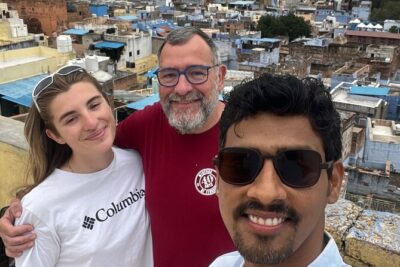
I especially like the way the day is built around street food tasting plus proper meals, not just photos and theory. I also like the extra touch of a complimentary online photo album, with pictures taken for you as you go, so you’re not scrambling for your own camera at every stop.
One thing to plan for: the tour starts early (8:30 am), involves walking through dense markets, and there’s a dress code for religious sites (no shorts; women need knees and shoulders covered). If you’re sensitive to crowds, heat, or strong smells, you’ll want good shoes and a calm mindset going in.
In This Review
- Key things I found most useful
- Why this Old Delhi day tour works so well
- Getting started at Ajmere Gate (and why “meeting point” matters)
- Pasar Chandni Chowk Wedding Market: where the shopping tells a story
- Khari Baoli Spice Market: your senses get a lesson
- Gurudwara Sis Ganj Sahib: slowing down for faith and history
- Kinari Bazar: embroidery trims you can almost feel
- Dariba Kalan: jewelry streets and old-school craftsmanship
- Rides and moving through chaos without getting lost
- The meals: street food tasting plus a real haveli dinner
- Masterji Kee Haveli: dinner in one of Old Delhi’s last standing havelis
- Your guide and the photo album: why it feels personal
- Price and value: what $141.25 really buys you
- Small group limits: max 10 travelers changes the whole feel
- Who should book this Old Delhi food and heritage tour
- Should you book this Old Delhi Food, Heritage, Cultural tour?
- FAQ
- What time does the tour start?
- Where is the meeting point?
- How long is the tour?
- How big is the group?
- What’s included in the price?
- What about hotel pickup and drop-off?
- Is there a dress code?
Key things I found most useful
- Small-group format (max 10): you move with a plan, but you can still ask questions when a street scene slows down
- Food stops that are more than snacks: breakfast, tea/coffee/lassi, street tastings, lunch, and an early haveli dinner
- Rickshaw-style transport help: bicycle and electric rickshaws take the edge off long stretches
- Market choices that explain themselves: wedding market, wholesale spices, embroidery trims, and jewelry lanes
- Religious and cultural stop included: Gurudwara Sis Ganj Sahib adds perspective to the food and shopping
- Photo album after the tour: you get photographer-made keepsakes without spending the day aiming a phone
Why this Old Delhi day tour works so well

Old Delhi can feel like a thousand overlapping errands—shops, temples, fragrances, and traffic all at once. This tour helps you line it up into a story you can actually follow, with food along the way so you’re not just looking. It’s also timed for one day, so you get the big sights without having to build your own route.
What makes it practical is that you’re not learning Old Delhi from a map. You’re moving street by street with a local friend who can point out what matters and what’s just background noise. That’s the difference between wandering and understanding.
You can also read our reviews of more food & drink experiences in New Delhi



Getting started at Ajmere Gate (and why “meeting point” matters)
The tour meets at Ajmere Gate Rd, in the Old Delhi area near Bazar Sirkiwalan and Chawri Bazar, starting at 8:30 am. Because hotel pickup isn’t included, you’ll want to get yourself there comfortably and on time—Old Delhi traffic and walking time can be unpredictable.
Since you end back at the same meeting point, you’re not stuck coordinating a later exit. You can plan the rest of your day with less stress, especially if you’re sleeping in New Delhi and want this to be your one Old Delhi block.
Pasar Chandni Chowk Wedding Market: where the shopping tells a story
One of the first stops takes you through Chandni Chowk’s wedding-market lanes, where wholesale and established merchants sell items tied to weddings. Think bridal footwear, bridal trousseau items, and all the supporting details that make a wedding look and feel complete.
This isn’t just a shopping detour. It’s a window into how Old Delhi’s economy runs: people come here to supply other people, and the streets reflect that scale. You’ll walk and look at what’s sold, how it’s displayed, and why the market exists in the first place.
A small drawback: wedding-market crowds can be intense, and the lanes can feel narrow. If you don’t like shopping, focus on the structure of the trade—who sells what, and how goods move—rather than trying to browse everything.
Khari Baoli Spice Market: your senses get a lesson
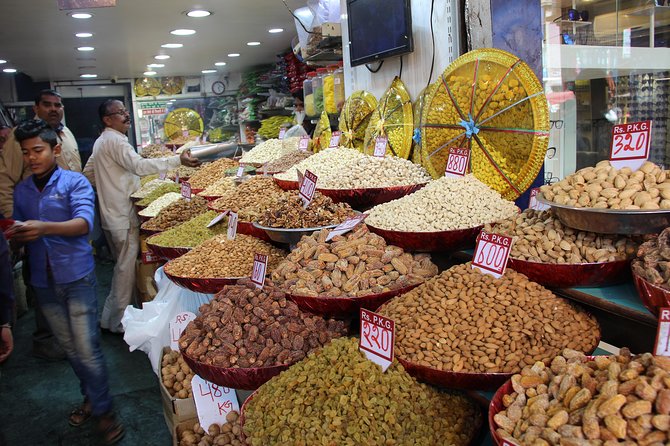
Next comes Khari Baoli, famous as a spice market that’s been operating since the 17th century. It’s a wholesale street where you’ll see spices, nuts, herbs, and food-related products sold in bulk, and the smell hits you the moment you step into the area.
The best part for me is how the tour ties scent to use. You’re not just staring at piles of color; you’re getting context for what different items are and how people actually buy them. That makes it easier to recognize spices later when you cook or eat Indian food on your trip.
This stop is shorter than the others (about 30 minutes), so don’t expect a slow browse. Treat it like a fast sensory tour that helps you understand what you’re seeing elsewhere in the day.
Gurudwara Sis Ganj Sahib: slowing down for faith and history
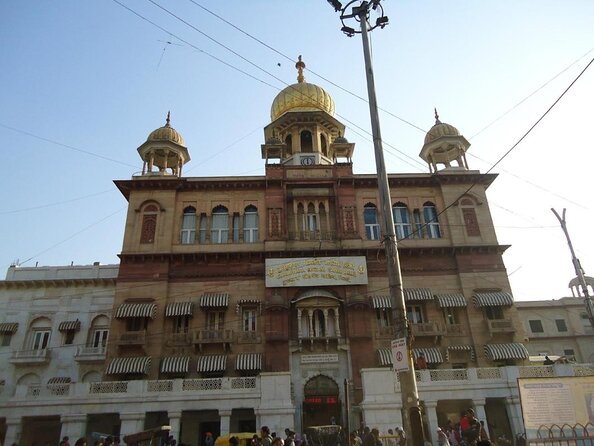
Then you visit Gurudwara Sis Ganj Sahib, one of the nine historical gurdwaras in Delhi. The site commemorates the martyrdom location of the ninth Sikh Guru, Guru Tegh Bahadur, and the visit adds a quiet pause between food and shopping.
This is also where the dress code becomes real. You’ll need to cover knees and shoulders (no shorts), especially as you move through worship spaces. If you want zero friction, wear lightweight long pants and a top with sleeves, or bring a scarf you can adjust.
Even if you’re not big on religious sites, this stop changes the pace of the day. It helps you understand that Old Delhi isn’t only about commerce—it’s also about community and belief.
A few more New Delhi tours and experiences worth a look



Kinari Bazar: embroidery trims you can almost feel
Kinari Bazar focuses on wholesale retail goods tied to garments and decoration—embroidery items, lace, threadwork, borders, embellishment, and garlands. It’s the kind of market where the details matter more than the headline products.
What you’ll enjoy is seeing how “making” is built into the streets. When you watch how trims are packaged and displayed, you start to grasp how wedding clothing and ceremonial outfits rely on specialized suppliers. It’s the practical side of tradition.
If you do want to buy something, consider buying only what you can carry easily. Most people come here as observers and for understanding, not necessarily for hauling home armfuls of fabric.
Dariba Kalan: jewelry streets and old-school craftsmanship
Dariba Kalan is a famous 17th-century street area connected to the same broader Chandni Chowk zone, and it’s known for jewelry trades. Many shops focus on gold, silver, and diamond jewelry, plus costume jewelry, so it’s a visual feast of shiny surfaces and careful displays.
This is a good stop after Kinari Bazar because it shifts the focus from textiles to ornament. Together, they show a theme: wedding culture isn’t only about a venue and a ceremony—it’s also about clothing, detail, and presentation.
Time is tight here (about 30 minutes), so aim to look for patterns: how counters are arranged, what’s displayed at eye level, and how storefronts signal what they sell.
Rides and moving through chaos without getting lost
Old Delhi has a navigation problem: roads twist, alleys branch, and landmarks repeat. That’s exactly why this tour includes cycle and electric rickshaw rides along with walking.
The rickshaws don’t just add fun. They help you cover ground efficiently so you can spend more time looking at the markets that matter. They also reduce the fatigue that hits when your feet are trying to keep up with your senses.
If you’re prone to motion sickness, mention it to your guide before the rides. Otherwise, treat the ride segments as breathing time between dense zones.
The meals: street food tasting plus a real haveli dinner
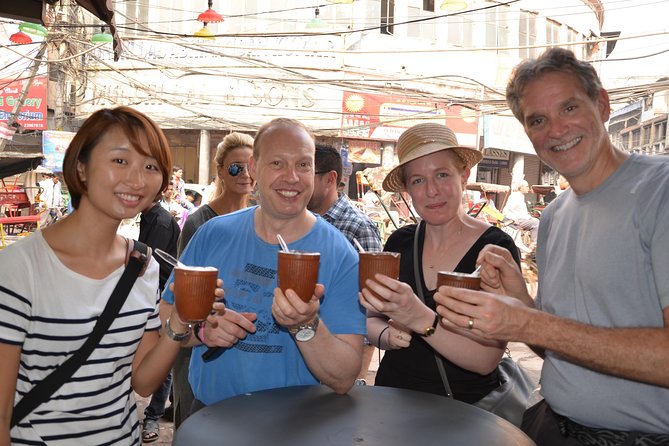
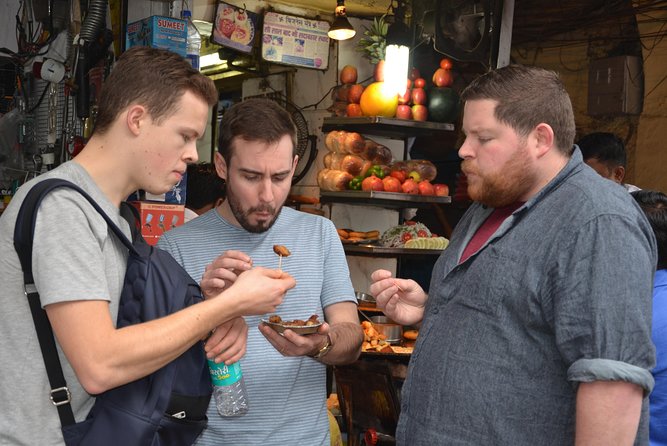
You get more than one meal across the day, and that’s the biggest reason the pricing can make sense. You’ll have breakfast, plus tea/coffee/lassi, then street food tasting, lunch, and an early dinner at the haveli.
Here’s why that matters: Old Delhi food is the kind of experience where you can easily overdo it on day one. Having structured meals helps you pace it. You’re not forced to choose between sightseeing and eating, and you’re also less likely to end up hungry during the places where you’re doing the most walking.
The day also includes bottled water. I’d still bring something extra if you run hot, but the included water helps you stay steady while you’re in and out of crowded lanes.
Masterji Kee Haveli: dinner in one of Old Delhi’s last standing havelis
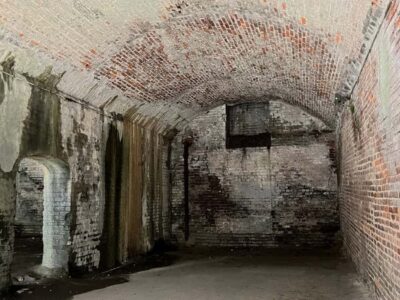
The tour’s centerpiece meal happens at Masterji Kee Haveli, described as one of the last standing havelis in Old Delhi. That setting turns dinner from a simple stop into part of the experience—food served in a historic home structure, not a generic restaurant.
What I like about this approach is contrast. Markets and streets teach you how daily life works on the outside; the haveli dinner shows you the atmosphere of home and hospitality on the inside. You get a pause that feels separate from the shopping lanes, even though it’s still very much in Old Delhi.
If you care about photography, you’ll appreciate how the space supports it. And since the tour includes a photographer component for the day, you’ll also come away with more than just blurry street snapshots.
Your guide and the photo album: why it feels personal
The tour includes a local friend cum story teller cum photographer, and the guide focus shows up in how the day flows. The best guides don’t only name places; they explain why those places exist and how the neighborhood thinks.
From past experiences with this team, I’ve seen guides like Varun, Vivian, Anju, and Raj referenced in connection with this type of Old Delhi storytelling and friendly pacing. You can expect a similar approach: less strict lecture, more context you can use while you’re looking.
The complimentary online photo album is also a practical win. When you’re with a group and moving, it’s hard to consistently take good pictures. Having photographer-snapped photos afterward saves time and gives you memories you can actually share.
Price and value: what $141.25 really buys you
At $141.25 per person, this isn’t a bargain-basement tour, but it also isn’t overpriced for what you get. You’re paying for multiple included meals (breakfast, lunch, and dinner), street tastings, drinks like tea/coffee/lassi, guided market time, and bicycle/electric rickshaw rides—plus taxes and fees are included.
The value angle here is simple: in Old Delhi, a day of transportation and food adds up fast. This tour bundles it into one plan so you don’t have to keep recalculating costs while you’re hungry and distracted by street scenes.
One cost-related consideration: hotel pickup and drop-off aren’t included. You’ll need to handle your own way to the meeting point in the Old Delhi area, starting at 8:30 am.
Small group limits: max 10 travelers changes the whole feel
A max group size of 10 travelers is a meaningful detail. In crowded markets, a larger group becomes a wall of bodies that slows everything down and drains the energy.
With a smaller group, you can move more like a coordinated pair of eyes and feet. You also get more chances to ask questions about food, markets, and what you’re seeing in front of you—things you’d normally have to Google later.
Who should book this Old Delhi food and heritage tour
This tour is a good fit if you want Old Delhi to feel structured without losing the street energy. You’ll likely enjoy it if:
- you like food experiences that come with context, not just random tastings
- you want to cover major market zones without building a route
- you appreciate a mix of shopping areas and a temple visit
It may be less ideal if you hate walking, don’t handle strong smells well, or you’re visiting with limited time for an early start. Still, “most travelers can participate,” and the rickshaw segments help break up the effort.
Should you book this Old Delhi Food, Heritage, Cultural tour?
If you’re only doing one Old Delhi experience, I think this is a smart pick. The best reason is not the markets by themselves—it’s the combination of food pacing, small-group movement, and a haveli dinner that gives the day a real ending.
Book it if you want your Old Delhi day to make sense in your head afterward, not just look good on your phone. Skip it only if you strongly prefer self-guided wandering, or if you’d rather avoid crowds and religious-site dress rules.
FAQ
What time does the tour start?
It starts at 8:30 am. You also return to the same meeting point at the end of the experience.
Where is the meeting point?
The meeting point is Ajmere Gate Rd, Bazar Sirkiwalan, Chawri Bazar, Old Delhi, New Delhi, Delhi 110006, India.
How long is the tour?
The duration is about 6 to 7 hours.
How big is the group?
The tour has a maximum of 10 travelers.
What’s included in the price?
It includes bottled water, tea/coffee/lassi, street food tasting, breakfast, lunch, and an early dinner at the haveli, plus cycle/electric rickshaw rides and a local friend guide. All taxes, fees, and handling charges are included. A complimentary online photo album is also included.
What about hotel pickup and drop-off?
Hotel pickup and drop-off are not included.
Is there a dress code?
Yes. A dress code is required for places of worship and selected museums: no shorts, and women must cover knees and shoulders.