REVIEW · ATHENS
Ancient Athens E-Bike Tour
Book on Viator →Operated by AyoToursAthens · Bookable on Viator
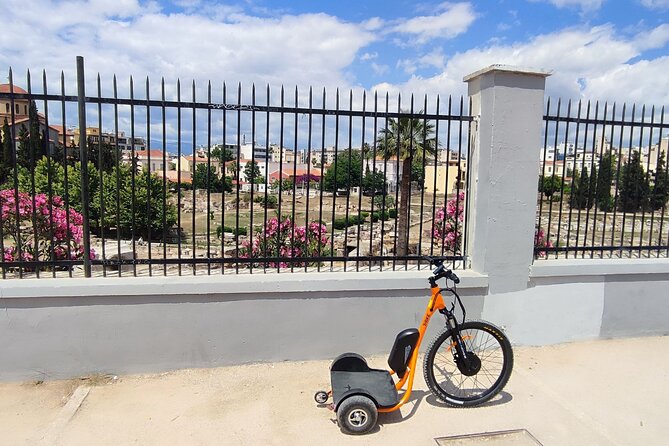
One-two hours can feel like a whole day. This Ancient Athens E-Bike Tour uses a standing motorized tricycle so you cover the big landmarks fast, without the burn of constant uphill walking. You’ll glide around the Acropolis area, then keep rolling through Plaka and the ancient markets.
I love that the pace is built for seeing more than you’d manage on foot. You get a small group experience (max 12), helmet included, and clear guidance on where to stop, what to look for, and how the sites connect.
One possible drawback: the archaeological tickets are not included, so your final total depends on which ticket options you choose for the Acropolis complex and the agoras.
In This Review
- Key things I’d circle before you book
- Why this standing Trikke tour feels different than a walking route
- Your two-hour route: from the first theater to Plaka
- Odeon of Herodes Atticus: a Roman theater still alive with shows
- Acropolis: the rock, the Parthenon, and the feeling of altitude
- Pnyx: where democracy started
- National Observatory of Athens (hill of Nymphs): science meets archaeology
- Ancient Agora: the main market of ancient daily life
- Kerameikos: ceramics, place-names, and a neighborhood link
- Monastiraki: “the heart” of eating, shopping, and wandering
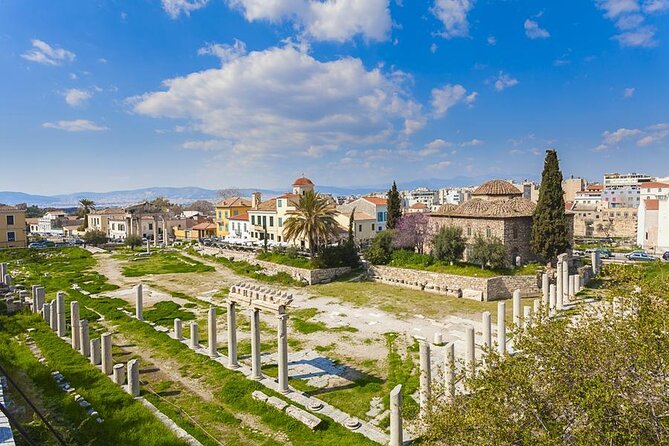
- Roman Agora and the Tower of the Winds
- Plaka: the traditional neighborhood that looks like a Greek postcard
- Tickets and money: how the $72.09 value really works
- How to ride the standing motorized trike without stress
- The guides: why the commentary matters (especially on Pnyx and democracy)
- Scheduling: when you can do it and how long to plan
- Who should book this tour (and who might skip it)
- Should you book Ancient Athens on a standing e-bike (Trikke)?
- FAQ
- How long is the Ancient Athens E-Bike Tour?
- What’s included in the tour price?
- What is not included?
- What language is the tour offered in?
- What group size should I expect?
- Where does the tour start?
- Where does the tour end?
- When does the tour operate?
- Do I need to pedal?
- Is the tour weather-dependent?
- Can families do it?
Key things I’d circle before you book
- Standing motorized Trikke: no pedaling required, which makes the heat and hills easier to handle
- Small group size (up to 12): more chat, less waiting around, easier to stay together
- A tight route of major Athens hits: Acropolis viewpoints plus Pnyx, multiple agoras, and Plaka
- Helmet + costumer insurance included: practical safety items are taken care of
- Ticket costs add up: you’ll pay extra for key sites like the Acropolis and Odeon of Herodes Atticus
- Guides can adjust your plan: Dimitris, and other guides like Kevin, are known for tailoring the route to what you already saw
Why this standing Trikke tour feels different than a walking route

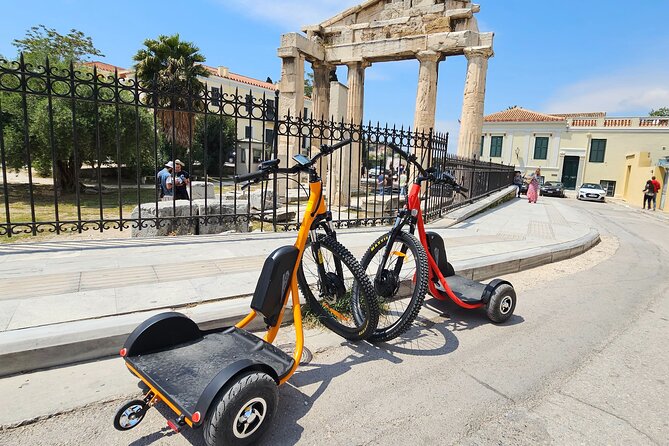
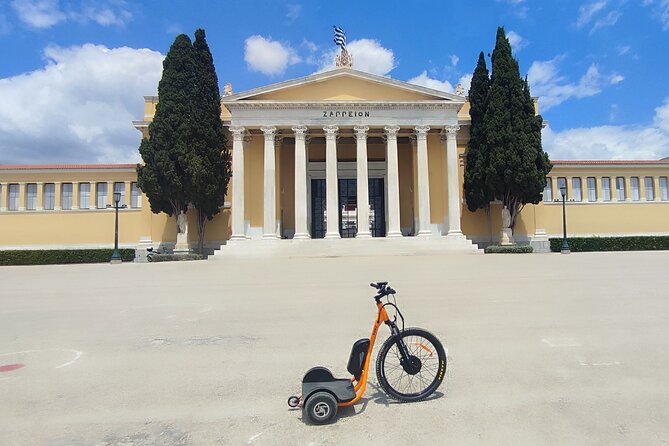
Athens can be a workout—especially around the Acropolis hill, where stairs and uneven ground slow you down. This tour solves that problem in a clever way: you ride a standing motorized tricycle (listed as “Trikke” in the inclusions) instead of pedaling a traditional e-bike.
You still stop often to look closely. The difference is that getting between stops doesn’t drain your energy. You can think of it as “time-efficient sightseeing” that keeps you mobile and in the right spot for photos and viewpoints, instead of arriving sweaty and late.
And because the group is capped at 12, the tour stays social without turning into a stampede. You get real moments—like pausing for the view—rather than rushing through everything.
You can also read our reviews of more tours and experiences in Athens.

Your two-hour route: from the first theater to Plaka
The flow is designed to hit the core stories of ancient Athens quickly, then land you in the neighborhood that feels most like modern Athens. Here’s how the stops fit together and what to watch for.
Odeon of Herodes Atticus: a Roman theater still alive with shows
The tour starts with the Theatre of Dionysus area, described as the most important theater in Ancient Greece and the place where theater began. The ticket info notes that the Acropolis Hill ticket includes the Theatre of Dionysus.
Right after that comes Odeon of Herodes Atticus, a Roman theater built in the second century A.D. It’s still in use for performances, and the site is tied to the memorial context of Herod Atticus and his wife. Even if you don’t catch a show, the vibe matters: this is not a theater that’s been frozen behind ropes for centuries. It’s a place that still performs.
If you’re short on time, this is a great warm-up stop because it sets the theme: Athens as a city where public life—art, politics, debate—was built into daily spaces.
Acropolis: the rock, the Parthenon, and the feeling of altitude
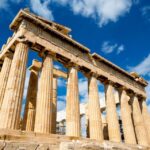
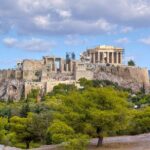
Next you’re taken to the Acropolis from a close side where you can watch the hill directly. The focus here is the scale and the “pull” of the place, especially with the Parthenon temple on top.
One practical note: at the Acropolis complex, time is tight and ticket lines can be real. This tour keeps the stops short—so you get the key viewpoint moments—then moves on. You’ll likely want to return later if you want deeper museum time, but this gives you the right orientation fast.
Pnyx: where democracy started
Then you roll to Pnyx, described as the place where democracy started. You’re in an archaeological area that also functions like a park, with a sense of open space compared to the denser ancient ruins.
This stop is where the tour’s meaning clicks. It’s not only “old stones.” It’s a living idea—how citizens gathered and how decisions were made. If you like history that connects to systems and civic life, Pnyx is one of the most satisfying stops on the route.
The ticket here is listed as free, so you can spend your money where you care most.

National Observatory of Athens (hill of Nymphs): science meets archaeology
After Pnyx, the tour includes the National Observatory of Athens, placed on the hill of Nymphs inside an archaeological area and park. The ticket here is included.
This is a good “breather” stop: it breaks up the heaviest concentration of famous ruins with something less predictable. You still get the big Athens-on-a-hill feeling, but the attention shifts to how layers of the city keep evolving—from ancient to more modern uses.
Ancient Agora: the main market of ancient daily life
Next comes the Ancient Agora of Athens, described as the main market in ancient society. This is where you picture commerce, conversations, and the social rhythm of the city.
You get about 20 minutes here, and the ticket is included (listed as included on the tour, though there’s also ticket information shown as 4€ for this stop). Either way, this is one of the places where even a short visit helps you understand what the word “market” meant back then.
What to look for: the way the Agora sits at the heart of movement. Even at a glance, you can sense why this area was essential—people gathered here because it mattered.
Kerameikos: ceramics, place-names, and a neighborhood link
Then you visit Keramikos (Kerameikos), close to the Ancient Agora. The name is tied to ceramics production, which is exactly why this neighborhood is called Kerameikos.
This stop is mostly about connection and context. If you’ve ever wondered how places keep names through time, this is the kind of clue that makes Athens feel less like a list of landmarks and more like a real city with trades and neighborhoods.
Monastiraki: “the heart” of eating, shopping, and wandering
You’ll reach Monastiraki, described as a crowded square and considered the heart of Athens because of bars, restaurants, and choices around you. The ticket is listed as included for this stop (though Monastiraki itself is a public area).
Monastiraki is valuable because it shifts you from “ancient Athens sightseeing” to “how modern Athens actually feels.” This is where you’re most likely to want snacks, a coffee break, or just time to wander after the guided portion ends.
Roman Agora and the Tower of the Winds
The tour also includes the Roman Agora, made by the Romans in the second century A.D. You’ll see the Tower of the Winds in this area, a standout feature even if you’re not a hardcore architecture person.
The Roman Agora ticket is shown as 4€ (and the stop is marked free in the itinerary details), so treat this as one of those spots where the tour’s included/excluded ticket rules can vary. Plan to ask when you check in so you don’t get surprised. Either way, it’s a short, high-impact stop.
Plaka: the traditional neighborhood that looks like a Greek postcard
Finally, you roll into Plaka, described as the traditional neighborhood of Athens—picturesque, in the heart of the city, and visually like a Greek island.
This ending makes sense. After standing viewpoints and ancient markets, Plaka lets your brain relax. It’s also the kind of neighborhood you’ll likely want to revisit, now that you’ve seen where the ancient ruins relate to the city streets today.
Tickets and money: how the $72.09 value really works
The tour price is $72.09 per person, which covers the Trikke ride, helmet, and costumer insurance. What it does not cover are the archaeological-area tickets.
From the ticket notes:
- Acropolis hill: 20€
- The Acropolis ticket info says it also includes Theatre of Dionysus and Odeon of Herodes Atticus
- Ancient Agora: 4€
- Roman Agora: 4€
- Pnyx and Keramikos are free in the itinerary notes
Here’s the reality check: your total might land around the tour price plus the ticket add-ons, depending on what you choose and how the ticket inclusions line up. The tour still tends to feel like good value because it buys you two things most self-guided visitors struggle to manage:
1) Speed between key areas
2) A guided sequence that helps you understand why the stops are grouped together
If you’re the type who usually buys “entry tickets, then wanders alone,” this tour can help you decide what’s worth going back for.
How to ride the standing motorized trike without stress
This is one of the reasons the reviews hit hard: the bikes/trikes are described as easy to use, comfortable, and made for safety (helmet included). The big selling point is that it’s motorized and doesn’t require pedaling.
That matters because Athens hills can wear you out fast. When you don’t have to pedal, you can focus on steering, watching the guide for stop points, and enjoying the view instead of managing your legs.
A small practical tip: wear comfortable closed-toe shoes. You’ll be standing part of the time and you’ll want stable footing when you stop, turn, and re-start.
If you’re worried about comfort, note that kids have been part of successful tours—so if your group is mixed ages and you need a “works for everyone” sightseeing format, this is one of the more practical approaches.
The guides: why the commentary matters (especially on Pnyx and democracy)
The itinerary is impressive on paper, but the real difference is what the guide does with the time you save.
Dimitris is called out for being friendly and adjusting the tour when people already saw certain sights. He also helped explain why places like Pnyx connect to democracy—so you don’t just see a hill, you understand the idea tied to it.
Another named guide is Kevin, mentioned with praise, and the overall pattern in the experience is consistent: guides keep things fun, keep things moving, and help you build a mental map fast.
If you like your tours with a bit of storytelling—politics, public life, theater, markets—this format is made for that. You cover ground quickly, then get the meaning at each stop.
Scheduling: when you can do it and how long to plan

The tour runs Monday through Saturday, 10:00 AM to 4:00 PM. It’s listed as lasting about 2 hours (approx.). Confirmation is sent at booking time, and the provider states the tour requires good weather—if it’s canceled due to poor weather, you get offered a different date or a full refund.
This timing is useful for practical travel planning. If you want to do a major sights day, this can fit as your “anchor activity,” then you can spend the rest of your day eating in Monastiraki or wandering Plaka.
Who should book this tour (and who might skip it)
Book it if:
- You want big Athens landmarks in a short window
- You don’t love long uphill walking or you’re traveling in hot weather
- You want a small-group experience with safety gear included
- Your group includes kids or mixed mobility and you want everyone to participate
- You care about understanding how the sights connect (theater → civic life → markets → neighborhoods)
You might skip it if:
- You already have tickets and planned a slower, in-depth day inside museums and excavations
- You prefer silent, independent wandering with no scheduled stops
- Your schedule doesn’t allow for weather dependency
Should you book Ancient Athens on a standing e-bike (Trikke)?
Yes, if you want a high-ROI Athens intro. For $72.09, you’re buying speed, safety basics, and guided context—then using the saved energy to enjoy the city afterward.
The best part is that it feels like you’re seeing Athens for what it is: a city where ancient civic life and modern neighborhoods sit on top of each other. With a guide like Dimitris—and a format that doesn’t require pedaling—you get those “how does it all fit together?” moments without burning hours on steep climbs.
Just budget for the extra archaeological tickets and you’ll be in a great spot.
FAQ
How long is the Ancient Athens E-Bike Tour?
It’s listed as about 2 hours (approx.).
What’s included in the tour price?
Included: use of Trikke, helmet, and costumer insurance.
What is not included?
Tickets to the archaeological areas are not included.
What language is the tour offered in?
The tour is offered in English.
What group size should I expect?
The maximum is listed as 12 travelers.
Where does the tour start?
The meeting point is Leof. Andrea Siggrou 22, Athina 117 42, Greece.
Where does the tour end?
The activity ends back at the meeting point.
When does the tour operate?
It’s listed Monday through Saturday from 10:00 AM to 4:00 PM, between 05/01/2023 and 12/22/2026.
Do I need to pedal?
No—it’s described as comfortable and easy with a standing e-bike setup that requires no pedaling.
Is the tour weather-dependent?
Yes. It requires good weather, and if canceled due to poor weather you’ll be offered a different date or a full refund.
Can families do it?
Most travelers can participate, and the experience has included kids (with one group mentioning ages 9, 12, 13, and 15 enjoying the bikes).