REVIEW · HAMBURG
Guided tour of Hamburg’s UNESCO World Heritage Site – Warehouses & Cathedrals of Commerce
Book on GetYourGuide →Operated by Marius Gebhardt Fotografie & Stadtführungen · Bookable on GetYourGuide
Hamburg’s commerce past is written in brick. This 2-hour guided tour shows you the story behind UNESCO sites like Kontorhausviertel office buildings and the Speicherstadt warehouse canyon—plus a clever, funny explanation that makes the architecture feel personal. I especially love how the guide, Marius Gebhardt, ties details to real working life, and how the walk moves at a relaxed pace with room for questions. The main thing to consider: it’s German-led and the route is on foot, so it’s not ideal if you have low fitness or hearing challenges.
You start at Hammaburg-Platz, where Hamburg’s origin story gets explained in plain language, then you gradually shift from medieval beginnings to merchant power and port logistics. The tour ends near St. Annenufer, with an optional coffee-and-cake stop in a former coffee warehouse. If you want easy, museum-style sightseeing, you may miss that feel—but if you like streets, façades, and the “why” behind them, this is a strong match.
In This Review
- Key points to know before you go
- Walking Hamburg’s UNESCO Commerce Sites: What You’ll Really Get
- Hammaburg-Platz: The Birthplace Story and How Hamburg Got Its Name
- Kontorhausviertel: Brick Office Power and the Cathedral-of-Commerce Feel
- A Critical Look at Port Founding Ideals (and Their Contradictions)
- Wasserschloss and Teekontor: A Palace for Dockworkers
- Speicherstadt: Red-Brick Canyons, Westphalia Links, and Port Roles Explained
- The Optional Coffee and Cake Finish: Why It Works Here
- Price and Value: How Much You Get for $2.36
- Pacing, Walking, and What to Bring (So You Enjoy It)
- Who This Tour Is Best For (and Who Might Want Something Else)
- Should You Book the Hamburg Warehouses and Cathedrals of Commerce Tour?
- FAQ
- How long is the guided tour?
- Where do I meet the guide?
- Where does the tour end?
- What language is the tour conducted in?
- Is the price per person and what’s included?
- What is not included?
- What should I bring?
- Are pets allowed?
- Sources? Wait—no.
Key points to know before you go
- Meet Marius Gebhardt: a calm, humor-tinged guide who answers group questions well
- UNESCO commerce in two hours: Hammaburg to Kontorhausviertel to Speicherstadt without rushing
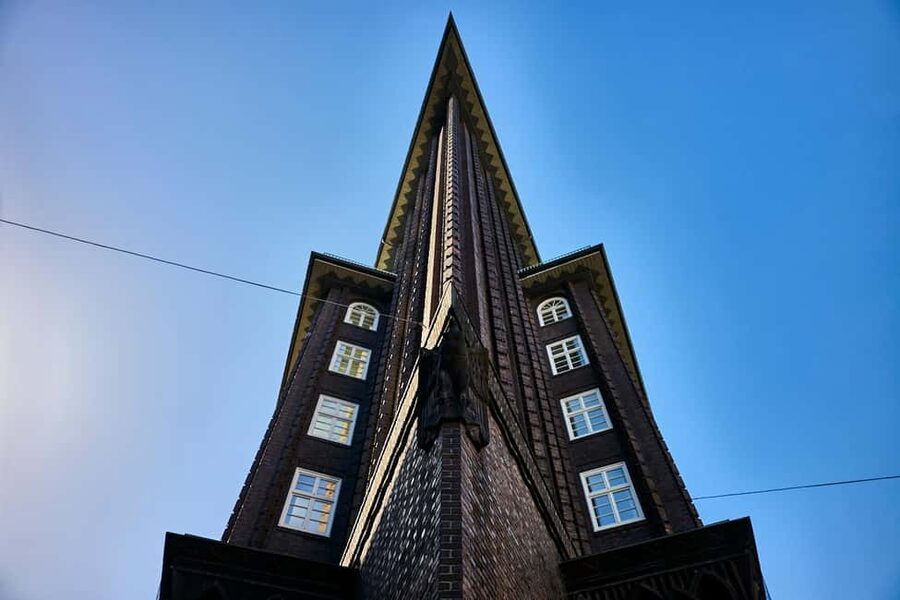
- Chilehaus photo stop: see why people call it a Cathedral of Commerce
- Workers’ buildings, not just monuments: Wasserschloss connects the port to human housing
- Real port details: you’ll hear about Schuten- and Ewerführer roles and why Hamburg’s stories are full of surprises
- Coffee warehouse finish: wrap up with a drink or cake where it makes sense
Walking Hamburg’s UNESCO Commerce Sites: What You’ll Really Get
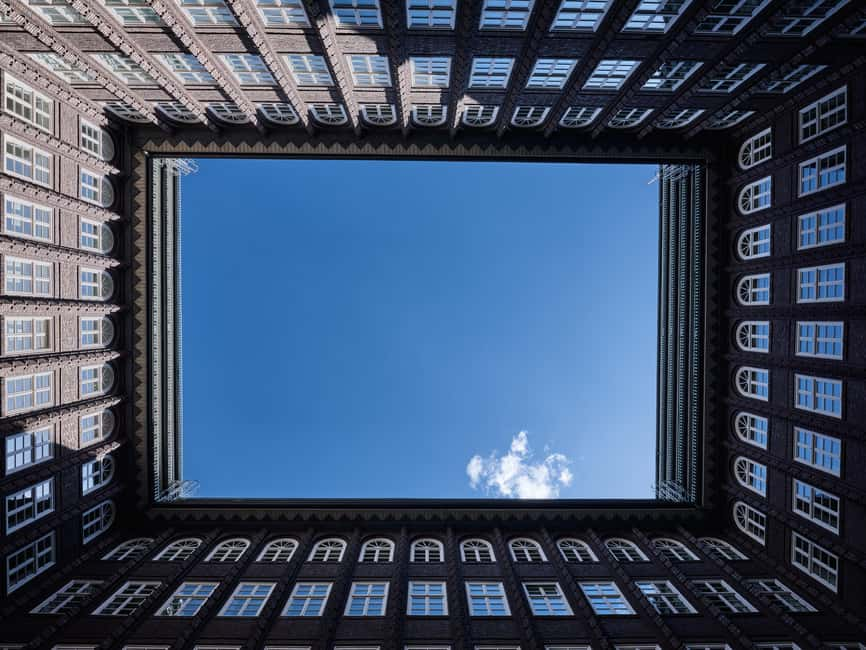
Hamburg can look like a modern port city at street level. But when you walk it with the right lens, the whole place starts acting like a textbook—just one printed in red brick, carved stone, and workplace architecture.
What I like most about this tour is that it doesn’t treat the buildings as pretty props. You’re taught what they were for, who paid for them, and how the port system shaped daily life. You also get small, memorable moments that make the history stick, like the way the guide points out symbolism and decorative details on office façades—yes, including playful stops that get you looking up, not just forward.
The second big win is pace and clarity. Two hours is short enough to stay sharp, but long enough to cover the key UNESCO areas in a way that feels connected rather than like a checklist. And because it’s guided, you’re not left Googling every corner.
You can also read our reviews of more tours and experiences in Hamburg.



Hammaburg-Platz: The Birthplace Story and How Hamburg Got Its Name
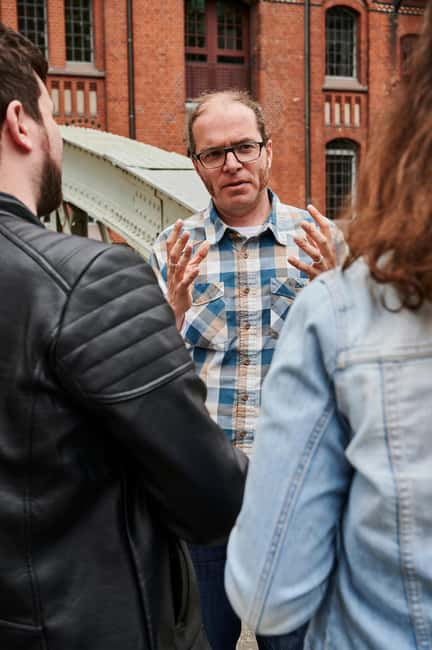
You begin at Hammaburg-Platz at the pink/grey column (Archaeoscope) near the pedestrian crossing. It’s a good start because it immediately anchors you in the idea that Hamburg didn’t begin as a warehouse city. It started as a place—an origin point—with a working identity that grew into a major port.
This opening segment is where you learn the “birthplace and nursery” framing, and you hear how Hamburg got its name. Even if you’ve passed this area before, the tour makes it feel like a starting chapter, not a random square.
What’s practical here: you’ll learn enough early on to understand later contrasts. When you get to the merchant offices and the warehouse city, the guide keeps linking back to the earlier roots—so the UNESCO label stops feeling like a stamp and starts feeling like a timeline.
Kontorhausviertel: Brick Office Power and the Cathedral-of-Commerce Feel
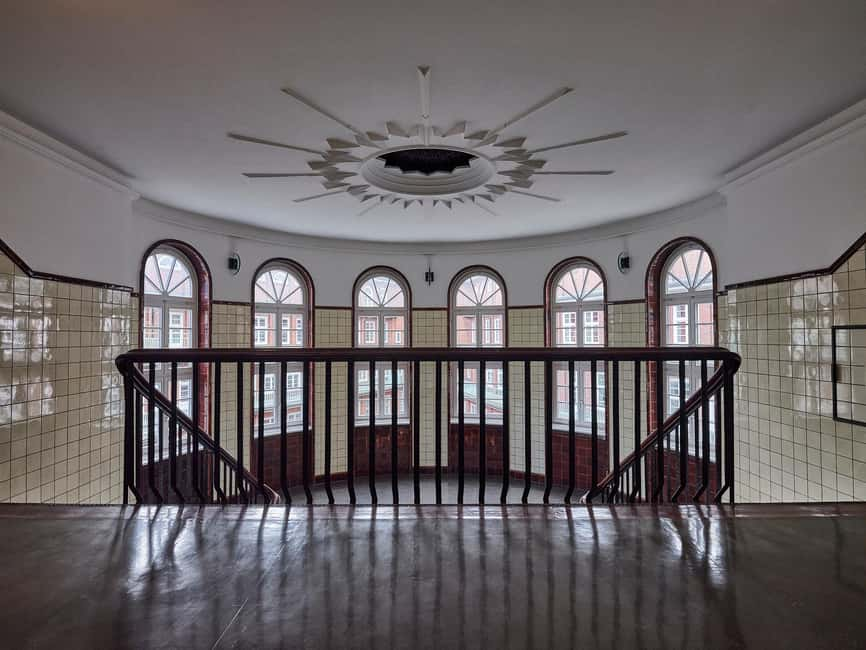
Next you move into Kontorhausviertel, the former center of Hamburg’s merchants. This is where you really see how “commerce” shaped the skyline. These weren’t just offices. They were statements—about wealth, confidence, and control of trade routes.
Expect a focused sightseeing block around the brick office buildings. The guide’s style matters here. Instead of rattling dates, Marius explains the logic of the architecture: why brick, why these shapes, why this style of building in a port city. You’ll also get that fun, look-up moment—there’s a playful reference to peeking under a decorative ballerina figure on the office buildings, like the tour is nudging you to notice what’s usually skipped.
Then comes the Chilehaus photo stop. People call it a Cathedral of Commerce for a reason: the building’s presence is all about scale and aspiration, as if trade itself needed an icon. You’ll take photos, but more importantly, you’ll learn what makes it symbolically important in the merchant landscape.
Possible downside: if you’re hoping for lots of indoor space or long museum time, this section is mostly outward looking—faces, materials, and street-level perspectives. Still, that’s the point: you’re learning to read the city.
A Critical Look at Port Founding Ideals (and Their Contradictions)
One of the more thought-provoking parts of the tour comes as you take a critical look at the founding charter of the port. The guide doesn’t present history as a clean story with a neat moral. You’re encouraged to notice contradictions.
That matters for you because it changes how you interpret the rest of the sights. When you later see warehouse systems, worker housing, and the machinery of shipping, you understand that trade doesn’t just mean prosperity—it also means rules, power, and friction.
This is also a section where the guide’s calm, slightly “hanseatic” tone helps. Instead of making you feel like you’re being lectured, you feel like you’re having a guided walk with someone who knows how to keep the thread.
Wasserschloss and Teekontor: A Palace for Dockworkers
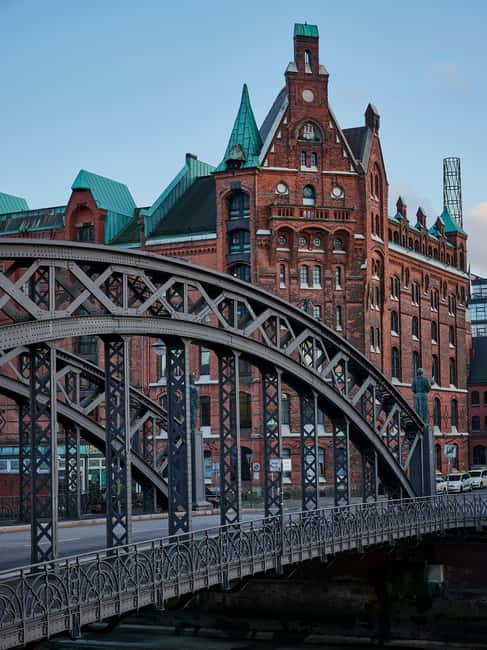
After the office-building phase, the tour shifts into something more human: Wasserschloss in the Speicherstadt area, described as a palace for Hamburg’s dockworkers.
This stop is your reality check. The UNESCO story here isn’t only about merchants who built impressive façades. It’s also about the people who worked the port—people who needed housing and facilities connected to the daily grind of trade. Wasserschloss is a strong example of that idea.
If you like architecture that communicates function and social structure, this will hit. You’ll see why the port wasn’t just a workplace; it was also a neighborhood with specific logistics and living patterns.
The photo stop timing here keeps it light. You’re not stuck for ages. You get enough time to look closely, take a few pictures, and move on with the story still flowing.
Speicherstadt: Red-Brick Canyons, Westphalia Links, and Port Roles Explained
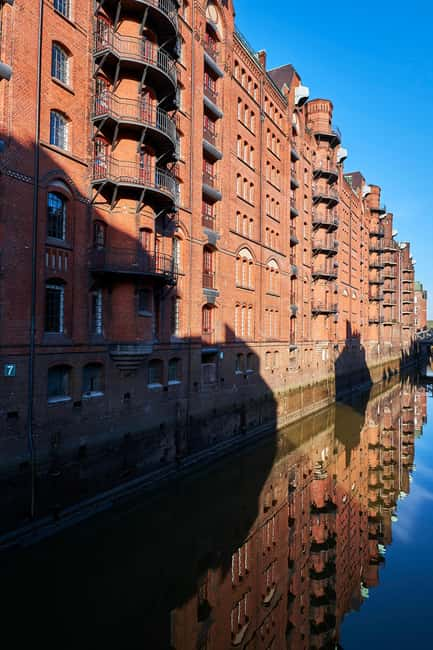
Then you reach the part many people come for: Speicherstadt. The guide frames it as a kind of Grand Canyon of the North—red brick, strong angles, and narrow spaces that feel like corridors between trading worlds.
This section is about immersion in the details, not just the scenery. You’ll get stories tied to the buildings and the systems behind them:
- You’ll hear how Westphalia connects with Hamburg in the storyline
- You’ll learn why workers lived in a castle there (as explained in the tour)
- You’ll get clear about what Schuten- and Ewerführer actually did
- You’ll hear why there are stories involving coffee barons and Persians in Hamburg
Even if some of these sound surprising at first, they make sense as pieces of a bigger trading web. Hamburg’s port identity wasn’t isolated. It was linked to broader regions, shifting work roles, and the movement of people and goods that never stopped.
A practical note for you: Speicherstadt is best experienced slowly, with pauses. The tour gives you a longer sightseeing block here (about 45 minutes), which is crucial. In shorter tours, this area becomes rushed. Here, you get time to walk the red-brick lanes, spot patterns in windows and façades, and understand why these buildings look so uniform yet still carry meaning.
The Optional Coffee and Cake Finish: Why It Works Here
The tour ends at St. Annenufer, 20457 Hamburg. And if you want to keep the experience going, you have the chance to enjoy coffee and/or cake in a former coffee warehouse.
This is more than a perk. It’s a smart closure. You’ve spent two hours learning how coffee and trade helped shape Hamburg’s identity, then you sit in a space where that story isn’t theoretical. You’re eating and drinking inside the historical setting the tour has been building toward.
If you’re traveling with kids, this kind of finish also helps the history land. It turns the last stop into a moment people remember, not just a photo they deleted later.
If you’re traveling solo, it’s also an easy way to decompress without feeling like you need a whole new plan right after the walk.
Price and Value: How Much You Get for $2.36
At $2.36 per person, this is one of those prices that feels almost too good to be real. Even if you treat it like an “intro” tour, the value is strong because you’re getting:
- Entrance to all sights included
- A live guide who explains the logic of what you’re seeing
- A concentrated route that covers multiple UNESCO-linked areas in one go
- A guided close that points you toward a meaningful coffee setting
In other words, you’re not paying for time only. You’re paying for translation—from brick and symbolism into understandable human stories. That’s the kind of value that actually changes your travel day.
One consideration: the tour is German-led. If your German is limited, you might still catch the highlights, but you’ll lose part of the charm that comes from how the guide explains contradictions and port roles. If you read well but don’t speak much German, you may do okay; if you don’t understand German at all, look for another format.
Pacing, Walking, and What to Bring (So You Enjoy It)
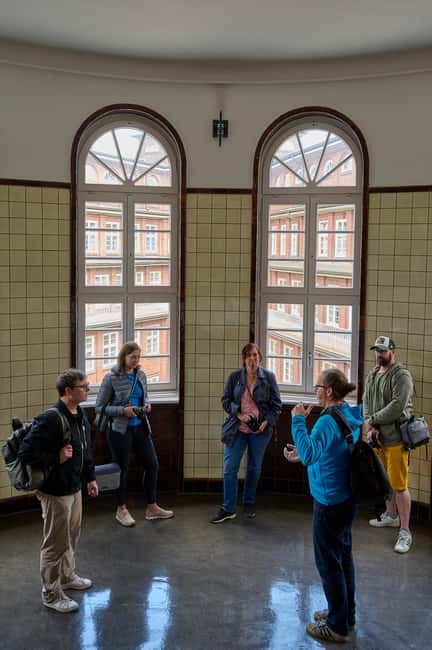
This is a guided walk that lasts about 2 hours and includes short, photo-friendly stops. Expect enough walking to be real, not a casual stroller route, but also not a marathon.
What to bring is simple: comfortable shoes. You’ll be spending time standing and looking up at architecture, then moving again through the red-brick streets. If you’re the kind of person who enjoys pausing to read details, you’ll love it. If you get annoyed by slow looking, tell yourself to treat the tour like a guided “reading session” in the open air.
The tour is wheelchair accessible, which is a real plus for people who need that option. At the same time, it’s not suitable for people with low fitness, and it’s not set up for hearing-impaired participants. So if either of those applies to you, plan carefully.
Logistics-wise, you meet at Hammaburg-Platz by the Archaeoscope column (pink/grey). The guide is easy to spot with orange umbrellas. And you’ll want to skip luggage or large bags—those aren’t allowed.
Who This Tour Is Best For (and Who Might Want Something Else)
This works best if you:
- Like cities you can read, where architecture tells a story
- Enjoy port history, trade logic, and how workers fit into the system
- Want a short, focused overview without feeling rushed
- Appreciate a guide who uses dry humor and stays relaxed while explaining details
You might choose something else if you:
- Need the tour in a language other than German
- Prefer long indoor museum time over outdoor façades and street-level context
- Want a fully “accessible for everyone” experience beyond the stated wheelchair note (since hearing accessibility isn’t supported)
If you’re in Hamburg for the first time, this tour is an excellent way to get bearings fast. And if you’re returning, it’s a great way to see what you missed—especially in Kontorhausviertel and Speicherstadt, where small details matter.
Should You Book the Hamburg Warehouses and Cathedrals of Commerce Tour?
Yes, I think you should book it if you want UNESCO that actually feels understandable. The standout strength is how the guide, Marius Gebhardt, connects buildings to the working port world—merchant offices, dockworker housing, and warehouse systems—using explanations that stay calm and clear, with a touch of humor.
At the price point, it’s hard to argue against trying. Just be honest about one thing: if German is a dealbreaker for you, this won’t give you the full experience. If German is workable, and you’re comfortable with a two-hour walk, you’ll leave with a much sharper picture of why Hamburg’s commerce sites look the way they do—and what they were really for.
FAQ
How long is the guided tour?
The tour lasts 2 hours.
Where do I meet the guide?
Meet at Hammaburg-Platz at the pink/grey column (Archaeoscope) next to the pedestrian crossing. The guide carries orange umbrellas.
Where does the tour end?
The tour finishes at St. Annenufer, 20457 Hamburg, Deutschland.
What language is the tour conducted in?
The live tour guide speaks German.
Is the price per person and what’s included?
The price is per person and includes entrance to all sights plus a guided tour.
What is not included?
Tips for the tour guide and food and drinks are not included.
What should I bring?
Bring comfortable shoes.
Are pets allowed?
Pets are not allowed, but assistance dogs are allowed.