REVIEW · VALLETTA
Hagar Qim temple (UNESCO) and Limestone Heritage guided tour
Book on Viator →Operated by V. Tabone Travel · Bookable on Viator
Stone has a story in Malta. This half-day tour strings that story together, from Malta’s deep limestone-mining past at the Limestone Heritage Park to the UNESCO power of Hagar Qim megaliths above the Mediterranean. I especially liked how the quarry stop makes the building stone feel practical, not just academic, and how the temple stop gives you real context for what you’re seeing instead of leaving you to guess. My one watch-out is time: with a tight 4-hour flow, you need to go in knowing you’ll see the highlights, not every corner.
You’ll travel in an air-conditioned vehicle with pickup from select hotels and you’ll keep moving with a small max group size (up to 50). If your guide keeps a smooth pace, this works well as a first Malta history hit. If timing feels chaotic, you may feel the squeeze, so come prepared to follow the meet-up plan and ask quick questions when you can.
In This Review
- Key things to know before you go
- Limestone, temples, and that big Mediterranean view
- $40.55 and where the value actually comes from
- How the day runs: pickup, small-group pace, and meet-up pressure
- Stop 1: Limestone Heritage Park & Gardens and the quarry story behind Malta
- Stop 2: Hagar Qim temples, UNESCO megaliths, and views over Filfla
- Wied iz-Zurrieq and the optional Blue Grotto boat ride
- Guide quality: the difference between informative and rushed
- Who should book this tour, and who might want something else
- Should you book? My decision call
- FAQ
- How long is the Hagar Qim and Limestone Heritage guided tour?
- Is hotel pickup included?
- Do I need a printed ticket?
- What admission is included?
- Is Mnajdra included too?
- How long do we spend at each stop?
- Is the Blue Grotto boat trip included?
- What’s the group size limit?
- What’s the price?
Key things to know before you go
- Limestone quarry museum stop: You’ll learn how limestone quarrying shaped Maltese building for thousands of years.
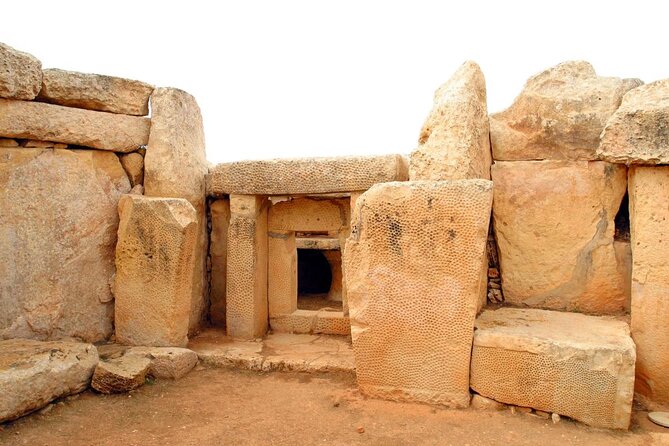
- UNESCO Hagar Qim: A main prehistoric site with big views over the Mediterranean and Filfla.
- Short visit windows: Around 45 minutes at each main stop means fast, focused sightseeing.
- Optional Blue Grotto boat: Weather-dependent from Wied iz-Zurrieq, with boat cost not included.
- Mobile ticket: No need to scramble for printed passes.
- Guide commentary matters: The quality of the explanation can make or break the feel of the tour.
Limestone, temples, and that big Mediterranean view
This tour is built around two Malta themes that don’t always get paired so neatly: the stone that powered Maltese construction and the prehistoric temples carved from that same long-gone world.
The limestone angle is clever because it turns Malta from a postcard island into an actual materials story. Limestone isn’t just a background detail here. It’s a reason the island’s architecture looks the way it does, and it helps you understand why quarrying became such a core craft.
Then comes Hagar Qim, the UNESCO-listed megalithic site that rises above the sea. The spot feels dramatic: wide Mediterranean views, the islet of Filfla visible from the area, and a setting that makes you picture how people once traveled and worshiped in a coastal world.
The payoff for you is momentum. In about four hours, you go from an industrial, human-scale story (quarrying) to a spiritual, monument-scale story (temples). It’s a good use of limited time in Valletta, especially if you’re trying to avoid spending a whole day on just one location.
You can also read our reviews of more guided tours in Valletta

$40.55 and where the value actually comes from
At $40.55 per person, this isn’t a luxury private tour. The value is in three practical things: guided context, included admissions, and transport from select hotels.
You get admission included for:
- the Limestone Heritage Park & Gardens stop, and
- Hagar Qim & Mnajdra Archaeological Park (with the tour’s arrangement focusing on Hagar Qim Temples).
You also get an air-conditioned vehicle, which matters in Malta when the sun is doing its best work.
The other big value lever is the guide. Reviews point to guides who do a strong job explaining not just the facts, but the meaning of the megaliths. When that happens, your 45 minutes at Hagar Qim feels fuller. When it doesn’t, you end up doing more “watch the guide” and less “learn something.”
So here’s my take: if you like tours that give you a story while you walk, this is solid value. If you prefer wandering at your own pace and don’t want structured timing, you might feel the constraints.
How the day runs: pickup, small-group pace, and meet-up pressure
The tour lasts about 4 hours total, with around 45 minutes at each main stop. That structure is the heart of both the strength and the drawback.
On the plus side, you’re not stuck in one place too long. You get quarry history, then you switch gears to prehistoric architecture, then you have the option to tack on a Blue Grotto boat from Wied iz-Zurrieq if weather cooperates.
On the reality-check side: 45 minutes passes quickly at an outdoor archaeological site. If you want extra time to re-read signs, take more photos, or slow down to enjoy the view, you’ll need a guide who manages the group clearly and keeps you oriented.
A couple of reviews mention issues like unclear timing or feeling rushed at the temples while more time went elsewhere. That tells you something important as a reader: this tour is only as smooth as the guide’s pacing and communication.
My advice for you:
- Know in advance that you’re there for the highlights, not a deep archaeological seminar.
- When you arrive at each stop, quickly locate the main viewing areas and then ask one good question. You’ll get more value than if you wait for perfect timing later.
- Stay alert for the meet-up instructions. With short windows, missing even 5 or 10 minutes can throw your whole day off.
Stop 1: Limestone Heritage Park & Gardens and the quarry story behind Malta
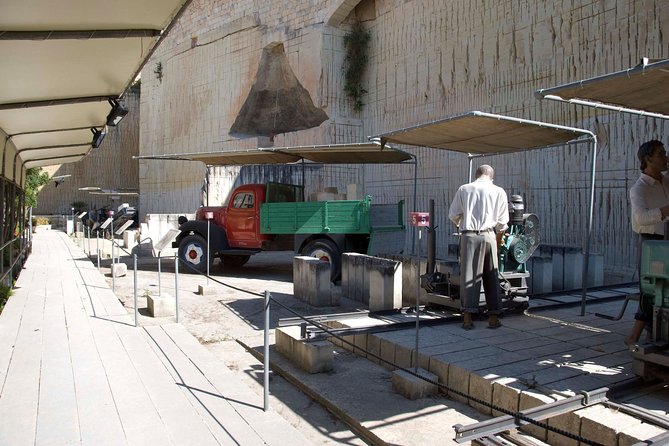
The Limestone Heritage Park & Gardens is where the tour’s title really makes sense. You start at one of Malta’s oldest limestone quarries, transformed into an attraction that shows quarrying as an evolving craft.
Why this stop works:
- You see the quarry as an actual working landscape, not just a static ruin.
- You learn how limestone was used for building purposes over thousands of years.
- The museum-style setup makes it easier to connect the stone you’ll later see at Hagar Qim to the industry that supplied the raw material.
You’ll spend about 45 minutes here, with admission included. That’s enough time to understand the basics and get a sense of scale. You’re not expected to master a geology degree. Still, it can change the way you look at Maltese buildings during the rest of your trip because limestone becomes a tangible material, not a background color.
What to watch for while you’re there:
- Look for explanations tying quarrying to Maltese construction traditions.
- Use the time to build a simple mental link: quarry → shaping stone → temples and other monumental buildings.
- If your guide offers quick examples of how techniques changed over time, lean in. Those “small” comments are often what turn a museum stop into a memory.
A small caution: because this is a guided tour with limited time, it may feel like a tight sprint if you’re the type who likes to linger in museums. But if you want context that makes the temple visit click, this is a great first chapter.
Stop 2: Hagar Qim temples, UNESCO megaliths, and views over Filfla
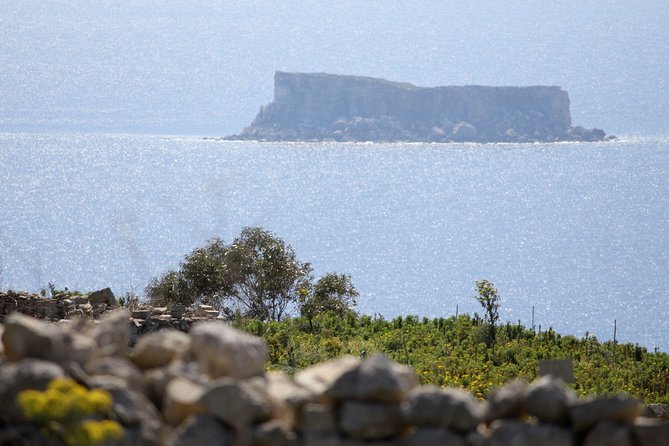
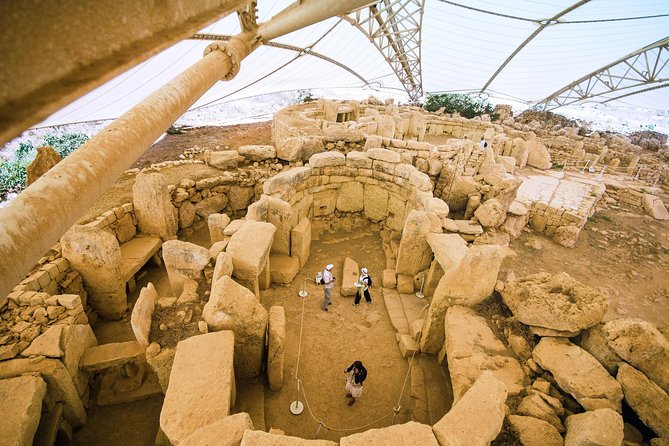
Hagar Qim is the tour’s big headline, and rightfully so. It’s a major prehistoric site and part of the UNESCO Megalithic Temples of Malta group. From the area, you get a wide expanse of the blue Mediterranean and you can see Filfla.
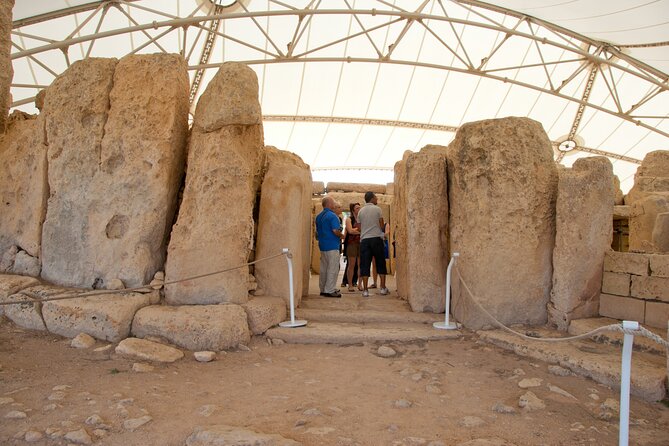
The guide is crucial here. Reviews mention guides who explain the context of the megaliths clearly, and you can feel the difference between “standing in front of stones” and “understanding why these stones are so important.” When a guide gives you a narrative—how sites relate, what you’re looking at, and how people likely used these spaces—your 45 minutes starts to feel like you’re inside the bigger story.
In the time you have, you can expect to:
- get the core overview of Hagar Qim,
- see the key features of the temple complex, and
- take in the setting that makes the site so memorable.
Now, the watch-out: the temple area contains multiple parts, and one review specifically called out missing a second temple further down the hill. Even if your experience runs smoothly, the itinerary time limits can mean you don’t see every section in as much depth as you’d like.
So if Hagar Qim is your top reason for booking, treat it like this:
- Prioritize getting a good understanding of the main structures.
- Take photos early if you’re tempted to chase views later—because later can come fast in a short visit window.
- If you’re confused about what you’re seeing, ask immediately. You’ll get more out of your one question than the extra time you might not end up with.
You can also read our reviews of more historical tours in Valletta
Wied iz-Zurrieq and the optional Blue Grotto boat ride
After Hagar Qim, the tour goes to Wied iz-Zurrieq, a spot where the sea scenery does the heavy lifting. You’ll have about 45 minutes here.
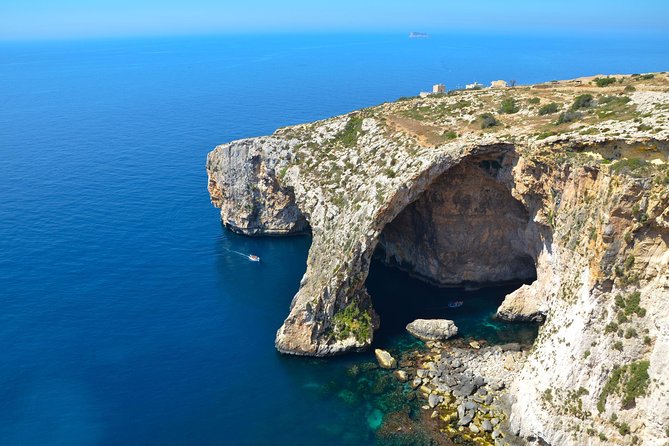
This is where the Blue Grotto comes in. The boat trip is optional, depends on weather, and the boat price isn’t included. In other words: this is your chance to add a little extra sea magic if conditions are good, without locking you into it.
Even if you don’t take the boat, Wied iz-Zurrieq can be worth it as a change of pace. You go from stone monuments to coastal atmosphere, and you get a different kind of “Malta moment” before heading back.
My practical tip: if you’re choosing whether to take the Blue Grotto boat, keep an eye on the day’s weather. If sea conditions aren’t ideal, skipping can be the more comfortable call and you won’t lose the value of the rest of the tour.
Also, because the boat isn’t included, think of it as a bonus add-on. It can fit well if you’re already excited about the sea sights, but it shouldn’t be your only reason for booking.
Guide quality: the difference between informative and rushed
A guided tour is basically a deal with time. The guide’s job is to convert your limited hours into understanding. That’s why reviews highlight guide commentary so strongly—when it’s good, the itinerary feels meaningful even with short stop times.
One review praised Maria for explaining things and giving context to the megaliths. Another review complained about an unstructured approach and unclear timing—less time at the temples and not enough communication about when and where to meet.
You can’t control who you get, but you can control how you participate:
- Start each stop with one goal question. Example: What am I supposed to look at first here?
- Ask your guide for a quick “must-see” list at Hagar Qim so you’re not wandering uncertainly when time tightens.
- Pay attention when the group is told where to gather next. When time is short, follow instructions the first time.
If you’re the type who likes a slower pace, don’t expect this tour to feel like an unhurried museum day. Expect a guided hit of history and scenery, with some built-in time pressure.
That said, if you pick your timing well and you’re comfortable being guided, this style works very well for first-time visitors.
Who should book this tour, and who might want something else
This tour is a strong fit if:
- you’re staying in or near Valletta and want a half-day plan,
- you want UNESCO Hagar Qim with interpretation rather than just photos,
- you like the idea of understanding Malta through limestone quarrying and building materials,
- you enjoy structured time blocks that prevent you from overthinking logistics.
It might be less ideal if:
- you’re hoping to thoroughly explore multiple parts of Hagar Qim with long viewing time,
- you’re sensitive to rushed pacing,
- you want a lot of flexibility at each stop (this tour is designed for set windows).
If your Malta trip is short and you want a balanced mix—stone industry plus prehistoric sites—this is a good use of your schedule. If your schedule allows a longer day at Hagar Qim alone, you might choose that instead. But for a first pass at the main sights, this is well aimed.
Should you book? My decision call
I’d book this tour if you want a smart half-day that connects two Malta stories: how limestone quarrying shaped what gets built, and how Hagar Qim shows what people built before “tourism” existed.
It’s also a good booking when you want:
- included admissions for the key stops,
- hotel pickup from select locations,
- an air-conditioned ride,
- and an optional Blue Grotto add-on if the weather behaves.
I would hesitate if Hagar Qim is the only thing on your must-see list and you’re the kind of visitor who needs a longer, quieter look at every temple section. The time windows can make that harder.
If you go, go with the right expectation: this is a highlights-with-context day. When the guide communicates clearly, you’ll come away feeling like the stones make sense—and that’s the whole point.
FAQ
How long is the Hagar Qim and Limestone Heritage guided tour?
It’s about 4 hours total.
Is hotel pickup included?
Pickup is offered from select Malta hotels.
Do I need a printed ticket?
You’ll receive a mobile ticket.
What admission is included?
Admission is included for the Limestone Heritage Park & Gardens and for Hagar Qim Temples.
Is Mnajdra included too?
This tour includes Hagar Qim Temples as part of the scheduled time, and it does not also include Mnajdra.
How long do we spend at each stop?
The stops are roughly 45 minutes each.
Is the Blue Grotto boat trip included?
No. A boat trip to the Blue Grotto is optional and weather permitting, and the boat price is not included.
What’s the group size limit?
The tour has a maximum of 50 travelers.
What’s the price?
The price is $40.55 per person.