REVIEW · DUNEDIN AND THE OTAGO PENINSULA
Heritage Dunedin City Walking Guided Tour
Book on Viator →Operated by Tales From Darkest Dunedin · Bookable on Viator
Dunedin history hits different when you walk it. This Heritage Dunedin City guided tour moves through the historic center with a local historian, mixing landmark architecture with stories that connect early settlers, Māori relationships, and the day-to-day reality of building a town.
I especially love the chance to see places up close instead of just staring at them—like the Dunedin Railway Station foyer with its Royal Doulton tiled walls, and the quick stop at the Toitu Otago Settlers Museum for the Josephine locomotive story. One thing to consider: it’s an outdoor walk that can include a hilly section, so wear grippy shoes and don’t schedule a super tight plan right after the finish.
In This Review
- Quick hits before you go
- A 1.5–2 hour walk that starts and ends where it matters
- The Octagon to First Church of Otago: where the city’s center tells the story
- Dunedin Railway Station foyer: the detail stop you’ll remember
- Toitu Otago Settlers Museum: Josephine and the “nearly lost” lesson
- Queens Gardens: Scottish settlers, Kai Tahu welcome, and the mud reality
- Princes Street Exchange and the Cargill memorial: playful stone with a message
- Broadway Medical Centre area: shoe shops, scandal, and the darker thread
- Speight’s Brewery finish: plan a second look, or stay for a drink
- Guides in real life: Gregor and Lolene’s storytelling style
- Value check: what you get for about $40.34
- Who should book this walking tour
- Should you book Heritage Dunedin City Walking Guided Tour?
- FAQ
- FAQ
- How long is the Heritage Dunedin City walking tour?
- Where do I start and where does the tour end?
- What is included in the tour price?
- How big is the group?
- Is the tour outdoors?
- What should I do after the tour ends at Speight’s Brewery?
Quick hits before you go
- Small group (max 10) makes it easier to hear the stories and ask questions.
- Royal Doulton tiled foyer at Dunedin Railway Station is the kind of detail you’d miss on your own.
- Toitu museum stop includes the Josephine locomotive tale and how it survived history.
- Queens Gardens context ties early Scottish settlement to welcome from Kai Tahu Māori and the reality of rain and mud.
- Princes Street Exchange features the Cargill memorial monkeys and other stone carvings.
- Speight’s Brewery finish gives you an easy place to continue with a drink or food.
A 1.5–2 hour walk that starts and ends where it matters
This is a downtown walking tour that takes about 1 hour 30 minutes to 2 hours. You begin at 50 The Octagon in central Dunedin and end at Rattray Street. That routing is handy: it’s easy to pair the tour with other sights in the same area, and you finish near a place where you can stay for a while.
The group is limited to up to 10 people, which keeps things conversational. In practice, this matters because you’re walking between multiple buildings and you want the guide’s explanations to land while you’re still standing in front of the thing they’re describing.
Weather does matter here. The experience requires good weather, and one review notes there’s a hilly section, so plan for uneven sidewalks and bring a light rain layer if the forecast looks moody. If you’re traveling with a mix of ages, this tour’s pace generally works well for people who still want plenty of stories without a grind.
You can also read our reviews of more tours and experiences in Dunedin and The Otago Peninsula.


The Octagon to First Church of Otago: where the city’s center tells the story
The tour starts in The Octagon, and the guide sets the tone right away by pointing out how much of Dunedin’s heritage survived by luck rather than perfect planning. That framing is useful because it changes how you look at buildings. Instead of seeing them as fixed scenery, you start thinking like a historian: what remained, what got replaced, and what almost disappeared.
You’ll also learn about the historic First Church of Otago as part of the heritage storyline. Even if you don’t consider yourself a church person, it’s a strong landmark for understanding how communities tried to build permanence fast—socially, spiritually, and politically.
One theme you should expect: the tour doesn’t treat early settlement like a simple success story. You get early relations between settlers and Māori woven into the narrative, which helps the architecture make more sense. Buildings don’t exist in a vacuum; people made choices, formed partnerships, and lived with the consequences.
Dunedin Railway Station foyer: the detail stop you’ll remember
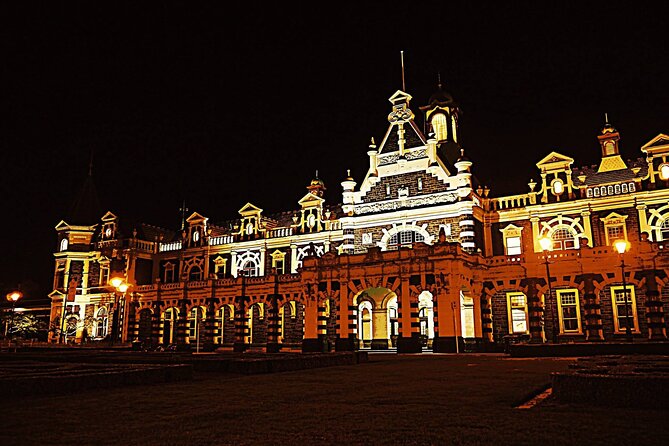
Your first major landmark break is Dunedin Railway Station. You even go inside the foyer, and the standout detail is the Royal Doulton tiled walls. That’s the kind of thing that feels special because it’s tactile—color, pattern, and craftsmanship that instantly makes the station feel more human than just a transit hub.
This stop is also about context. The station sits in the middle of the city’s growth story, so the guide uses it to talk about how Dunedin functioned as a connected place. Even with just about 10 minutes here, you get a clear idea of why rail mattered: it shaped movement, commerce, and the flow of people and goods during the colonial era.
If you like photography, this is also a natural place to pause. The tour frames the station as one of the most photographed buildings in the southern hemisphere—second only to the Sydney Opera House—so you’ll see it through a new lens: not just famous, but meaningful.
Toitu Otago Settlers Museum: Josephine and the “nearly lost” lesson
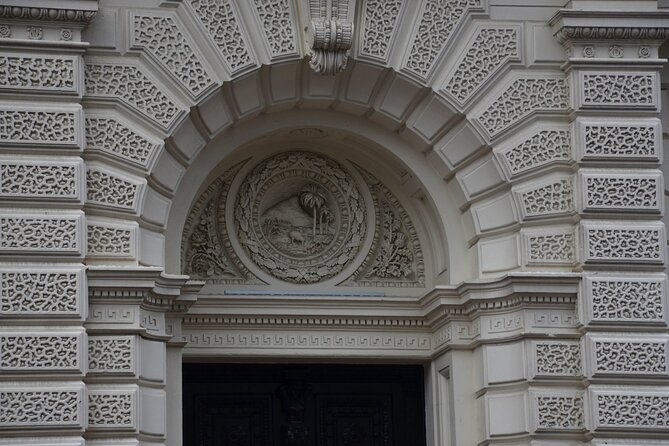
Next up is the Toitu Otago Settlers Museum, and the quick stop is built around a specific story: Josephine, the first locomotive in Otago. You’re in and out quickly—around 10 minutes—but the point is not to rush the museum. It’s to use the museum as a launchpad for a broader lesson: history can vanish fast unless someone protects it.
The guide focuses on how Josephine arrived, why it mattered, and how it was nearly lost to history before it survived. That story is surprisingly relevant even outside rail history. It nudges you to think about what gets preserved in museums versus what disappears because no one saved it in time.
This is also a great stop if you’re traveling with kids, teens, or anyone who learns best through a single character/object rather than a timeline. One locomotive becomes a shortcut to big themes: technology, settlement, and survival.
Queens Gardens: Scottish settlers, Kai Tahu welcome, and the mud reality
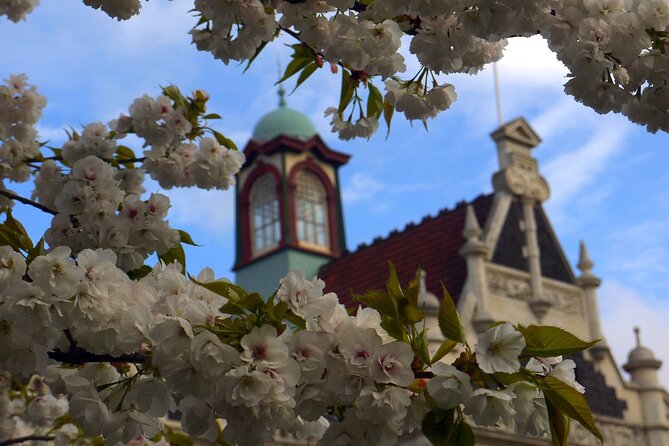
At Queens Gardens, the tour slows into a more reflective mode. You’ll hear about the first Scottish settlers and how they were welcomed by the Kai Tahu Māori. That matters because it adds texture to the early settlement story beyond dates and names.
The guide also brings in the less glamorous parts of making a new start—specifically rain and mud, and why it was still worth it. This is one of the tour’s strengths: it makes the past feel like lived experience. You can stand in a beautiful city garden and still understand how hard it was to build anything there.
Don’t skip this stop if you care about more than buildings. Gardens sound soft and calm, but here they become a record of settlement logistics and relationships. It’s a reminder that colonial history is not just grand architecture—it’s also weather, footing, and cooperation.
Princes Street Exchange and the Cargill memorial: playful stone with a message
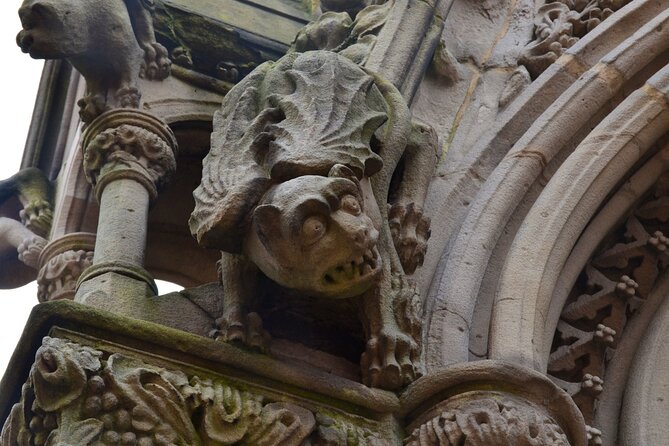
The walk then reaches Princes Street, including the Exchange area. Here you’ll see the winged monkeys of the Cargill memorial, along with other fanciful stone shapes.
This stop is short—about 20 minutes for this segment—but it’s a good example of how the guide balances “serious” history with points that feel almost cheeky. Those carvings help you understand that public spaces weren’t only solemn. People wanted beauty, personality, and symbolism in everyday city life.
It’s also a reminder that heritage isn’t always about grand monuments. Sometimes it’s the quirky details that survive in plain sight. If you like learning what to look for, this is one of those segments that makes you more attentive for the rest of your time in Dunedin.
Broadway Medical Centre area: shoe shops, scandal, and the darker thread
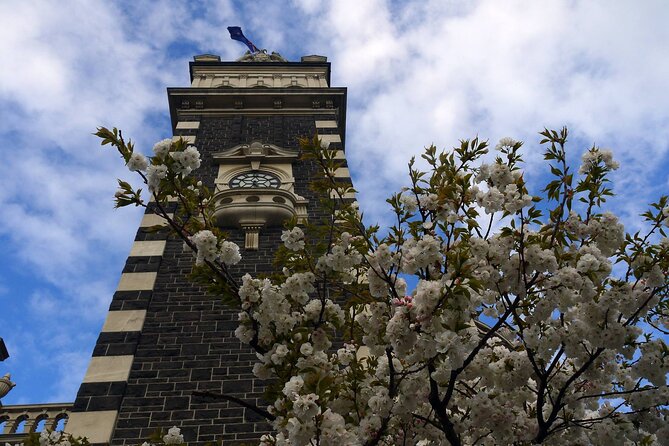
Another stop focuses on the Broadway Medical Centre area, which used to be the site of a large shopping center. The guide tells a story tied to Mr and Mrs Loft and a shoe shop there, including a scandalous and tragic ending.
This is where the tour’s title vibe makes sense. One reviewer described a mix of mainstream history with dark drama and intrigue, and this is one of the spots where that tone shows up. The guide uses local details to show how ordinary streets held real lives—commerce, relationships, and conflict—not just peaceful progress.
If you dislike heavy topics, you can still handle this as part of the overall city portrait. It’s not gore-and-chaos. It’s more about realism: the past included suffering and shock, and the buildings still stand as witnesses.
Speight’s Brewery finish: plan a second look, or stay for a drink
The tour ends at Speight’s Brewery (noted here as Dunedin’s oldest pub). You get about 10 minutes to take in the surrounding heritage buildings before you decide what you want next.
A nice option is to stay right there—there’s a restaurant and gift shop. If you’d rather keep walking, your guide can also take you back toward the starting point in the Octagon, depending on how your group feels.
This finish is practical. After 1.5–2 hours of stories, you’re ready to digest. Having a comfortable end point makes it easier to turn the tour into a smooth afternoon instead of a hard stop where you’re suddenly figuring out logistics.
Guides in real life: Gregor and Lolene’s storytelling style
The experience is powered by the guide, and the strongest praise in the material centers on storytelling quality. Guides like Gregor and Lolene are repeatedly highlighted for being passionate about Dunedin and for telling stories that connect architecture to real people.
I like that the style often includes humor alongside the darker moments. It’s not just dates and plaques. You get the feel of why these buildings were important to citizens at the time—and why they still matter now.
There’s also a practical advantage to a good guide: when the group asks questions, the answers can go beyond the planned route. One review mentions that a guide took extra time to answer questions and show more things, which is exactly what you want from a guided walking tour—help when you’re curious, not just a script.
Do note one caution: timing can be affected by schedule pressure. One review describes an instance where the tour ran late and the overall duration felt shorter than advertised. That doesn’t mean it’s typical, but it is smart to build a little buffer into your day.
Value check: what you get for about $40.34
At $40.34 per person, this tour sits in the “good value if you like context” category. You’re paying for an in-person guide, plus guided access that includes museum and landmark stops where admission is listed as free.
The math works because the itinerary packs in multiple high-impact places in a short time:
- A landmark interior (the railway station foyer),
- A focused museum story stop (Toitu and Josephine),
- And several heritage streetscape moments where the guide tells you what you’re looking at.
If you’re the type who can wander old streets for fun but wants the meaning stitched in, this tour saves hours. You can still DIY after, but you’ll understand more once you’ve heard the why.
Also, the small group size helps. Paying the same price in a crowd doesn’t always feel like value. Here, the limit to 10 travelers supports a more personal experience.
Who should book this walking tour
This is a great fit if you:
- Love architecture and want the stories behind what you’re seeing,
- Want a quick, organized way to understand Dunedin’s colonial-era evolution,
- Prefer a human scale tour, with room for questions and personality,
- Appreciate a balanced mix—mainstream city-building stories plus darker intrigue and tragedy.
It’s also a solid choice for varied ages, since it’s designed as a walk with landmark stops rather than a long day of nonstop sightseeing. Just bring your comfort items for walking outdoors, especially if weather looks unsettled.
Should you book Heritage Dunedin City Walking Guided Tour?
I’d book it if your idea of a good trip includes standing in front of a real building and getting the story that explains why it’s there. The stops are well chosen for first-time visitors: Octagon to railway station, a museum mini-hit, and then the streetscape details on Princes Street and around the Exchange area.
Skip it (or at least rethink timing) if you’re strict about exact duration. The experience requires good weather, and a small amount of hill and schedule variability can affect how quickly you move. If you’re flexible and you want the city’s heritage explained clearly, this is a strong way to spend your time in central Dunedin.
FAQ
FAQ
How long is the Heritage Dunedin City walking tour?
It runs for about 1 hour 30 minutes to 2 hours.
Where do I start and where does the tour end?
You start at 50 The Octagon, Central Dunedin and the tour ends at Rattray Street, Central Dunedin.
What is included in the tour price?
The tour includes an in-person guide who provides commentary and direction. Admission tickets for the listed stops are shown as free.
How big is the group?
The tour has a maximum of 10 travelers.
Is the tour outdoors?
Yes. It is a walking tour and the experience requires good weather.
What should I do after the tour ends at Speight’s Brewery?
The tour ends in the area, and you can stay for a drink or meal at Speight’s. You can also ask your guide to take you back to the starting point in the Octagon if you want.