REVIEW · TUNIS
Historical Tour of Ancient Carthage
Book on Viator →Operated by Savor Tunisia Tourism & Services · Bookable on Viator
Carthage reads like a timeline. In just a few hours, you’ll see how Carthage moved from Punic beginnings to Roman power and early Christian faith. It’s a tight route with a local guide that helps you make sense of big, layered sites without wasting time.
I especially like the way this tour gives you admission tickets built into the stops, so you’re not hunting down entry fees as you go. I also like the human side of it: in my experience, tours really take off when your guide can answer questions clearly, and guides like Tarek are known for doing exactly that—and even helping with practical requests like finding lunch.
One thing to consider: the whole outing is about 3 hours 30 minutes, so it’s not a slow, wander-all-day pace. Also, it requires good weather, so plan flexibility if conditions are poor.
In This Review
- Key things you should know before you go
- Carthage in 3.5 hours: what you’ll really see from Tunis
- Stop 1: Site Archeologique de Carthage and the Arena of Carthage
- Stop 2: Punic Ports & Museum and the ancient port life
- Stop 3: Tophet de Carthage and the Alter of Tophet
- Stop 4: La Basilique de Saint Cyprien and Mediterranean views
- The guide factor: why Tarek’s style matters
- Transportation and the private-group setup (your day stays smoother)
- Price and value: why $104 can make sense for Carthage ruins
- What to plan for: time, questions, and lunch
- Who this tour fits best
- Should you book? My practical call
- FAQ
- How long is the Historical Tour of Ancient Carthage?
- Where does the tour take place?
- Is pickup offered?
- Does the price include admission tickets?
- Is lunch included in the tour price?
- Is this a private tour?
- How is transportation handled?
- Are there any discounts?
- What is the cancellation policy?
- Is this tour suitable for most people?
Key things you should know before you go
- Private-group feel: your experience is restricted to your group, not a mixed crowd flow.
- Tickets included on-site stops: you’ll cover the main ruins and museum elements without extra entry hassles.
- Strong guide impact: Tarek comes up again and again for making the sites click and answering lots of questions.
- A sequence that makes history make sense: Roman arena first, then Punic ports, then Tophet, then St. Cyprian’s basilica ruins.
- All-in transport: you get private transportation plus fees and taxes included.
- Short and focused: each stop is timed, so you’ll see a lot, but you won’t park yourself for hours.
Carthage in 3.5 hours: what you’ll really see from Tunis
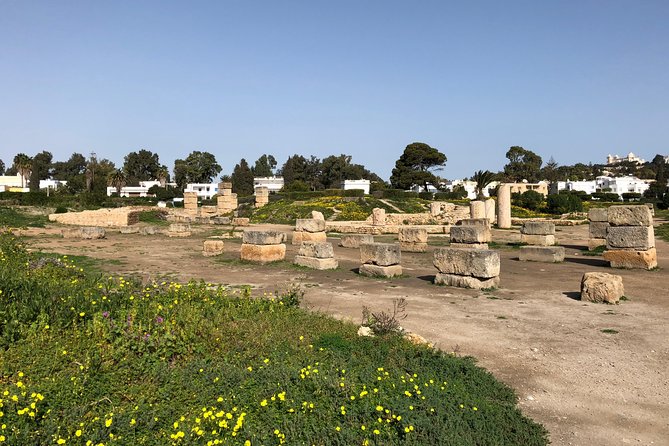
If you’re short on time in Tunis, this tour is a smart fix. You’re not trying to plan four separate destinations across Carthage on your own. Instead, you follow a clear story: Roman public life at the arena, seafaring and trade at the Punic Ports, religious practice at the Tophet, and early Christian presence at the basilica ruins.
The pacing is important. Each stop is deliberately limited—around 30 to 45 minutes—so you’ll move with momentum. That’s great if you like “see it, learn it, move on.” If you’re the type who needs extra time for slow photos or long readings, you may want to add a self-guided hour on your own afterward.
You can also read our reviews of more historical tours in Tunis

Stop 1: Site Archeologique de Carthage and the Arena of Carthage
Your first visit is the Site Archeologique de Carthage, with time focused on the Arena of Carthage. This is an ancient Roman arena that’s been well preserved, which means you get an actual sense of scale instead of just scattered stones.
Why this start works: Roman Carthage sets the visual tone. Once you understand how Romans built and used large public spaces, the later stops feel less random. You’ll hear the arena stories as you explore, and you’ll get a quick education on what you’re looking at—helpful because ruins can look similar if you don’t have a guide explaining details.
The downside of starting with a big landmark is that it can feel like a lot at once. The arena visit is about 45 minutes, so give yourself permission to skim and then ask questions rather than trying to absorb everything in one pass.
Stop 2: Punic Ports & Museum and the ancient port life
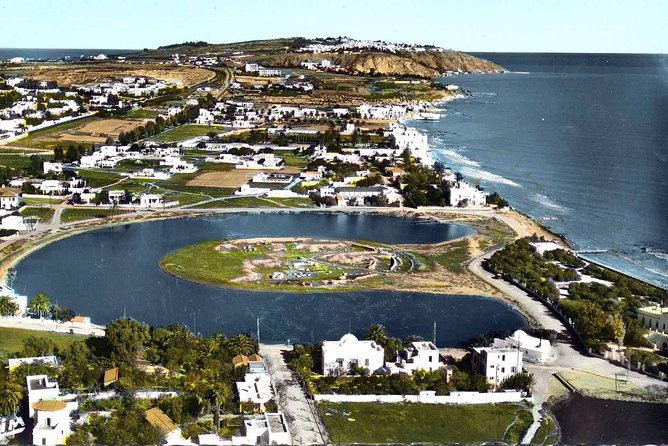
Next comes the Punic Ports & Museum, where you’ll learn about the ancient port of Carthage. Ports aren’t just about boats. They’re about power, supplies, and who controlled trade routes.
The value here is the walk through the ruins of the port area—something you might skip if you were DIY. The guide helps connect what’s left on the ground to the bigger picture of Carthage as a serious maritime city. That makes this stop feel more grounded than a museum-only experience because you’re linking artifacts to real geography.
It’s also short, about 30 minutes, so you’ll want to listen for the guide’s main points. If you’re prone to distraction, this is the moment to stay focused—because port history is where the later religious and Roman transitions start to feel connected.
Stop 3: Tophet de Carthage and the Alter of Tophet
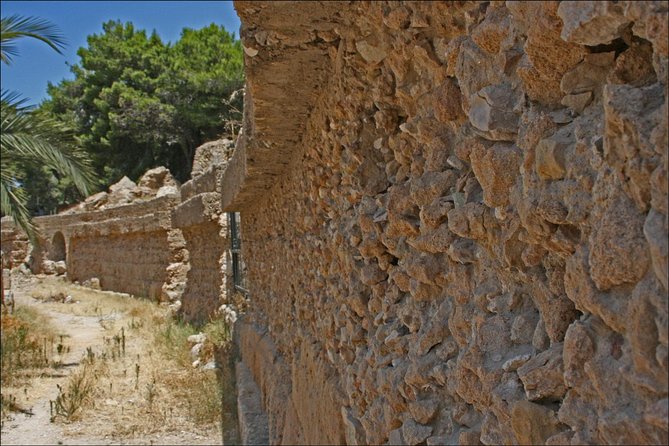
Then you’ll visit Tophet de Carthage, including the Alter of Tophet. This is where the tour turns more serious. You’ll learn about the Carthaginian religion and its practices at an ancient religious compound.
This stop is fascinating, but it’s not “light entertainment.” If you prefer only upbeat ruins and simple storylines, this may feel heavy. But if you want to understand how people lived, believed, and made choices in the ancient world, it’s a key chapter.
The time here is about 30 minutes. That’s enough for a guided overview, but not enough to analyze everything at a deep personal pace. The best strategy is to go in ready to ask questions—especially if you’re trying to understand ancient religious practices without forcing modern assumptions onto old beliefs.
Stop 4: La Basilique de Saint Cyprien and Mediterranean views
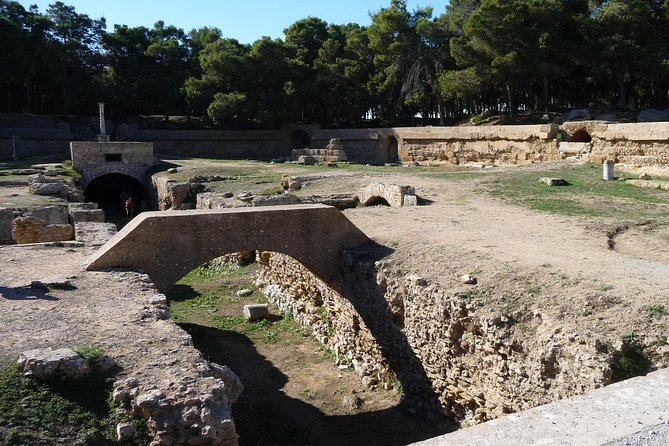
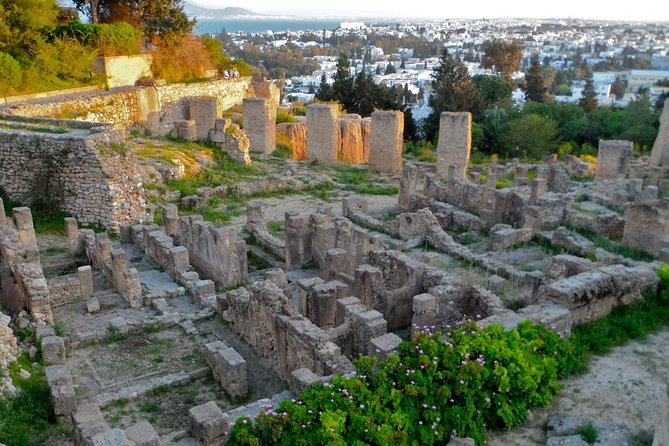
The final stop is La Basilique de Saint Cyprien, where you’ll explore the ruins of St. Cyprian’s basilica. This site sits in a place with major payoff: the ruins overlook the Mediterranean, and you’ll get views that change the whole mood of the day.
You also get an important historical note: it’s described as one of the oldest churches in North Africa. That matters because it shows you the religious shift from earlier eras toward early Christian presence—and it does it in a way you can actually see from the site.
This stop is also timed at around 30 minutes, so don’t spend the whole time racing for the perfect photo. Take a moment to look out first, then turn back to the ruins. The contrast helps the history land. The sea view makes the place feel real, not just old.
The guide factor: why Tarek’s style matters
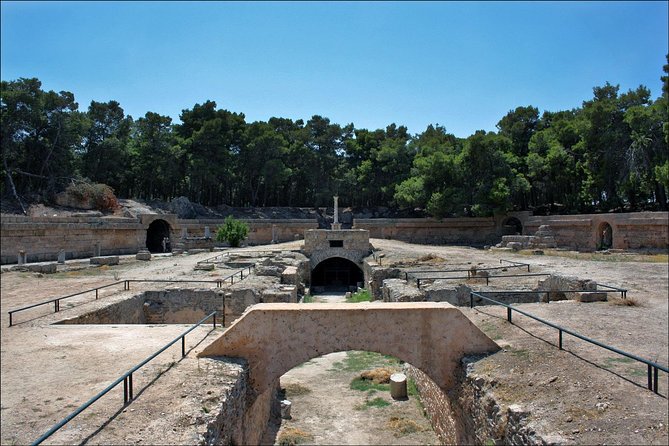
A big reason this tour earns such a strong score is the guide experience. In particular, Tarek comes up repeatedly as a guide who answers lots of questions and helps you connect the dots across the sites.
What you should expect from a good guide like that:
- Clear explanations of what you’re seeing at each ruin
- Quick context so the next stop makes sense
- Room for your questions, not just a lecture that barrels through
One detail I really appreciate from real-world experiences with this kind of tour: sometimes guides also help with practical needs. There’s even an example of Tarek making sure someone got the shwarma they wanted for lunch. That doesn’t change the history, but it changes the day—and it’s a good sign that your comfort matters to the people running the tour.
Transportation and the private-group setup (your day stays smoother)
This experience includes private transportation and all fees and taxes. In plain terms: you’re not piecing together rides, paying extra entry fees at the last second, or dealing with “how long until we’re there” stress.
Pickup is offered, and the tour is near public transportation. So even if you don’t use pickup, you’re not stuck in the middle of nowhere. Still, pickup can be a big time-saver in Tunis traffic, especially when you’re working with a fixed 3.5-hour window.
The “private experience restricted to your group” part is also worth noting. You’ll get a calmer vibe than you would on a large group bus, and it’s easier to ask questions when the guide isn’t juggling a crowd.
Price and value: why $104 can make sense for Carthage ruins
At $104 per person for about 3 hours 30 minutes, this tour isn’t the cheapest way to see Carthage—but it often lands as good value because of what’s included.
Here’s how to judge it:
- Admission tickets are included for the arena, Punic port museum/ruins stop, Tophet, and the basilica ruins. That alone reduces add-on costs and friction.
- Private transportation is included, which matters because Carthage isn’t a one-stop “walk there from your hotel” kind of day.
- All fees and taxes are included, so you’re not surprised at checkout with extra line items.
- There’s also group discounting, which can make it even more reasonable if you’re traveling with friends or family.
If you were DIYing, you’d likely spend time figuring out transport and entry, then lose the advantage of someone tying together the story across the four stops. For many people, that time savings and guidance is the value you’re paying for.
What to plan for: time, questions, and lunch
This is a quick route. Plan your day so you’re not rushing back immediately afterward. The tour itself is about 3.5 hours, and each site has a focused time window.
Lunch isn’t included, but the organizers provide recommendations for excellent lunch spots. That’s practical. It means you can eat without guessing, but you’re still free to choose what fits your tastes and dietary needs.
If you want a smoother day:
- Come ready with 2–3 questions about what you want to understand most (Roman public life? Punic trade? the religious practice at Tophet? early Christian sites?)
- Wear comfortable shoes. These are ruins and paths, and your feet will do most of the work.
- Bring something for sun or light rain. The tour requires good weather, but conditions can change fast.
Who this tour fits best
This tour is a strong match if:
- You want a guided introduction to Carthage’s key eras in a short time
- You like the idea of tickets included and private transport
- You want a guide-driven explanation rather than wandering and guessing
- You’re traveling with a group and want a more private feel
It may be less ideal if:
- You need a very slow pace with long stays at each site
- You prefer only one era (Roman, for example) and don’t want the day to jump between Punic, Roman, and early Christian themes
- You have zero flexibility for weather conditions
Should you book? My practical call
I think you should book if you’re time-limited and you want Carthage to feel clear, not confusing. The combination of timed stops, admission tickets included, and a guide like Tarek who’s known for answering questions makes it a smart way to get the big picture quickly.
If you can afford a bit more time in Carthage, you could also add free time after the tour to revisit a favorite stop at your own pace. But as a first outing to understand what Carthage is about, this plan is hard to beat.
FAQ
How long is the Historical Tour of Ancient Carthage?
It runs for about 3 hours 30 minutes.
Where does the tour take place?
The tour is in Tunis, Tunisia, with stops at ancient Carthage sites.
Is pickup offered?
Yes, pickup is offered.
Does the price include admission tickets?
Yes. Admission tickets are included for each listed stop.
Is lunch included in the tour price?
No. Lunch is optional, and you’ll be given recommendations for lunch spots.
Is this a private tour?
Yes. It is a private tour/activity, and only your group participates.
How is transportation handled?
The tour includes private transportation.
Are there any discounts?
Group discounts are available.
What is the cancellation policy?
You can cancel for free up to 24 hours in advance for a full refund. If you cancel less than 24 hours before the start time, the amount paid is not refunded. If it’s canceled due to poor weather, you’ll be offered a different date or a full refund.
Is this tour suitable for most people?
Most travelers can participate.