REVIEW · TUNIS
Guided tour in the UNESCO world heritage Medina of Tunis
Book on Viator →Operated by Saber ARRAKI · Bookable on Viator
Tunis medina feels like a living map. What makes this tour work is the UNESCO setting plus a guide who knows how the maze connects—Saber ARRAKI, a Tunisian National Tourism Office–approved certified guide. I especially like how the route mixes landmark monuments (like Zitouna Mosque) with everyday places (like Café du Souk), so you get a real feel for how the medina functions, not just what it looks like.
You’ll also enjoy the pace and format: a small group (max 15), frequent short stops, and time to look closely at details such as the Zitouna Mosque’s ancient columns. The main drawback to consider is simple: this is a lot of walking on uneven medina streets, and the experience requires good weather, so plan accordingly with comfy shoes and light layers.
In This Review
- Key Highlights You Shouldn’t Miss
- Entering the UNESCO Medina with a Plan (Not Just a Wander)
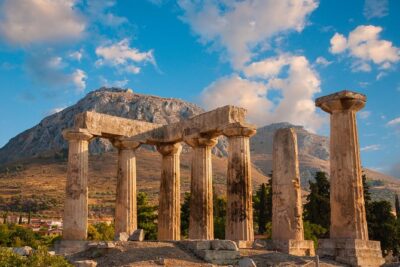
- Zitouna Mosque: The Olive Tree, Malikite Roots, and 184 Ancient Columns
- Dar Lasram: A Traditional Tunisian House You Can Read
- Slimaniya Medersa or Bir Lahjar: Education Inside the Souk Web
- Souk Al Attarine and Café du Souk: Perfume Street and a Real Break
- Rue de la Kasbah to Hammam el Kachachine: Crafts, Gold, and Public Life
- Rue du Pacha and Dar El Jeld: Monuments and a Photo Moment
- Price and Value: Is $46.53 a Good Deal?
- Should You Book This Guided Medina of Tunis Tour?
- FAQ
- How long is the Medina of Tunis guided tour?
- What time does the tour start, and where does it begin and end?
- What is included in the price?
- Are admission tickets included for every stop?
- How many people are in the group?
- Is private transportation provided?
- Can I cancel for a full refund?
- Is the tour dependent on weather?
Key Highlights You Shouldn’t Miss
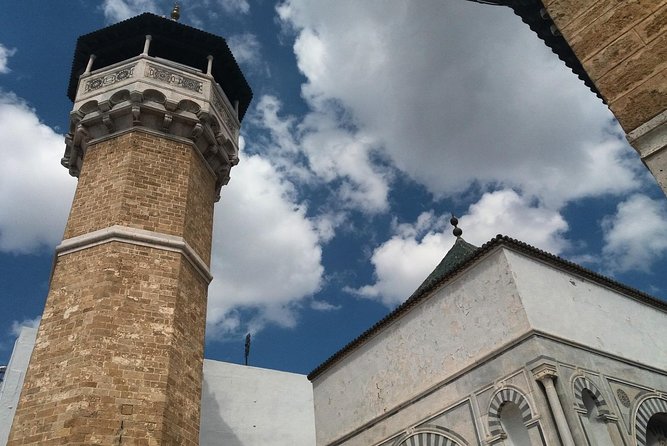
- Saber ARRAKI, a certified guide approved by Tunisia’s national tourism office
- Zitouna Mosque details that change how you see the medina
- Madrasas near the souks, with a choice between Slimaniya and Bir Lahjar
- Attarine perfumery shopping street plus Café du Souk for a break
- Short, smart photo stops around Hammouda Pasha Mosque, goldsmiths, and Hammam el Kachachine
- Rue du Pacha monuments packed into one walk
Entering the UNESCO Medina with a Plan (Not Just a Wander)
The tour starts at La Kasba in Tunis and ends at La Medina, with a 9:00 am start. Expect about 2 hours 30 minutes to 3 hours 30 minutes, depending on the rhythm of the group and how long you pause for photos. The group is capped at 15 people, which matters here—too-large groups in the medina turn into noise and elbows fast.
What I like about this format is that it’s designed for orientation. The medina can look like one long string of shops, but a good guide helps you connect each stop to the bigger story: where religion education sits, where crafts trade happens, and where people socialize. Saber’s background growing up in Tunis shows in the way he links places to real daily life. In practice, that means you’re less likely to get turned around, and more likely to notice the small architectural clues and street patterns that most people miss.
One more practical point: the tour asks for good weather. If rain is coming, it can be harder to enjoy outdoor segments and keep everyone moving comfortably. Also, since private transportation is not included, you’ll want to arrive already able to reach the meeting area via public transit.
You can also read our reviews of more tours and experiences in Tunis.

Zitouna Mosque: The Olive Tree, Malikite Roots, and 184 Ancient Columns
Zitouna Mosque (often called the Mosque of the Olive Tree) is the medina’s anchor point, and this stop sets the tone for everything after it. It’s tied to Malikism, and it’s described as the oldest and largest sanctuary in Tunisia’s capital. The numbers alone give you a sense of scale: the mosque covers about 5,000 m², has nine entrances, and includes 184 ancient columns—mainly reused from the Carthage site.
This is the kind of stop where a guide really earns their fee. Without context, you can walk past big doors and pretty stonework and feel like you saw something important. With context, you start seeing reuse, continuity, and the layers of Tunisian identity built into the building. You also get a better sense of how the surrounding souks relate to a place that draws daily attention.
Another bonus is the panoramic angle. People who’ve taken this tour mention a view from Medina rooftops looking toward the Al-Zaytuna Mosque. Even if you’re not obsessed with architecture, that viewpoint helps you understand the medina as a whole—streets, courtyards, and sightlines become easier to read.
Possible drawback: this is a major site, so you’ll likely spend more time looking and listening than shopping. If you want a purely shopping-focused morning, you may feel the tour slows down at the start—but if your goal is understanding the medina, Zitouna is the right place to begin.
Dar Lasram: A Traditional Tunisian House You Can Read
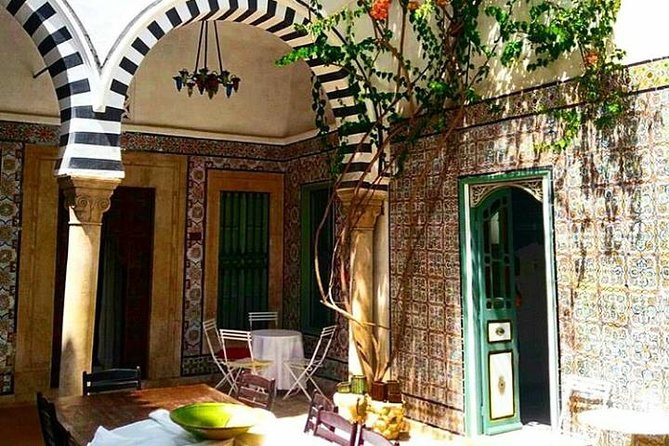
After Zitouna, you’ll move to Dar Lasram, described as a traditional Tunisian house with about 2,250 m² of space. The layout matters here. On the ground floor, it’s arranged with a shop and the service house. Upstairs is the main house, and there’s also a guest-house level on the upper part.
This stop works well because it turns the medina from a visual maze into a lived space. You start thinking in terms of how people organized work, hospitality, and family life inside one property. It also connects architecture to culture because the palace space is divided between the Medina Safeguarding Association and the Tahar-Haddad Cultural Club in the store area.
One thing to note: the Dar Lasram segment lists that an admission ticket is not included, and the time here is about 30 minutes. So if you want to go inside fully, budget a little extra and keep some cash or card readiness. If your priority is strictly external viewing, you can still benefit from the architectural explanation, but the extra ticket is the tradeoff.
Slimaniya Medersa or Bir Lahjar: Education Inside the Souk Web
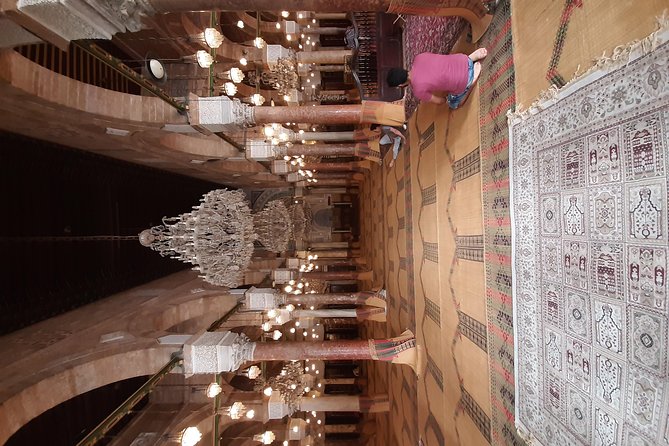
Madrasas are a key part of Tunis’s medina identity, and this tour builds that into the walking flow. You’ll encounter Medersa Slimaniya first, built in 1754 by Ali I Pasha in memory of his son Suleiman, who is said to have been poisoned by his brother. The location is also strategically placed: it’s near Zitouna Mosque, right around the corner of souk El Koutbiya and souk El Kachachine. Entry here is listed as included, and the stop is short (about 15 minutes), which keeps the tour moving without rushing your attention to key features.
Then there’s Bir Lahjar (Arts center Bir Lahjar), which you can choose to visit either instead of Slimaniya or as the alternative during the tour. Bir Lahjar is described as one of the madrasas of the medina and as a place that hosted Malikite students for decades from different regions of Tunisia. Admission is listed as included for this stop too, and it’s also about 15 minutes.
This “choice” matters for value. If you love religious education sites, you’ll be glad either option still gets you inside a madrasa context and not just outside signage. The drawback is obvious: you won’t see both madrasas on this walk. If you’re the type who wants to compare styles line-by-line, you might want a longer private plan later. For most people, this compromise is smart, because it protects time for the souks and mosque sights.
Souk Al Attarine and Café du Souk: Perfume Street and a Real Break
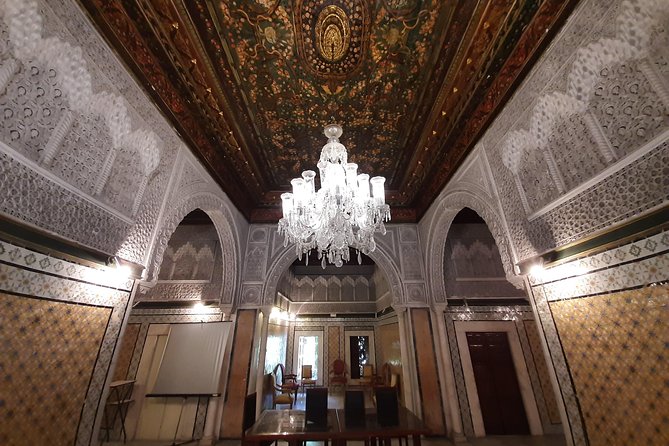
Souk Al Attarine (the perfumers’ souk) is one of the medina’s specialized lanes. It focuses on perfumes and beauty products, and it’s on the route for a reason: it gives you a sensory slice of Tunisian daily life. The stop is about 15 minutes, and the itinerary notes admission is free, so you’re not paying for the experience of simply watching and learning how the trade works.
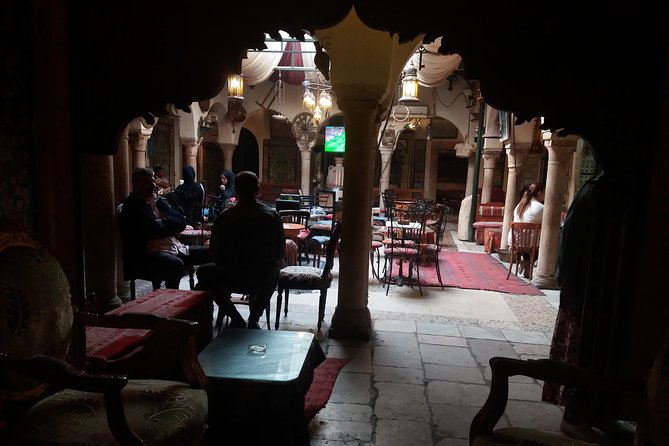
Café du Souk follows as a short reset—about 30 minutes on the plan, with admission free. This is the kind of break that makes a walking tour feel human instead of exhausting. Even if you don’t plan to stay long with a drink, the café stop acts like a pause button. You can regroup, take a photo, and listen to what your guide is saying without needing to walk every second.
Possible drawback: if strong scents are an issue for you, Attarine may feel intense. Also, souks naturally bring crowd pressure. The silver lining is that having a guide helps you keep the pace manageable and understand what you’re seeing instead of getting pulled along by sales energy.
Rue de la Kasbah to Hammam el Kachachine: Crafts, Gold, and Public Life
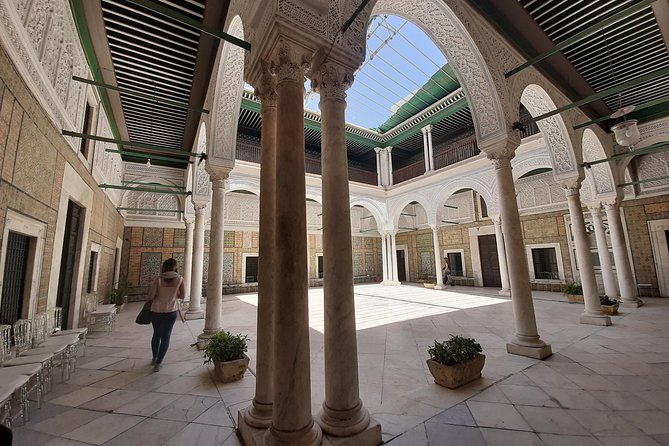
This section is where the medina shifts from big-ticket monuments to street-level character. You’ll have a series of short stops, each about 5 minutes, which sounds quick—but that’s exactly how you cover a lot without turning the tour into one long slog.
You start with Rue de la Kasbah and a discovery of Hammouda Pasha Mosque. Then you move to Souk el-Birka, the market of goldsmiths, where the focus is on craft trade rather than sightseeing. After that comes Hammam el Kachachine, introduced as a hammam discovery. These stops are free, and they function like “street chapters”—each one gives you a single theme to carry with you.
Then you’ll visit Grand Souk des Chechias, a traditional Chaouachine souk segment, with about 15 minutes for this part. This is a longer window than the 5-minute craft stops, so you can slow down and actually see how traditional goods are presented.
Why this mix is valuable: the medina isn’t just a museum. It’s a working community. By passing through goldsmith trade, hammam culture, and traditional crafts, you learn to read the medina as infrastructure, not just scenery.
If you’re worried about time: these are short segments. If you’re planning a major photo shoot or you want more in-depth craft watching, you may wish the stops were longer. The good news is that the guide’s context helps you make quick stops count.
Rue du Pacha and Dar El Jeld: Monuments and a Photo Moment
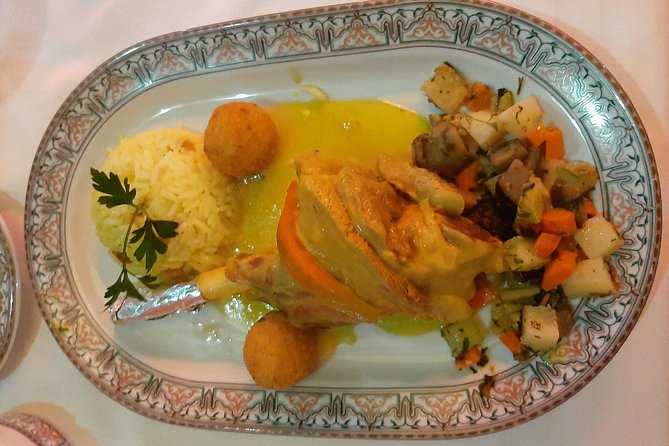
Rue du Pacha is another street that rewards attention. It’s listed as full of monuments, including dar Hammouda Pasha, didi ben arous mausoleum, and Hammouda Pasha Mosque. This section is about 30 minutes, free, and it gives you time to absorb how many important points are concentrated in one street corridor.
You’ll also get a short photo break near Dar El Jeld. The description notes it’s an old residence converted into a gourmet restaurant. Even if you don’t go inside, this is a helpful “visual bridge” between past architecture and how parts of the medina get repurposed today.
Possible drawback: with so many monuments in a single stretch, the risk is that you’ll move through it on autopilot. The antidote is to use the guide’s explanations to pick out what to look for—names, functions, and how one building relates to the street.
Price and Value: Is $46.53 a Good Deal?
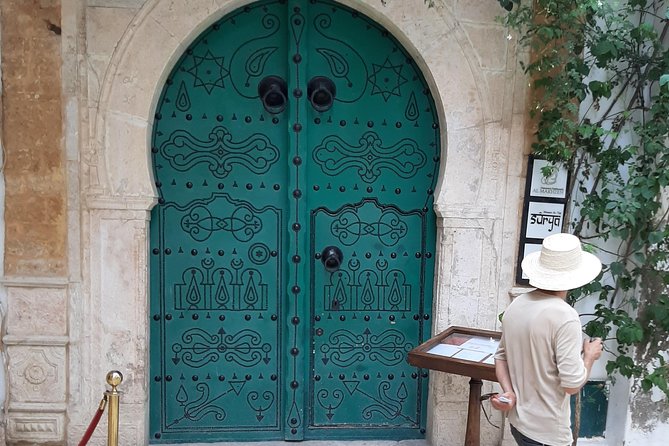
At $46.53 per person, this tour is priced like a smart half-day investment. The real value is not just that it’s guided—it’s that you’re paying for time in a complex UNESCO site with a certified local expert, plus access to certain entry points.
The tour includes all fees and taxes, and it uses a mobile ticket. In the itinerary, admission tickets are listed as included for Medersa Slimaniya and Arts center Bir Lahjar, while Dar Lasram is specifically noted as admission ticket not included. Everything else on the route is listed as admission free, including Souk Al Attarine, Café du Souk, Hammam and souk craft stops, and the various Rue segments.
So here’s how I’d think about value:
- If you like pairing landmark buildings with smaller streets, the included stops do the heavy lifting.
- If you’re excited to enter madrasas, you should feel good about this price because entry is included for those segments.
- If Dar Lasram matters to you, you may want to budget extra because the plan flags admission as not included.
Duration also plays a role. A 2.5–3.5 hour walk is long enough to create context and short enough that you still have energy left for lunch and your next medina wander.
Should You Book This Guided Medina of Tunis Tour?
Book it if you want a first-gear approach to Tunis’s medina. You’ll get a structured route through UNESCO landmarks, madrasas, and souks without needing to figure out the geography yourself. Saber ARRAKI’s reputation comes through in how people describe his patience with photos, his ability to answer questions about Tunisian culture, and his storytelling style. Small group size helps too, especially if you’re traveling with kids or you just don’t want the whole morning to feel like crowd control.
Skip or consider something else if you want a slow, shopping-first day where every souk gets long browsing time. This is a guided tour with multiple themes and short stops, so it’s built for breadth and orientation more than deep linger-at-every-counter time.
If you’re aiming to understand the medina as a lived community—mosque, school, trade, and everyday social life—this is a strong pick.
FAQ
How long is the Medina of Tunis guided tour?
It runs for about 2 hours 30 minutes to 3 hours 30 minutes.
What time does the tour start, and where does it begin and end?
The tour starts at 9:00 am. The meeting point is La Kasba, Tunis, Tunisia, and the tour ends in La Medina, Tunis, Tunisia.
What is included in the price?
The tour includes all fees and taxes, and it uses a mobile ticket.
Are admission tickets included for every stop?
Admission is listed as included for Medersa Slimaniya and for Arts center Bir Lahjar. Admission for Dar Lasram is noted as not included. Many other stops are listed as free.
How many people are in the group?
The group size is capped at a maximum of 15 travelers.
Is private transportation provided?
Private transportation is not included.
Can I cancel for a full refund?
Yes, you can cancel up to 24 hours in advance for a full refund.
Is the tour dependent on weather?
Yes. The tour requires good weather, and if it is canceled due to poor weather, you’ll be offered a different date or a full refund.