REVIEW · HUE VIETNAM
Hue Motorbike & Boat Tour to Countryside & Heritage Sites
Book on GetYourGuide →Operated by Adventure Journey Vietnam · Bookable on GetYourGuide
Hue changes fast when you ride it. This one-day tour is built for Hue Imperial history and countryside views, with your guide Hung steering the story. You’ll cover a lot of ground without feeling rushed, because the motorbike setup does the heavy lifting.
I especially love the mix of big-ticket sites (the UNESCO imperial core and the royal tombs) with smaller, human-scale stops like Thanh Toan Covered Bridge and the incense village. You’ll also get a private Perfume River dragon boat that slows the day down at just the right moment. One thing to keep in mind: royal tomb entrance tickets are not included, so you’ll want to budget for ticket combos before you go.
In This Review
- Key things I’d pencil in first
- A scooter-and-boat day that really fits Hue
- How the ride on a motorbike keeps the day efficient
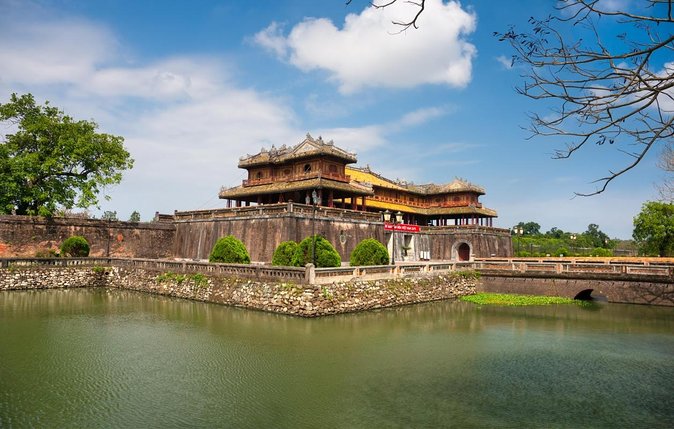
- Hue Historic Citadel: where the Nguyen dynasty lived and ruled
- Thanh Toan Covered Bridge and the market-walk feel
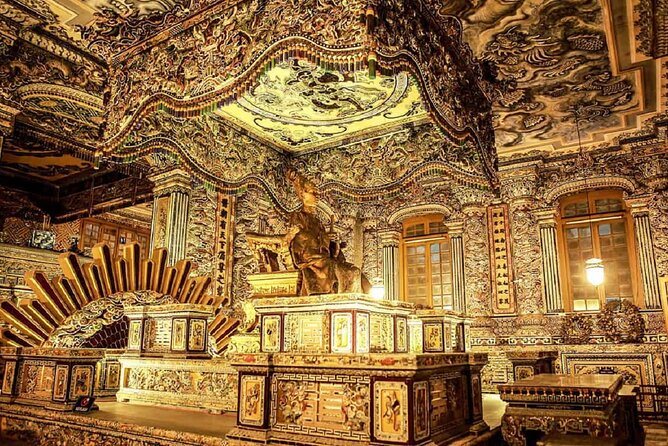
- Khai Dinh Tomb: the small one with the biggest style flex
- Thuy Tien Lake and the abandoned water park stop
- Vong Canh Hill: river views and Vietnam War perspective
- Tu Duc Tomb and Minh Mang Tomb: garden-scale power
- Dong Khanh Mausoleum and the pagoda side of Hue
- Tu Hieu Pagoda: home of retired eunuchs
- Thien Mu Pagoda: an imperial symbol with a modern history marker
- Tiger Arena in Thuy Bieu: entertainment turned brutal
- Thuy Xuan village: make incense sticks, not just buy souvenirs
- Perfume River dragon boat: the calm reset
- Budget and ticket reality: the $16 price and Royal Tomb entries
- Should you book this Hue motorbike and boat tour?
Key things I’d pencil in first
- Customizable Hue city route with a guide who can tweak stops to match what you care about
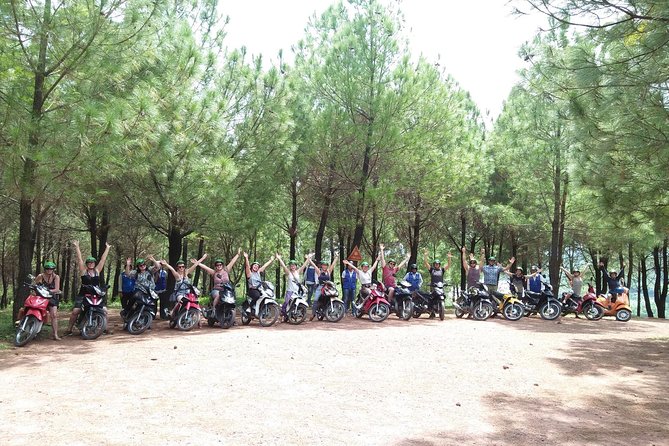
- Scooter with a driver + helmets, so you get the freedom without the white-knuckle part
- Royal tomb contrasts: Khai Dinh’s mixed styles, Tu Duc’s garden-scale design, and Minh Mang’s nature-plus-stone approach
- War-era and scenic viewpoints from Vong Canh Hill over the Perfume River
- Tiger and elephant arena lessons on entertainment that was brutal, not just historic
- Hands-on Thuy Xuan workshop where you can try making incense sticks and shop conical hats
A scooter-and-boat day that really fits Hue
This tour works because Hue is made for moving. The city’s imperial monuments sit close to river scenery, and the tombs spread out in ways you simply can’t enjoy on foot. The private setup matters too: you’re not stuck waiting for a big group to shuffle between gates.
At the center is the royal story of the Nguyen Dynasty. You’ll visit the imperial core, then walk into the tombs that show how power, family, and beliefs were carved into stone and gardens. And because you’re traveling by motorbike/scooter with a driver, you spend your energy on sights—not transport logistics.
The other half of the experience is everyday Hue. You’ll cross local bridges, browse a market area near Thanh Toan, and step into the incense-and-hat workshop at Thuy Xuan. That blend is what keeps the day from turning into only tomb photos.
You can also read our reviews of more tours and experiences in Hue Vietnam.

How the ride on a motorbike keeps the day efficient
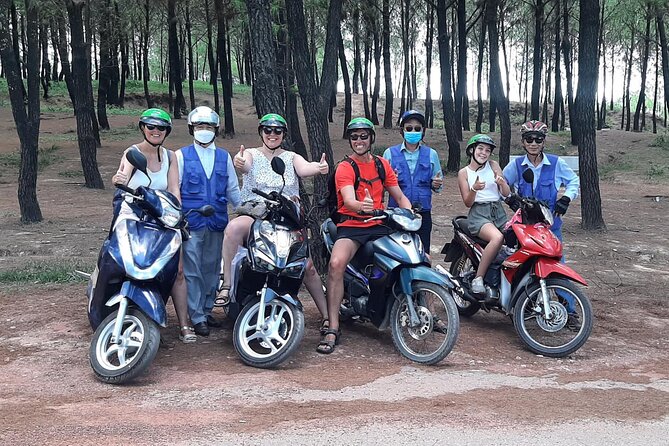
The tour includes qualified motorbikes with a driver and helmets, plus a guide who keeps the day structured. That means you can treat the ride as part of the sightseeing instead of a chore.
You’ll spend time on scooter segments between major sites, with shorter transfers (often around 15–45 minutes) and longer guided blocks at the stops themselves. When you’re sitting behind the driver, you can actually look outward—especially on the route toward viewpoints and river areas.
If you’re thinking about comfort: this is not a slow walking tour. Plan for a full day on the move, and take the break time seriously—because it’s what keeps the schedule enjoyable.
Hue Historic Citadel: where the Nguyen dynasty lived and ruled
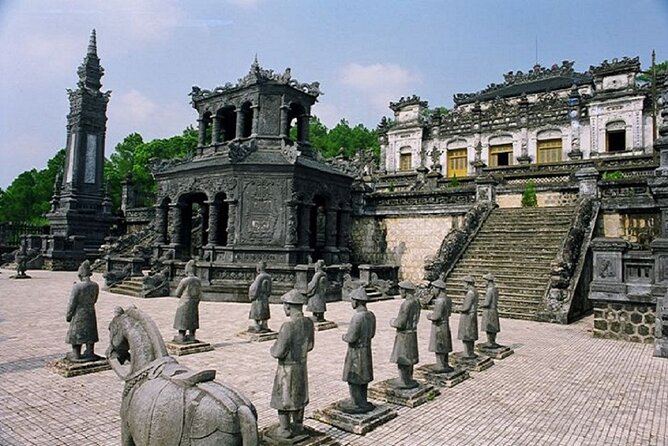
Your day starts with Hue Historic Citadel, the imperial zone built from 1804 under King Gia Long and finished in 1833 by King Minh Mang. This was not only a ceremonial area; it functioned as living and working quarters for the royal family until 1945. It’s also recognized by UNESCO as a World Cultural Heritage site.
What I like about this stop is that the guide can explain the layout as a system: who lived where, how authority worked, and why the buildings look the way they do. Even if you’ve seen photos of Hue’s imperial gates before, being there in person gives you scale—what feels huge in pictures becomes specific when you walk through it.
You’ll have a mix of photo stops, walking time, and a guided tour, with a break built in. That structure helps you avoid the common problem of seeing everything in a blur.
Thanh Toan Covered Bridge and the market-walk feel
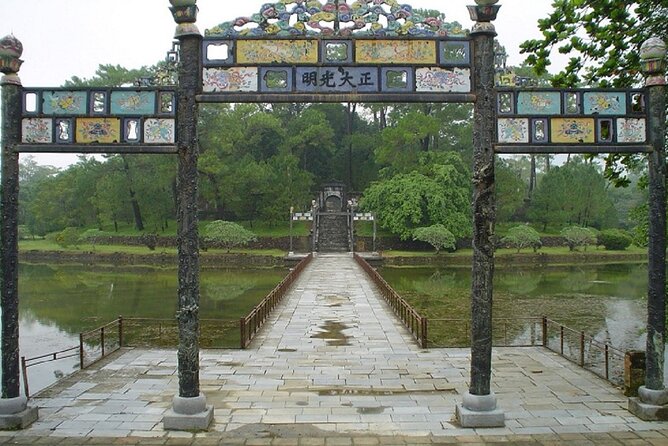
Next comes Thanh Toan Covered Bridge, built in 1776 with money donated by a local lady. It’s the kind of stop that rewards slow looking: the bridge isn’t just scenic, it’s tied to local community life.
From here, you take a walk to explore the nearby Thank Toan local market area. The goal is simple: understand daily life in Hue beyond the royal bubble. You’ll see the market rhythm and hear how locals think about farming, food, and work.
This is also one of the best places to ask questions. The guide can connect what you see in the market to what you later learn in the countryside portions of the day.
Khai Dinh Tomb: the small one with the biggest style flex
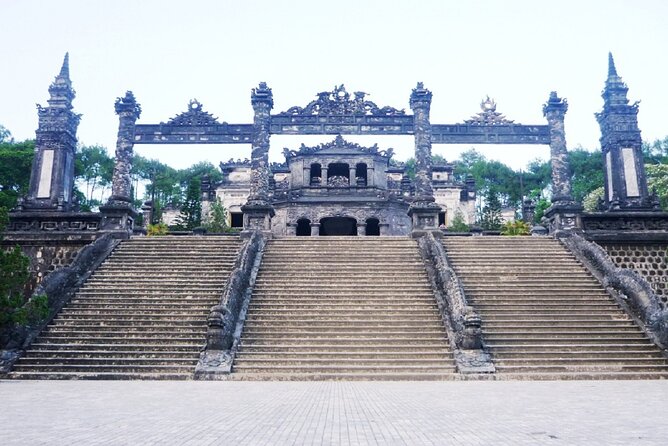
Khai Dinh Tomb is known as the smallest Nguyen emperor tomb, but it’s also the most elaborately designed. What makes it memorable is its design mix—an unusual blend of Oriental, Indian, and European architectural elements.
Even if you don’t want to spend your whole day reading stone symbolism, you’ll notice the difference in materials, patterns, and proportions. This tomb gives you a clear sense of how Vietnamese royal culture adapted foreign influences while still staying its own thing.
Drawback to consider: because it’s elaborately designed, it can feel detail-heavy. If your brain gets tired from too many facts, take advantage of the photo breaks and step back to view the tomb as a whole, not just as close-up details.
Thuy Tien Lake and the abandoned water park stop
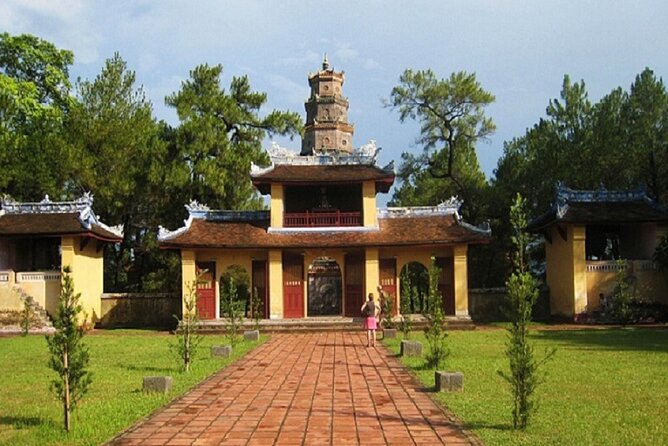
The route includes Thuy Tien Lake and a visit/photo stop at the Thuy Tien Lake Abandoned Water Park area. This part of the day reads differently than the imperial sites: it’s more atmospheric than formal.
Expect guided explanations plus scenic pauses. You’ll get time to look around and capture photos, then move on before the day gets too heavy.
If you’re traveling with kids or anyone who doesn’t like strange, empty places, you can treat this as a shorter camera stop rather than a long exploration.
Vong Canh Hill: river views and Vietnam War perspective
At Vong Canh Hill, you get two things at once: views over the Perfume River and guided context about the Vietnam War from different viewpoints. The river is the obvious attraction, but the viewpoint history makes it more than a pretty photo.
I like this stop because it changes the tone of the day. One minute you’re in royal culture; the next you’re thinking about how the same geography shaped modern conflict.
Take your time here. If the weather is good, you’ll want to linger for the river sightlines before you move toward the tombs.
Tu Duc Tomb and Minh Mang Tomb: garden-scale power
Two of the biggest tomb stops are Tu Duc Tomb and Minh Mang Tomb.
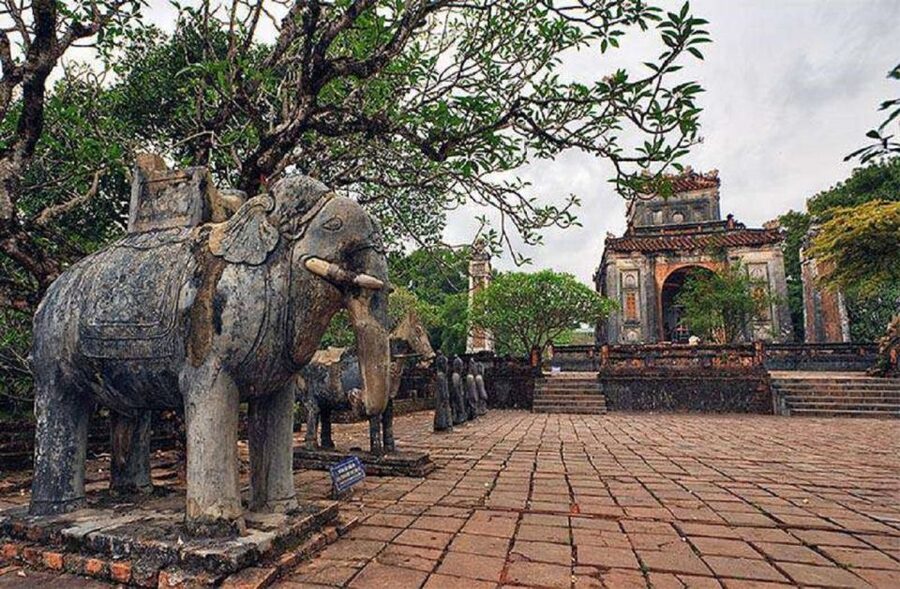
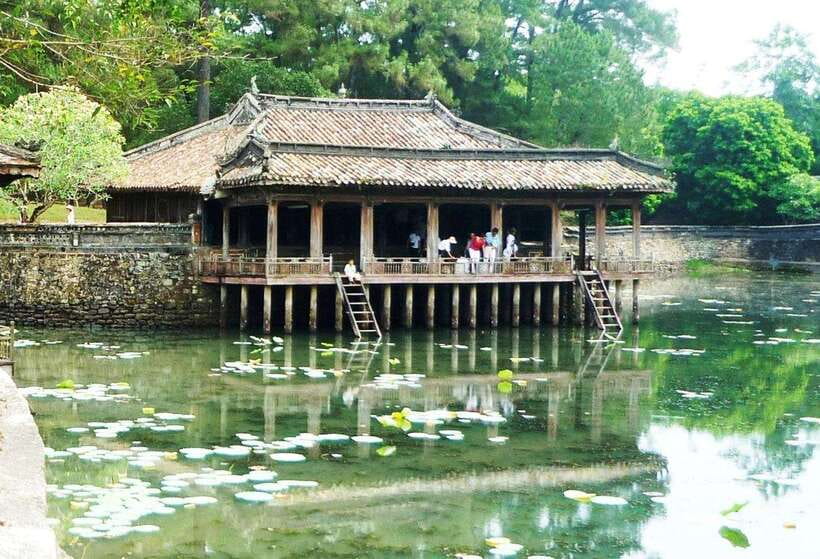
Tu Duc is known for its beauty and layout, covering about 12 hectares. It took 3 years with around 3,000 workers to finish. This isn’t just a final resting place; it feels like an entire world built to project identity and control through design.
Minh Mang’s tomb focuses on what you might call nature-plus-architecture. Minh Mang appointed the design and location himself. After he passed away in 1841, his successor and son Thieu Tri helped build it during 1840 to 1843, which shaped its finished form. The guide can help you read the way the tomb fits the land rather than fights it.
One practical note: the tour includes a choice option. If you’d rather see Tu Duc instead of Minh Mang, tell the operator when booking.
Dong Khanh Mausoleum and the pagoda side of Hue
Later you’ll also visit the Mausoleum of Emperor Dong Khanh. Like the other royal tombs, it helps round out the Nguyen Dynasty timeline with another ruler’s approach to monument and symbolism.
Then the tour shifts into spiritual Hue with Tu Hieu Pagoda and Thien Mu Pagoda, plus a stop for the Pagoda of the Celestial Lady.
Tu Hieu Pagoda: home of retired eunuchs
Tu Hieu Pagoda served as living quarters for eunuchs of the Nguyen Dynasty after they retired from royal service. It’s also called the Root Temple and is described as one of Hue’s greatest temples. This stop gives you a more human angle on court life—less about emperors’ power and more about the people who served within the system.
Thien Mu Pagoda: an imperial symbol with a modern history marker
Thien Mu Pagoda sits on the north shore of the Perfume River, about 3km from the Imperial Citadel. You can reach it by dragon boat along the river, or by a bicycle ride if that’s part of your route.
This pagoda is regarded as the unofficial symbol of the former imperial capital. Today it’s also the home of the Austin motor vehicle linked to Thich Quang Duc, who carried out a self-immolation in Saigon in 1963 in protest against the Diem regime. Many monks live and work there, and it remains a holy site visited every day.
I find it powerful because it connects centuries of religious tradition with a specific moment of modern political history—right where people still come to worship.
Tiger Arena in Thuy Bieu: entertainment turned brutal
One of the most memorable learning stops is Tiger Arena, Thuy Bieu Village. The arena was built in 1830 and used as a colosseum-style venue for fighting between elephant and tiger for entertainment of the kings. It was used until 1904.
Your guide explains what this meant in the royal entertainment world—and the brutality behind it. It’s not a stop meant for thrill-seeking. It’s a stop meant for understanding how power can normalize violence.
Thuy Xuan village: make incense sticks, not just buy souvenirs
At Thuy Xuan Incense-making Village, you’ll visit a workshop specializing in incense sticks and conical hats. This is where the tour becomes tactile.
You’ll have free time for shopping, plus a chance to try making incense sticks. That small effort turns a souvenir into something more personal. And it’s a practical way to understand what you’re seeing—how the material, shaping, and drying process connects to everyday trade.
If you love cooking or crafts, this is the kind of stop that stays with you longer than another tomb photograph.
Perfume River dragon boat: the calm reset
The tour ends with a private dragon boat cruise on the Perfume River. After a full day of stone, pagodas, and learning, this is the reset that keeps the schedule from feeling punishing.
You’ll take the boat back toward Hue city, and you’ll likely have a chance to shop during the river time as part of the experience flow. Once you disembark, your guide and driver will bring you back to your hotel.
One detail I appreciate: the river is treated as a ride and a viewpoint, not just transportation. Even on a busy day, it gives you that slow-breath feeling.
Budget and ticket reality: the $16 price and Royal Tomb entries
The base price is listed at $16 per person for the full-day experience. That’s a strong deal considering you’re getting a guide, scooter drivers with helmets, a private dragon boat, and fuel plus entrance fees—except for the royal tomb tickets.
Here’s the practical part: royal tomb entry tickets are not included. The operator notes that you can buy combo tickets that may work better depending on which tombs you choose.
You’ll see options such as:
- 420k per ticket of Imperial City with 2 tombs, valid in two days
- 530k per ticket of Imperial City with 3 tombs, valid in two days
My advice is to decide your priorities before you arrive. If you want maximum tomb coverage, the combo ticket can save money versus paying separate entrances. If you’re mainly focused on a few standout sites, you may end up spending less by choosing fewer tickets.
Also remember: the tour specifically includes the chance to visit Tu Duc instead of Minh Mang, if you request it in advance.
Should you book this Hue motorbike and boat tour?
I think you should book it if you want a full-day Hue plan that mixes imperial monuments with real local life, and you’d rather ride than walk between far-flung spots. The combination of royal tomb education, Thien Mu Pagoda’s historical weight, and the Perfume River private boat is a smart way to see Hue beyond a single district.
You might skip or adjust if you already know you don’t want tombs, because royal culture is the backbone of the route. And if you’re budget-tight, plan for the royal tomb ticket cost when you pick your combo.
If you like structure (guided explanations with breaks) and you’re okay spending most of the day on scooters, this is one of the easier ways to enjoy Hue’s big sights without turning it into a stressful logistics puzzle.