REVIEW · HUE VIETNAM
Hue: 3 Best Royal Tombs Tour and Ancient Pagoda
Book on GetYourGuide →Operated by Hue Friendly Travel Company · Bookable on GetYourGuide
Hue’s royal tombs feel like open-air palaces. This 5-hour trip strings together Minh Mang and Thien Mu Pagoda, with Khai Dinh, Tu Duc, and incense village in between. I like that you get a comfortable ride with strong A/C and bottled water, so you spend your energy on the sites, not the heat.
I also like the way the architecture shifts by emperor. Khai Dinh mixes Vietnamese style with French-influenced details, while Tu Duc’s gardens and lakes feel calmer and more personal. My only watch-out is practical: tomb entrance fees aren’t included and are paid separately in cash, and Tu Duc’s pathways can be a little confusing if you don’t plan your walk.
In This Review
- Key things to know before you go
- Why this Hue day trip works so well for a short stay
- The two options: decide if you want guided explanations inside
- Minh Mang Tomb on Cam Khe Mountain: the “order” tomb
- Khai Dinh Tomb: where Vietnamese and French-era design collide
- Tu Duc Tomb gardens and lakes: the one that feels quieter
- Hue Incense Village: a 700-year craft you can try yourself
- Thien Mu Pagoda: Hue’s iconic tower near the Imperial City
- Comfort, timing, and how to handle the heat without rushing
- The value question: does $13 make sense for this day?
- Who should book this Hue tour (and who might skip it)
- Should you book this Hue Royal Tombs and Thien Mu tour?
- FAQ
- How long is the Hue Royal Tombs and Ancient Pagoda tour?
- What does the tour cost?
- What sites are included in the tour?
- Are entrance fees included in the price?
- Is pickup available?
- Is there an English-speaking driver?
- Is the tour private or shared?
- Are there any restrictions on who can join?
- What’s the cancellation policy?
Key things to know before you go
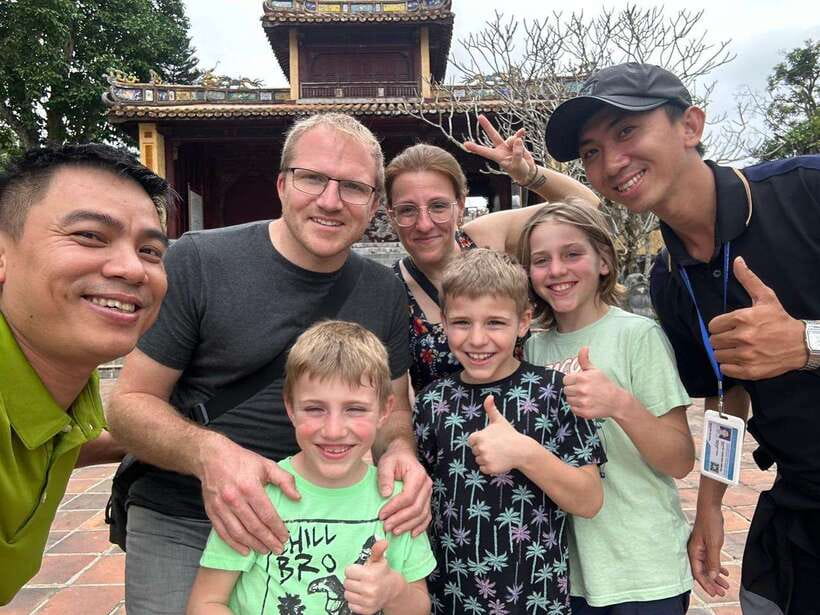
- Three UNESCO Nguyen Dynasty tombs: Minh Mang, Khai Dinh, and Tu Duc in one efficient loop
- Comfort matters in Hue: strong A/C car and bottled water keep the day pleasant
- Khai Dinh is the architecture wildcard: Vietnamese craftsmanship meets French-era design
- Tu Duc is slower by design: gardens, lakes, and a quieter feel than the other tombs
- Incense Village is hands-on: you can watch making and even roll incense sticks
- Thien Mu is the big Hue landmark: the seven-story pagoda tower near the Imperial City
Why this Hue day trip works so well for a short stay
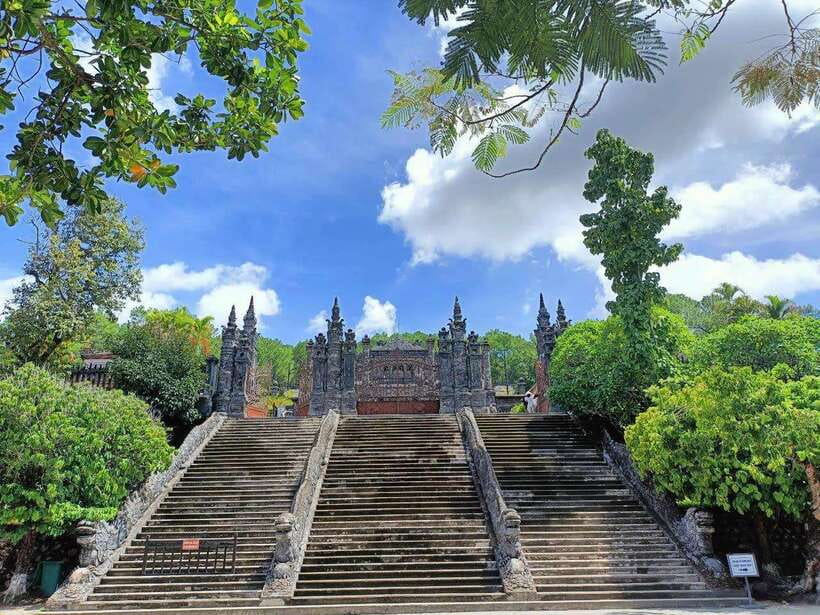
If your Hue time is tight, this tour hits the best mix: imperial tombs, a living craft workshop, and one of Vietnam’s most recognizable pagodas. Instead of doing only one tomb and calling it a day, you see three different imperial styles back-to-back, with minimal planning stress.
The pacing also makes sense. You travel by car between sites (so you don’t burn the whole day in transit), then you get focused time on each monument. In Hue’s summer heat, that matters. A cool ride plus a few planned stops is a big part of the value here.
Another smart detail: you’re not just checking boxes. You’re also learning how the Nguyen emperors imagined power, nature, belief, and remembrance—using everything from mountain settings to lake gardens to temple towers.
You can also read our reviews of more tours and experiences in Hue Vietnam.

The two options: decide if you want guided explanations inside
The tour is built around an English-speaking driver, and in some options you also get a tour guide. If you choose the option that includes a guide, you’ll likely get more explanation while you walk around the tombs and pagoda.
If you choose the option without a guide, you’ll still be in good hands for driving and timing, but you may rely more on signage and your own questions. Either way, bring curiosity. Even the same tomb can feel different depending on what you notice—symbols, materials, and how each emperor wanted to be remembered.
Minh Mang Tomb on Cam Khe Mountain: the “order” tomb
Minh Mang is the second Nguyen emperor, and his tomb is known for a strong sense of layout—great if you like order and geometry. It sits on Cam Khe Mountain, and the surroundings are part of the effect: you don’t just see a monument, you’re also aware of the mountain setting shaping the experience.
This stop is a good warm-up for the day. You get to see a traditional imperial approach before the tour swings into the more dramatic, hybrid style of Khai Dinh. I like that this helps you keep your eye on details rather than feeling overwhelmed by three sites that all blend together.
What to watch for: wear shoes with grip. Mountain tomb grounds can be uneven, and you’ll be walking. Also, keep water handy even with bottled water provided; Hue can feel relentless.
Khai Dinh Tomb: where Vietnamese and French-era design collide
Khai Dinh is the twelfth emperor’s mausoleum, and this is the one most people remember. The reason is right in the design: it blends traditional Vietnamese aesthetics with French-influenced architecture. You feel the shift immediately as you move through the complex.
This is also where the tour earns its keep as a “best of” day. If you’ve never seen Nguyen tomb architecture up close, Khai Dinh teaches you how flexible imperial design could be—less like a single repeated template, more like a deliberate statement.
A nice advantage of visiting by organized transport is you get the sequence right. Minh Mang prepares your brain for imperial structure; Khai Dinh then hits you with contrast; Tu Duc slows things down again.
Tu Duc Tomb gardens and lakes: the one that feels quieter
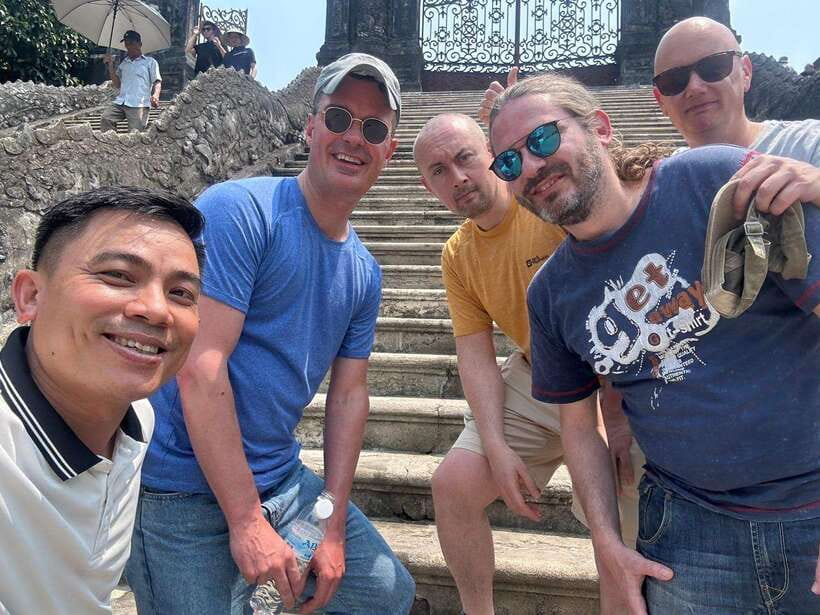
Tu Duc is the ninth Nguyen emperor’s final resting place, and the setting is the big story. The tomb complex is built around gardens and lakes, and it feels more hidden than the others. It’s the stop for calm, shade when you can find it, and slow wandering.
This is also the place where you’ll want to pay attention to navigation. The layout can be confusing if you just follow the first route you see. If you’re the kind of person who likes to understand where you are (I am), plan to spend extra time here, move at an unhurried pace, and don’t be afraid to ask your driver for a simple walking direction like which section to hit next.
The best way to enjoy Tu Duc is to treat it like a garden visit wrapped in royal symbolism. Pause often. The views over water and greenery are part of the design language.

Hue Incense Village: a 700-year craft you can try yourself
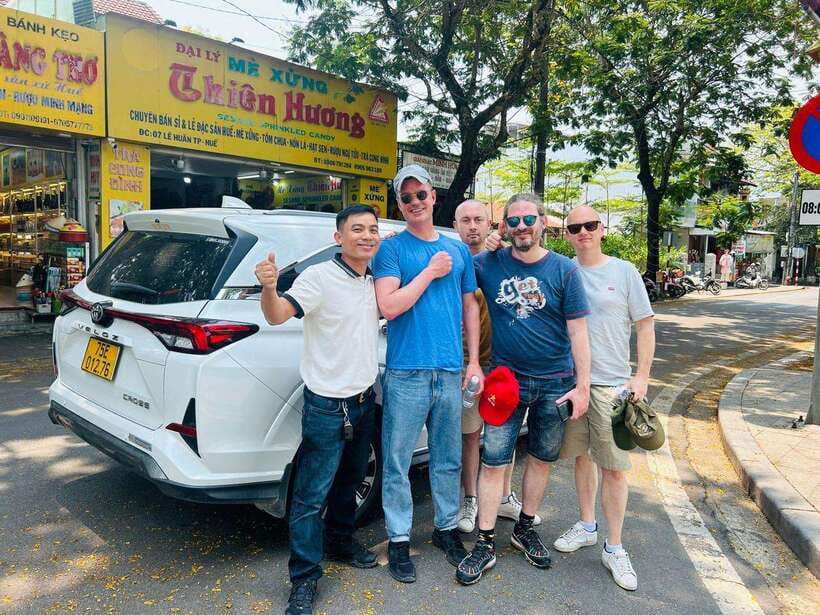
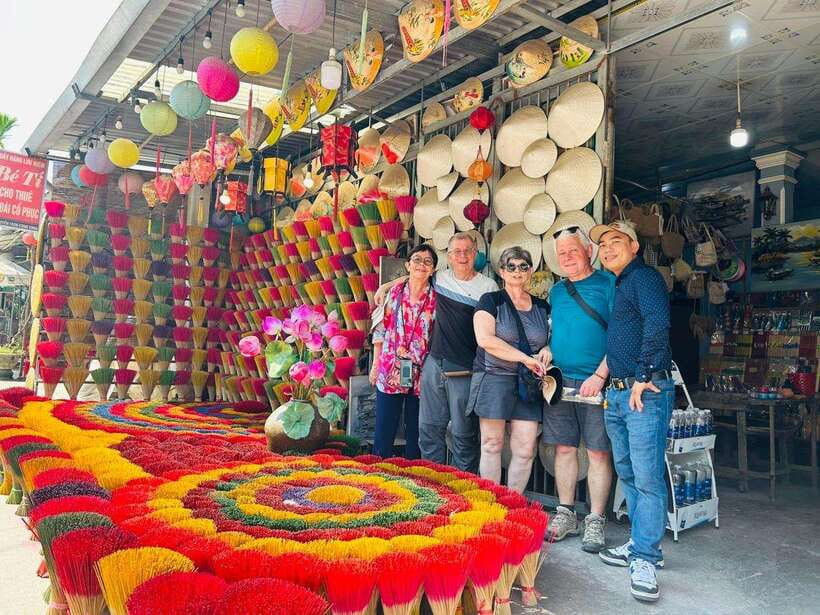
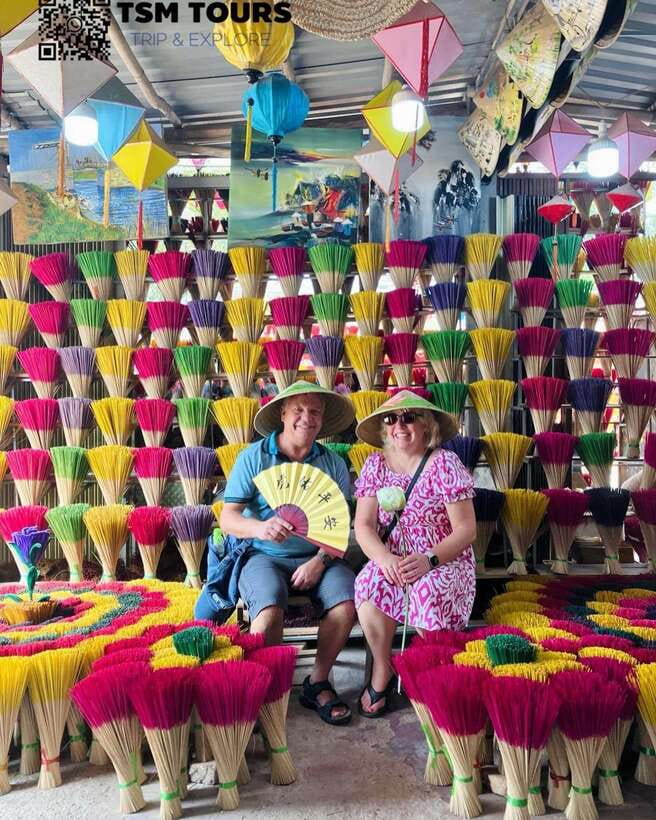
Between tombs, you’ll stop at Hue Incense Village. This is where the day becomes more than monuments. Incense in Vietnam isn’t just a smell; it’s a ritual material. And here you get a real maker’s process rather than a souvenir-only stop.
You’ll watch the incense-making process, and you often get a chance to roll incense sticks yourself. That hands-on moment is the easiest way to understand how much work and technique goes into something that seems simple when you see it in a shop.
If you like cultural stops that don’t feel staged, this one tends to deliver. It’s also a good reset for your legs after walking the tomb grounds.
Thien Mu Pagoda: Hue’s iconic tower near the Imperial City
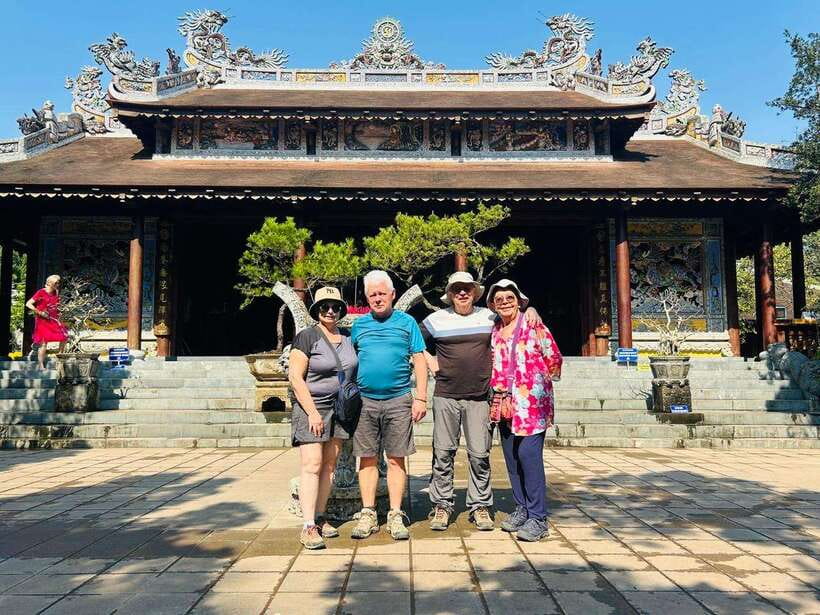
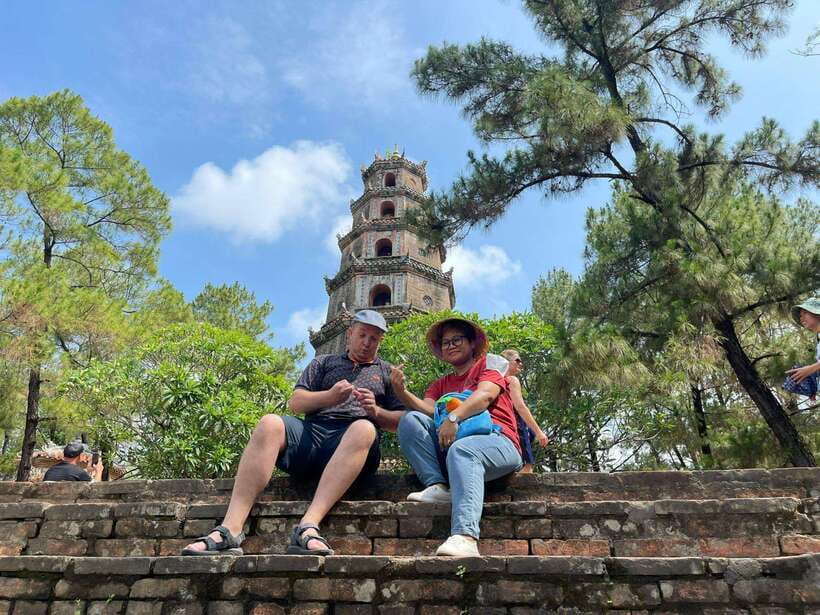
The day ends at Thien Mu Pagoda, a Buddhist landmark on Ngu Phong Mountain, about 5 km from Hue’s Imperial City. The big visual is the famous seven-story tower, which becomes a kind of lighthouse for the whole area.
This stop gives your day an ending that’s spiritual rather than royal-military. The pagoda complex can shift your mood from imperial power to daily belief and reverence—especially if you slow down and really watch the flow of people and prayers in the space.
Practical note: bring a little patience for walking and stairs. The pagoda’s main views are worth it, but you’ll be moving. If it rains, you’ll probably appreciate the earlier A/C ride and how the tour is structured for a steady rhythm.
Comfort, timing, and how to handle the heat without rushing
This tour runs about 5 hours. That’s a sweet spot: long enough to see three major tombs plus incense village and Thien Mu, short enough to avoid turning your Hue day into a full-body endurance test.
Starting times vary, depending on availability. When you pick your time, I’d aim for a slot that avoids peak midday if you can. Tombs involve sun, and even with good weather you’ll be outside a lot.
The car setup is a big plus: a model car with strong A/C and bottled water. That’s not a small detail in Hue. It’s what keeps you alert once you reach the sites.
Also, the pace tends to feel unhurried. The best days happen when you have enough time to look around without sprinting from point to point. Many drivers (like Hai, Hien, Toan, and Trung, names that show up often) are known for patience and keeping the day smooth.
One more practical tip: bring cash specifically for entrance fees at the royal tombs. The tour price covers transport and guide/driver service, but tomb entry is paid separately. If you show up without cash, your schedule can get awkward.
The value question: does $13 make sense for this day?

At about $13 per person, this tour feels like strong value—if you treat entrance fees as a separate budget item. Here’s what you get for the base price: hotel pickup and drop-off in Hue, an English-speaking driver, a clean A/C vehicle, bottled water, and parking fees.
What you don’t get: entrance fees for the royal tombs (paid in cash at the entrances). Food and other drinks are also not included. There’s an add-on if you want the Imperial City as well, listed at $8 or 200,000 VND.
So the value math is simple:
- If you want transport + English help + a compact “best of Hue” route, $13 can be a bargain.
- If you’re already planning to enter everything and you hate extra cash payments at gates, budget a bit more for tickets.
A helpful mindset: this is a logistics-friendly way to see major UNESCO tombs plus Thien Mu Pagoda without spending your day navigating traffic and timing.
Who should book this Hue tour (and who might skip it)
This is a great fit if you:
- Want to see multiple Nguyen Dynasty tombs in one go
- Like architecture and want to compare Khai Dinh’s hybrid style with more traditional layouts
- Appreciate hands-on cultural stops like incense-making
- Prefer a smooth ride over renting a scooter and doing route math in Hue
You might skip it if:
- You want total freedom to linger for hours at one tomb and ignore the rest
- You dislike paying separate entrance fees in cash
- You need a very simple, low-walking day (there’s a fair amount of walking at each stop)
Should you book this Hue Royal Tombs and Thien Mu tour?
I think you should book this tour if you’re trying to make Hue count in a short time. The combination is hard to beat: three UNESCO royal tombs, Incense Village, and Thien Mu Pagoda, all in about 5 hours with A/C transport and an English-speaking driver.
Just go in with two practical expectations. First, bring cash for tomb entrances. Second, at Tu Duc, slow down and plan for a bit of wayfinding, because the layout can feel more complex than the others. If you do those two things, you’ll leave with a very complete sense of what Hue’s royal era and spiritual life look like on the ground.
FAQ
How long is the Hue Royal Tombs and Ancient Pagoda tour?
The tour duration is 5 hours.
What does the tour cost?
The price is $13 per person.
What sites are included in the tour?
You’ll visit Minh Mang Tomb, Khai Dinh Tomb, Tu Duc Tomb, Hue Incense Village, and Thien Mu Pagoda.
Are entrance fees included in the price?
No. Entrance fees for the royal tombs are not included and are cash only at the entrance.
Is pickup available?
Pickup in Hue is included. There are also two options offered, and you should choose the one that matches what you want.
Is there an English-speaking driver?
Yes. The tour includes an English-speaking driver, and a tour guide may be included depending on the option you select.
Is the tour private or shared?
The tour is available as private or small groups.
Are there any restrictions on who can join?
Pets are not allowed. It’s not suitable for babies under 1 year or people over 95 years.
What’s the cancellation policy?
Free cancellation is available up to 24 hours in advance for a full refund.