REVIEW · KYOTO
Kyoto UNESCO World Heritage Sites 1d Tour from Osaka/Kyoto
Book on GetYourGuide →Operated by VIP Japan Tour · Bookable on GetYourGuide
Gold, bamboo, and 1,001 statues in one day. This Kyoto UNESCO tour is interesting because it pairs star temples with real breathing room, plus an optional Kobe Beef lunch when you want the good stuff. You’ll hit Kinkakuji and Sanjusangendo as real anchors for the day, not just quick photo stops.
I love the way the route builds visuals in contrast. First comes the gleam of the Kinkakuji Golden Pavilion and its Mirror Pond reflection, then you slow down with Arashiyama’s Bamboo Grove and river views. I also like that the guide work can be history-focused, and one guide name that popped up is Kaytu, praised for strong historical context.
The main drawback to consider is time pressure. The tour runs about 9–10 hours and leaves even if roads are messy, and you also can’t count on the guide waiting around if you’re late or at the wrong meeting point.
In This Review
- Key Points That Make This Tour Worth Your Time
- Why This Kyoto UNESCO Day Works So Well From Osaka
- Kinkakuji Golden Pavilion and the Mirror Pond Moment
- Arashiyama Bamboo Grove, Tenryuji, and Togetsukyo Bridge Views
- Bamboo Grove: Why it feels bigger than it looks
- Togetsukyo Bridge: the classic mountains-and-water framing
- Kimono Forest and Old-School Photo Stops: Fun, but Keep Expectations Real
- Sanjusangendo: The 1,001 Kannon Statues Experience
- Kiyomizudera’s Wooden Stage, Otowa Waterfall, and Skyline Views
- Ninenzaka and Sannenzaka: Shopping Streets With the Right Kind of Noise
- Kobe Beef Lunch (A5) and the Real Question: Is It Worth Paying Extra?
- Price and Logistics: What You’re Actually Getting for $59
- Who This Tour Suits Best (And Who Should Rethink It)
- Should You Book This Kyoto UNESCO Day Tour?
- FAQ
- How long is the Kyoto UNESCO World Heritage Sites tour?
- Where can I start this tour?
- What language will the guide speak?
- How many UNESCO World Heritage sites are included?
- Is lunch included?
- Does the tour include temple tickets?
- What are the main stops during the day?
- What time is set aside for Kinkakuji and Sanjusangendo?
- Is the group size small?
- Will the tour run in bad weather or heavy traffic?
Key Points That Make This Tour Worth Your Time
- Kinkakuji’s gold-leaf look with Mirror Pond reflections at a focused, timed visit
- Arashiyama + Togetsukyo Bridge for big mountain-and-river photo views
- Sanjusangendo’s 1,001 golden Kannon statues in Japan’s longest wooden hall
- Kiyomizudera’s big wooden stage and skyline views, plus Otowa Waterfall
- Optional A5 Kobe Beef lunch if you want a serious food payoff
- English/Chinese live guidance in a small-group setup (buses may be shared)
Why This Kyoto UNESCO Day Works So Well From Osaka
Kyoto in one day sounds ambitious, but this plan is built around short, efficient temple blocks and a sensible pacing pattern: one landmark, a scenic reset, another landmark, then the east-side classics. You’re on an air-conditioned vehicle most of the time, which matters in summer heat and when crowds make walking slow.
The value here is the coordination. You’re not just seeing temples at random times; you’re seeing them in a sequence that makes visual sense. Gold in the north, bamboo and river in the west, a rare scale-up at Sanjusangendo, then Kiyomizudera with its dramatic stage and old-street shopping. If you like your days structured but not frantic, this tour hits a nice middle ground.
And if you’re picky about what’s included: temple tickets are part of the package for Kinkakuji and Sanjusangendo, so you’re not scrambling for paperwork or entry lines at those two stops.
You can also read our reviews of more historical tours in Kyoto
Kinkakuji Golden Pavilion and the Mirror Pond Moment
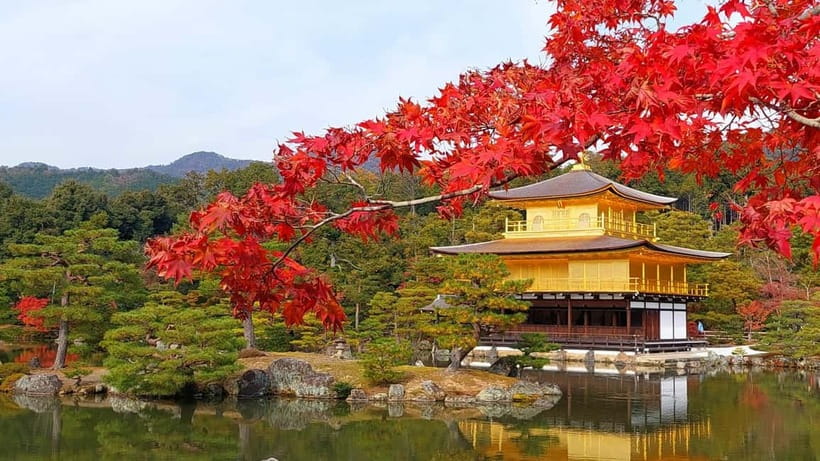
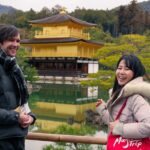
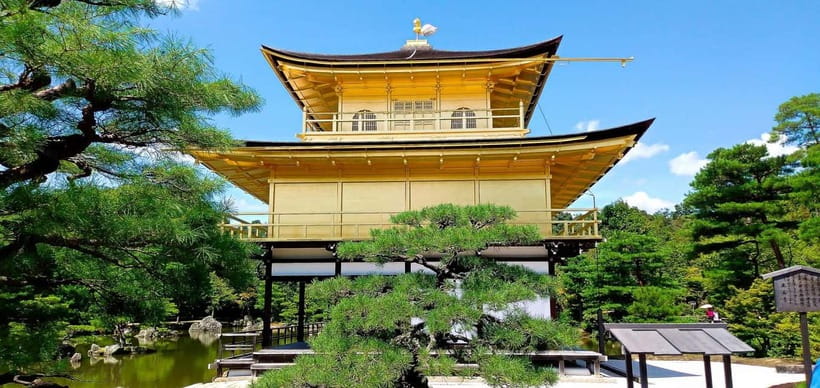
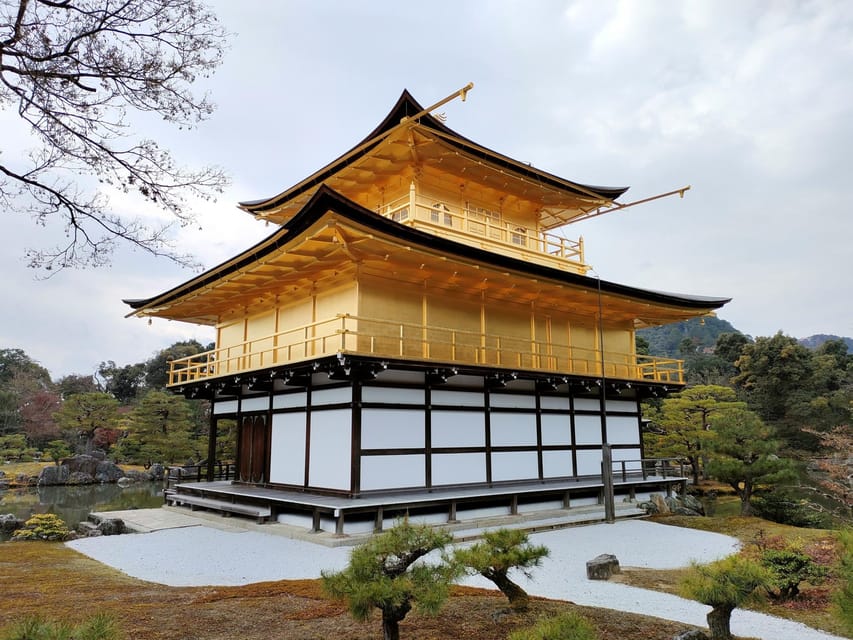
Kinkakuji is the kind of place that makes you stop talking. The top two floors are covered in gold leaf, and the setting is built for reflection. You get to see it with the Mirror Pond effect, where the pavilion and the water line up into one image.
What I like about how this tour handles Kinkakuji is the pacing. You’re given about 40 minutes to take it in, not a token 10-minute stamp. That’s usually enough to do three things:
1) orient yourself to the pond view,
2) take a few photos without panic,
3) walk around and catch the gold from more than one angle.
One practical tip: wear non-slip shoes. You’ll be moving on temple grounds, and Kyoto weather can turn slick fast.
Also, if you care about meaning, this is a Zen temple with a reputation for elegance, not chaos. Even when crowds form, the main visual stays calm: gold up top, still water below.
Arashiyama Bamboo Grove, Tenryuji, and Togetsukyo Bridge Views
From Kinkakuji’s shine, the day shifts into green quiet at Arashiyama. First you’ll get time in the area around Tenryuji Temple, with free time and sightseeing built in. Then comes the Bamboo Grove experience and the river view stops.
Bamboo Grove: Why it feels bigger than it looks
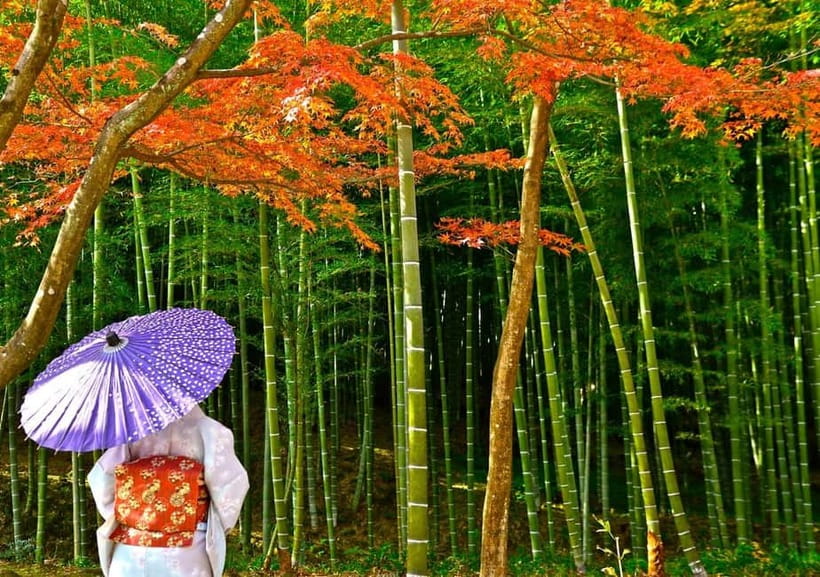
The bamboo is tall and close. Walking through it feels like you’re inside a natural corridor. Sunlight filters down through the stalks, and the noise level drops in a way you don’t get at many famous city parks.
The tour includes a longer Arashiyama block of about 2.67 hours, which gives you more flexibility than the quick-bus “bamboo and go” style. You can do photos, wander, and pause when the atmosphere hits.
Togetsukyo Bridge: the classic mountains-and-water framing
Right by the grove circuit is Togetsukyo Bridge, nicknamed the Moon Crossing Bridge. You’ll have a photo stop and time to take in the broader view, especially where mountains show up in the river reflections.
If you’re chasing the best photos, plan to reposition a bit. The view changes based on where you stand along the walkway and how the light hits the water.
Kimono Forest and Old-School Photo Stops: Fun, but Keep Expectations Real
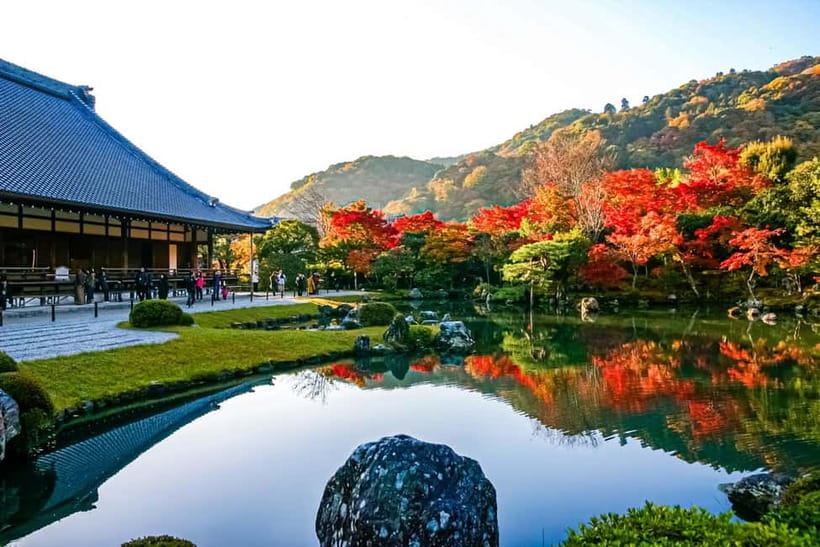
The route includes a Kimono Forest photo stop. This is one of those places that’s less about history depth and more about atmosphere and photos. It can be fun if you go in knowing it’s a quick visual moment, not a long museum-style stop.
You also get multiple Arashiyama bamboo-related photo and sightseeing segments, including stops that are more “see it, shoot it, breathe” than “study it for an hour.” If you love photography and don’t mind short breaks, you’ll enjoy these.
Sanjusangendo: The 1,001 Kannon Statues Experience
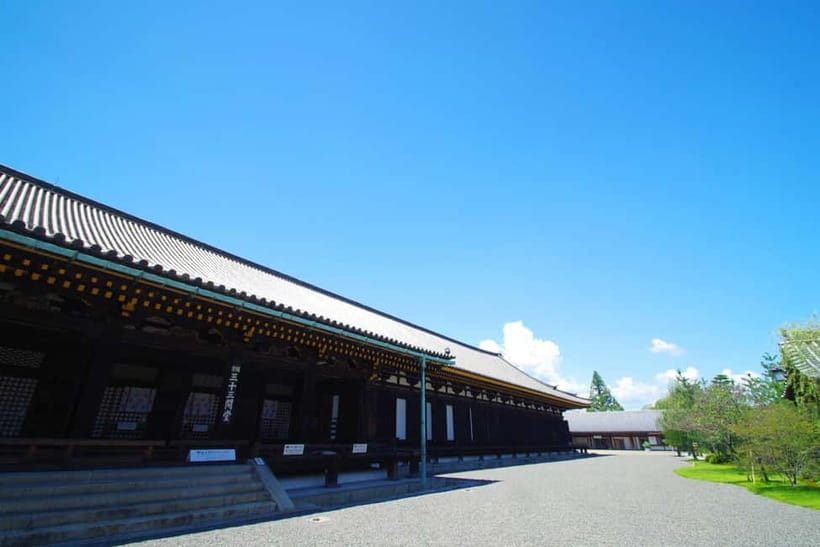
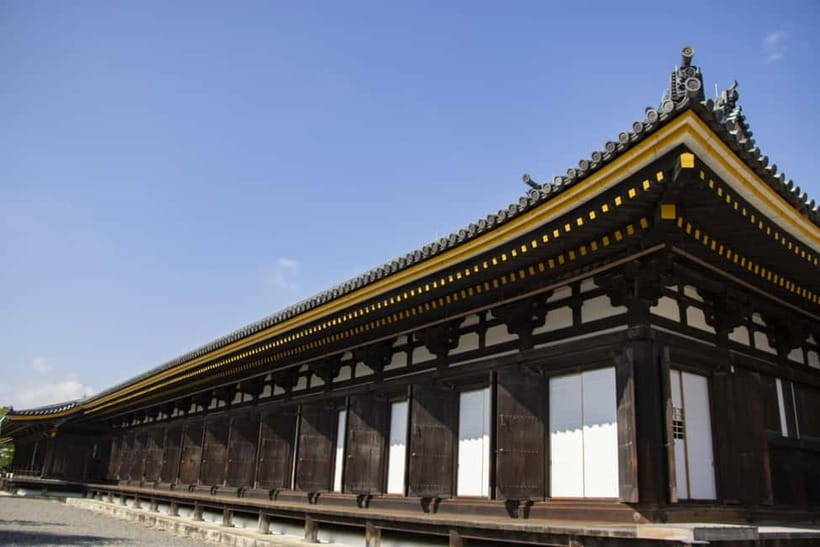
Sanjusangendo is the stop that changes your sense of scale. The hall is described as Japan’s longest historic sanjusangen-do, and inside are 1,001 life-sized statues of Kannon, the Goddess of Mercy.
The tour gives about 40 minutes here. That’s enough time to:
- look across the full row effect (the “army” feeling),
- notice how repeated figures still look distinct,
- and sit with the weird, slightly intense atmosphere that comes from seeing something so massive all at once.
There’s also a story attached to it: among the thousand faces, you may find one that resembles a person you love. Even if you treat it as a tradition rather than a guaranteed outcome, it’s a helpful mental frame. It pushes you to look longer, not faster.
If you’re into art, this hall is a masterclass in repetition with variation. If you’re not, the sheer count still lands. Either way, it’s a very Kyoto way to experience spirituality: not loud, but unforgettable.
Kiyomizudera’s Wooden Stage, Otowa Waterfall, and Skyline Views
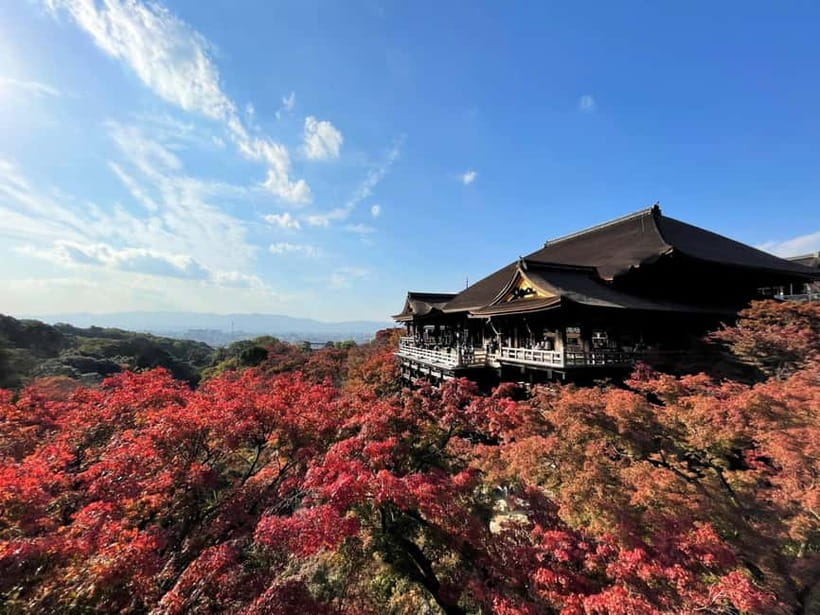
Then you shift to the east-side classic: Kiyomizudera, the Temple of Pure Water. What makes it stand out is the legendary wooden stage built without a single nail, plus the panoramic views.
The tour schedules about 80 minutes at Kiyomizudera area, and that time matters. You’ll have a chance to take in the stage from key viewpoints and get your bearings before the walking around starts. Seasonal views can be part of the appeal here, since the skyline framing is a big part of why people come.
Before leaving, you can visit the Otowa Waterfall, where visitors drink from the sacred waters said to bring health, longevity, and success. Even if you don’t buy into every tradition, it’s a memorable ritual stop that fits the temple mood.
You’ll also visit the Koyasunoto Pagoda as part of the Kiyomizudera block, then the route moves into old-street Kyoto.
Ninenzaka and Sannenzaka: Shopping Streets With the Right Kind of Noise
After Kiyomizudera, the tour heads to Ninenzaka and Sannenzaka for temple-street atmosphere and shopping time. These lanes are built for wandering: snack smells, souvenir shops, and lots of photo corners.
This is a good place for a final energy reset. If you’re planning to buy gifts or try one more small bite, do it here during the built-in time rather than rushing at the end of the day.
One thing to remember: these streets can be crowded. If you want photos without shoulder-to-shoulder framing, move a little off the most photographed spots and give yourself options.
Kobe Beef Lunch (A5) and the Real Question: Is It Worth Paying Extra?
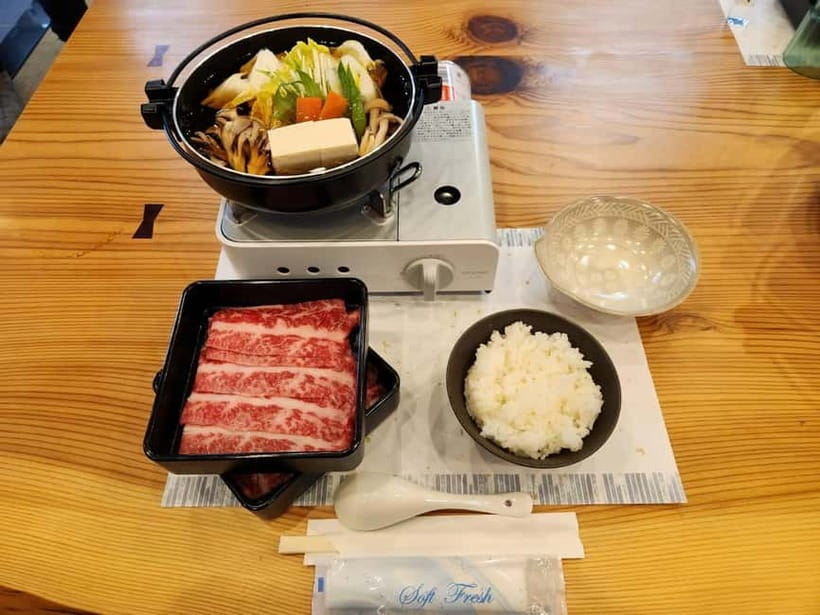
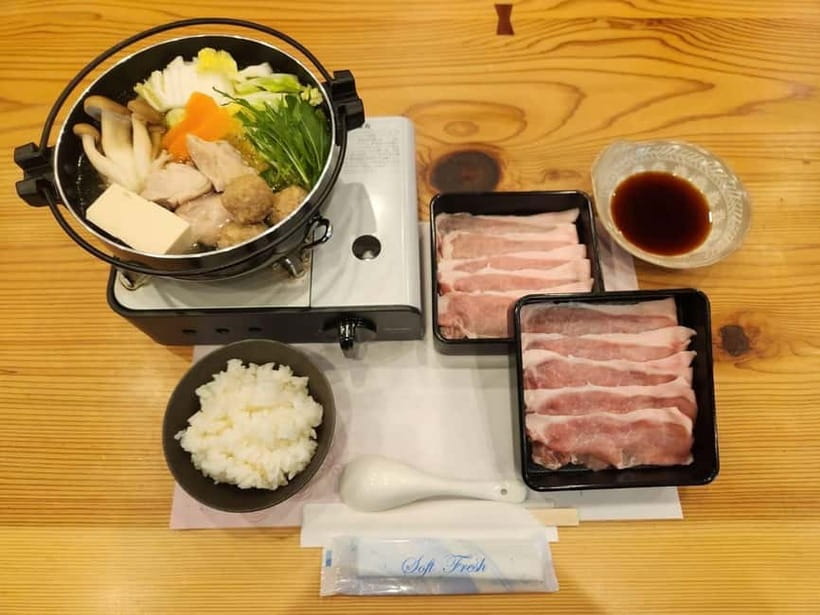
This tour offers an optional A5 ranked Kobe Beef lunch, described as a luxury upgrade with high-grade wagyu marbling and melt-in-your-mouth texture.
So is it worth it? For many people, the simplest logic works:
- If you want Kyoto temples and also want one major food memory, this is a good pairing because you’ve got a full day after the meal to walk it off.
- If you’re more of a street-food person and you’d rather control your budget, skip the upgrade and spend that money on Kyoto snacks during the Ninenzaka/Sannenzaka time.
Also, because lunch is listed as included only when you select that option, treat it like a separate decision. You’re not paying extra “mystery fees” during the day; it’s a choice upfront.
Price and Logistics: What You’re Actually Getting for $59
At $59 per person for a 9–10 hour tour, the value is mostly in three buckets:
1) Transportation in an air-conditioned vehicle,
2) Live English/Chinese-speaking guide,
3) Temple tickets included for Kinkakuji and Sanjusangendo.
Then there’s the optional upgrade element with Kobe Beef lunch, which can push the total cost higher if you select it, but at least the upgrade is clearly defined.
Two timing realities to factor in:
- You’re departing regardless of weather/traffic unless the local operator notifies otherwise.
- In severe delays, there may be reduction of planned attractions without refund.
And for smoothness, the tour runs on strict punctuality. Arrive about 10 minutes before departure, and don’t plan on the guide waiting for late arrivals or wrong meeting points.
Who This Tour Suits Best (And Who Should Rethink It)
This tour is a strong fit if you want:
- multiple Kyoto highlights in one day without DIY planning,
- photo-and-temple balance (not only “sit and listen,” not only “run and snap”),
- and at least one big food splurge option.
It’s not ideal if:
- you hate any schedule pressure,
- you need a lot of time to linger at each site (the visits are timed blocks),
- or you’re very dependent on flexible pick-up timing.
Because it’s small-group available, the experience is usually easier than full-size coach chaos, though the note says English and Chinese-speaking guests may share the same bus depending on participant counts.
Should You Book This Kyoto UNESCO Day Tour?
If you’re short on time and want a day that hits the most iconic Kyoto visuals—gold pavilion reflections, bamboo corridor calm, 1,001 Kannon statues, and Kiyomizudera’s wooden stage views—this is a practical way to do it.
I’d especially recommend it if you like structured sightseeing with a guide who can explain what you’re seeing. The mention of Kaytu being strong on history is exactly the type of support that can turn a photo day into a meaningful day.
If you’re budget-tight, consider skipping the Kobe Beef upgrade and spending your money on food during the street-time blocks. But if you’re treating this as your one big splurge meal in Kyoto, the A5 lunch option can be a satisfying payoff.
FAQ
How long is the Kyoto UNESCO World Heritage Sites tour?
The tour duration is about 9–10 hours (approximate) and may vary depending on traffic conditions.
Where can I start this tour?
You can choose one of two starting locations: VIPヴィラなんば or 京都VIPラウンジ. The meeting point may vary based on the option booked.
What language will the guide speak?
The guide is available in English and Chinese.
How many UNESCO World Heritage sites are included?
The experience is designed to visit four UNESCO World Heritage sites in Kyoto.
Is lunch included?
Lunch is included only if you select the Kobe Beef lunch option.
Does the tour include temple tickets?
Kinkakuji Temple ticket and Sanjusangendo Temple ticket are included.
What are the main stops during the day?
You’ll visit Kinkakuji, Arashiyama (including the Bamboo Grove area), Sanjusangendo, and Kiyomizudera, plus photo stops and sightseeing time such as Togetsukyo Bridge and the Ninenzaka/Sannenzaka shopping streets.
What time is set aside for Kinkakuji and Sanjusangendo?
Kinkakuji is listed as about 40 minutes, and Sanjusangendo is also listed as about 40 minutes.
Is the group size small?
Small group is available. Depending on the number of participants, English-speaking and Chinese-speaking guests may share the same bus.
Will the tour run in bad weather or heavy traffic?
The tour departs regardless of weather/traffic conditions unless you are notified otherwise. If severe traffic happens due to holidays or adverse weather, planned attractions may be reduced without refund.