REVIEW · INCHEON
Incheon Port History Tour by 19th Century Electric Car, KTourTOP10
Book on Viator →Operated by 조은투어 · Bookable on Viator
Vintage wheels make Incheon history easy.
This Incheon Port History Tour uses a 19th-century-style electric car to connect the city’s waterfront past to what you see today, along the Open Port Street area. I like how fast you get your bearings, and I love the mix of landmarks like the Jjajangmyeon Museum, Chinatown shrines, and the Jemulpo Club.
You’ll also appreciate the small-group setup (maximum 20), plus the simple schedule options so you can fit it around sightseeing or a layover. The car tour itself feels like a themed ride without taking over your time.
One thing to consider: language can be uneven. On some departures you may get mainly pre-recorded commentary, and English may be limited, so you’ll get less back-and-forth with questions.
In This Review
- Key things to look forward to
- Riding a vintage-style electric car through Incheon’s Open Port core
- Where the tour starts (and why that matters)
- Stop by stop: what you’ll learn in the Incheon Port zone
- The Incheon Art Platform: red bricks and the port-era story starter
- The Jogye area and stair views toward the sea
- Haean Catholic Church: a faith site tied to overseas Chinese Catholics
- Jjajangmyeon Museum: food history anchored to a real location
- Chinatown’s Euiseon-dang: a shrine that explains immigrant hardship
- From Songwol-dong to Donghwa Village: what changed after 1883
- Chohanji Mural Street and Three Kingdoms Mural Street: novels turned public storytelling
- Jemulpo Club: a short stop with strong “foreign social club” atmosphere
- The guide factor: what you can expect from the human connection
- Value check: is $45 per group up to 3 a good deal?
- Timing tips for layovers and tight schedules
- Who should book this Incheon Port History Tour?
- Quick FAQ on the Incheon Port electric car tour
- FAQ
- How long is the Incheon Port History Tour?
- How much does it cost?
- Where do we meet, and where does the tour end?
- What’s included in the ticket price?
- Is a meal included?
- What if the weather is bad, or I need to cancel?
- Should you book? My honest recommendation
Key things to look forward to
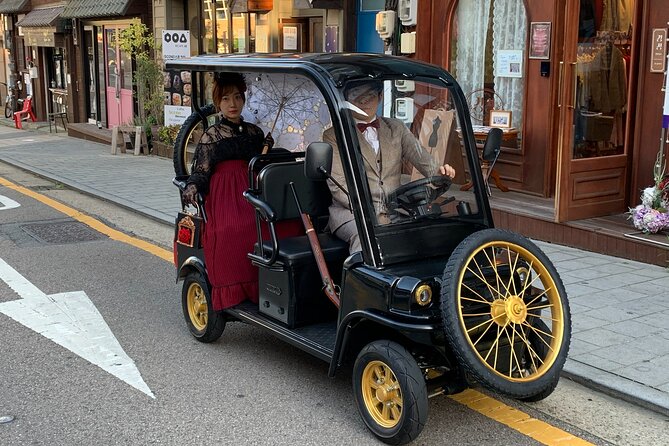
- 19th-century-style electric car ride that turns streets into a moving classroom
- Open Port Street landmarks that explain how foreigners shaped Incheon after 1883
- Chinatown stops like Euiseon-dang that focus on immigrant life and faith
- Jjajangmyeon Museum tied to the original restaurant location, not just foodie vibes
- Jemulpo Club visit (about 5 minutes) with free admission
Riding a vintage-style electric car through Incheon’s Open Port core
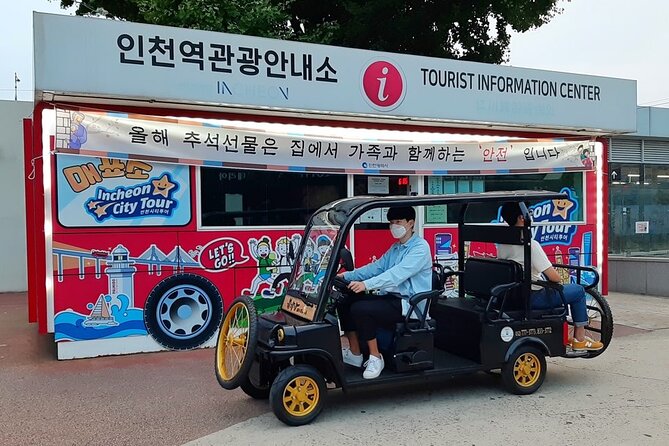
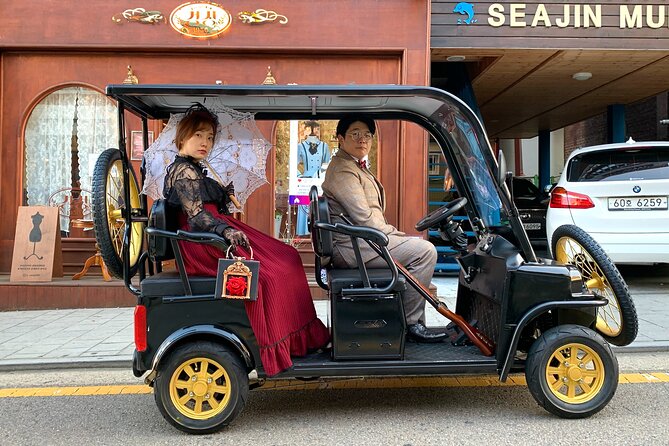
This tour is built around a simple idea: if you want context for Incheon Port, you need to move through the area where that story happened. The old-style electric vehicle keeps things comfortable and low-effort, especially when weather turns warm or humid. You’re also not stuck on a long walking route if your time is short.
What I like most is the “drive-and-learn” rhythm. In about an hour, you’ll cover multiple stops tied to the port’s foreign-resident era, then connect them to today’s streets and neighborhoods. It’s a great primer if you’re visiting Incheon for the first time and want the big picture without committing to a full day.
The car tour is sold as 50 minutes (approx.), and it ends back at the starting point, so you don’t have to plan a complicated next leg. If your day is already packed, this “small chunk” format is practical.
Where the tour starts (and why that matters)
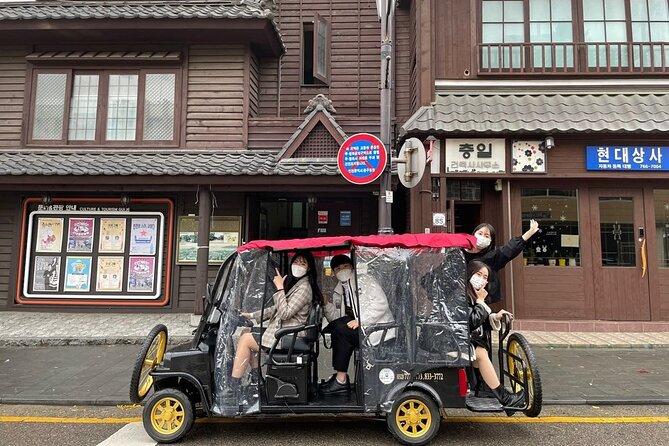
Meeting point is at 266 Jemullyang-ro, Jung-gu, Incheon. The tour ends back at the meeting spot, which helps if you’re coordinating with public transport or heading to the next activity without guessing distances.
Because it’s near public transportation and service animals are allowed, this is generally an easy plan for a casual visit. Still, do a quick day-of check that your departure time is confirmed and you’re at the right address—one-off timing issues can ruin a tight schedule.
If you’re coming from Incheon Station area, give yourself buffer time. Even with a short tour, you don’t want to sprint at the exact start minute.
Stop by stop: what you’ll learn in the Incheon Port zone
The itinerary covers a cluster of places that explain why Incheon mattered once the port opened in the late 1800s. Think of it as “story beats” across architecture, neighborhoods, faith, food culture, and a social club that reflected foreign presence.
The Incheon Art Platform: red bricks and the port-era story starter
Your tour begins at the Incheon Art Platform, a red-brick space tied to the history of the open port. It’s the kind of stop that works even if you’re not there to watch performances—architecture and location help set the theme fast.
This is the moment when the guide’s framing matters most. If you listen closely here, you’ll understand why the next stops look the way they do and why certain areas divided into foreign resident zones rather than growing evenly like a typical neighborhood.
If there’s an exhibition running, you might catch extra context before you roll on—but don’t count on it as a guaranteed highlight. The real value is the port-history setup.
The Jogye area and stair views toward the sea
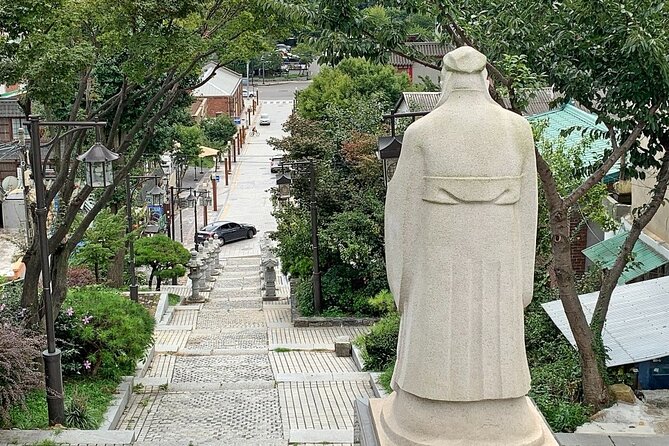
Next you’ll head to the section divided into Chinese and Japanese buildings around the stairs. You’ll hear that Jogye (조계) refers to a defined area for foreign residents or trade, and the stops help you visualize how geography created social boundaries.
This area also links toward Jayu Park, and you can get views out toward the Incheon Sea from the stair area. Even if you’re not a “view person,” it helps to see the coastline so the stories about shipping and foreign presence make physical sense.
Practical tip: wear shoes you can stand in. Stair areas are fine for photos and sightseeing, but you’ll want grip and comfort.
Haean Catholic Church: a faith site tied to overseas Chinese Catholics
Then comes Haean Catholic Church, described as having religious and historical significance. It was created for devoted Catholics among overseas Chinese in the 1960s, which gives the tour a wider lens beyond the late-1800s port opening.
This stop adds a useful point: history doesn’t freeze at the moment of a treaty. Communities keep changing, and institutions show that long after the initial foreign trade era.
If you care about how immigrant communities settled, this church stop is one of the more grounded moments on the route.
Jjajangmyeon Museum: food history anchored to a real location
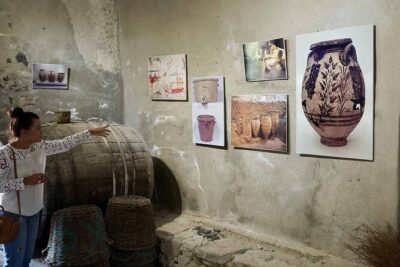
A highlight for food lovers is the Jjajangmyeon Museum. It’s located where the very first original Jjajangmyeon restaurant, Gonghwachun, used to be. You’ll see relics connected to Jjajangmyeon and that original restaurant.
What makes this stop valuable is that it treats a dish as cultural evidence. Jjajangmyeon isn’t presented as random street food trivia—it connects directly to the foreign presence and how cuisines adapted over time.
If your group enjoys stories with flavor, this is your “payoff stop.” If you don’t care about museums, you’ll still probably find it interesting because it links taste to place.
Chinatown’s Euiseon-dang: a shrine that explains immigrant hardship
Inside Chinatown, you’ll visit Euiseon-dang, a Chinese-style shrine built by Chinese immigrants who left their homeland. The tour frames it as a place that addressed the loneliness and difficulties of immigration.
This is one of those stops where the architecture isn’t just decorative. A shrine like this is a survival tool—faith and community for people far from home.
If you like meaningful cultural stops instead of purely scenic ones, don’t rush this moment.
From Songwol-dong to Donghwa Village: what changed after 1883
Another important stop looks at how the neighborhood evolved after the port opened in 1883. The tour explains that many foreigners lived in Songwol-dong to form rich villages, and over decades young people moved out while only seniors remained. The town was reborn as Donghwa Village.
That’s a useful story because it highlights the long arc of neighborhoods. Ports bring people in, but generations later the community structure can flip. You’re seeing how “foreign resident geography” turns into local memory, then into a changed neighborhood.
If you’re traveling with family or anyone who likes historical continuity, this stop ties the others together.
Chohanji Mural Street and Three Kingdoms Mural Street: novels turned public storytelling
Next is Chohanji Mural Street & Three Kingdoms Mural Street, a street featuring murals linked to the Chinese historical novels Chohanji and the Three Kingdoms. The theme is essentially literature turned into walkable history.
This stop can be a win if your group likes visual storytelling. Murals are also a good reset during a quick tour—you get a break from listening and you can scan the scenes with your eyes.
One caution: if you’re expecting major museum-level interpretation, you might find it more like a guided orientation than a deep lecture. Still, it’s an enjoyable way to connect culture to the streets.
Jemulpo Club: a short stop with strong “foreign social club” atmosphere
The final stop is Jemulpo Club. You’ll spend about 5 minutes here, and admission is free. The tour describes it as a social club for foreigners living in Incheon in 1981, with rooms inside like a social room, billiard room, and reading room, plus a tennis court outside.
It also notes that later—during the Japanese colonial period—the building took on another role. Even with a short visit, it’s memorable because the idea of a club shows a different side of port history: not just trade, but daily social life for foreign residents.
If you’re the type who likes buildings with personality, this is a good close.
The guide factor: what you can expect from the human connection
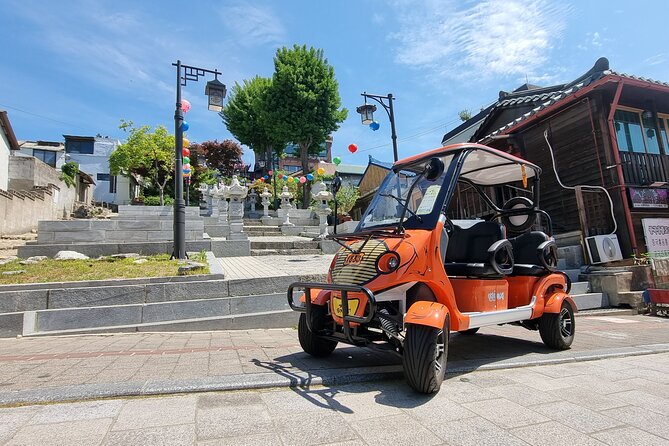
The tour includes a tour guide fee, and in a good set-up, the guide makes the whole route click. One guide name you might hear is Soonie (spelling may vary), described as enthusiastic and patient, explaining the historical parts of old Incheon in a way that stuck.
At the same time, there’s variation in how much live explanation you get. Some departures may lean on pre-recorded commentary and a guide who may not speak English well, which can limit questions. If your Korean is basic, you’ll still likely understand the highlights from the structure, but you won’t get the same level of dialogue as with a strongly English-speaking guide.
My advice: if you have even two or three questions (like why Jogye mattered, or how food history ties back to the port), ask them early. The tour moves fast, so late questions often don’t get answered.
Value check: is $45 per group up to 3 a good deal?
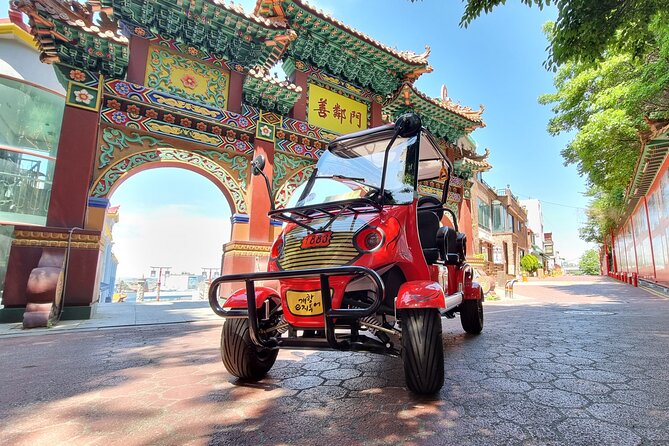
At $45 per group (up to 3) for about 50 minutes, the value depends on how you travel.
If you’re traveling as a small group (or you can share the cost with two friends), it becomes a straightforward bargain: you’re paying for a guided car tour without paying for multiple individual tickets. Also, since it includes the guide fee, you’re not nickel-and-diming your way through the main learning component.
If you’re solo, the cost might feel less dramatic, but the short duration can still make it worth it when you only have an hour to cover multiple meaningful stops. This is the kind of tour that works well when you want the overview without spending half a day commuting and walking.
The key “value test” is this: can you use an hour to get a coherent picture of Incheon Port? If yes, the price is reasonable.
Timing tips for layovers and tight schedules
This is a short tour, so it’s built for people who don’t want a whole-day commitment. One of the best uses is a wait time between flights or a gap day where you still want to feel you experienced something real in Incheon.
That said, short tours are sensitive to delays. If you’re on a long layover, build in buffer time to reach the meeting point and settle your nerves. The route is timed, and you don’t want to arrive stressed.
Also, since the experience requires good weather, have a plan B for rain or heavy wind. When weather is bad, the tour may be rescheduled or refunded depending on the operator’s decision.
Who should book this Incheon Port History Tour?
I’d point you toward this tour if:
- You want a fast history orientation around Incheon Open Port Street
- You like the idea of learning while riding (not just standing and reading)
- You’re interested in Chinatown, immigrant faith sites, and how food culture connects to place
- You’re traveling in a small group and want to keep costs simple
I’d skip it or adjust expectations if:
- You need lots of time at each stop like a typical museum visit
- You rely on live English conversation and want deep Q&A all the way through
- You’re very weather-sensitive and can’t handle possible rescheduling
Quick FAQ on the Incheon Port electric car tour

FAQ
How long is the Incheon Port History Tour?
It runs for about 50 minutes.
How much does it cost?
It costs $45 per group, up to 3 people.
Where do we meet, and where does the tour end?
You meet at 266 Jemullyang-ro, Jung-gu, Incheon, South Korea, and the tour ends back at the same meeting point.
What’s included in the ticket price?
The old-style electric car tour (about 50 minutes) and the tour guide fee are included.
Is a meal included?
No. Meal and snack are not included.
What if the weather is bad, or I need to cancel?
The experience requires good weather. If it’s canceled due to poor weather, you’ll be offered a different date or a full refund. You can also cancel for a full refund up to 24 hours in advance.
Should you book? My honest recommendation
Book it if you want a short, guided, place-based introduction to Incheon’s port-era story, and especially if your group includes up to three people to share the cost. The vintage-style car adds fun without eating your time, and the mix of Chinatown, Jjajangmyeon Museum, murals, and Jemulpo Club gives you more variety than a typical “one neighborhood” tour.
Skip it only if you’re expecting long stays at each sight or you need constant English conversation. If you’re flexible, this one-hour loop is a smart way to understand why Incheon looks the way it does today.