REVIEW · BOROBUDUR
“Java’s Cultural Heritage: Borobudur and Prambanan Tour”
Book on GetYourGuide →Operated by BY-U Tour and Travel Jogjakarta · Bookable on GetYourGuide
Two UNESCO temples, one unforgettable Java day. This is a chance to connect Buddhist and Hindu architecture in the same itinerary, and to see how builders looked at the universe long before modern tech existed. I like that the day is structured so you’re not just driving past monuments—you’re actually in them with guidance.
I also love the pace and comfort for a long day: it runs with a small group (up to 15) and the tour’s built to skip the ticket line. That matters when you only have one shot to see each complex properly.
One possible drawback: plan around food on your own. The tour details don’t clearly lock in lunch, and one past guest even asked for better lunch suggestions.
In This Review
- Key highlights you’ll feel in the day
- Why Borobudur and Prambanan in One Day Actually Works
- Borobudur: the 9th-century Buddhist architecture you can read
- The drive and photo stops between temples
- Prambanan at sunset: Shiva, Trimurti, and the sheer scale
- Guide and driver experience: what good assistance changes
- Price and tickets: how $15 becomes good value
- When this tour fits you best
- Should you book the Java UNESCO day trip?
- FAQ
- How long is the Java Cultural Heritage: Borobudur and Prambanan Tour?
- Where does the tour pick you up and drop you off?
- Is there an English guide, and how big is the group?
- Does the tour include entrance tickets?
- Does the tour help with tickets and entry lines?
- Are there any restrictions on the tour?
Key highlights you’ll feel in the day
- UNESCO recognition at both sites: Borobudur and Prambanan are both UNESCO World Heritage.
- 9th-century temple design you can map with your eyes: tiers, terraces, and the Buddhist “layers of reality.”
- English live guide plus help with tickets: smoother entry, less stress.
- Sunset at Prambanan: the schedule includes sunset timing plus self-guided exploring.
- Small-group touring (15 people max): easier questions, less rushing.
- Arts & crafts market visit: a cultural stop, not just temples-in-temples-out.
Why Borobudur and Prambanan in One Day Actually Works
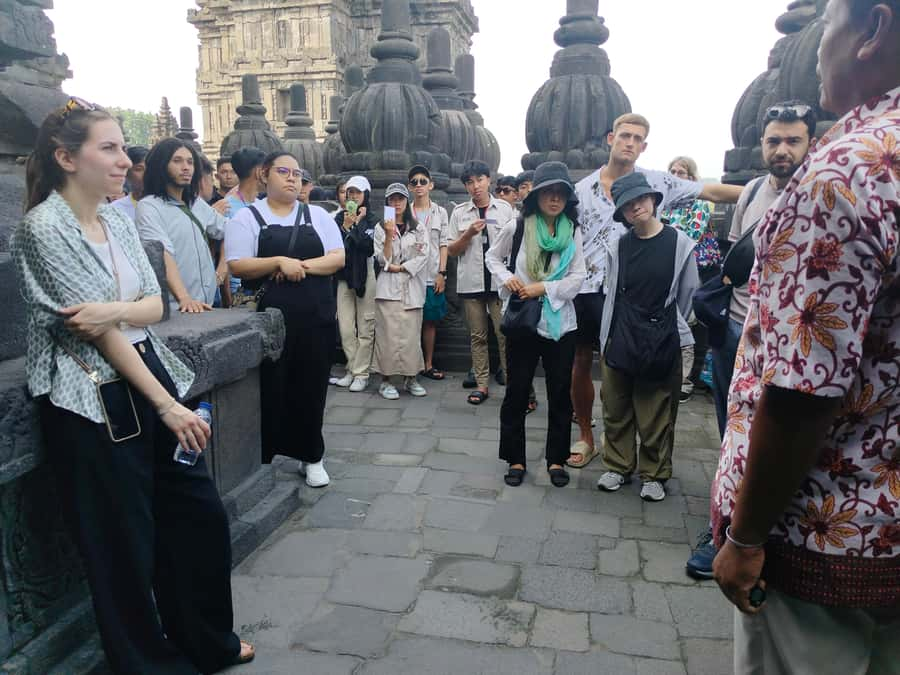
If you’re short on time in Yogyakarta, this is a smart pairing. Borobudur gives you the Buddhist side of Java’s old Mataram era, while Prambanan shows the Hindu kingdom’s temple ambition—and both were built around the same broad timeframe.
What I like about doing them in one day is the contrast. You go from Borobudur’s structured, cosmos-based layout—base, body, and upper parts—to Prambanan’s sacred space built as a “Shiva house.” Seeing both back-to-back helps your brain sort the symbols faster, even if you’re not a scholar.
This tour also keeps you moving in a realistic way. It includes photo stops and guided time at Borobudur, then a guided-plus-self-guided mix at Prambanan, with scenic drive time between. That structure is ideal if you want value without turning your day into a chaotic checklist.
Borobudur: the 9th-century Buddhist architecture you can read
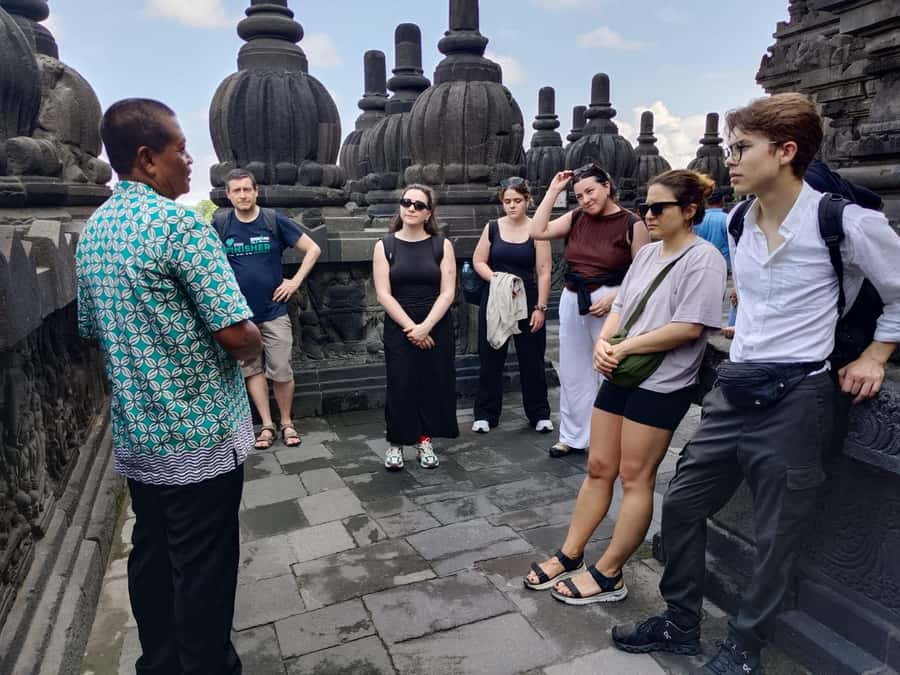
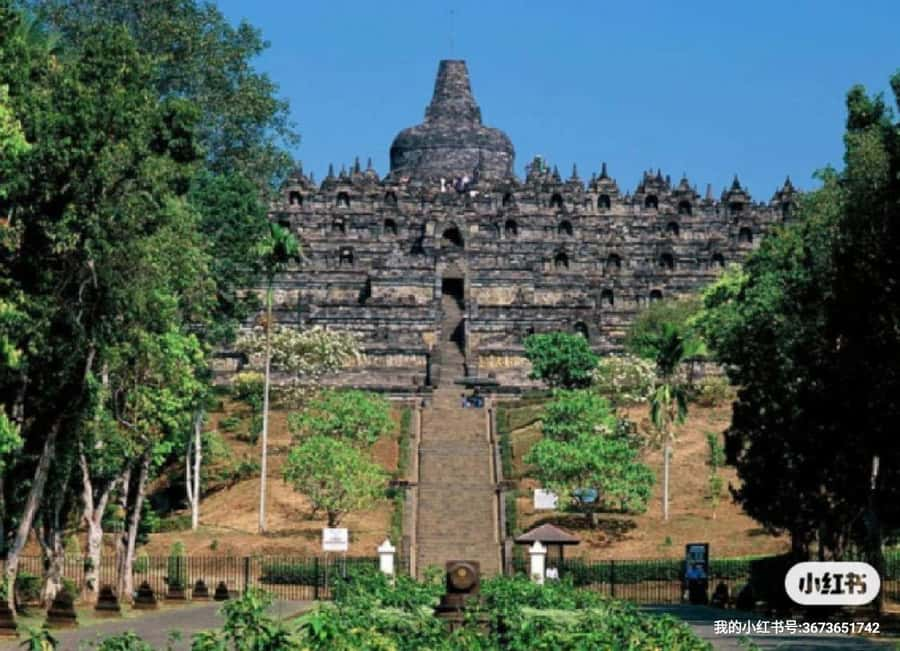
Borobudur is one of those places where you start noticing patterns. The temple was built in the 9th century (under the Syailendra dynasty in old Mataram) and follows Javanese Buddhist temple architecture in a very deliberate design.
The layout is the big story. Borobudur is built in three major sections:
- a pyramid base with five concentric square terraces
- a cone-like body with three circular platforms
- a top with a monumental stupa
The walls and balustrades also carry fine low reliefs, which is where you start feeling how much storytelling the builders packed into stone.
The universe concept is not just poetic—it’s part of the structure. The vertical divisions of Borobudur align with Buddhist cosmology into three superimposing spheres: kamadhatu, rupadhatu, and arupadhatu. Once you know that, the walk starts to feel like moving through layers of meaning instead of only chasing photos.
Practical detail: UNESCO restoration is part of the modern story too. Borobudur was restored with UNESCO in the 1970s, which is one reason the site is in the form you can still study today. And because this tour includes guided time plus sightseeing and walking, you’re more likely to understand what you’re looking at rather than just admiring it from a distance.
One small tradeoff to keep in mind: the day is designed around an efficient visit. You’ll get guidance and time inside, but if you’re the type who wants to linger over every single relief segment, you may feel a bit squeezed by the schedule.
The drive and photo stops between temples
The route between the two complexes includes scenic driving time and a dedicated photo stop at Borobudur. The Borobudur portion is scheduled with about 1.5 hours for that stop, guided visiting, sightseeing, and walking, plus time to enjoy views along the way.
Why mention this? Because the “in-between” time is where people often lose momentum. With an air-conditioned vehicle, mineral water on board, parking handled, and an English-speaking driver, you’re not spending the day figuring out logistics mid-stream.
Also, this is set up as a small group experience. With up to 15 participants, you’re less likely to feel like a number. You can ask basic questions during the drive, too—especially useful when the guide is already talking temple layout and symbolism.
Prambanan at sunset: Shiva, Trimurti, and the sheer scale
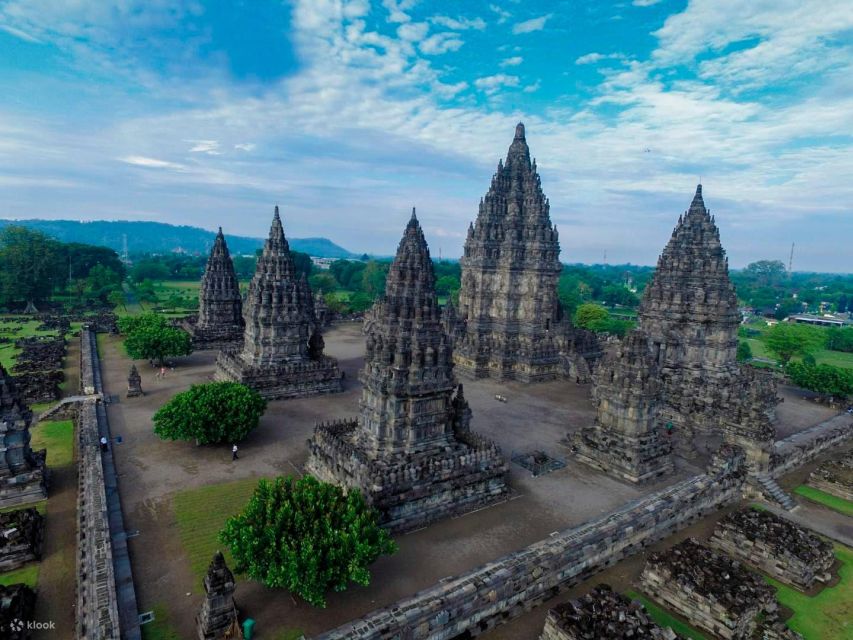
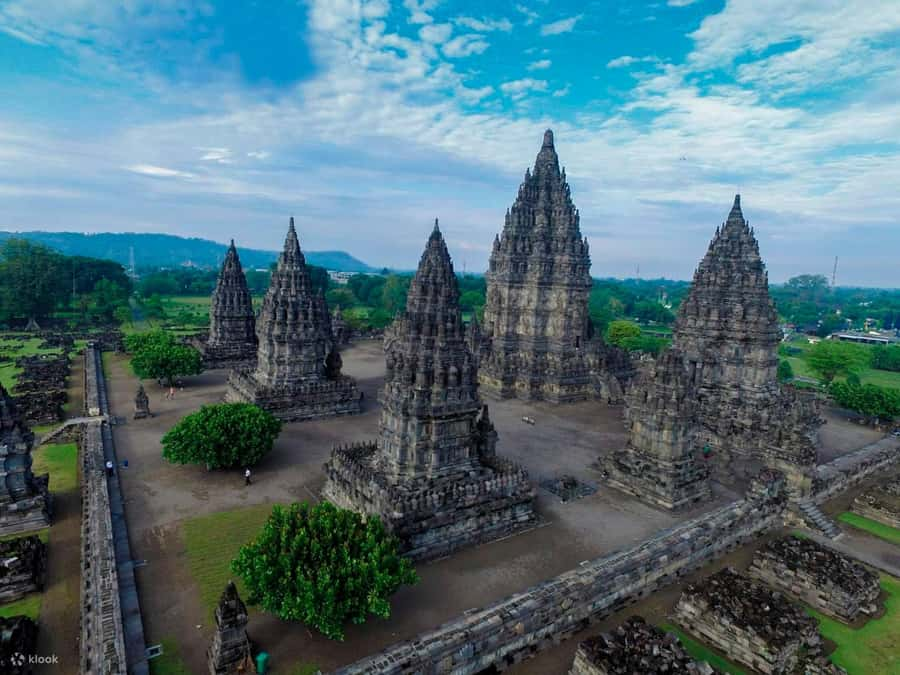
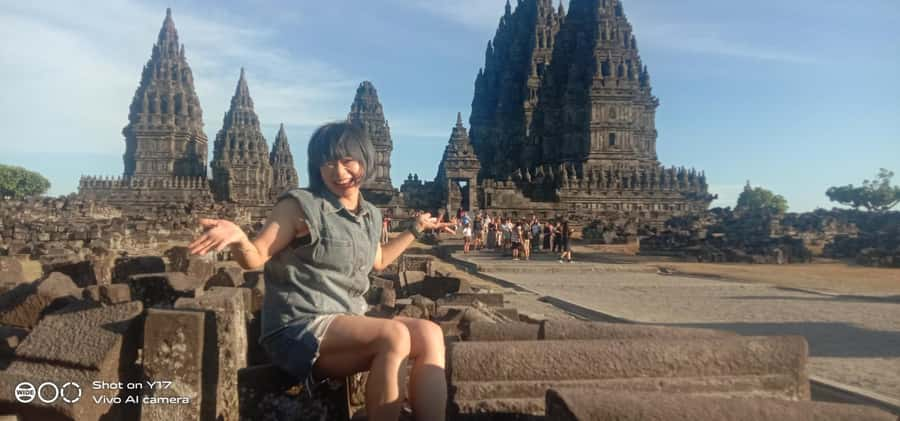
Prambanan is a very different energy from Borobudur, and that difference is exactly why the pairing works. Prambanan is also known as Rorojonggrang Temple and is the largest Hindu temple in Indonesia.
It was built in the 9th century during the Mataram or Medang kingdom era. A key detail that helps you understand what you’re seeing comes from the Siwagrha inscription: the original name was Siwagrha temple, which means Shiva house. In other words, this isn’t just “a big Hindu complex”—it was created as a specific offering space.
The temple was built as an offering to the Trimurti, the three primary Hindu gods:
- Brahma
- Vishnu
- Shiva
UNESCO recognition is part of its modern status as well, and this tour gives you a guided visit plus time to explore on your own. The schedule includes a sunset moment, which is often when temple silhouettes and details feel more dramatic. After that guided portion, you get self-guided touring, so you can slow down and focus on what grabs you.
There’s also an arts & crafts market visit included in the Prambanan block. It’s the kind of stop that breaks the day up after temple time, and it gives you a chance to pick up something local without turning the trip into a separate shopping detour.
One detail to note: the Prambanan segment includes both a photo stop and sunset timing. If you’re serious about photos, arrive ready to move when the guide says it’s time. Temple light shifts fast, and the schedule is built around that.
Guide and driver experience: what good assistance changes
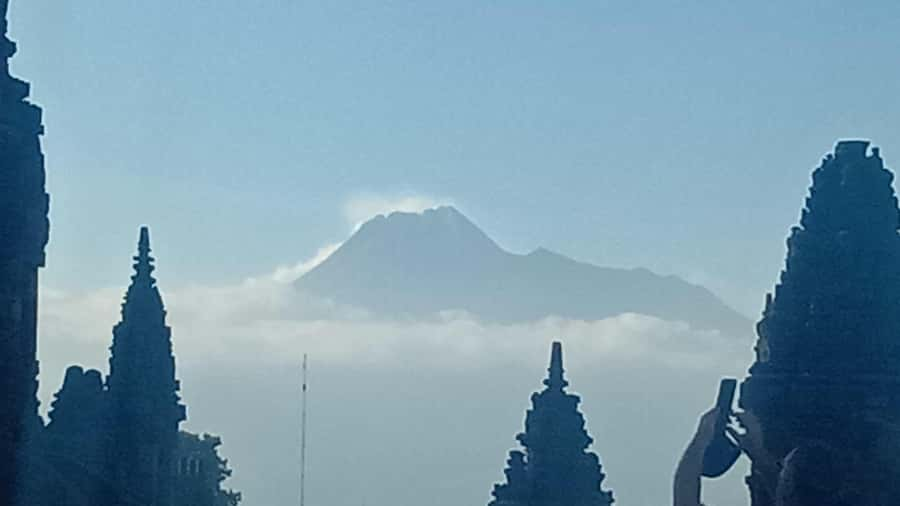
In this kind of day trip, the guide can make the monuments feel clearer—or just louder. This operator’s format includes a live English tour guide and an English-speaking driver, plus full assistance to help you buy or book your entrance ticket on the spot (depending on your ticket package choice).
In the past, strong communication has been highlighted by the names Holly (English guide) and Hari (driver) in guest feedback. What matters for you is the effect: better explanations at Borobudur, and smoother handling of the day when timing gets tight.
Good guide work shows up in small things. At Borobudur, the guide can point out how the structure maps to Buddhist cosmology, and that makes the stone feel less random. At Prambanan, the guide can anchor you in the Trimurti and Shiva house story so the scale doesn’t just overwhelm you.
Also, this is a limited group tour. With a small group size, you get fewer bottlenecks at entry points and fewer “everyone go here now” moments.
Price and tickets: how $15 becomes good value
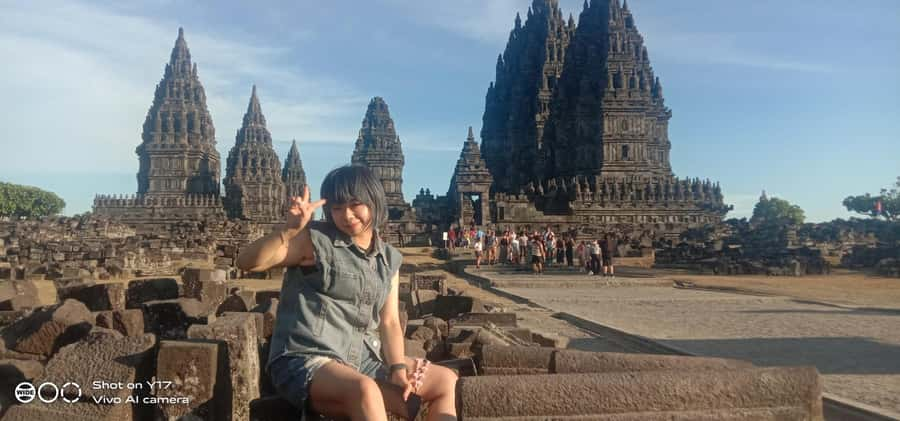
The price is listed as $15 per person, and on paper that can sound too good. The value comes from what’s bundled and what’s assisted.
First, you’re paying for a full day (about 10 hours) with hotel pickup and drop-off at the same place, an air-conditioned vehicle, mineral water, gasoline, parking fees, and travel insurance. That’s not just transport—it’s the cost of keeping the whole day running.
Second, there’s the ticket part. The provider offers three different options:
- a package that includes all tickets
- an option where Prambanan tickets are included
- an option where entrance tickets are shared and not included (meaning you may pay separately depending on the arrangement)
On top of that, the tour includes skip-the-ticket-line plus help to buy or book entrance tickets with full assistance. That reduces the most stressful part of Temple Day: wasting time and waiting while the rest of the group stands in limbo.
So how do you judge value for you?
- If you prefer less hassle, choose the option that includes more ticket coverage.
- If you’re comfortable handling tickets yourself, the cheaper ticket-sharing choice could work—just remember the tour includes assistance either way, which is part of what makes the day easier.
When this tour fits you best
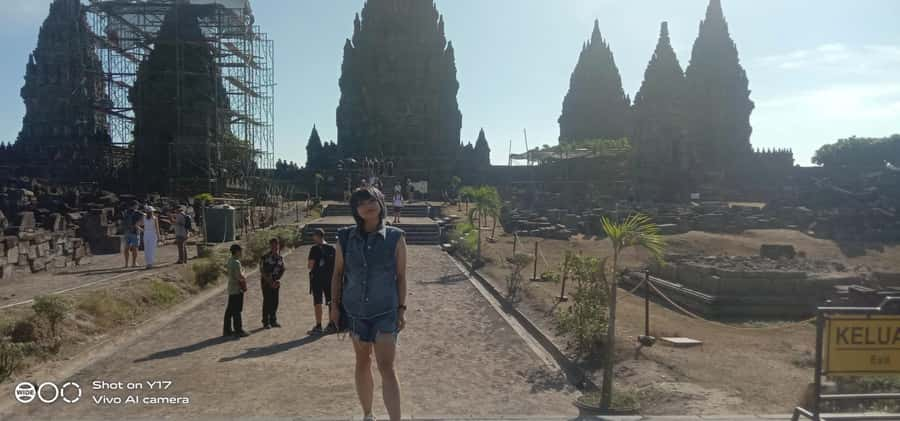
This tour is a strong match if you:
- want two UNESCO temple sites in one day without turning it into a car-only day
- care about explanations of architecture and symbolism (not only sweeping views)
- prefer English live guiding
- like a small group setup rather than a crowd
It’s also explicitly wheelchair accessible, which is great to know. Just remember the tour is not suitable for people over 70 years, so if age affects mobility or stamina, you’ll want to consider alternatives.
You’ll also want to be aware of the rules: no drones, and no alcohol or drugs. That’s standard for many heritage sites, but it’s worth noting so you don’t get stuck mid-day dealing with problems you could have avoided earlier.
Should you book the Java UNESCO day trip?
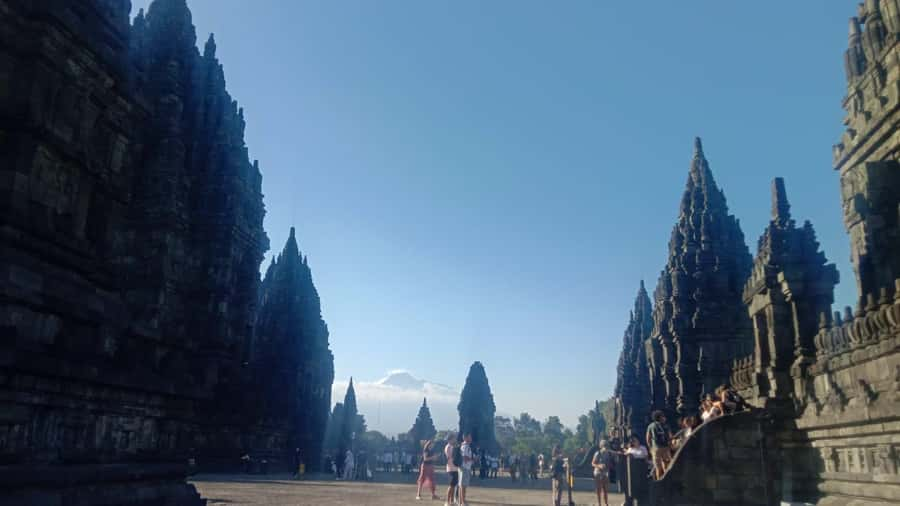
Yes, if you want an efficient, guided, small-group day that connects Borobudur’s Buddhist cosmology with Prambanan’s Shiva-focused Hindu story. The mix of guided touring and self-guided time is a practical recipe: you learn what matters, then you can still take your own path for a bit.
Book with extra confidence if you like structure. The day is planned around photo stops, walking time, scenic drive, and sunset timing. And with hotel pickup/drop-off, air-conditioned transport, mineral water, and ticket help, you’re not carrying the admin burden.
Skip—or at least rethink it—if you need long, unstructured temple time or you rely heavily on the tour to plan meals. Since lunch details aren’t listed as part of the core itinerary, you may want to plan your own food strategy before you go.
FAQ
How long is the Java Cultural Heritage: Borobudur and Prambanan Tour?
It runs for 10 hours.
Where does the tour pick you up and drop you off?
Pickup and drop-off are available at two options: New Yogyakarta International Airport Railway Station and Malioboro Yogyakarta.
Is there an English guide, and how big is the group?
Yes, the tour includes a live English tour guide and is limited to 15 participants.
Does the tour include entrance tickets?
There are three options: one that includes all tickets, one that includes Prambanan tickets, and one where entrance tickets are shared but not included.
Does the tour help with tickets and entry lines?
Yes. The tour includes skip the ticket line and offers full assistance to help you buy or book entrance tickets on site.
Are there any restrictions on the tour?
Drones are not allowed, and alcohol and drugs are not allowed.