REVIEW · SICILY
Ortigia: Syracuse’s Ancient Town Center Private Walking Tour
Book on Viator →Operated by Hermes Sicily Tourist guides group · Bookable on Viator
Ortigia reads like an open-air textbook. In just about 2 hours, this private walking tour helps you hit the big Syracuse icons—Temple of Apollo, Piazza Duomo, Fonte Aretusa, and the Giudecca quarter—without wasting time figuring out directions. I especially like the focused route (so your limited time turns into real understanding), and I like the mix of myth, architecture, and everyday street life. One catch: cathedral entry depends on dress code and sometimes on whether there’s a service happening.
This is a walk with real guidance, not a simple stroll. Guides such as Eva/Ava, Valeria, and Carmine have led groups here and brought lots of context, including how the city stacked Greek, Roman, Arab, and Christian layers over time. Plan for Sicilian sun and long stretches on foot, since the tour is outdoors for most of the experience.
In This Review
- Quick Take: What You’ll Notice Immediately
- Why Ortigia on Foot Makes Sense for a Short Visit
- Temple of Apollo: The First Big Piece of the Greek Puzzle
- Piazza Archimede and Via Cavour: Neoclassicism Meets Real Streets
- Piazza Duomo and Syracuse Cathedral: Where the Dress Code Really Matters
- Santa Lucia alla Badia and Fonte Aretusa: Baroque Interiors and Myth at the Spring
- Island of Ortigia and the Giudecca District: A Walking History That Feels Personal
- What You Pay for: The Real Value Behind $107.53
- The Guide Factor: Tailored Pace, Q&A Time, and Small Detours
- Should You Book This Ortigia Private Walking Tour?
- FAQ
- How long is the Ortigia: Syracuse’s Ancient Town Center private walking tour?
- Is this tour private or shared with other groups?
- What language is the tour offered in?
- Where do you meet the guide, and where does the tour end?
- Are the cathedral interiors included in the price?
- What dress code do I need for the cathedral?
- Is Chiesa di Santa Lucia alla Badia open every day?
- Do I need to bring a paper ticket?
- What happens if weather is poor?
- Can I get a full refund if I cancel?
Quick Take: What You’ll Notice Immediately
- A real private format: only your group, with a professional guide doing the explaining
- Built around Ortigia’s walkability: narrow lanes, squares, churches, and key viewpoints in about 2 hours
- Temple of Apollo and Fonte Aretusa stops are free for the sites shown on the route
- Syracuse Cathedral is optional inside and costs €2 per person, with strict dress rules
- Fonte Aretusa comes with papyrus + the Arethusa myth (Alpheus and Arethusa)
- Giudecca + Via della Giudecca: you get the ancient Jewish district context, not just photos
Why Ortigia on Foot Makes Sense for a Short Visit
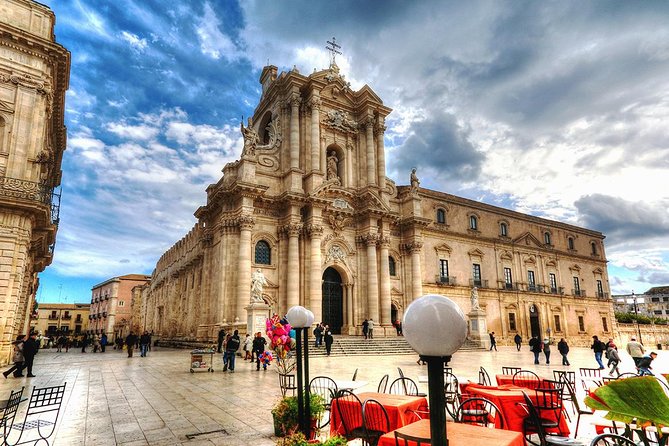
Ortigia is small enough to walk, but complicated enough to feel confusing without help. This tour solves that fast by keeping you moving from landmark to landmark, with a guide who can connect what you’re seeing to the bigger story of Syracuse.
You start at Via dell’Apollonion and end back there. That matters more than you might think: you’re not constantly changing plans or re-orienting yourself mid-day. The tour lasts about 2 hours, which is a sweet spot for getting the main highlights without burning your whole afternoon.
Because it’s private, you don’t have to fit your pace to strangers. Your guide can slow down when you want more detail, or speed up if you’re just trying to cover ground. If you booked with a group discount option, that’s also a nice way to stretch the value.
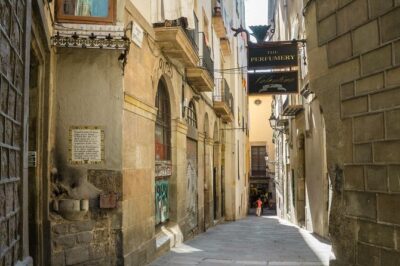
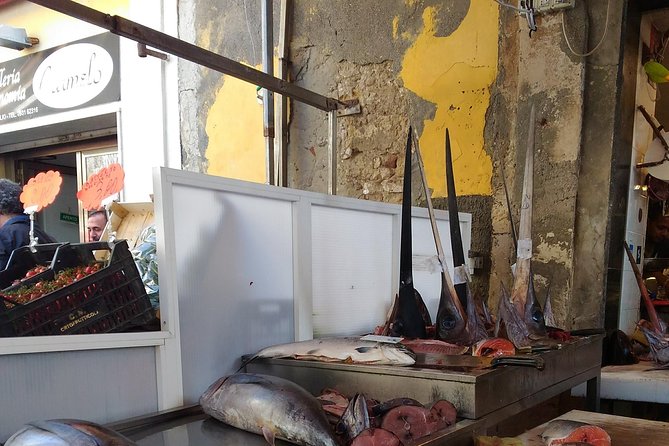
And yes, you’ll get the street texture you can’t replicate from a bus ride: small lanes, church fronts, and glimpses of daily life around the markets and squares. It’s the kind of walking tour where the city starts to make sense—fast.
You can also read our reviews of more walking tours in Sicily

Temple of Apollo: The First Big Piece of the Greek Puzzle
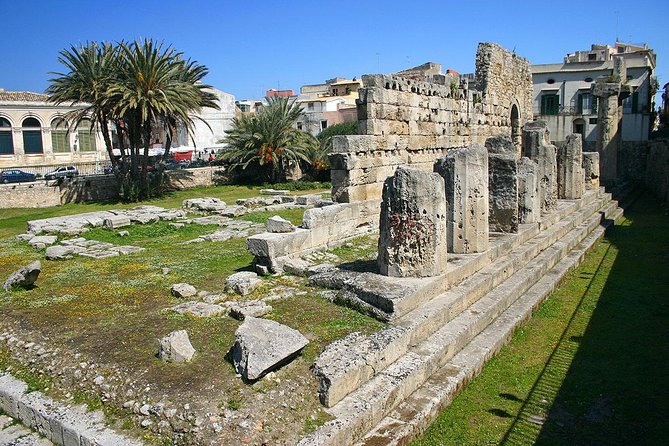
Your first landmark is the Temple of Apollo (Tempio di Apollo). This is described as the oldest stone temple built by Greeks in Sicily—an impressive way to open the day. You spend about 10 minutes here, and admission for this stop is free.
Why this start works: it sets the baseline. Syracuse wasn’t built in one era. When you start at a Greek monument, you can better understand later layers—especially when the route moves toward places like Piazza Duomo and the Cathedral, which sits on an ancient Greek foundation.
Also, stopping here early helps your brain. When you’re later standing in squares filled with Roman and Baroque-era shapes, you’ll recognize what’s older and what’s been reused, rebuilt, or layered on top.
Piazza Archimede and Via Cavour: Neoclassicism Meets Real Streets
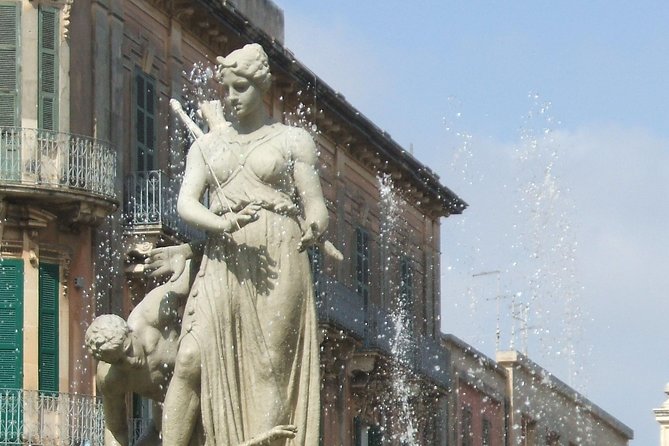
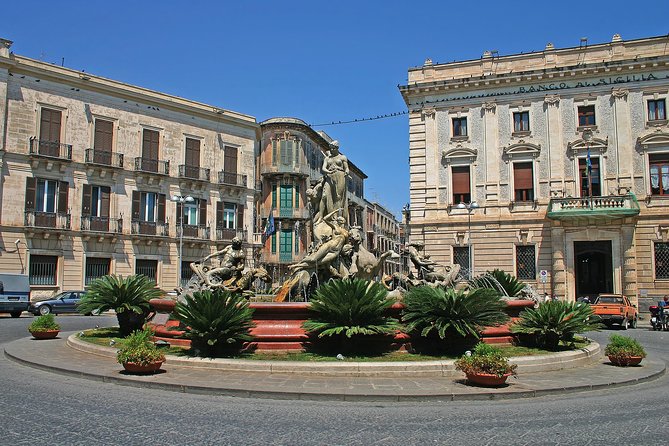
Next up is Piazza Archimede, about 10 minutes. Here you’ll spot the neoclassical Diana fountain, surrounded by buildings with different architectural styles. Admission for this is also free, and it’s a good pause point—something open and readable before you move back into narrower streets.
Then you walk along via Cavour, passing near the Collegio dei Gesuiti. You don’t need a long stop here to get value. What you’re really learning is how later institutions shaped the area. Even without a huge detour, this kind of passing context matters when you’re trying to understand a city’s “why,” not just its “what.”
This section is also where you start feeling the rhythm of Ortigia: quick landmark views, short explanations, then back into walking mode.
Piazza Duomo and Syracuse Cathedral: Where the Dress Code Really Matters
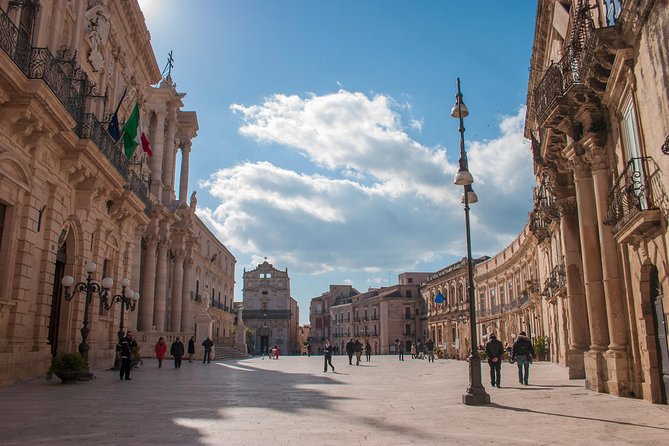
You arrive at Piazza Duomo, where the main buildings are clustered together. Expect about 15 minutes here, with admission free for the viewing portion. The tour focuses on the cathedral square and key structures around it, including the cathedral itself, palazzo Vermexio, the arcivescovado, and palazzo Beneventano del Bosco.
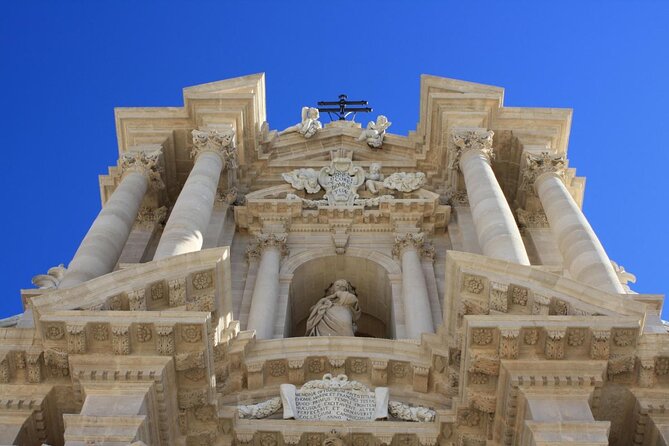
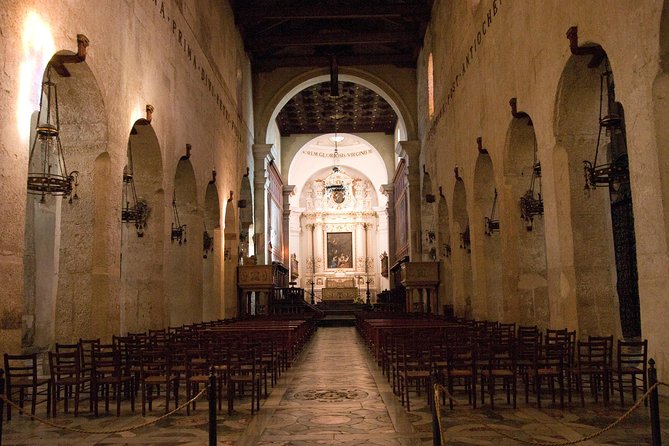
Then comes the big one: Syracuse Cathedral. You spend about 25 minutes. The interior visit is not included; there’s an optional €2 per person cathedral entrance fee.
Two practical notes can make or break your expectations:
- The cathedral interior may be unavailable during holy mass or marriages. If that happens, your guide explains the church from outside instead.
- There’s a strict dress code for entering the cathedral: no shorts or sleeveless tops, and shoulders must be covered for both men and women. If you don’t comply, you can be refused entry.
If you’re traveling in hot weather (common in Sicily), this is worth planning for. Bring a light layer that covers your shoulders, and you’ll feel less stressed when you arrive at the cathedral area.
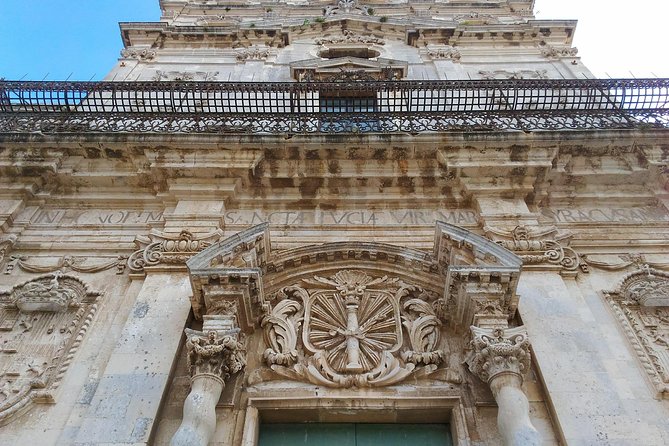
Why I like this stop: it directly connects Syracuse’s Greek past to a Baroque Christian presence. The route describes the cathedral as a baroque church built on an ancient Greek temple. So even if you only get the exterior view, you’re still standing in a place where eras overlap.
Santa Lucia alla Badia and Fonte Aretusa: Baroque Interiors and Myth at the Spring
After the cathedral square, the tour moves to Chiesa di Santa Lucia alla Badia. You’ll have about 20 minutes here, and admission for the stop is listed as free.
But there’s an important schedule detail: the church is closed on Mondays, so an interior visit isn’t possible on that day. If your travel dates include Monday, expect the tour to shift the experience accordingly.
This stop can also be a highlight for art and devotion details. In the guide explanations from previous groups, Caravaggio’s The Burial of Saint Lucy has come up in connection with Santa Lucia alla Badia, and St. Lucy references are common in this area of the route. If art is part of your travel style, this is one of the stops where the guide’s storytelling can make the sight feel more specific.
Then you head to Fonte Aretusa—Syracuse’s legendary spring—about 10 minutes, with admission listed as free. This spring is also famous for its papyrus plants, and your guide will tell you about Alpheus and Arethusa, tying the physical place to the myth.
Practical tip: Fonte Aretusa is a great pause moment. It’s easier to slow down here than in the tighter lanes, and it’s a good place to ask your guide follow-up questions. The myth theme also pays off later, because you’ll start noticing patterns in how Ortigia’s stories connect across neighborhoods.
You can also read our reviews of more private tours in Sicily
Island of Ortigia and the Giudecca District: A Walking History That Feels Personal
The heart of the experience is the time spent simply walking Ortigia’s narrow streets. You’ll cover about 20 minutes in the Island of Ortigia area, including the Giudecca district, which is described as the ancient Jewish district of Syracuse.
This isn’t just a background label. With a guide, the route can turn the neighborhood into a story you can track. You’re moving through the kind of streets where a city’s layers become visible in how buildings sit, how squares open up, and how churches and institutions anchor the walk.
You’ll also get time specifically for Via della Giudecca, about 10 minutes, and the tour ends with a walk through this former Jewish district.
Why this portion is so valuable: many guided walks focus only on monuments. Here, you get context for a neighborhood that helped shape the city’s everyday life. It’s also one of the best ways to understand why Ortigia feels so distinct from “mainland” Syracuse—you’re living inside the historic grid, not just viewing it.
What You Pay for: The Real Value Behind $107.53
The price is $107.53 per person, for a tour listed at about 2 hours with a professional guide in English. It’s also a private walking tour for your group, with group discounts mentioned as an option.
What’s included is straightforward: guide + private walking tour. What’s not included is the cathedral entrance fee (optional) at €2 per person.
In value terms, the equation looks good if you meet two conditions:
- you want history that connects across locations, not isolated facts
- you want a route that saves time and reduces confusion
If you were planning to do this on your own, you’d still need to spend time figuring out the logic between stops—Greek temple foundations, later architectural layers, and how the Jewish quarter fits into the broader story. Here, the guide does that work for you.
One more value point: the tour’s structure includes time for key places that are free to view (Temple of Apollo, piazzas, Fonte Aretusa), so your paid portion isn’t only about buying tickets. The cost is mostly for interpretation and navigation—exactly what you want on a short visit.
The Guide Factor: Tailored Pace, Q&A Time, and Small Detours
This tour’s reputation is closely tied to the guide experience. Names that have shown up with strong feedback include Eva/Ava, Valeria, Carmine, and Frau Maier.
What matters most isn’t just facts. It’s the way guides make the walk interactive:
- They answer questions clearly and often tie what you see to the next place.
- They may adjust the focus based on what you care about.
- They can spot details you might miss on your own.
There’s also evidence that some guides add a quick detour to something very specific—like an old Mikveh ritual bath. That kind of stop can turn a standard walking tour into a Syracuse-specific story you’ll remember.
And yes, the tour can run in warm conditions. Strong pacing helps. When the route is tight and the explanations are timed well, you’re not just walking; you’re actively learning with the city around you.
Should You Book This Ortigia Private Walking Tour?
I’d book this tour if you want a guided, efficient way to understand Ortigia in a short window—especially if you like Greek origins, Baroque churches, and neighborhood context like the Giudecca district. The private format also helps if you prefer a less crowded experience and want time to ask questions without feeling rushed.
I’d think twice if:
- you’re counting on guaranteed cathedral interior time and you’re traveling on a day with mass or ceremonies
- you might struggle with the cathedral dress code (shoulders covered)
- your schedule includes Monday, when Santa Lucia alla Badia interior access is not possible
If your goal is to get oriented fast and leave with a real sense of how Syracuse layers its eras, this is the kind of walking tour that makes the city click.
FAQ
How long is the Ortigia: Syracuse’s Ancient Town Center private walking tour?
The tour lasts about 2 hours.
Is this tour private or shared with other groups?
It’s a private tour/activity, meaning only your group participates.
What language is the tour offered in?
The tour is offered in English.
Where do you meet the guide, and where does the tour end?
You meet the guide at Via dell’Apollonion, 96100 Siracusa SR, Italy, and the tour ends back at the meeting point.
Are the cathedral interiors included in the price?
No. The Syracuse Cathedral interior requires an optional ticket fee of €2 per person, which is not included.
What dress code do I need for the cathedral?
You must avoid shorts and sleeveless tops. Shoulders must be covered for both men and women, or you may be refused entry.
Is Chiesa di Santa Lucia alla Badia open every day?
No. The church is closed on Mondays, so it’s not possible to visit the interiors on that day.
Do I need to bring a paper ticket?
A mobile ticket is included.
What happens if weather is poor?
This experience requires good weather. If it’s canceled due to poor weather, you’ll be offered a different date or a full refund.
Can I get a full refund if I cancel?
Yes. You can cancel up to 24 hours in advance for a full refund. If you cancel less than 24 hours before the start time, the amount paid is not refunded.