Three hours in Budapest, with weight and hope. I like how this Jewish Heritage tour pairs major sights in the Jewish Quarter with short, emotional memorial stops, guided by local licensed guide Edith. You’ll also get a small-group experience (under about ten to thirteen people), with time for Q&A and real back-and-forth about what being Jewish in Hungary means today.
I especially love that Edith doesn’t treat this like a textbook. She connects the architecture, the cemetery, and the memorials to lived history—then brings the conversation back to the present. One consideration: the big Dohány Street Synagogue entrance ticket is not included (it’s listed at €26.00 per person), so plan for that extra cost.
In This Review
- Key highlights in plain terms
- Meeting at Deák Ferenc tér: how to start without stress
- Dohány Street Synagogue: more than a famous building
- The Tree of Life and the stories behind objects
- The synagogue ticket cost: why you should budget early
- Shoes on the Danube Bank: the short stop that stays with you
- The memorial to the victims of the German invasion: where history meets argument
- Why Edith’s guiding style is the real product
- Price and logistics: where the money goes
- Timing your day after the tour: what to do next
- What kind of traveler should book this?
- Should you book this Jewish Heritage tour?
- FAQ
- How long is the Jewish Heritage full tour in Budapest?
- Where do I meet for the tour?
- What’s the ending location?
- What is included in the tour price?
- Do I need to pay for the Dohány Street Synagogue entrance?
- Is transportation included?
- How large is the group?
- Is free cancellation available?
Key highlights in plain terms
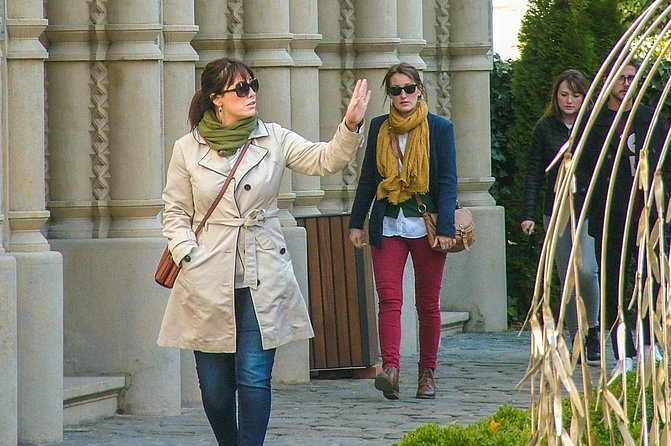
- Edith’s small-group approach: under a dozen people, so questions don’t get lost
- Dohány Street Synagogue inside access plus cemetery grounds: the stop that carries the most meaning
- Short stops that hit fast: Shoes on the Danube Bank and a controversial memorial, each under 20 minutes
- Raoul Wallenberg Memorial Garden and the Tree of Life: specific places that add depth beyond the main building
- Guided discussion about Jewish life today: not only World War II—also what’s going on now
Meeting at Deák Ferenc tér: how to start without stress
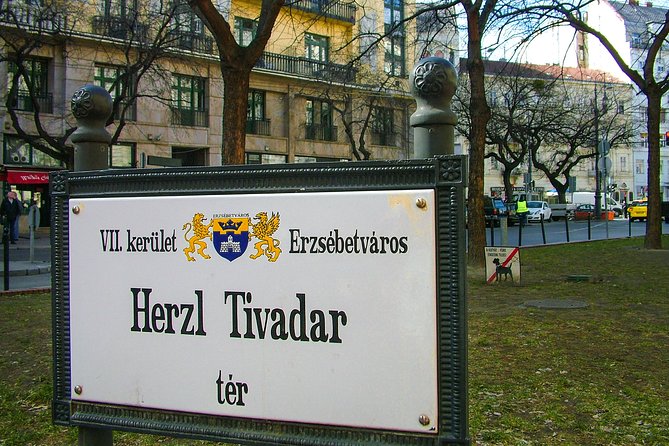
You’ll meet in central Budapest at Deák Ferenc tér. This is a smart choice for two reasons. First, it’s easy to reach with public transport, so you’re not trying to coordinate a taxi in peak city traffic. Second, it puts you right at the start of the day’s story: you’re in the heart of Budapest, then you move into the Jewish Quarter where the city’s history becomes personal.
The tour runs about 3 hours. That timing matters because it leaves you room to keep exploring afterward—ruin bars, cafés, museum hopping, or just wandering the streets around the synagogue area. Even the way the day is structured reflects that: one longer anchor stop, then shorter memorial visits.
If you want to make the day smoother, wear comfortable shoes. This is a walking-focused route, and you’ll likely cover a mix of streets and short transfers, since transportation is not included in the ticket.
You can also read our reviews of more historical tours in Budapest


Dohány Street Synagogue: more than a famous building
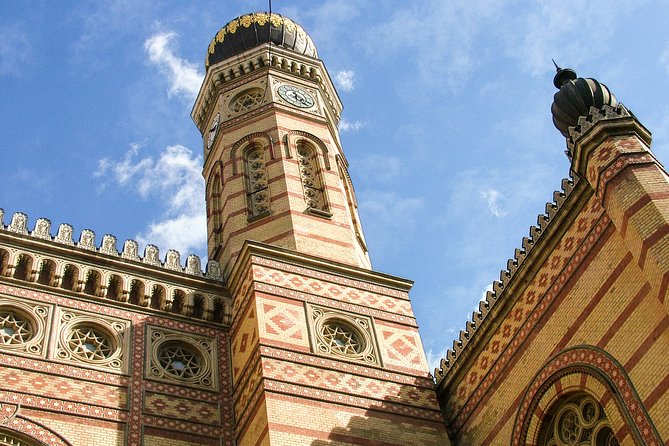
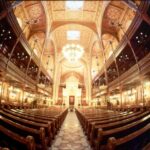
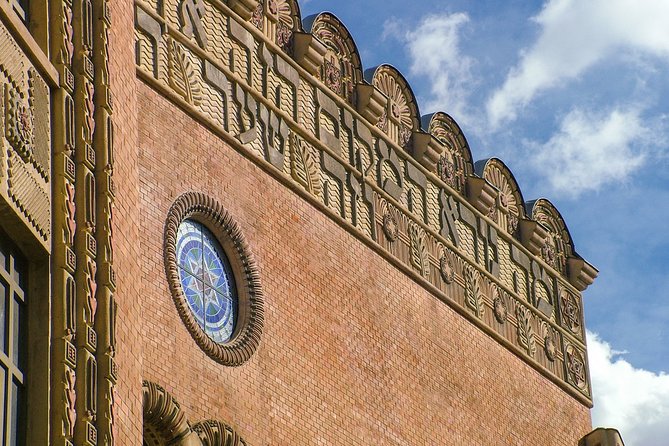
The main event is the Dohány Street Synagogue complex. This is the second largest synagogue in the world, and the building alone can feel like a landmark that refuses to be just a background detail. But the tour’s value is that you don’t just look at it—you understand what you’re looking at.
You’ll spend about 2 hours at Stop 1, and that’s where the tour earns its reputation. You’ll visit the synagogue building and the cemetery area, plus the Raoul Wallenberg Memorial Garden. These places work together: the synagogue helps you see community scale and identity, while the garden and cemetery grounds shift the mood into remembrance.
One detail I’d plan for: the stop is described as including more than one functioning synagogue, with an outside visit to a second place of worship. That matters because it reinforces something easy to miss when you only read about the past. This isn’t only history museum glass. It’s still a living religious area.
The Tree of Life and the stories behind objects
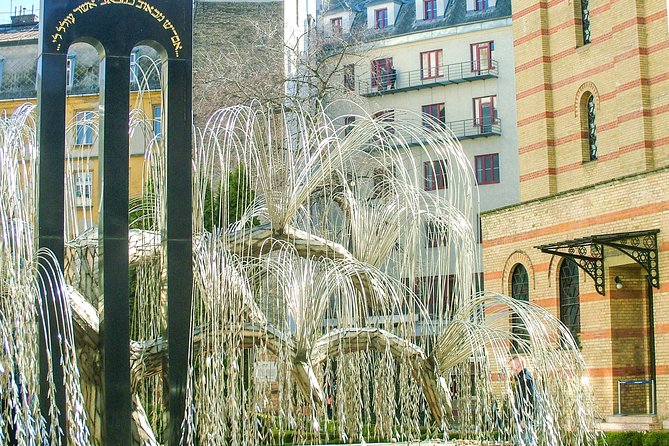
Another stop within the larger complex is the Emmanuel Tree, also linked to Tony Curtis. That may sound like a quirky side-note, but it’s the kind of human detail that turns a landmark into a story you can retell later. Edith’s style (based on how many people mention her approach) is to use these items to explain why they exist and what they mean to real people, not just what they look like.
The synagogue ticket cost: why you should budget early
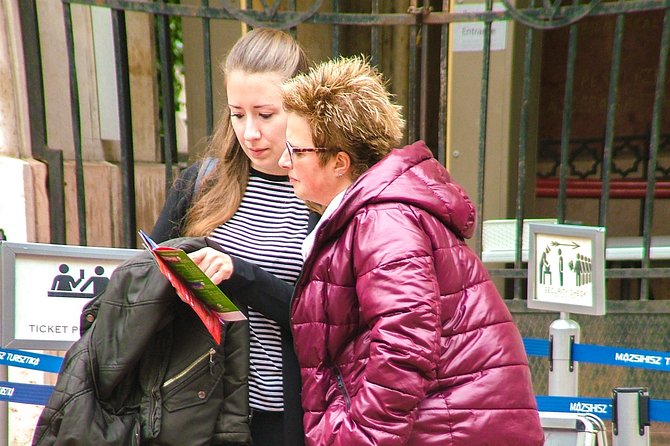
Admission to the Dohány Street Synagogue is listed at €26.00 per person and is not included in the tour price. So yes, your $80.86 booking is not the full cost for the day. But this is one of those cases where the extra expense is directly tied to the best part of the experience: you’re paying for access to the building and grounds with a guide who can interpret it.
If you’re cost-sensitive, budget the synagogue entrance as part of the total. If you’re value-sensitive, this is still a solid trade: it’s a focused 3-hour route anchored around the place most people come to see.
Shoes on the Danube Bank: the short stop that stays with you
Next comes Shoes on the Danube Bank, one of Budapest’s most moving Holocaust-era memorials. The listed time is about 15 minutes, and that’s enough. You don’t need a long visit here to feel the impact.
The memorial is about the thousands of Jews who were shot into the Danube. It’s brief by design. It forces you to confront the idea that a person can be reduced to an object—then asks you to remember the human life behind what you’re seeing.
A practical note: because it’s outdoors, bring layers. The Danube area can feel colder or windier than you expect, even when the rest of the city is comfortable. And since this tour has a weather requirement, a cool, blustery day could make this stop even more intense.




The memorial to the victims of the German invasion: where history meets argument
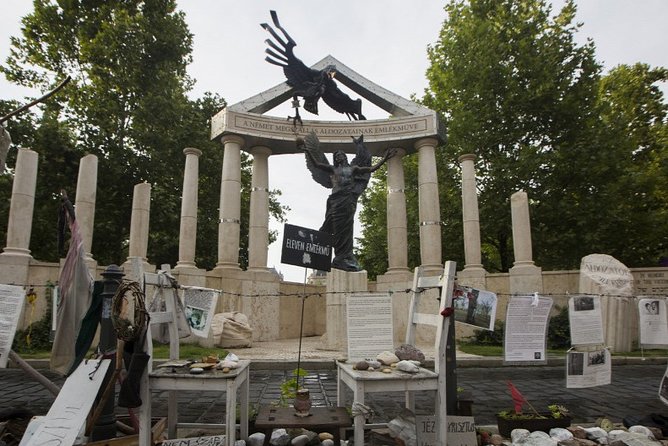
The final major stop is a memorial to the victims of the German invasion—mostly Jews—plus the reality that it remains controversial. The tour describes it as having been erected under cover of night and guarded by policemen, and it also notes protests have continued ever since the memorial was established about ten years ago.
This is not the kind of monument that settles into neutral. It’s the kind of place where people still disagree about what it represents and how it should be presented. That’s exactly why it belongs on a guided tour focused on Jewish heritage in Hungary today.
You’ll spend around 15 minutes here. Think of that time as a chance to understand the conflict around memory itself. When a memorial sparks daily protest, the lesson is bigger than the stone. It’s about how countries tell hard truths, and who gets to decide the message.
Why Edith’s guiding style is the real product
A lot of tours claim they’re personal. This one earns that label in small ways you’ll feel right away.
Edith is repeatedly praised in the details: her clear English, her timing, her ability to answer questions as you walk, and the way she brings emotion without turning it into melodrama. Many people also mention that she shares personal stories alongside the historical timeline. In other words, she’s not only naming events—she’s giving you human context.
Another repeated theme is how she handles discussion. The tour encourages dialogue about what it means to be Jewish in Hungary today, not only what happened during the war years. That’s a big deal. You get a better grasp of the continuity and complexity of Jewish life when someone connects the stones and streets to present-day identity.
Also, this is where the small group size helps. With fewer people, it’s easier to ask follow-ups, and it’s easier for the guide to match the pace to your comfort level.
Price and logistics: where the money goes
The tour price is listed at $80.86 per person. For a short, guided route, that’s not a bargain pricing model. But it can be a fair value when you look at what’s included versus what you’d likely pay anyway.
Included:
- A local licensed tour guide (Edith)
- A mobile ticket
- The guided route through the synagogue area and memorial sites
Not included:
- Transportation
- Dohány Street Synagogue entrance (listed at €26.00 per person)
Here’s how I’d think about value: if you’re the type who likes context—why a site matters, not just what it looks like—this tour helps you “read” the neighborhood. Without a guide, you can absolutely visit the synagogue and memorials on your own. But you’d be doing more guesswork. With Edith, you’re paying for interpretation, discussion time, and a route built around meaning.
The group size also tilts the equation. This isn’t a large coach tour where you get a single earful from a distant guide. With up to about ten to thirteen people, you get better interaction per minute, which makes the cost feel more justified.
Timing your day after the tour: what to do next
Because the tour is about 3 hours, you’ll finish while Budapest still feels like it’s in full swing. Stop 1 at the synagogue complex takes the longest time (about 2 hours), and the two memorial stops are shorter. So after you wrap up, you’re not forced into a “nothing else today” schedule.
The Jewish Quarter area is also described as having street art and night life. That’s one of those practical truths that helps you plan: you can combine heritage sites with casual city life without feeling like you’re skipping the fun. If you want a low-stress plan, consider building your remaining hours around the synagogue neighborhood so you don’t bounce across town again.
Also, if you want photographs, the synagogue complex and the Danube area offer very different moods. But don’t rush the memorial stops just to get images. The impact comes from slowing down for a few minutes, not sprinting for a shot.
What kind of traveler should book this?
This tour is a great match if you:
- Want Jewish heritage in Budapest with a guide who can answer questions clearly and at length
- Prefer smaller groups and a discussion format
- Are okay with a tour that includes emotional, Holocaust-related memorials
- Want a focused morning or afternoon, not a half-day to full-day commitment
It might be less ideal if you:
- Hate paying separate entrance fees (the synagogue ticket is an extra €26.00 per person)
- Want a purely cheerful sightseeing route (two stops are intentionally heartbreaking or controversial)
- Need a tour with no walking at all (the route is walking-centered, and transportation isn’t included)
Should you book this Jewish Heritage tour?
I think you should book it if you care about understanding what you’re seeing—especially at Dohány Street Synagogue. The combination of synagogue access, cemetery grounds, the Raoul Wallenberg Memorial Garden, and the specific Danube memorial stops makes this more than a checklist tour.
The deciding factor for many people seems to be Edith herself: clear English, strong explanations, and a warm style that still respects the heavy material. If that’s what you want from a Budapest tour, this one earns its near-perfect rating and its “don’t miss it” reputation.
If you’re price-checking, just add the synagogue entrance ticket to your budget before you book. Once you do that, the value feels more straightforward.
FAQ
How long is the Jewish Heritage full tour in Budapest?
It runs about 3 hours (approximately).
Where do I meet for the tour?
You start at Budapest, Deák Ferenc tér, Hungary.
What’s the ending location?
The tour ends at Dohány Street Synagogue, Budapest, Dohány u. 2, 1074 Hungary.
What is included in the tour price?
A local licensed tour guide is included. You also receive a mobile ticket.
Do I need to pay for the Dohány Street Synagogue entrance?
Yes. The entrance fee for the Dohány Street Synagogue is listed as €26.00 per person and is not included.
Is transportation included?
No. Transportation is not included.
How large is the group?
It’s capped at a maximum of 13 travelers (and is described as a maximum of ten for a more personalized experience).
Is free cancellation available?
Yes. You can cancel for a full refund up to 24 hours in advance.