REVIEW · OLBIA
Journey Through Time – Discover Sardinia’s Ancient Treasures
Book on GetYourGuide →Operated by Ape Romantic Tour · Bookable on GetYourGuide
A city can change fast when you’re riding toward it. This Journey Through Time tour strings together Olbia’s big layers, from Nuragic ritual sites to Roman engineering and a medieval hilltop castle, all in a tight 2.5-hour loop. I love how the stops feel practical and close enough to make sense in one outing, and I especially like the in-vehicle audio system that keeps you connected to what you’re seeing. One thing to consider: the castle area involves walking and steps, so come in with comfortable shoes and realistic expectations.
You start at Molo Brin, park-side and easy to find, then hop into a tuk-tuk or minivan with a professional Italian driver. From there, you’ll mix photo stops with short walks, so it works even if you don’t want a long hiking day on Sardinia. The route is built for different interests too, with a pace that doesn’t feel rushed.
For the price (about $101.96 per person), you’re paying for transportation plus interpretation, not just entrance to a couple monuments. If you like history, but also like a smooth plan, this is a strong way to do Olbia without building a DIY route.
In This Review
- Key things to know before you go
- Why this 2.5-hour Olbia route feels like a time machine
- From Molo Brin to the sights in a tuk-tuk or minivan
- Monumento ai caduti and Lungomare di Olbia: quick orientation by the water
- Castello di Pedres: granite views and a climb worth planning for
- Su Mont’e e S’Abe tombs: Nuragic burial architecture at giant scale
- Pozzo Sacro Sa Testa: the sacred well where water meant more than survival
- Acquedotto Romano and Roman cistern logic: water control as power
- Basilica di San Simplicio: a Romanesque granite statement in Olbia
- Parco Fausto Noce and scenic drives: the gentle between-points pacing
- What’s included, and how the audio guide helps
- Price and value: what $101.96 buys you in real terms
- Who should book this tour (and who might want a different plan)
- Should you book Journey Through Time: Discover Sardinia’s Ancient Treasures?
- FAQ
- How long is the tour?
- Where do I meet the driver?
- Is transportation included?
- What languages is the audio guide available in?
- What should I bring?
- Are bottled water or snacks included?
- Is hotel pick-up included?
- Is the tour suitable for wheelchair users?
- Can I cancel for a refund?
Key things to know before you go
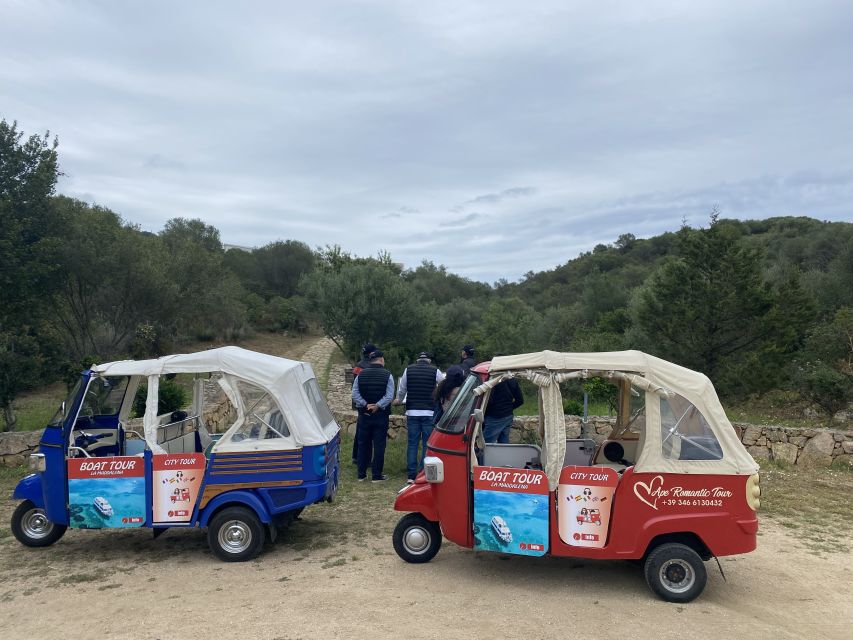
- Tuk-tuk or minivan comfort: You get local sights with less hassle than driving yourself.
- Audio guide included: A clear audio system with options in Italian, English, French, German, and Spanish.
- Nuragic + Roman in one run: You’ll see ritual water and burial architecture, then switch to water infrastructure.
- Castle views, some steps: Castello di Pedres is worth it, but plan for uneven ground and climbing.
- Easy start point: Meet at the parking area at Molo Brin, across from the carousel.
- Small-group options: Private or small groups are available depending on what you book.
Why this 2.5-hour Olbia route feels like a time machine
Olbia is one of those Sardinian places where modern streets sit on older ground. This tour keeps that idea simple: you’ll move between sites tied to the Nuragic civilization, then to Phoenician and Roman development, and later to medieval defense. You don’t need a history degree to follow along, because each stop is framed as a specific function—water, worship, burial, defense.
What I like most is the rhythm. You’re not bouncing between random far-flung ruins. Instead, you get a logical chain: Roman water systems lead you toward Nuragic water ritual, then you shift to burial architecture, and end with the big stone and granite statement of the basilica and the defensive look-out from Castello di Pedres.
You can also read our reviews of more tours and experiences in Olbia.
From Molo Brin to the sights in a tuk-tuk or minivan
Your day starts at Molo Brin. The meeting point is the parking area at Molo Brin in Olbia, directly across from the carousel. The driver waits in front of the bus parking area, so you’re not stuck searching for a guide in a sea of vehicles.
Transportation matters here. Riding in a tuk-tuk or minivan means you spend less time navigating and more time looking. You’ll also get scenic drives along the way, including the Lungomare di Olbia, so you’re not just doing a checklist of stops.
One practical tip: bring a jacket. Even in fair weather, you can feel the sea air in short rides and while you’re standing still for photos.
Monumento ai caduti and Lungomare di Olbia: quick orientation by the water
Before the major archaeology, you get a couple of grounding moments. There’s a stop for the Monumento ai caduti, then you move along the Lungomare di Olbia with short scenic drive segments.
Think of these as setup beats. They help you get your bearings fast, and they make the later monuments feel less like isolated points on a map. When you finally reach the older sites, you’ll better understand where the city grew and how close so many ancient features are to today’s daily life.
Castello di Pedres: granite views and a climb worth planning for
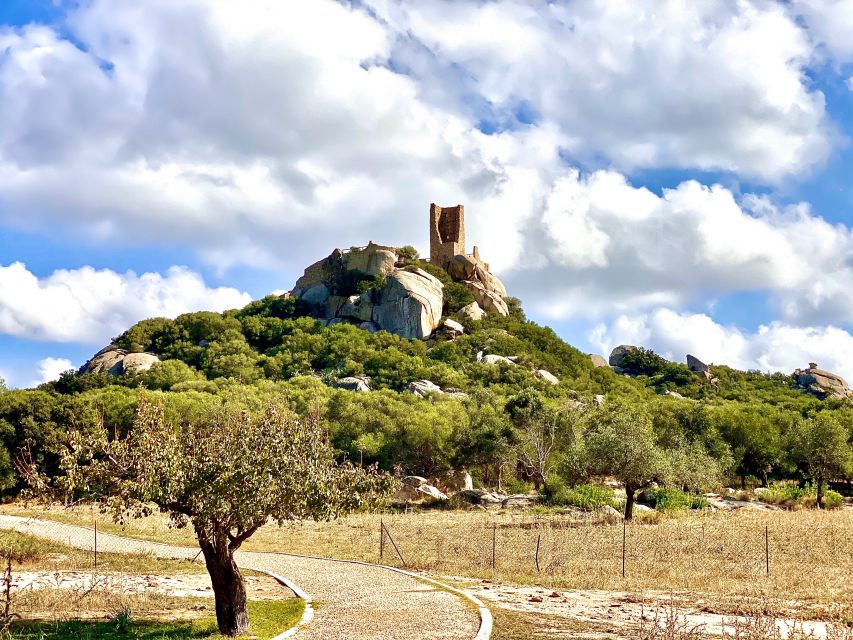
Castello di Pedres is a 14th-century castle on a rocky hill just a few kilometers from Olbia. It’s built for defensive purposes, and it shows. From the outside, you immediately get why a hilltop location mattered: visibility, control, and protection.
This is also the stop where you should plan for your body. The walking time includes a walk and sightseeing, plus photo stops, and it can involve uneven ground and steps. In one helpful review tip, a guest called out the steepness and small steps leading up to the castle, and the driver responded with real problem-solving—finding wayside steps and curbs and even adjusting the vehicle access to help someone step in more safely.
So here’s my advice: if you’re not steady on your feet, wear supportive shoes and take your time. The views are the reward, but the path is part of the experience.
Su Mont’e e S’Abe tombs: Nuragic burial architecture at giant scale
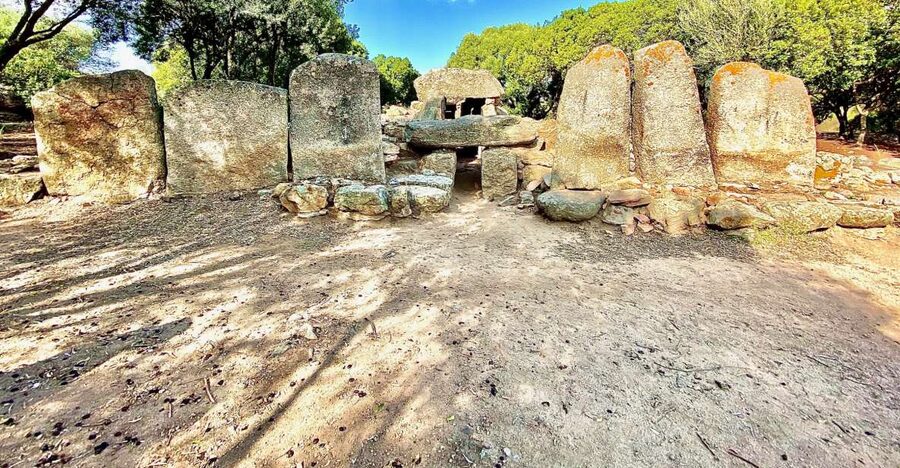
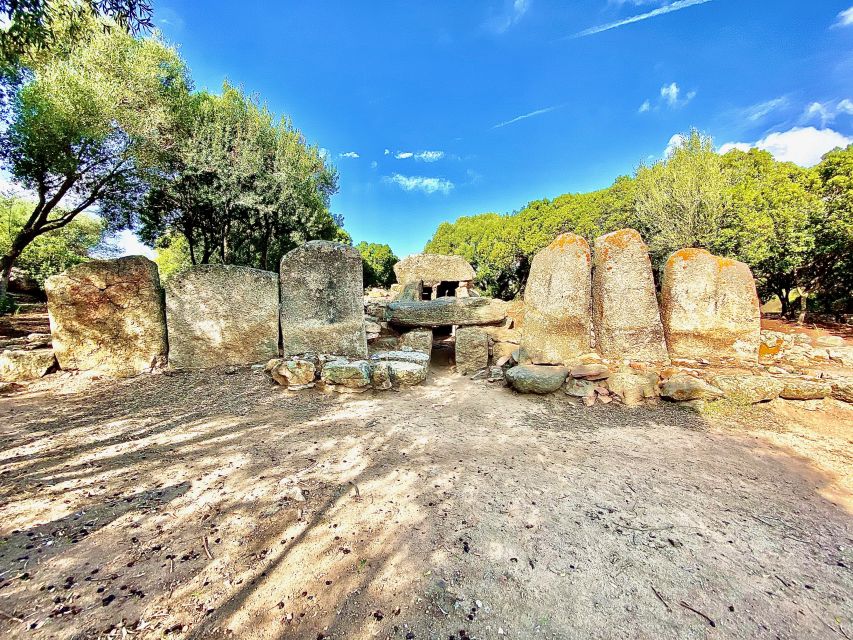
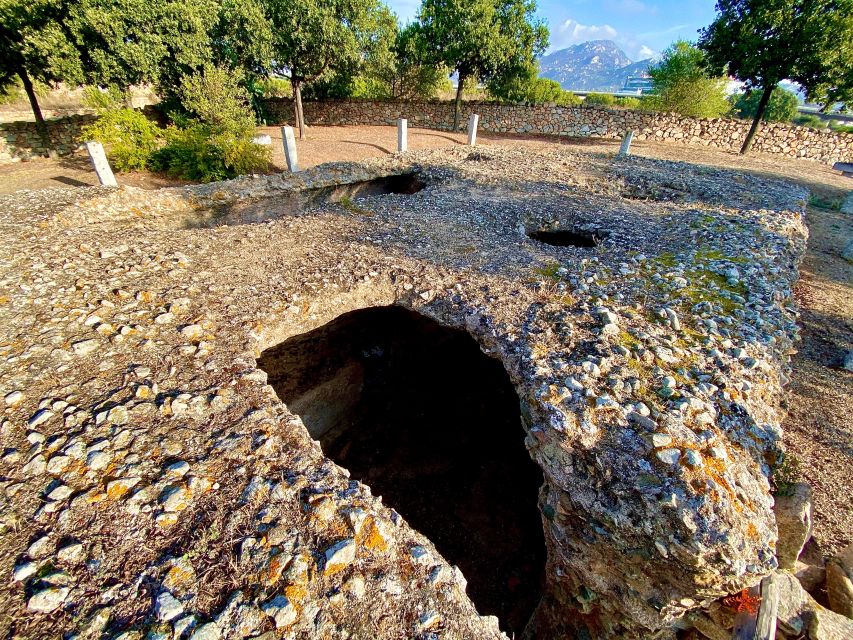
Next comes the Tombs of the Giants, Su Mont’e e S’Abe. These are Nuragic burial sites, and the tour highlights their scale—about 28 meters—not just as a fun number, but as a clue to how important community ritual was.
You’ll get a photo stop plus a visit and walk that’s short enough to handle without draining your whole afternoon. What you’ll notice is how these tombs aren’t trying to impress you with softness. They’re monumental, practical, and meant to last, like the society wanted the story of the dead to keep speaking long after them.
If you’ve never seen Nuragic sites, this is often the moment when the trip clicks. You shift from Roman stonework and engineering into a different worldview—one where water and burial were tied to spirituality and identity.
Pozzo Sacro Sa Testa: the sacred well where water meant more than survival
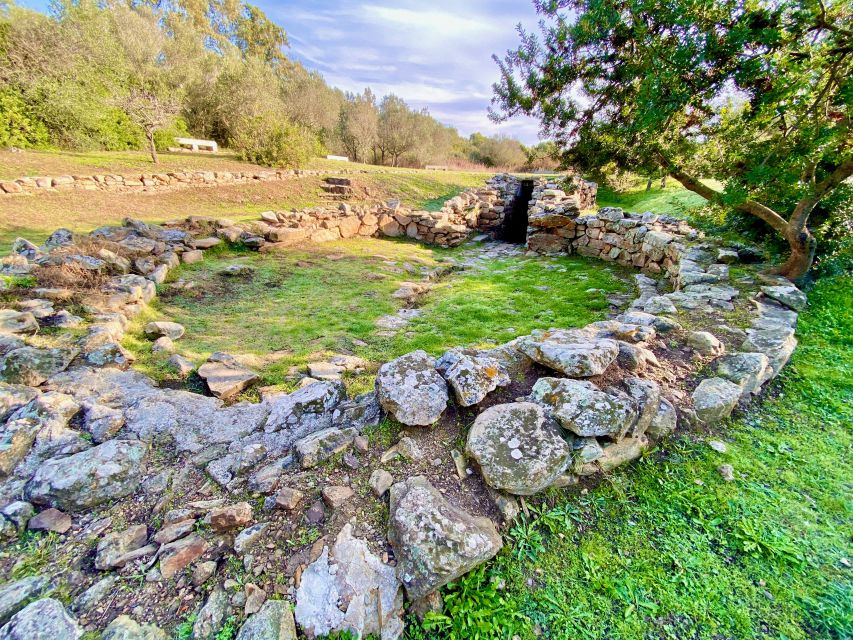
The Pozzo Sacro Sa Testa is one of the key Nuragic remnants on the island. The big idea here is that it wasn’t just a practical well. It dates to the Nuragic period and served as a ritual site, emphasizing the spiritual importance of water.
On this stop you’ll have a photo moment, then time to visit with a short walk and scenic views on the way. The tour framing helps: you’re not only looking at stone, you’re thinking about why a certain kind of water access would become sacred.
If you like the intersection of daily needs and belief systems, this is a standout. It also pairs nicely with what you’ll see next, because the tour later switches to Roman water infrastructure. You can watch the meaning of water shift across time without leaving Olbia.
Acquedotto Romano and Roman cistern logic: water control as power
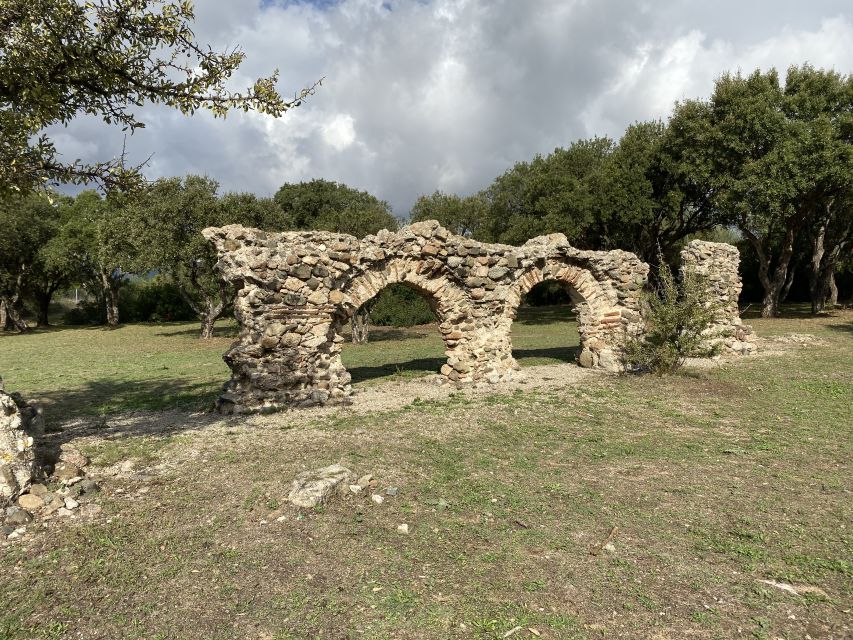
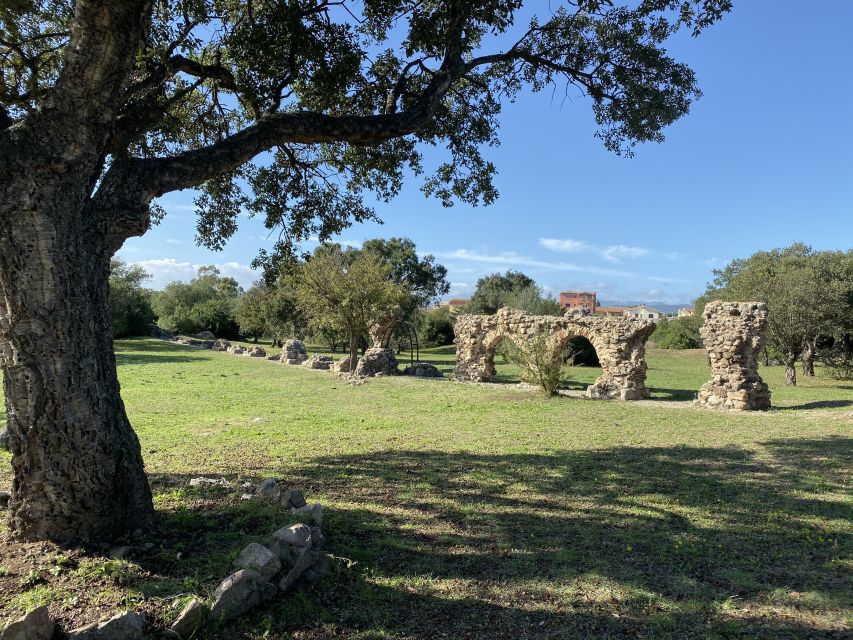
The Roman Aqueduct in Olbia is one of the most significant Roman structures in the city. The point of it was supply: water from the nearby Monte Cabu Abbas area, known for its water springs, fed into the city center. It’s Roman engineering you can understand without technical training.
You also visit the Roman Cistern, used to store rainwater. Again, you’re seeing how Rome solved survival math: collect, store, distribute. For a 2.5-hour tour, this is a smart pairing because it builds one theme from two angles.
If you want a simple way to remember it, think of Rome as the empire of systems. Water wasn’t just needed; it was managed.
Basilica di San Simplicio: a Romanesque granite statement in Olbia
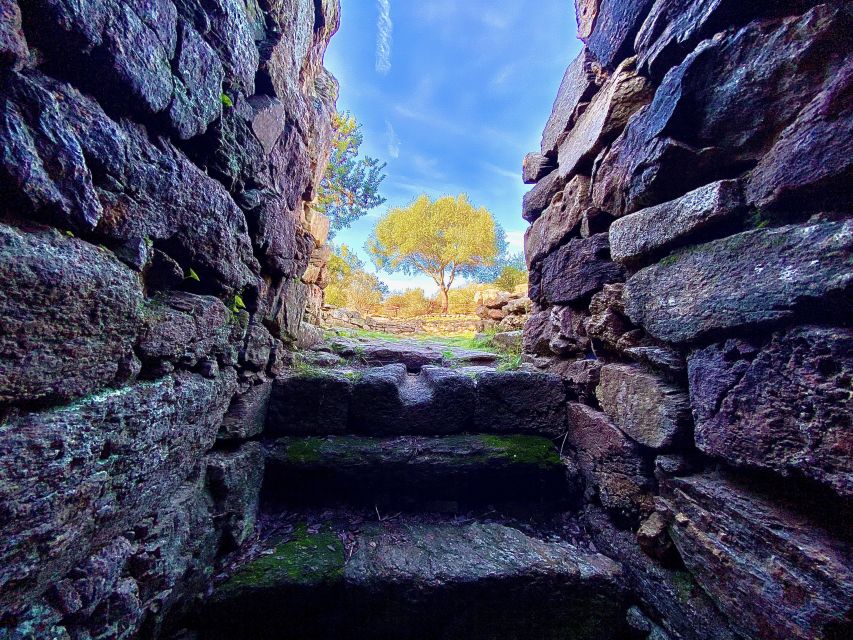
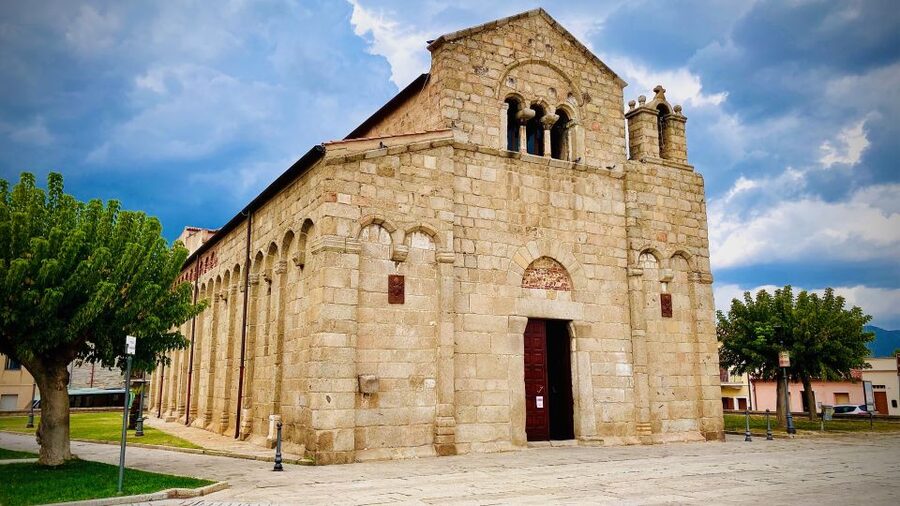
After the water stories, you shift to architecture at the Basilica di San Simplicio. This is an imposing Romanesque church built entirely in granite. The tour notes three construction periods, spanning from the 11th to the 12th century.
You’ll have time for a photo stop and a visit, with walking and sightseeing built in. This is one of those stops where even if you don’t go deep into church art, you still learn something from the building itself: local materials, long timelines, and a strong sense of permanence.
One practical note: entrance to churches can call for extra coverage. Cardigans aren’t included, so plan to have a light layer on hand, even if you’re arriving in warm weather. The tour also tells you to bring a jacket, which is a good “covers-the-bases” choice.
Parco Fausto Noce and scenic drives: the gentle between-points pacing
Not every minute needs to be an archaeological mission. You’ll also pass through Parco Fausto Noce with scenic drive and scenic views segments.
These breaks matter more than they sound. They keep the tour from feeling like you’re constantly stepping out, walking, and back in. You get chances to regroup, take quick photos, and stay comfortable while the driver moves you between key stops.
What’s included, and how the audio guide helps
This tour includes transportation in a tuk-tuk or minivan and a clear audio system with speakers for optimal audio guide listening. Audio is available in Italian, English, French, German, and Spanish.
That matters because outdoors and inside monuments can be noisy, and you don’t want to strain to hear explanations. The speakers approach helps you follow along while keeping your hands free for photos.
A couple of rules keep the experience smooth. You can’t smoke in the vehicle, and food and drinks aren’t allowed in the vehicle. Alcohol and drugs are not allowed either, and making noise is discouraged. The tour also notes that bottled water isn’t included, so I’d plan on either buying water after a stop or carrying your own if permitted once you’re off the vehicle.
Price and value: what $101.96 buys you in real terms
At around $101.96 per person for a 2.5-hour tour, you’re not just paying for a ride. You’re paying for:
- Vehicle transport by a professional driver (tuk-tuk or minivan)
- A structured route hitting major sites close together
- A multi-language audio guide setup
- Time-efficient stops that include photo moments and short walks
If you were to DIY Olbia, you’d likely spend time figuring out parking, coordinating transit, and building a route across scattered sites. That effort can be the hidden cost. Here, the value is mostly in saving time while still getting meaningful context at each location.
The trade-off is control. You’ll follow the standard itinerary, and there’s no mention of custom routing in the basic package. If you love spontaneity and want to design your own stops, you might prefer DIY. If you want a clean plan with interpretation included, this is priced like convenience done right.
Who should book this tour (and who might want a different plan)
This is a great fit for:
- People who want Nuragic and Roman highlights in one afternoon
- History-minded travelers who still want comfort and structure
- Anyone who prefers short walks over long museum days
- Small groups or private visitors who want a gentler format
It’s less ideal for:
- Wheelchair users, since the tour notes it’s not suitable
- People who struggle with steps and uneven ground, especially near Castello di Pedres
Also, note the tour is in the open air and involves walking. Even if the walks are short, you’ll want to show up with comfortable shoes and a jacket.
Should you book Journey Through Time: Discover Sardinia’s Ancient Treasures?
Book it if you’re spending limited time in Olbia and you want the story to connect: Nuragic water ritual at Pozzo Sacro Sa Testa, giant burial scale at Su Mont’e e S’Abe, Roman infrastructure like the Acquedotto Romano, and then the bold granite presence of Basilica di San Simplicio. The transportation format makes it feel easy, and the audio guide languages make it work for mixed groups.
Skip it or consider another option if you need step-free access or if you want total control over your day. In that case, a DIY plan might fit you better.
If you do book, I’d come prepared for the castle stop, take your time on any steps, and wear shoes that won’t punish you. This is the kind of tour where you leave with a clearer sense of how Olbia layers time on top of itself.
FAQ
How long is the tour?
The duration is 2.5 hours. Starting times depend on availability.
Where do I meet the driver?
Meet at the parking area at Molo Brin in Olbia, directly across from the carousel. The driver waits in front of the bus parking area.
Is transportation included?
Yes. The tour includes transportation by tuk-tuk or minivan with a professional driver.
What languages is the audio guide available in?
The audio guide is available in Italian, English, French, German, and Spanish.
What should I bring?
Wear comfortable shoes and bring a jacket. Cardigans for church entrances are not included.
Are bottled water or snacks included?
No. Bottled water is not included, and food is not allowed in the vehicle.
Is hotel pick-up included?
No. Hotel pick-up is not included, and it can be arranged for an additional charge that must be paid on-site.
Is the tour suitable for wheelchair users?
No. The tour is not suitable for wheelchair users.
Can I cancel for a refund?
Yes. Free cancellation is available up to 24 hours in advance for a full refund.