REVIEW · OLBIA
Olbia : Ancient Sardinia Archaeological Tour + pickup included
Book on Viator →Operated by Smeralda 360 · Bookable on Viator
Olbia shows its roots fast. In about 2.5 hours, this small-group archaeology tour links five standout sites with hotel or cruise pickup and a mobile ticket, so you spend less time hunting transport and more time looking.
I like the period mix most: Acquedotto Romano (described as the best preserved Roman-age aqueduct in Sardinia) sits right beside Nuragic monuments like Tomba dei Giganti Su Monte ’e S’Abe and Pozzo Sacro Sa Testa. I also like the clear audio with speakers, which makes the stories and context easier to follow while you’re riding between sites.
One practical catch: the Basilica Minore San Simplicio stop is 20 minutes, but its admission ticket is not included.
In This Review
- Key highlights to know before you go
- Why this 2.5-hour archaeology tour works in Olbia
- Pickup and arrival: cruise port meets hotel convenience
- The route: San Simplicio to Pedres Castle in one afternoon
- Stop 1: Basilica Minore San Simplicio (20 minutes, ticket not included)
- Stop 2: Acquedotto Romano (20 minutes, admission included)
- Stop 3: Tomba dei Giganti Su Monte ’e S’Abe (20 minutes, admission included)
- Stop 4: Castello di Pedres (30 minutes, admission included)
- Stop 5: Pozzo Sacro Sa Testa (20 minutes, admission included)
- The vehicle, the group size, and why the pace feels right
- Value for the price: what $132.17 gets you (and where it doesn’t)
- What to bring and how to get the most out of each stop
- Who should book this tour?
- Should you book Olbia’s Ancient Sardinia Archaeological Tour?
- FAQ
- FAQ
- How long is the Olbia archaeological tour?
- What time does the tour start?
- Is pickup included, and does it work for cruise passengers too?
- What language is the tour available in?
- How many people are in the group?
- Are entrance tickets included for all the sites?
- What happens if weather is bad?
- Can I get a full refund if plans change?
Key highlights to know before you go
- Five major sites in one loop: Roman, Nuragic, and medieval Olbia within ~2.5 hours.
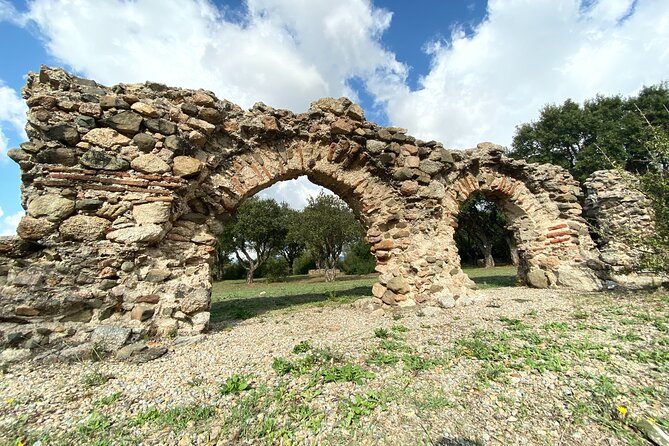
- Acquedotto Romano’s details: you get to see the stone cistern, ventilation holes, and surviving water channels.
- Nuragic funerary and water-cult monuments: Tomba dei Giganti and Pozzo Sacro give you the “Gallura spiritual” side.
- Small group size (max 8): a more relaxed pace than big bus tours.
- Pickup is built in: cruise passenger help plus direct hotel/apartment pickup.
- Mostly included admissions: four of five stops include entry, but San Simplicio is ticket extra.
Why this 2.5-hour archaeology tour works in Olbia
Olbia can feel like a stopover city. This tour treats it like a real destination. You get a focused route that moves through different eras without turning your afternoon into a logistics project.
What I like is that the pacing matches the sites. Each stop is short enough that you still feel energy in the group, but long enough to look closely. You’re not just ticking off names. You’re seeing how the Romans engineered water, how Nuragic culture honored the dead and linked devotion to water, and how the medieval period left its mark on the hilltop.
The tour also uses a clear audio system with speakers, which matters more than it sounds. When you’re outdoors, between stones and viewpoints, a normal voice can disappear fast. With speakers, the explanations stay readable even while you’re walking or riding.
You can also read our reviews of more tours and experiences in Olbia.

Pickup and arrival: cruise port meets hotel convenience
This is one of the most practical ways to do archaeology around Olbia, mainly because pickup is part of the package.
If you’re on a cruise, you’ll use the free shuttle bus under the ship to reach the Maritime Station. Then you enter the Maritime Station, exit the main entrance, and look for a representative of Smeralda 360 holding a sign that says “Smeralda 360.” You’ll want to show up at the meeting point about 10 minutes early, because the driver can only wait a few minutes.
If you’re staying on land, pickup is direct from the main entrance of your hotel or apartment. The vehicle is recognizable with the Smeralda 360 side writings, and you’re expected to be ready at the planned pickup time while standing outside.
Two small notes that affect your experience:
- You start at 2:00 pm, so plan to have your lunch situation handled before you go.
- This tour requires good weather, since it’s outdoors for most of the route.
The route: San Simplicio to Pedres Castle in one afternoon
The tour is built around five stops, each with its own “why.” Here’s what to expect at each one, and what’s worth your attention.
Stop 1: Basilica Minore San Simplicio (20 minutes, ticket not included)
You begin at Basilica Minore San Simplicio, known as the oldest and most important religious building in Gallura, dating back to the 11th century. This isn’t a quick photo stop. Even in a short visit window, you’ll have time to take in the Romanesque character and understand why it remains a spiritual landmark for the city.
Practical detail: the admission ticket is not included, so budget for it separately. Also, because it’s a church setting, keep an eye on any modesty rules or dress expectations while you’re there.
Why it matters on this itinerary: this first stop gives you a “today-to-then” anchor. Once you move into Roman engineering and Nuragic monuments, you’ll notice how long different cultures have shaped the same ground around Olbia.
Stop 2: Acquedotto Romano (20 minutes, admission included)
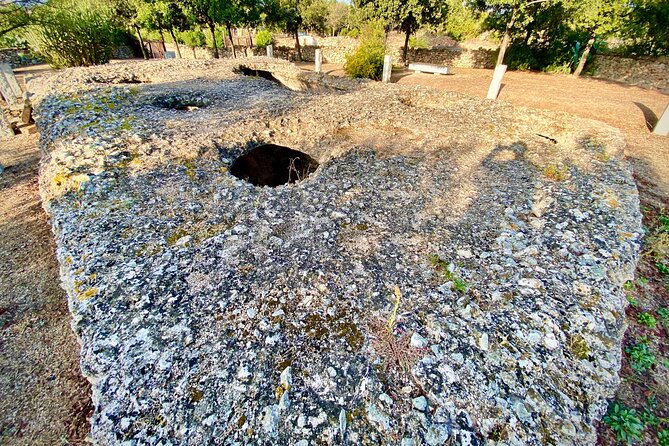
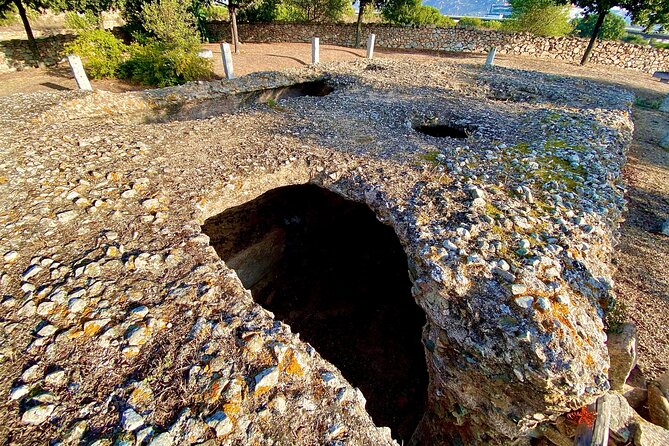
Next comes the star for architecture lovers: Acquedotto Romano, built between the 1st and 2nd centuries AD. The payoff here is that it’s described as the best preserved Roman-age archaeological site in Sardinia, so you can actually imagine the system working.
What to look for:
- The aqueduct’s water supply role for ancient Olbia
- A large settling tank carved completely into the stone
- Six holes for ventilation on the cistern
- Smaller side tanks, plus an inlet and outlet well
- On the arches: surviving water transport channels
That list may sound technical, but it’s exactly why this stop feels different from many “ruins” you see elsewhere. You’re not just staring at old blocks. You’re seeing how Romans controlled water flow, reduced problems, and engineered a system that lasted.
Why it’s great on this schedule: it’s one of the included-entry stops and it hits a sweet spot between easy to understand and genuinely impressive.
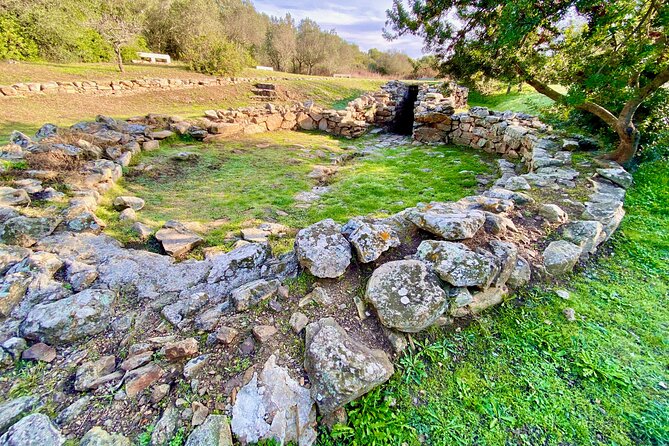
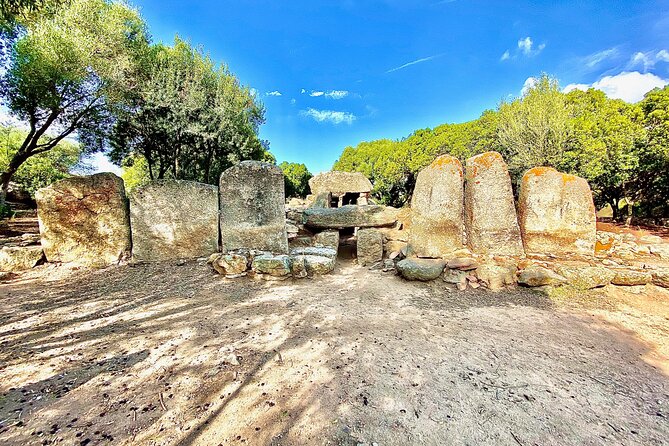
Stop 3: Tomba dei Giganti Su Monte ’e S’Abe (20 minutes, admission included)
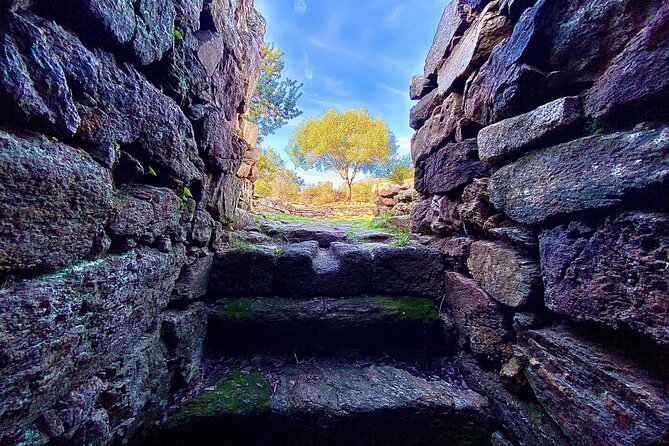
Now you shift into Nuragic territory with Tomba dei Giganti Su Monte ’e S’Abe, a funerary monument found in the Gallura countryside. This is the kind of site where a guided explanation changes everything.
Here’s what you’ll focus on:
- The idea of a Nuragic funerary rite
- How the monument is tied to community memory and legend
- The feeling of being in the landscape where the monument belongs
The tour’s structure helps. After the Roman water system, your brain is primed to think about function and belief. At the Tomb of the Giants, you’re looking at devotion expressed in stone, not just infrastructure.
Potential drawback: because the stop is only about 20 minutes, you’ll want to pay attention during the talk. If you drift into phone-scrolling mode, the meaning won’t “stick” as well.
Stop 4: Castello di Pedres (30 minutes, admission included)
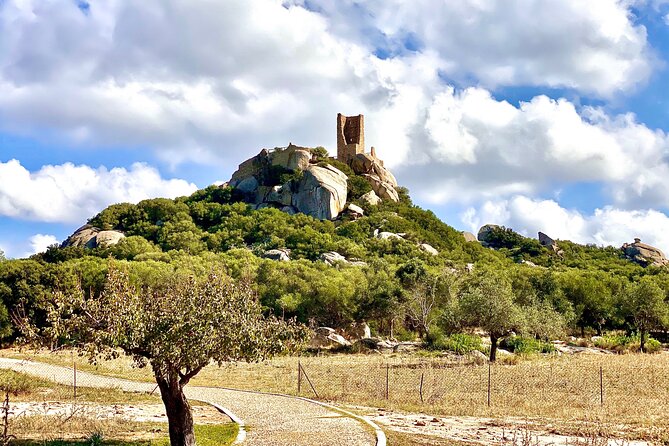
For a change of pace, you move to the Castello di Pedres on a panoramic hill. This is medieval Sardinia, and the best part is that you get a visual “frame” for the territory. From the hilltop, the castle dominates the plain of Olbia, giving you context for where older structures and roads likely sat.
Plan on using the full time here. Even if you’re not a medieval architecture expert, the value is in:
- The viewpoint
- The sense of how control and defense shaped where buildings were placed
- The shift from “ancient monuments in fields” to “fortified power above”
Why it works in a tight tour: this is a natural reset moment. You’re not just looking down at stones. You’re looking out at the area.
Stop 5: Pozzo Sacro Sa Testa (20 minutes, admission included)
You close with Pozzo Sacro Sa Testa, linked to a Nuragic cult of water. The architecture of a sacred well can be deeply symbolic, and this stop is designed to show you that connection.
What you’ll get:
- A better sense of how Nuragic people treated water as spiritually significant
- How advanced engineering shows up in religious construction
- Why the well form matters beyond being a functional object
If you enjoyed the Roman aqueduct stop, you’ll likely feel extra interest here. Both are about water systems, but one is civic engineering and the other is devotion.
The vehicle, the group size, and why the pace feels right
This tour caps at 8 travelers, and that changes the vibe. Small groups tend to mean you can hear explanations more easily, ask quick questions, and avoid the “everybody rushes to keep up” feeling.
The tour also includes a clear audio system with speakers, and that likely contributes to why people rate the experience so highly. Even short stops can feel worthwhile when the guide’s context is easy to follow.
A few practical improvements stand out from how the experience is run: communication is described as fast through WhatsApp, and there’s mention of a photo at the end. Even if those details aren’t guaranteed on every departure, they point to a service style that cares about the total experience, not just the driving and stopping.
And about the ride: people have described it as a TukTuk-style way to zip around. The key takeaway for you is comfort and ease, since the tour includes an air-conditioned vehicle.
Value for the price: what $132.17 gets you (and where it doesn’t)
At $132.17 per person, this tour has to justify itself fast. Here’s how it does it.
What you get included:
- Pickup from hotel/apartment, or help for cruise passengers
- A mobile ticket
- Clear audio with speakers
- Admission included for Acquedotto Romano, Tomba dei Giganti, Castello di Pedres, and Pozzo Sacro Sa Testa
- Air-conditioned vehicle for the ride between stops
What costs extra:
- Basilica Minore San Simplicio admission is not included
So the value depends on your priorities. If you want a guided route that combines Roman engineering, Nuragic monuments, and medieval viewpoints in a short window, the included admissions help. If you only care about one stop, you may feel the price is too high compared to ticket-only access.
My advice: think of this as a “two and a half hour guided history sprint” where you’re paying for time-saving pickup, smooth coordination, and the sound system that makes explanations practical.
What to bring and how to get the most out of each stop

Because this is mostly outdoor (and weather-dependent), pack like it’s a sightseeing afternoon, not a museum day.
I’d bring:
- Comfortable shoes for walking on uneven ground around archaeological and hill areas
- A light layer, even in warm months, since coastal wind can shift
- Water, especially if the day is sunny
- A charged phone for the mobile ticket, plus offline maps in case signal is weak near meeting points
Also, keep your expectations aligned with the schedule. You’ll see a lot, but you won’t have hours in any one place. That’s not a flaw here. It’s the point. You’re getting a high-return overview that you can later build on with a longer independent visit if one stop pulls you in.
Who should book this tour?
This is a good fit if:
- You’re short on time in Olbia and want a structured route
- You care about seeing different Sardinian eras without doing extra planning
- You prefer small groups where you can actually hear the guide
- You’re traveling by cruise and want pickup-and-meetup help
It may feel less ideal if:
- You want long, slow museum-style visits
- You hate splitting attention across multiple sites
- You’re mainly interested in only one specific monument type (Roman, Nuragic, or medieval)
In other words, it’s best for people who like guided clarity and efficient discovery.
Should you book Olbia’s Ancient Sardinia Archaeological Tour?
Yes, I’d book it if your goal is a high-quality, short afternoon that covers Roman, Nuragic, and medieval Olbia with practical pickup. The standout ingredients are the best-preserved Roman aqueduct stop, the two Nuragic “why water matters” moments (tomb and sacred well), and the speaker-based audio that keeps the information usable.
Just go in knowing the Basilica San Simplicio ticket is extra, and accept the fact that each stop is brief. If that sounds like your pace, this is a smart use of a limited time window around Olbia.
FAQ
FAQ
How long is the Olbia archaeological tour?
The tour lasts about 2 hours 30 minutes.
What time does the tour start?
The start time is 2:00 pm.
Is pickup included, and does it work for cruise passengers too?
Yes. Pickup is included from hotels or apartments. For cruise passengers, you take the free shuttle bus under the cruise ship to the Maritime Station, then meet outside the main entrance with a sign for Smeralda 360.
What language is the tour available in?
The tour is offered in English.
How many people are in the group?
The tour has a maximum of 8 travelers.
Are entrance tickets included for all the sites?
No. Admission ticket for Basilica Minore San Simplicio is not included, while admission is included for Acquedotto Romano, Tomba dei Giganti Su Monte ’e S’Abe, Castello di Pedres, and Pozzo Sacro Sa Testa.
What happens if weather is bad?
This experience requires good weather. If it’s canceled due to poor weather, you’ll be offered a different date or a full refund.
Can I get a full refund if plans change?
Yes. You can cancel for a full refund up to 24 hours before the experience starts. If you cancel less than 24 hours before, the amount paid is not refunded.