REVIEW · KUTAISI
Kutaisi: Bagrati & Motsameta Religious Heritage Tour
Book on Viator →Operated by Megobari Tours Georgia · Bookable on Viator
That first uphill stretch toward Motsameta makes the whole day feel like it has a plan. This Kutaisi religious heritage tour strings together three major sites—Motsameta Monastery, Bagrati Cathedral, and Gelati Monastery—plus the kind of local context that turns old stones into living faith.
What I like most is the combo of historic stops and real viewpoints. You get free admission at each main site, and you also get a guide who explains symbols, icons, and the stories that make Georgian Christianity feel specific to this place. One heads-up: Gelati Monastery Complex is sometimes closed due to construction, so your third stop can change depending on the day.
In This Review
- Key Takeaways
- Why This Kutaisi Religious Heritage Route Works So Well
- Meeting at Colchis Fountain: How You Start Smoothly
- Stop 1: Motsameta Monastery and the View-First Feel
- Stop 2: Bagrati Cathedral for Kutaisi Panoramas
- Stop 3: Gelati Monastery Complex When It’s Open, and the Backup Plan
- What Your Guide Actually Brings to the Trip
- Timing: How the 2-4 Hours Plays in Real Life
- What It Costs and Why It’s Good Value
- Who This Tour Fits Best
- Tips to Get More Out of Your Visit
- Should You Book This Kutaisi Bagrati & Motsameta Tour?
- FAQ
- Is this tour in English?
- How long is the tour?
- Will I need to buy entrance tickets?
- What if Gelati Monastery Complex is closed?
- How big is the group?
- Where does the tour start?
- Is there free cancellation?
Key Takeaways
- Three standout Georgian sites without hopping all over town
- Views built into the route, not just at one photo spot
- Free admission for the main monuments on the schedule
- Small groups (max 7) for better questions and pacing
- Pickup anywhere in Kutaisi so you start without hassles
- Gelati may swap for another church if it’s closed that day
Why This Kutaisi Religious Heritage Route Works So Well
Kutaisi has a way of making big history feel close. You’re not looking at religious sites from behind a velvet rope—you’re walking through the same kind of spaces people have used for generations. Even if you’re not a big church person, you’ll still care once you see how these places sit in the terrain and how the stories connect.
I like that this tour is tight and practical. You cover three major sites in about 2 to 4 hours, which is ideal when you have a packed travel schedule or you don’t want a whole day of long drives. And because it’s English-speaking with a small group, you get the meaning behind what you’re seeing instead of a fast, silent sweep.
The biggest value is that you learn the “why,” not just the “what.” The guide helps connect icons and symbolism to the wider Georgian faith story, which makes the visits feel personal rather than academic.
Meeting at Colchis Fountain: How You Start Smoothly
This tour starts and ends back at the meeting point near the Colchis fountain in Kutaisi. The practical win is the pickup: they can pick you up anywhere in Kutaisi to begin. That matters because Kutaisi can be spread out, and not every visitor wants to play taxi-chess before a walking day.
You’ll also get a mobile ticket, which is convenient if you’re the kind of traveler who keeps everything on your phone. And if you’re using public transportation, you’re not stuck in a remote spot—this is described as being near public transport.
Stop 1: Motsameta Monastery and the View-First Feel
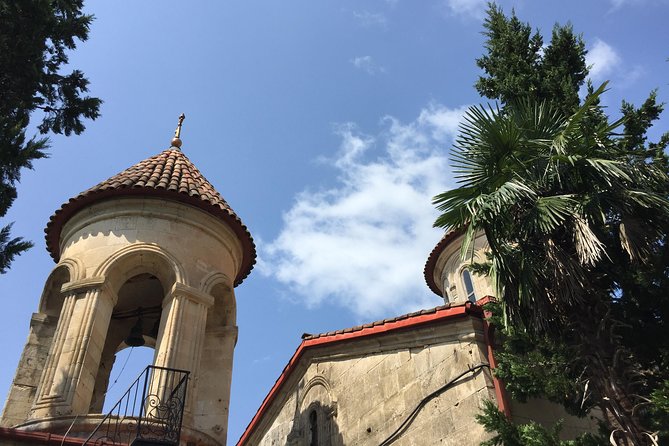
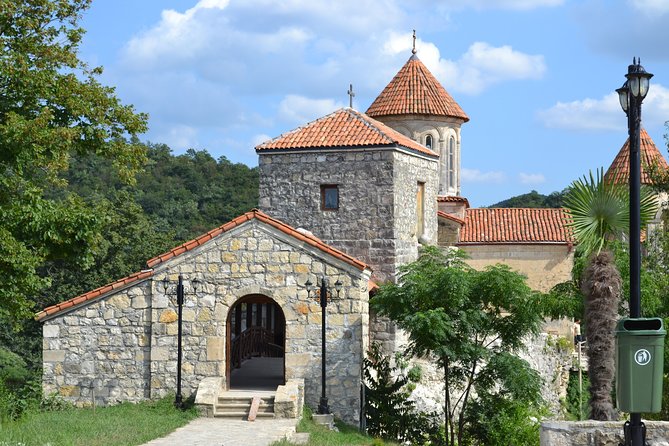
Your first major stop is Motsameta Monastery, a key monastery near Kutaisi in the Imereti region. It’s often described as a symbol of Georgian faith, and you’ll feel that immediately in the atmosphere and the setting.
Plan for about 1 hour here. That time is usually enough to slow down, look closely, and let the guide explain what you’re seeing beyond the basic architecture. Motsameta also comes with one of the tour’s most memorable view moments—greenery and the river area show up in a way that makes the monastery feel connected to daily life, not floating in a history book.
If you’re traveling with slower legs, this stop tends to work because the experience is about standing, looking, and listening as much as it is about walking fast. One review even mentioned how the guide made room for a guest on crutches without rushing.
Stop 2: Bagrati Cathedral for Kutaisi Panoramas
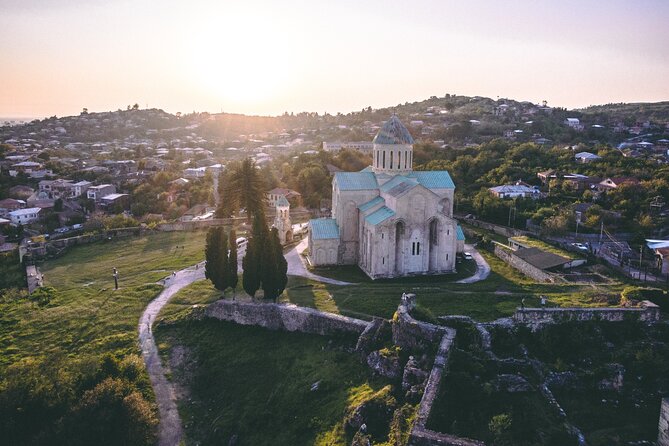
Next you head to Bagrati Cathedral, one of Kutaisi’s emblematic churches. It’s timed for about 30 minutes, so you’ll want to treat it like a focused photo-and-interpretation stop rather than a long linger.
The main reason it’s worth it: the panorama of Kutaisi. The views don’t feel like an afterthought. They’re part of the cathedral’s point—religious power and civic identity folded into one place.
This is also where the guide’s storytelling really helps. When someone explains how the site fits into Georgian history and local meaning, that half hour becomes more than ticking off a cathedral name. It turns into a better mental map of where Kutaisi sits and why people have cared about this hilltop area.
Stop 3: Gelati Monastery Complex When It’s Open, and the Backup Plan
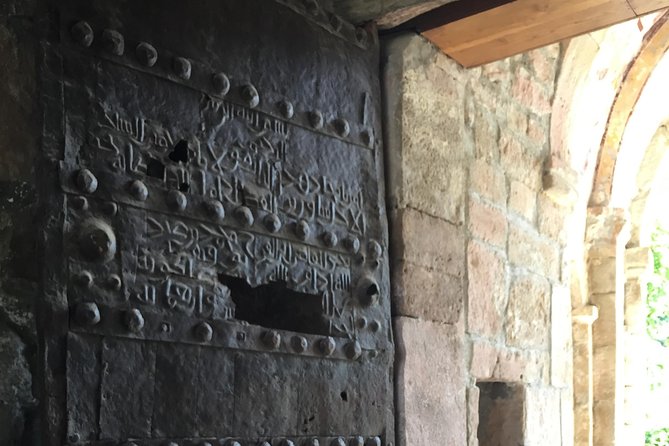
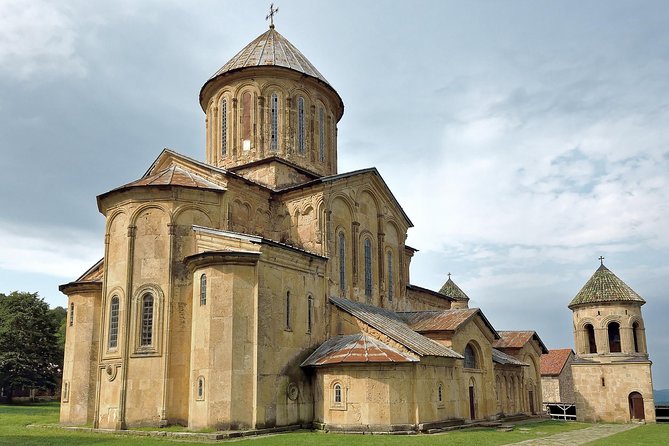
Your third stop is Gelati Monastery Complex, one of the most famous names around Kutaisi. Here’s the reality check: it’s currently under construction, so it’s open to visitors only on Sundays and on some occasional days.
When Gelati is open, you get about 1 hour at the complex. On these days, you’ll be able to see the monastery as a functioning historical destination, not just an exterior stop.
When Gelati is closed, the tour doesn’t leave you with disappointment. The plan is to visit another church in Kutaisi instead. One review described a day when the Gelati complex was closed for restoration, but the guide, Teona, still brought the group to two churches and even an older hospital viewpoint area for great views.
That backup matters because Gelati is the kind of stop people build their expectations around. A good tour doesn’t pretend the closure won’t happen. This one adjusts so you still get a strong finish to the route.
What Your Guide Actually Brings to the Trip
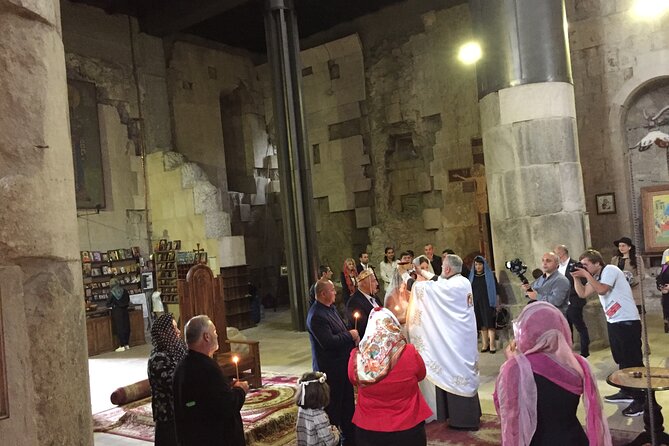
A tour like this lives or dies by the guide. The standout across the reviews is how clearly the guides explain history and symbols without making it feel like a lecture.
You’ll see names like Michael and Eva mentioned for strong interpretation. Michael is praised for being very informative and explaining details of the history of each place, including what you’re passing along the way. Eva is described as very chatty and full of culture knowledge, and she even acknowledged that Georgian history has layers and mysteries—especially because not all research is available in languages other than Georgian.
That part is important. You don’t get a fake sense of certainty. Instead, you learn what people know, what they’re still figuring out, and why those old icons and symbols can feel meaningful from more than one angle. It makes the sites feel alive, not locked behind facts you can’t question.
If you love asking questions, small group size helps a lot. This tour caps at 7 travelers, so you’re more likely to get answers that fit what you’re actually curious about.
Timing: How the 2-4 Hours Plays in Real Life
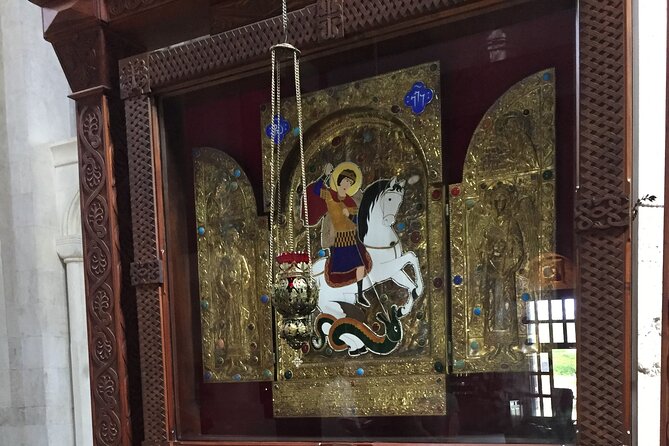
The duration is listed as 2 to 4 hours, which is a helpful range for planning. In practice, it depends on how much time you spend at each stop and whether Gelati is open that day.
Your schedule is built around:
- Motsameta: about 1 hour
- Bagrati Cathedral: about 30 minutes
- Gelati: about 1 hour, or a replacement church stop if Gelati is closed
Because there’s not an all-day time commitment, it pairs well with other Kutaisi plans like a meal near the center, museum time, or a late afternoon walk. And because the tour includes pickup anywhere in town, you’re not stuck trying to coordinate your own transport between sites.
One practical note: you’ll want to be ready for short walking stretches and the kind of uphill/overlook walking you get around monasteries and cathedrals. If you’re on crutches or moving slowly, bring your usual pacing strategy. The reviews show the guides can handle slower movement without rushing you.
What It Costs and Why It’s Good Value
The price is $19.22 per person, which feels low for a guided route covering three major heritage stops. The value pops out when you look at what’s included in the day.
Here’s why this can be a bargain:
- The main sites have free admission tickets for the listed stops
- You get pickup anywhere in Kutaisi, so you’re not paying for separate rides between sites
- You get a guide who spends time explaining history and symbolism, not just naming places
- The group stays small, with a cap of 7 travelers
So you’re mostly paying for guidance, organization, and transport within the route—not for entry fees. For a short, high-impact Kutaisi day, that’s a solid deal.
Who This Tour Fits Best
I’d point you to this tour if you want a focused Kutaisi experience without the stress of figuring out logistics. It works especially well if you:
- want religious and historical context with a guide
- prefer a small group setting
- have limited time and still want to see multiple “must” sites
- enjoy viewpoints and short outdoors breaks
It’s also a good choice if you’re traveling with family or you’re the one doing the planning. The route is structured, the guide handles the pacing, and you don’t have to hunt for how to connect stops.
Service animals are allowed, and it says the tour is suitable for most travelers. If you have mobility concerns, I’d still bring it up with the provider in advance, but the tour’s short site times suggest it can be manageable.
Tips to Get More Out of Your Visit
Before you go, think about how you want to experience churches and monasteries: quietly, with your camera ready, and with questions lined up for your guide.
A few practical ideas:
- Bring layers. Even in good weather, monastery areas can feel cooler and windier near viewpoints.
- Pace your photos. You’ll likely want a few wide shots at each site, then switch to details for icons and architectural features.
- If Gelati is closed, don’t mentally cancel the day. Use it as your reminder to focus on the other churches and the replacement viewpoint stops.
One more tip: if you’re the type who spots symbols, ask about what you’re seeing. The guides described in the reviews are open to discussing icon meanings and the questions visitors naturally ask.
Should You Book This Kutaisi Bagrati & Motsameta Tour?
If your goal is a short, meaningful Kutaisi day with guided interpretation and real views, I think this is worth booking. The price is modest, the group stays small, and the mix of Motsameta, Bagrati, and Gelati (when open) creates variety—monastery atmosphere, cathedral views, and the big Gelati name to close the loop.
The only real reason to hesitate is if Gelati being closed would genuinely ruin your plans. But the tour includes a built-in replacement plan, and the guide support sounds strong even on renovation days.
If you want an efficient way to understand how Georgian faith shows up in Kutaisi’s landmarks, book it and treat it as your guided shortcut to the region’s story.
FAQ
Is this tour in English?
Yes. The experience is offered in English.
How long is the tour?
The duration is listed as 2 to 4 hours (approx.).
Will I need to buy entrance tickets?
The admission tickets for the main stops are listed as free.
What if Gelati Monastery Complex is closed?
Gelati is currently under construction and is open only on Sundays and some occasional days. If it’s closed on your date, the tour will visit another church in Kutaisi instead.
How big is the group?
This activity has a maximum of 7 travelers.
Where does the tour start?
The tour starts at the Megobari Tours meeting point near the Colchis fountain in Kutaisi and ends back at the same meeting point.
Is there free cancellation?
Yes. Free cancellation is available if you cancel up to 24 hours in advance for a full refund.