REVIEW · THESSALONIKI
Learn an Ancient Music Instrument: The Lyre of Apollo
Book on Viator →Operated by Seikilo · Bookable on Viator
An hour with an ancient lyre feels surprisingly simple. You’ll spend real time with a reconstructed instrument, learn how the music system worked in antiquity, and then play the famous Seikilos melody during your session at the Seikilo Museum of Ancient Music.
What I like most is the hands-on instruction plus the fact that you get a lyre to use right away—no musical background required. Another strong point is the included museum time, where you can explore and interact with the instrument-focused exhibits.
The only thing to think about: this is a very short lesson, so it’s not meant to make you a concert performer. It’s best if you want a fun, doable taste of ancient music rather than a long training course.
Loaner lyres are provided by the program so you start playing fast
Private instruction means you’re not stuck watching from the side
Learn the “Epitaph of Seikilos” using a real, playable ancient-music approach
Museum exhibits are included at no extra charge with instrument inspiration all around
English-speaking guidance helps you understand what you’re doing as you play
A compact one-hour format keeps the experience focused and manageable
In This Review
- A One-Hour Lyre Lesson at the Seikilo Museum of Ancient Music
- Start Point and Timing: Thessaloniki at 11:30 am
- Your Instrument: Loaner Lyres Crafted for Real Play
- What You Learn: Antiquity’s Music System and the Sound of the Lyre
- The Seikilos Epitaph Melody: Learning a Complete Surviving Tune
- Museum Time Included: Exploring Exhibits Without Extra Fees
- Instruction Style and Group Setup: Private by Design
- Price and Value: Paying $48 for a Hands-On Hour
- Who Should Book the Lyre of Apollo Experience
- Quick Practical Notes Before You Go
- Should You Book This in Thessaloniki?
- FAQ
- What time does the Lyre of Apollo experience start?
- Where does the tour meet, and where does it end?
- Is the instruction offered in English?
- Do I need prior musical training to participate?
- Are lyres provided, or do I need to bring an instrument?
- Is this a private tour or a group activity?
- What happens if the weather is poor or I need to cancel?
A One-Hour Lyre Lesson at the Seikilo Museum of Ancient Music
If you’ve ever wondered what ancient Greek music might have sounded like, this experience gives you the answer in your hands, not just through explanation. You’ll hear and play a reconstructed ancient Greek lyre—an instrument concept that goes back thousands of years.
You also get a clear learning path. First, you look closely at the lyre’s sound and design. Then you get an overview of antiquity’s music system and try it with step-by-step guidance. Finally, you focus on learning a complete surviving melody: the “Epitaph of Seikilos,” described as the oldest complete melody with lyrics that still survives today.
Start Point and Timing: Thessaloniki at 11:30 am
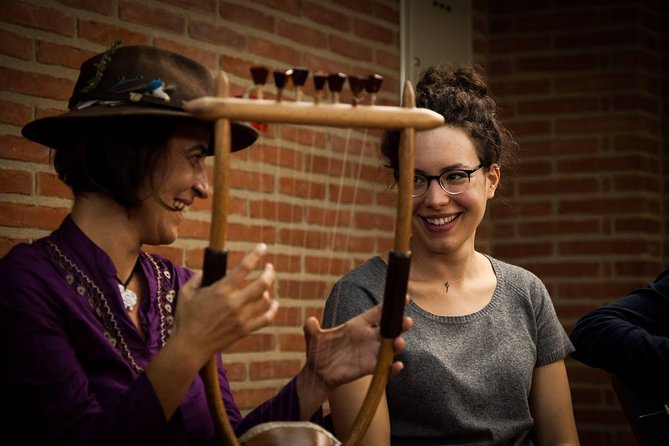
This session meets at SEIKILO Museum of Ancient Music, Filippou 5, Thessaloniki 546 30, Greece, and it ends back at the same spot. The start time is 11:30 am, and the lesson runs about 1 hour.
It’s also practical that the venue is near public transportation and the experience uses a mobile ticket. If you’re planning your day, this is a great mid-morning activity that doesn’t steal your whole afternoon.
One small tip from prior scheduling issues: double-check the exact address details provided to you in your booking confirmation, since directions can sometimes be inconsistent.
You can also read our reviews of more tours and experiences in Thessaloniki.



Your Instrument: Loaner Lyres Crafted for Real Play
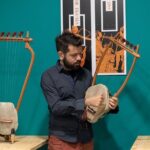
You don’t arrive empty-handed. The experience provides a lyre for each participant during the session. These loaner instruments are handcrafted by Luthieros, a niche brand known for building instruments with careful attention to how they should look and play.
That matters for two reasons. First, you can focus on learning rather than worrying about whether you’ll be able to hold or tune the instrument. Second, reconstructed-instrument experiences can vary a lot; having an instrument that’s designed for play makes the whole lesson feel legitimate.
This is also one of the reasons the lyre tends to work well for beginners. Based on how the lesson is structured, you’re not fighting complex modern technique from day one. You’re learning a small set of skills and then applying them right away.
What You Learn: Antiquity’s Music System and the Sound of the Lyre
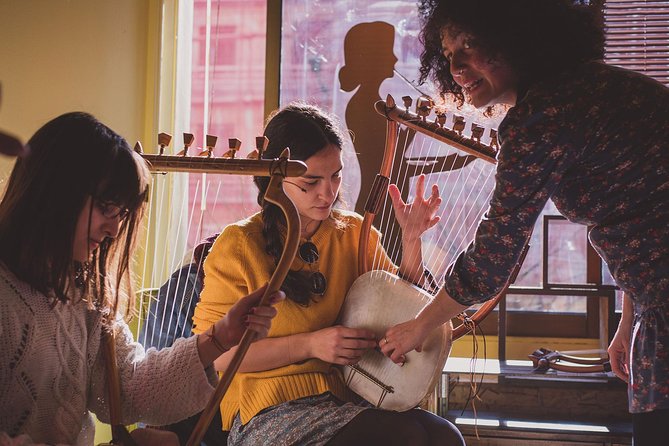
Your lesson starts with the basics, but not in a boring way. You’ll get a closer look at the reconstructed lyre—its aesthetics and how it produces sound. Then your instructor helps you understand the music system used in antiquity.
From there, you’ll actually play the lyre on the spot. The goal is for you to connect three things quickly: what the instrument looks like, what it sounds like, and how the music system translates into finger action.
The best part of this structure is pacing. In an hour, you can’t master everything, so the lesson sticks to the essentials that let you participate meaningfully. You’re not just watching your instructor perform. You’re working through the musical ideas step by step.
If you’re already a professional musician, the session can be tailored to your level. That’s a big deal, because it keeps the experience from feeling generic. The program isn’t locked into a single, beginner-only script.
The Seikilos Epitaph Melody: Learning a Complete Surviving Tune
The centerpiece is learning the “Epitaph of Seikilos,” which the experience describes as the oldest complete melody with lyrics that survives today. You’re not just learning a rhythm or a general concept. You’re working toward a full melody.
Why this matters for your experience: a lot of historic-music activities teach you theory with only a light musical payoff. Here, the payoff is the opposite. You learn something historically significant and then you practice it as music, not just as information.
The lesson also uses the lyre in a way that shows why it historically worked as a teaching tool. The instrument is presented as much simpler to learn than guitar or many modern instruments—at least in terms of getting started. That lines up with the lesson flow: quick orientation, hands-on practice, then applying what you learned to a real tune.
Museum Time Included: Exploring Exhibits Without Extra Fees
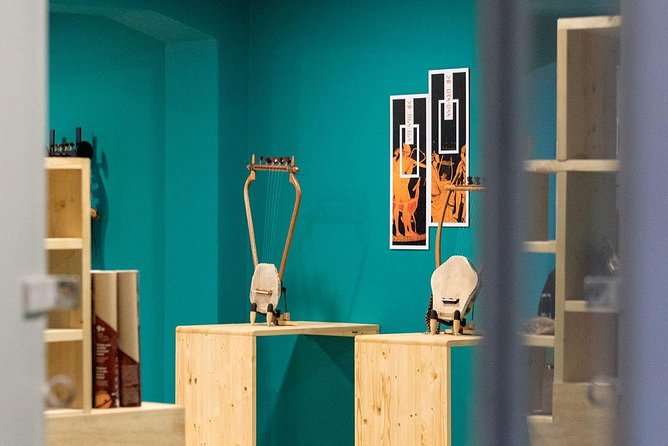
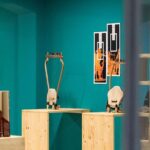
Your visit includes time at the Seikilo Museum of Ancient Music, and the experience notes that you can explore the exhibits at no extra charge. That turns the session from a simple lesson into something richer and more atmospheric.
You’ll see instrument-focused displays and reconstructed lyres. The tone here is participatory, not museum-stare-only. One key detail is that visitors are allowed to play the instruments in the museum collection. That shifts the feeling from passive sightseeing to active learning.
Do expect the museum to be compact. That can be a good thing. It encourages you to slow down inside rather than rush from one exhibit to the next. With only about an hour total for the tour, the compact size helps keep the experience efficient.


Instruction Style and Group Setup: Private by Design
This is a private tour/activity, meaning only your group participates. That’s huge for a short lesson. You get direct attention, and questions don’t get lost in a larger crowd.
The experience also emphasizes personalized attention with private instruction for just you and your party. Even if you don’t have any musical education, you’re guided through the process. If you do have experience, you get room to adapt the lesson to your level.
The English-speaking component is clear, too. You’ll be able to follow the musical ideas and the reasoning behind them without needing special knowledge.
Price and Value: Paying $48 for a Hands-On Hour
At $48.06 per person, the price may look modest compared to many “special interest” experiences. The value comes from what you actually do during the hour.
You get:
- A structured, English-speaking lesson that includes a music-system overview
- A lyre provided for every participant, so you can play right away
- A focus on a historically significant surviving melody
- Included museum exhibit time at no extra charge
- Private attention, since it’s not mixed with strangers
For many people, the best bargains are the ones that turn history into a physical activity. This fits that pattern. You pay for participation, not just for listening.
Who Should Book the Lyre of Apollo Experience
This is a great match if you’re:
- Curious about ancient Greek culture but tired of only looking at objects
- Interested in music and want a hands-on way to understand it
- Traveling with a partner or small group and like private instruction
- A complete beginner who wants to try something new without pressure
It may not be the best fit if you want a long, performance-level course. The time is about an hour, so the goal is participation and real first sounds—not mastery.
Quick Practical Notes Before You Go
Plan for a short, focused session at 11:30 am that ends where you started. Wear something comfortable for sitting and holding the lyre, since you’ll be practicing. And if you’re comparing directions, lean on the address details in your booking confirmation rather than relying on generic map pins.
One more practical point: the experience notes it requires good weather. If weather affects the day, you’ll be offered a different date or a full refund. That’s worth keeping in mind if you’re choosing among multiple activities for the same time window.
Should You Book This in Thessaloniki?
Yes—if you want an experience that feels like history plus action. This isn’t just a lecture about ancient music. It’s a guided, structured hour where you hear the lyre, understand the basic musical system, and then play the “Epitaph of Seikilos” yourself.
You’ll also like the museum component if you enjoy learning by hands-on discovery. And the private setup makes it feel less like a ticketed class and more like a personalized cultural moment.
If you’re deciding between options, pick this one when your schedule can handle a one-hour block and you want something different from standard museum time. For many visitors, that short window turns into the part of the trip they remember most.
FAQ
What time does the Lyre of Apollo experience start?
The experience starts at 11:30 am and runs for about 1 hour.
Where does the tour meet, and where does it end?
It meets at the SEIKILO Museum of Ancient Music at Filippou 5, Thessaloniki, and the activity ends back at the same meeting point.
Is the instruction offered in English?
Yes, the experience is offered in English.
Do I need prior musical training to participate?
No. The experience states there’s no need for any musical education.
Are lyres provided, or do I need to bring an instrument?
Loaner lyres are provided to all participants during the experience.
Is this a private tour or a group activity?
It’s a private tour/activity, and only your group will participate.
What happens if the weather is poor or I need to cancel?
The experience requires good weather. If it’s canceled due to poor weather, you’ll be offered a different date or a full refund. You can cancel for free up to 24 hours in advance for a full refund.