REVIEW · THESSALONIKI
Experience Ancient Greece: A Musical Journey
Book on Viator →Operated by Seikilo · Bookable on Viator
Ancient Greek music is easier than you think. This private visit to the SEIKILO museum turns mythology into sound, mixing hands-on instrument time with a live performance led by Theodore. You’ll also get story details that connect gods, philosophers, and real instruments you can try.
I especially like the hands-on playing part. You’re not stuck behind glass—you get to see, hear, hold, and in many cases play a long lineup of ancient instruments. I also like the way the tour can be tailored to your musical level, so it works whether you read music or you just love music.
One potential drawback: this is a music-first experience. If you’re hoping for a long, quiet museum walk with lots of lecture-style archaeology, you may find it a little too active and story-driven for your taste.
In This Review
- Key highlights to know before you go
- A Music-Themed Private Tour That Lets You Touch the Past
- Meet Theodore and the Live Lyricist Storytelling
- Trying Ancient Instruments: Lyres, Tympanons, and More
- Inside the SEIKILO Museum: What Private Access Changes
- How Tailoring Works for Amateurs and Pros
- Thessaloniki Logistics: Finding Filippou 5 at 10:30
- Price, Value, and What Makes It Worth $18
- Who Should Book This Musical Journey
- Should You Book It or Skip It?
- FAQ
- How long is the Experience Ancient Greece tour?
- Is the tour private?
- What language is the tour offered in?
- Do I need to be a musician to join?
- Can I get a full refund if I cancel?
- What if the weather is bad?
Key highlights to know before you go
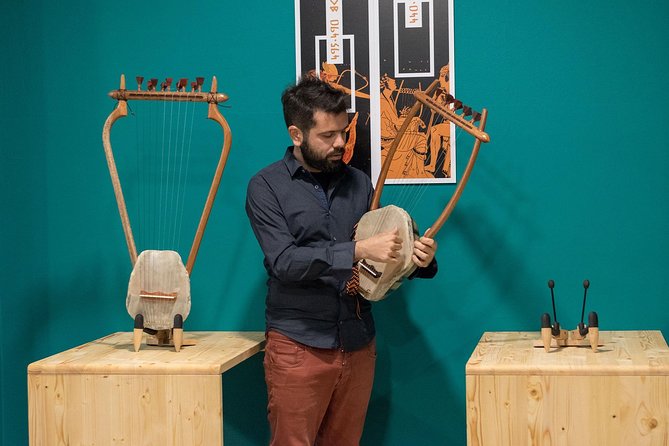
- Private access to the SEIKILO Museum of Ancient Music so you’re not squeezed into a crowd
- More than a dozen instruments you can see, hear, hold, and often play
- Theodore leads the experience, with a professional lyricist performing live
- Greek mythology in real time through details about Hermes, Apollo, Zeus, Plato, and more
- Musical tailoring based on whether you’re an amateur, or a professional musician
A Music-Themed Private Tour That Lets You Touch the Past
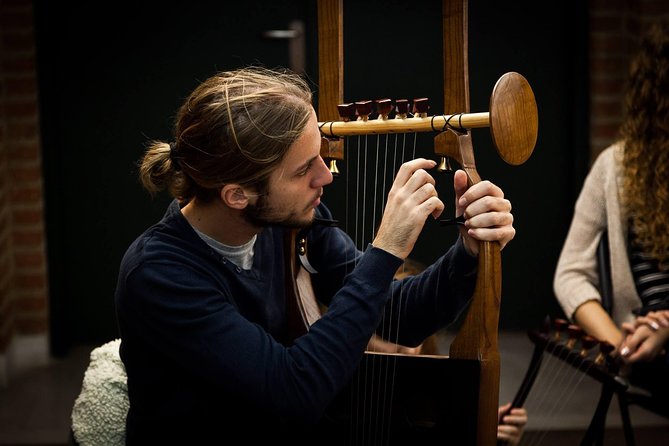
This tour is built for people who learn best by doing. The focus isn’t just listening to facts—it’s hearing how ancient Greek mythology might have sounded, then getting your hands on the instruments that carry those myths.
It helps that the setup is private. You’re only with your own group, so you can ask questions without feeling rushed. And you’re in Thessaloniki, which makes this feel like a local specialty rather than a generic “big sights” stop.
The basic payoff is simple: you get a museum experience that also works like a mini masterclass, just with more mythic characters and more instrument variety than you’d expect for an hour. If you like music, Greek culture, or both, this is the kind of plan that gives you something to remember beyond photos.
You can also read our reviews of more tours and experiences in Thessaloniki.



Meet Theodore and the Live Lyricist Storytelling
The main guide is Theodore, and he sets the tone. Based on what people emphasize, he’s the kind of guide who makes instruments feel approachable instead of intimidating. You’ll be learning through a mix of explanation and performance, with Theodore guiding you through what you’re seeing and trying.
A professional lyricist performs live during the experience, not as background music but as a storytelling tool. You’ll also get interesting details tied to the myths and ideas behind the instruments—think Hermes, Apollo, Zeus, and Plato. Even if you don’t know those figures well, the stories give names and meaning to what you’re hearing.
One of the clever things here is how the myth connects to technique. You don’t just get a list of instruments—you get the sense that sound and myth traveled together in ancient Greek imagination. That makes the whole museum visit feel less like a storage room for old things, and more like a living cultural thread.
Trying Ancient Instruments: Lyres, Tympanons, and More
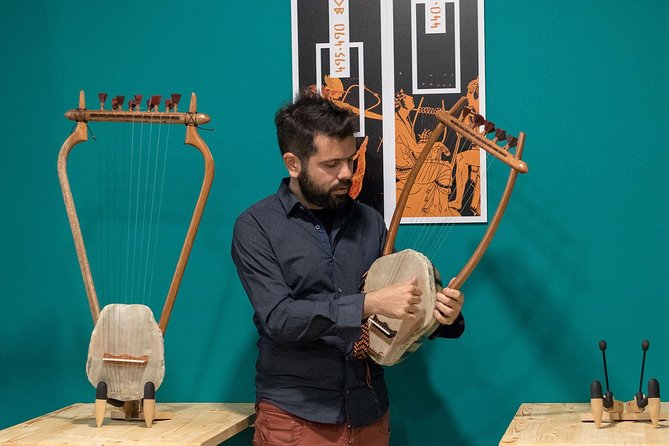
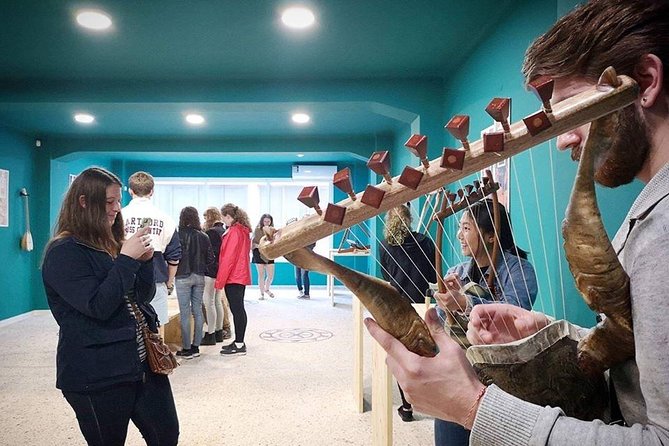
The headline promise is that you can interact with many instruments. You’ll get to see, hear, hold, or even play more than a dozen ancient instruments, with examples tied directly to mythology and literature.
Here are some of the instrument references you can expect during the experience:
- Lyre of Hermes
- Barbiton of Sappho
- Pandura
- Cithara of the Golden Age
- Phorminx of Homer
- Tympanon of Dionysus
That list matters because it shapes your expectations. This isn’t one “special” instrument with a lot of waiting around. It’s a variety show of historical instruments, with short moments that help you understand differences in sound and how each instrument is handled.
A practical note: when something is hands-on, you should go in expecting to learn by trial and error. You won’t just observe technique—you’ll likely pick up the basics of how to approach the instrument in your own hands. If you’re self-conscious, don’t be. The goal is participation, not perfection.
If you love music and want a break from the usual museum pattern of stand, read, move on, this is a strong match. You’ll be doing something. And that physical involvement is exactly what makes the hour feel “worth it.”
Inside the SEIKILO Museum: What Private Access Changes
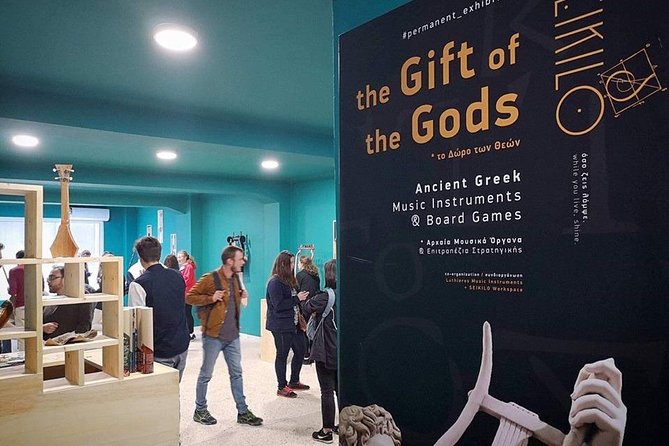
The museum stop is the heart of the tour: Seikilo Museum of Ancient Music. The standout value here is the private access. That matters because it changes the whole feel of the visit—from shared attention to focused attention.
In a crowded setting, hands-on activities can become chaotic. Here, the tour structure is built around the idea that you can look closely and then shift into listening or playing. That’s also why the instruction is clear that you may see, hear, hold, or play. The experience is set up to make those transitions smooth.
The museum itself is centered on ancient music, so the content stays tight. You’re not being pulled in ten directions. Instead, you’re guided through instruments and the stories tied to them, which helps you leave with a stronger mental map of what you encountered.
One more benefit: private access usually means you can ask follow-up questions when they actually pop into your mind. If you’re curious about a specific instrument, myth reference, or sound effect, you’re more likely to get a direct answer.
How Tailoring Works for Amateurs and Pros
One detail I like a lot is that the tour can be tailored to your musical knowledge. That means you don’t have to pretend you’re an expert, and you also don’t have to feel like you’ll be talked down to if you are.
Before you start, you’re encouraged to let them know if you’re an amateur or even a professional musician. That’s a useful signal because the “right” level for ancient instruments can vary a lot. Some people want a simple explanation of how it’s played. Others want more structure—notes, technique, or how the instrument is approached.
In practical terms, tailoring helps keep the tour from turning into one-size-fits-all narration. With a private group, it’s easier for Theodore and the lyricist to shape the pace and the detail. If you’re the type who asks questions while listening, you’ll probably enjoy how responsive the experience can be.
If you’re bringing a friend who knows nothing about music theory, you’re also covered. This kind of guided, interactive museum format works well because the experience doesn’t require you to read music in advance—you learn through sound, handling, and demonstration.
Thessaloniki Logistics: Finding Filippou 5 at 10:30
This tour starts at 10:30 am and runs about 1 hour. It begins at Filippou 5, Thessaloniki 546 30, Greece, and the experience ends back at the meeting point.
That matters because it makes planning easier. You can fit it neatly into a morning in Thessaloniki without needing a complicated schedule around it. If you’re trying to build a day with both museums and meals, this is a clean, predictable slot.
The meeting point also being near public transportation helps. If you’re staying a bit outside the center, you’re not locked into hiring a car. And since it’s a mobile ticket, you should have your phone ready at the start.
One more practical consideration: the experience requires good weather. That’s your clue to plan for a flexible day and bring the kind of clothes you’d wear for an outdoor segment, just in case. If weather turns, you’ll have options rather than a forced loss of your day.
Price, Value, and What Makes It Worth $18
At $18 per person, this is priced like an activity, not like a long museum tour that eats half a day. The value comes from what’s included in that hour.
You get:
- private access to the SEIKILO Museum of Ancient Music
- hands-on interaction with more than a dozen instruments
- a professional lyricist performing live
- myth-linked context connected to major figures like Hermes, Apollo, Zeus, and Plato
- the chance to learn at a level that fits you, since the tour can be tailored
When you add those elements together, the price starts to make sense. You’re paying not just for entry, but for active participation plus performance plus guided explanation. For many travelers, the “click” moment is the first time you hold or try an instrument yourself. That’s the experience paying you back.
Also, the private format can be a real value booster. Even without knowing exact group size, the structure is designed so you aren’t waiting your turn in a crowd.
If your travel style is “I want something different, not just another building,” this is the kind of stop that can punch above its cost.
Who Should Book This Musical Journey
This experience is for anyone interested in ancient Greek civilization, music, and mythology. You don’t need to be a musician, but you do need to be willing to participate. If you enjoy stories and like the idea of hearing myths through instruments, you’ll likely have a great time.
It’s also a smart choice if you’re visiting Thessaloniki and want one distinctive cultural activity that feels local and specific. Ancient music museums aren’t a dime a dozen, and the interactive element makes it more memorable than a standard museum visit.
If you’re traveling with:
- a music lover who wants hands-on learning
- someone curious about Greek mythology beyond statues and names
- a pair of friends who enjoy playful, practical activities while traveling
…this fits well.
If you’re the type who wants a strictly quiet, passive museum experience, it may not be your ideal match. The tour is designed to get you listening, asking, and trying instruments.
Should You Book It or Skip It?
I’d book this if you want an hour in Thessaloniki that actively teaches you through sound. The mix of private museum access, interactive instruments, and a live lyricist performance makes it feel more like a guided cultural workshop than a slow walkthrough.
I’d consider skipping only if you strongly prefer quiet exhibits and minimal participation. Since the experience is built around trying and playing, it’s not the best fit for travelers who want to just observe from a distance.
If you’re on the fence, here’s a simple decision rule: if you’d enjoy learning what a lyre or a tympanon feels like in real hands, you’ll probably love this. If the idea of playing an instrument sounds like a chore, pick a different museum activity that matches your style.
FAQ
How long is the Experience Ancient Greece tour?
It lasts about 1 hour.
Is the tour private?
Yes. It’s a private tour/activity, and only your group participates.
What language is the tour offered in?
The tour is offered in English.
Do I need to be a musician to join?
No. The experience can be tailored to your level of knowledge, so let them know if you’re an amateur or even a professional musician.
Can I get a full refund if I cancel?
Yes, you can cancel up to 24 hours in advance for a full refund.
What if the weather is bad?
The experience requires good weather. If it’s canceled due to poor weather, you’ll be offered a different date or a full refund.
If you want, tell me your travel month and whether you’re more into music, mythology, or hands-on experiences, and I’ll help you place this into a smart Thessaloniki day plan.