REVIEW · ATHENS
From Athens: Ancient Olympia Full-Day Guided Tour
Book on GetYourGuide →Operated by SIGHTS OF ATHENS-GRAY LINE · Bookable on GetYourGuide
Olympia hits like a time machine. I love walking through Temple of Hera and seeing the Olympic Flame tradition tied to this exact spot, and I also love the scale of the original stadium where ancient athletes chased glory. One consideration: it’s a long day, so you’ll feel the hours on the bus even though the payoff is real.
This tour balances big-name ruins with actual planning. You get round-trip transportation from central Athens (Hondos Center), a photo stop at the Corinth Canal, and then a good chunk of time at the archaeological site plus a break in Olympia village for lunch and browsing. The main question for you is whether you’re comfortable with a structured route that moves on a schedule.
In This Review
- Key highlights at a glance
- A 13-hour bus day to the Olympics birthplace
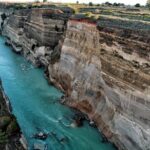
- Corinth Canal photo stop: quick views, smart timing
- Ancient Olympia main gate to Temple of Hera: where the Flame story starts
- Temple of Zeus and the Pelopion: the wonder that once was
- Original stadium and Bouleuterion: competition plus judges
- The audio and VR in 10 languages: helpful tools for structure
- Olympia village break: lunch you pay for, plus local strolling
- Price and logistics: what $129 really buys you
- Who this day trip fits best
- Practical tips so your day feels smoother
- Should you book this Ancient Olympia tour?
- FAQ
- How long is the tour from Athens to Ancient Olympia?
- Where does the tour start and end in Athens?
- What sites are included at Ancient Olympia?
- Is lunch included?
- Are entry tickets included?
- What languages are available for the audio and guidance?
Key highlights at a glance
- Ancient Olympia’s core monuments: Temple of Hera, Temple of Zeus, Pelopion, stadium, and Bouleuterion
- Olympic Flame connection: Temple of Hera is where the modern flame is ignited
- Temple of Zeus scale and symbolism: site of the famed gold-and-ivory statue of Zeus
- Original competition setting: time in the stadium built for ancient events
- 10-language audio plus VR support to help you understand what you’re seeing
- A real break in Olympia village next to the site for lunch and local wandering
A 13-hour bus day to the Olympics birthplace
This is a full-day outing, priced around $129 per person, with a total duration of 13 hours. The structure is simple: you leave Athens, spend hours getting to the Peloponnese, enjoy Ancient Olympia with guide-style narration and tech support, then head back the same day. If you’re the type who wants history to be efficient, this works well. If you’re sensitive to long travel, it will feel like a commitment.
What makes it especially workable is that the trip isn’t just “ride to a site and sprint around.” You get a timed stop at Corinth Canal for photos, then you’re on the ground at Ancient Olympia for about three hours. That’s long enough to see the main monuments without feeling like you’re only catching quick snapshots.
Also, the tour is on an air-conditioned bus with round-trip transportation included, plus pickup and drop-off up to your preferred location in Athens. You don’t have to figure out local connections or driving logistics, which is a big deal for a day like this.
You can also read our reviews of more guided tours in Athens
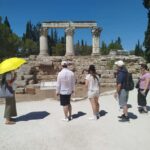
Corinth Canal photo stop: quick views, smart timing
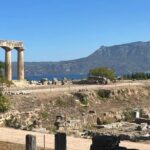
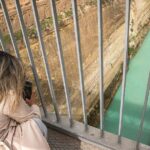
On the way to Olympia, you get about 30 minutes at the Corinth Canal for a break and photo stop. The bus ride to the Peloponnese is part of the experience here, and this stop gives your legs a reset before the longer stretch toward the archaeological site.
In practice, 30 minutes is short. So I’d treat it like: step out, take the photos you care about, and then get back on the bus. Wear shoes you can move fast in, because there’s no slow stroll schedule mentioned—just a photo stop plus a break.
Ancient Olympia main gate to Temple of Hera: where the Flame story starts
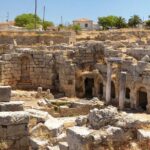
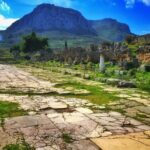
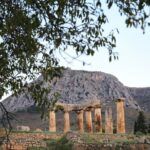
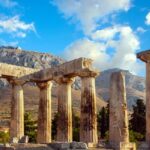
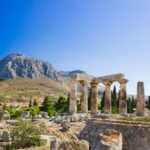
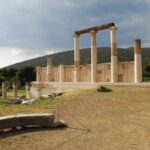
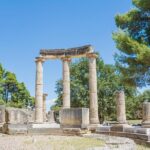
Once you reach the archaeological site area, you get roughly three hours to explore Ancient Olympia. The tour starts with the Temple of Hera, and this matters because you’re not just looking at impressive ruins—you’re standing at a place tied to a living tradition.
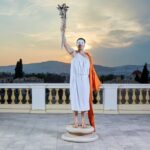
The Temple of Hera is where the modern Olympic Flame is still ignited before the Games. That connection changes how the ruins feel. It’s no longer only about ancient athletics as a dead topic. It’s about continuity: the Olympic idea keeps returning to its roots, and this is one of the places where that happens.
From a visitor perspective, I like starting at Hera because it helps you frame the whole sanctuary. You’re learning how this site worked as a religious and athletic center at the same time. Even if your Greek is limited, the tour’s English-speaking live guide and 10-language audio support are designed to keep the story moving as you walk.
Practical note: you’ll be walking among uneven ground and open-air ruins, so comfortable shoes are not optional. The tour explicitly asks for comfortable footwear for exploring the ruins.
Temple of Zeus and the Pelopion: the wonder that once was
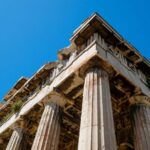
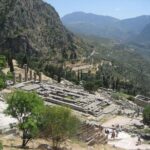
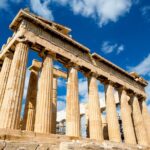
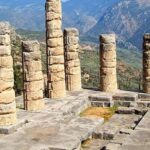
After Hera, the route continues toward the Temple of Zeus. This is where you’ll hear the famous story about the colossal statue of Zeus, described as a gold-and-ivory masterpiece and one of the Seven Wonders of the ancient world. You won’t see the statue itself, of course, but the temple setting helps you picture the ambition behind it.
If you’re the kind of person who likes understanding scale, this stop delivers. Even with the missing parts, the temple layout communicates why it became a legend. You’re looking at a sacred space designed for awe, built for a crowd and a ritual world where athletics and religion were tightly linked.
The itinerary also mentions the Pelopion. Even without going into every detail not listed here, I’d treat Pelopion as the “how this sanctuary ties together” area—part of the sanctuary where myth, worship, and ceremony orbit around the same place. It’s the kind of stop where your best move is to keep your ears open during commentary, because these areas can look similar unless someone points out how they fit into the big picture.
Original stadium and Bouleuterion: competition plus judges
The tour’s next big moment is the original stadium. Seeing it in person is where many visitors feel the weight of what happened here. You’re standing where athletes competed for glory, in a setting built for sightlines, speed, and repeated events.
Then you visit the Bouleuterion, the council house where Olympic judges once gathered. That pairing—athletes in the stadium and judges in the Bouleuterion—helps you understand the Olympics weren’t only about winning. There was structure, authority, and rules. The site layout supports that idea: you can almost imagine the flow of people moving between competition and decision-making.
One thing to watch for: you’ll want to pace yourself. Three hours across the main monuments can feel both generous and tight, depending on how fast you move and how much you stop to read. If you prefer slow looking, focus on the stadium first, then Hera and Zeus, and leave the rest for “okay, I’ll take my time” rather than trying to do everything equally.
A few more Athens tours and experiences worth a look
The audio and VR in 10 languages: helpful tools for structure
A major value-add here is that the tour includes an audio and VR application in 10 languages, and the commentary is offered across multiple languages as well. If you don’t speak Greek, that’s a real practical advantage—ruins can be visually stunning but confusing on their own.
The VR component can help you visualize what you’re seeing. That said, don’t assume it replaces good in-person walking. Think of VR as a support tool: it can clarify what a restored version might have looked like, or help connect the dots while you’re standing in the right spot. But your “wow” moment still comes from being in the real place and seeing the stadium scale and temple foundations for yourself.
Also, if you’re a fast reader and enjoy museum-style learning, you might actually find the tech useful because it keeps your route from becoming random. If you’re not into phone apps or VR headsets, you can still have a great visit—the tour isn’t dependent on tech to enjoy the core monuments.
Olympia village break: lunch you pay for, plus local strolling
After finishing at the archaeological area, you get a break in Olympia village, right next to the site. The free time is about 1.5 hours. This is where you can reset, grab lunch, and walk around traditional alleys for local goods.
Lunch and drinks are not included, so budget for food. That’s a normal trade-off on day tours, but it’s also why I like that the break exists at all. If you’re hungry, you’ll want a chance to eat without rushing through the afternoon.
This village time is also your flexibility buffer. If the morning felt fast, use this window to slow down. If you feel ready to move on, you can do a quick look and then return to the bus early—though the tour will keep you on its schedule for departures.
Price and logistics: what $129 really buys you
At $129 per person, the big value isn’t just “transport to Olympia.” It’s that you’re paying for a bundle: round-trip transportation, entry tickets, an air-conditioned bus, and tech support (audio/VR in 10 languages), plus express security check. For many people, those inclusions reduce the stress cost—time spent planning, ticket lines, and figuring out what to see.
You also get a live, English-speaking guide and driver included, plus fuel, toll fees, and taxes. That kind of all-in structure tends to matter on a day like this, because the total time is long and it’s easy to lose momentum if anything goes wrong.
One drawback to keep in mind: the tour should include a live guide, but there’s at least one case where only the driver was present and no guide provided information. That doesn’t mean it always happens, but it’s a good reason to double-check your confirmation details. If you care a lot about narration, you’ll want the live guiding component to be solid on your day.
Who this day trip fits best
I think this tour is a good fit if you:
- Want to see the top monuments at Ancient Olympia in one organized day
- Like having structure and explanations through English-speaking guidance and multi-language audio/VR
- Don’t want to drive or plan a complicated route from Athens
It may not fit if you:
- Struggle with long travel days. This includes several hours of bus time on both directions.
- Need a very flexible schedule or lots of unscripted wandering.
- Are uncomfortable walking on uneven ruin surfaces. The tour asks you to wear comfortable shoes for a reason.
- Are over 95 years old. The activity notes it isn’t suitable for people above that age threshold.
Also, pets aren’t allowed. If you’re traveling with an animal, you’ll need a different plan.
Practical tips so your day feels smoother
Bring a layer even if the forecast looks mild. This is an all-day outing where weather can shift, and you’ll spend time walking outside among ruins. One review highlighted how the experience still worked even with rain during a winter period near the Olympics season—so don’t assume bad weather automatically kills the day.
Carry water and a light snack plan. Drinks aren’t included, and lunch is on you in Olympia village. If you run low on energy, the day can feel longer than it needs to be.
If you like photos, plan around the fact that the real photo “windows” are the Corinth Canal stop and then the Olympia ruins themselves. With only 30 minutes at the canal, don’t get stuck reading every sign there.
If you’re the kind of person who wants to move at your own pace, you’ll still be under the tour’s rhythm. But there is time to walk around during the archaeological site visit, and that pacing is part of why the day can feel satisfying rather than rushed.
Should you book this Ancient Olympia tour?
Book it if you want a straightforward, value-packed way to hit the core of Ancient Olympia without logistics headaches. The mix of Temple of Hera (with the Olympic Flame connection), Temple of Zeus, the stadium, and the Bouleuterion gives you the main “why this place mattered” story in one go. Add in transport, entry tickets, express security help, and multi-language audio/VR, and the $129 starts to look like a practical bargain versus building everything yourself.
Pass or think twice if you’re very sensitive to long bus days, or if you specifically need lots of deep, unscripted time in the ruins. Also, if narration matters a lot to you, make sure your booking includes the live guide on your date.
If you want one reason to choose it anyway: this is one of those rare days where you’re not just seeing ancient ruins—you’re seeing the birthplace of the Olympic idea, tied to a tradition that still gets lit before the world watches.
FAQ
How long is the tour from Athens to Ancient Olympia?
The tour lasts about 13 hours total.
Where does the tour start and end in Athens?
It starts and ends at Hondos Center in Athens, with drop-off back at the same meeting point.
What sites are included at Ancient Olympia?
You’ll visit the Temple of Hera, the Temple of Zeus, the Pelopion, the stadium, and the Bouleuterion. There’s also time to explore the archaeological site area.
Is lunch included?
No. Lunch and drinks are not included, but you do get free time in Olympia village next to the site.
Are entry tickets included?
Yes. Entry tickets for the sites are included in the price.
What languages are available for the audio and guidance?
The tour includes a live English guide, plus audio and VR support in 10 languages. English is included, along with French, German, Italian, Spanish, Portuguese, Korean, Polish, Russian, and Chinese, and Japanese.