REVIEW · SCOTLAND
Lewis Historical Tour
Book on Viator →Operated by Hebridean Life Tours · Bookable on Viator
Stone circles, then a lighthouse, in one day. This Lewis Historical Tour is interesting because you bounce between Neolithic sites and iconic island landmarks, with stops timed to keep the day moving. I like the quick, fact-filled moments at places like Clach an Trushal and Callanish, and I really like how the guides can answer questions and shape the pace—names like Alan, Marisa, and Murdo come up for good reasons. One consideration: it’s a 4–6 hour day with a moderate fitness requirement, so you’ll want comfortable walking shoes and patience for weather.
You start at South Beach in Stornoway at 9:00am, and you’re back at the same point after the tour. Most of the major sights in the route are free to enter, while the only likely extra cost is the blackhouse/iron-age house admission note, plus meals (brunch and lunch are not included).
In This Review
- Key highlights worth planning for
- Clach an Trushal: the Stone of Compassion (and why size matters)
- Butt of Lewis Lighthouse: Stevenson’s father, plus big-sky wildlife
- Gearrannan Blackhouse Village: Harris Tweed and real peat stacks
- Callanish Standing Stones: figuring out the why, not just the what
- Lews Castle: from the Mathesons to the Lewis Chessmen
- How the 4–6 hour schedule feels in real life
- Price and value: what $493.61 buys you
- Who should book this Lewis Historical Tour?
- Should you book it? My practical call
- FAQ
- How long is the Lewis Historical Tour?
- What time does the tour start, and where do we meet?
- Is pickup offered from my accommodation?
- Is this a private tour?
- What language is the tour in, and do I get a mobile ticket?
- Are meals and lunch included?
- Is there free cancellation?
Key highlights worth planning for
- Clach an Trushal’s exact measurements: the Stone of Compassion is listed at 5.8 metres tall and among the tallest standing stones in Scotland
- Butt of Lewis Lighthouse location: the most north-westerly point in the British Isles, tied to David Stevenson and Robert Louis Stevenson
- Gearrannan Blackhouse Village in the 1800s: museum time plus watching a Harris Tweed weaver at work, and seeing a real peat stack
- Callanish with tea and cake: a short visit to the stones plus an exhibition and a cup of tea at the visitor centre
- Lews Castle and the Lewis Chessmen: a museum stop connected to walrus ivory chess pieces found in Uig in 1831
- Guides who time the day: the best version of this tour avoids big bus crowds and keeps you flexible for what interests your group
Clach an Trushal: the Stone of Compassion (and why size matters)
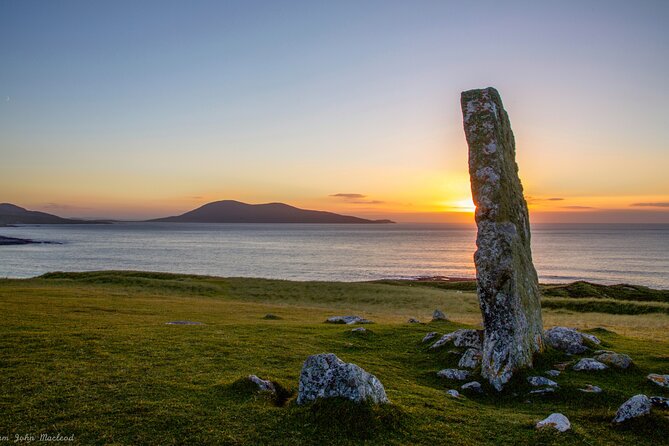
The tour starts with Clach an Trushal, often called the Stone of Compassion. It’s believed to be the tallest standing stone in Scotland, and the details are the fun part: it’s listed at 5.8 metres above ground, 1.83 metres wide, and 1.5 metres thick at its thickest point. In other words, this isn’t a “look and walk away” stop. Even with the short time slot, you get a real sense of scale.
A quick heads-up: the schedule gives you about 5 minutes here, and the goal is orientation—get your bearings, then move. If you want a slower look, you’ll benefit from asking your guide to point out the stone’s shape and how it sits in the ground. That short, guided framing is what turns this into more than a photo stop.
Also, you’ll likely feel the tug of the place’s name. Stone traditions in the British Isles often come with story, and this one’s tied to compassion—so even if you’re not chasing legends, it gives your brain something to hold onto while you’re staring up at something ancient.
You can also read our reviews of more historical tours in Scotland
Butt of Lewis Lighthouse: Stevenson’s father, plus big-sky wildlife
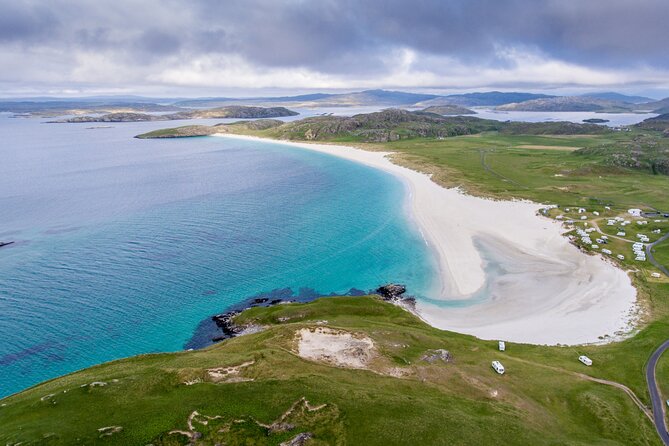
Next up: the Butt of Lewis, a stop-off at the most north-westerly point in the British Isles. The lighthouse is built by David Stevenson—father of Robert Louis Stevenson, the author of Treasure Island. It’s a neat literary link, but the stronger appeal is the setting.
This area is known for watching sea life, including basking sharks and porpoises, and there’s a small beach nearby for quick stretching of legs and a look at the waterline. If you like tying nature to human engineering, this is the stop for you: a lighthouse made to cut through fear of the sea, placed in a place where the sea still sets the pace.
One more useful trivia detail: the Butt of Lewis area is associated with a Guinness Book of Records entry for the highest gust recorded in the British Isles—133.6 miles per hour in 1962. You don’t need to become a meteorologist, but it helps you take the weather seriously. Even if skies look calm, wind here can change fast.
The stop is about 15 minutes, so treat it as a viewpoint break. You can enjoy it without rushing, but don’t plan on lingering for a full beach hang.
Gearrannan Blackhouse Village: Harris Tweed and real peat stacks
Then you shift into everyday life with a stop at Gearrannan Blackhouse Village, a restored community made up of blackhouses and a museum space. The idea is simple and smart: if the earlier stones tell you how people marked the land, Gearrannan tells you how people lived on it—much later, in the 1800s.
You’ll get around 45 minutes here, and this is where the day turns from “where” to “how.” There’s a video on community life and culture, and you can watch a Harris Tweed weaver at work. If you’ve ever wondered what “craft” really means, this is the best kind of museum moment: you’re not just reading about skill, you’re seeing it.
The visuals stick. You’ll also see a real peat stack, which helps make the island economy feel tangible rather than abstract. Peat is one of those island realities that can sound distant until you see the form of it close up.
One note on costs: the tour pricing shows Gearrannan Blackhouse Village admission as included in the itinerary description, but the pricing details also list an admission fee of £6.50 per person for Gearrannan Blackhouse Village (or Bosta Iron Age House). Since those two pieces don’t perfectly match, I’d treat it as a “check at booking” item so you’re not surprised later.
Callanish Standing Stones: figuring out the why, not just the what
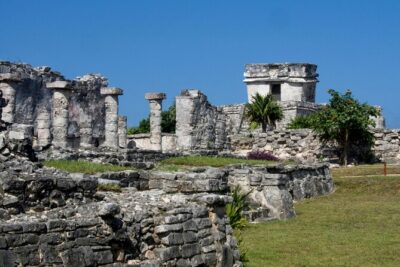
After Gearrannan, you go to Callanish Standing Stones. This is one of the most important Neolithic sites on Lewis, and the tour frames it well: the stones age with the Pyramids and are older than Stonehenge. It’s a bold comparison, but it helps you place them in time quickly.
You’ll get around 30 minutes. That’s not enough for a full academic interpretation, and that’s okay. The goal here is to help you try to make sense of the stones—shape, alignment, and what the visitor centre can explain.
You also get the exhibition and a cup of tea with cake at the visitor centre. That sounds like a small detail, but it’s a big quality-of-life win. When you’re looking at ancient stones in wind and salt air, you’ll want a break to re-center. The tea-and-cake pause is the moment where your brain stops racing and you can actually think.
Potential drawback: because the time is limited, you’ll need to accept that you won’t see every angle for ages. To make the most of it, be ready to ask your guide where to stand for the best view or what to notice in the stone circle arrangement.
Lews Castle: from the Mathesons to the Lewis Chessmen
The last major stop is Lews Castle. This is a different kind of history: social power, land ownership, and then a museum that connects the islands to Viking-era objects.
The castle was redeveloped in 2015 to bring it back toward its original state. It was built between 1840 and 1860 by Lord and Lady Matheson as a luxurious dwelling. Later it was sold to Lord Leverhulme of Unilever, and then in 1924 the castle, the grounds, and surrounding areas were left to the people of Stornoway. That decision is described as culminating in the first land-owning trust in Scotland—so this isn’t just pretty stone buildings. It’s about who had control of the land and how that changed.
The museum inside has island history and includes the Lewis Chessmen, discovered in a sand dune in Uig in 1831. These chess pieces were carved from walrus ivory and are believed to have been brought to Lewis by Vikings in the 12th century AD. Even if you’ve seen photos online, seeing the story connected to where they were found makes them feel more real.
You’ll have about 30 minutes here, with free admission listed for the castle stop. It’s a good ending point because it closes your day with “people and power,” not just “stone and sea.”
How the 4–6 hour schedule feels in real life
This tour runs about 4 to 6 hours, starting at 9:00am. The biggest thing you’ll want to know is how that time gets used. Most stops are short—think 5 to 30 minutes—and that’s why the private format matters.
In the best versions of the day, your guide will keep momentum without turning it into a sprint. One of the strongest review-based themes tied to this tour is that guides like Alan can handle a lot of questions and adjust the day for what your group finds interesting. That flexibility can matter when Lewis is showing you weather, wildlife, or a sudden sight worth stopping for.
Timing also seems to be part of the craft. A guide’s ability to plan around the big tour bus schedule can make the difference between crowds and calm. In a place like Callanish, even a small crowd shift changes the vibe fast.
What I’d pack mentally: this is a morning-to-early-afternoon style tour. You’re seeing multiple highlights in one loop, so plan meals accordingly. Since brunch and lunch are not included, you’ll either want to eat before you go or build your own lunch stop when the guide gives you the chance.
Price and value: what $493.61 buys you
At $493.61 per person, this isn’t a budget tour. But it can still be good value, depending on what you care about.
Here’s what you’re paying for that matters:
- Private transportation: you’re not squeezed into a cattle-car schedule, and you can be flexible
- Pickup options: Stornoway Airport, client accommodation, the town centre, and the deep water port are listed pickup points
- Multiple major stops with free admission at several sites (Clach an Trushal, Butt of Lewis Lighthouse, Callanish, and Lews Castle are listed as free)
- Guided context that turns separate landmarks into one story of Lewis
Your biggest potential extra costs are meals (brunch and lunch are not included) and possibly the blackhouse admission note (Gearrannan or Bosta Iron Age House, listed at £6.50 per person). Since the itinerary says Gearrannan’s ticket is included, it’s worth confirming at booking which fee applies to your version.
One practical point: this is booked about 125 days in advance on average. That suggests demand is real. If you’re traveling in a busy season, locking in your date earlier usually gives you better guide availability and smoother scheduling.
Who should book this Lewis Historical Tour?
This tour fits best if you want a hit-list of Lewis history that still feels guided, not rushed, and not like you’re piecing together bus routes.
You’ll likely enjoy it if:
- You care about Neolithic sites (Clach an Trushal and Callanish) and want help interpreting them
- You want a day that connects stone monuments to later island life at a blackhouse village
- You like castles and museums, especially when they connect local land stories to objects like the Lewis Chessmen
- Your group values a private day and the ability to ask lots of questions
It’s also a solid option for couples or small groups who don’t want to drive themselves in northern wind and weather. The tour is described for moderate physical fitness, so plan for short walks and standing time rather than a full-on hike.
If you’re the type who wants unlimited time at just one site—say you want a whole afternoon at Callanish—this might feel tight. It’s built for breadth and a guided pace.
Should you book it? My practical call
Book it if you want one guided loop that covers Lewis’s big themes—ancient stones, lighthouse edges, blackhouse life, and the museum connections inside Lews Castle—without the hassle of figuring out logistics yourself. The combination of free entries at several stops, private transport, and guides who can flex around your questions makes it a strong “use your time well” choice.
Skip or consider carefully if you’re hoping for long, slow wandering at a single site or you expect meals to be handled for you. Also, because the blackhouse admission note is slightly inconsistent between included vs fee-listed information, it’s smart to confirm what you’ll pay for at the door (if anything) before you go.
If you want a day where you see a lot of Lewis and still come away with better understanding, this is a good fit.
FAQ
How long is the Lewis Historical Tour?
The tour duration is listed as approximately 4 to 6 hours.
What time does the tour start, and where do we meet?
It starts at 9:00am and meets at South Beach, Stornoway HS1, UK. The tour ends back at the same meeting point.
Is pickup offered from my accommodation?
Yes. Pickup is listed for Stornoway Airport, client accommodation, Stornoway Town Centre, and Stornoway Deep Water Port.
Is this a private tour?
Yes. It’s described as private, and only your group participates.
What language is the tour in, and do I get a mobile ticket?
The tour is offered in English and you receive a mobile ticket.
Are meals and lunch included?
No. Brunch and lunch are not included.
Is there free cancellation?
Yes. Free cancellation is available up to 24 hours in advance of the experience start time for a full refund.