REVIEW · MALTA
Mdina and Rabat Food and History Tour
Book on Viator →Operated by Best Tours Malta · Bookable on Viator
Food in Malta hits different in Mdina and Rabat.
I love that this tour pairs St Paul landmarks with real meal stops, so the history feels personal instead of lecture-style. I also like the hands-on pacing: you pause for photos at key spots, then you move on to taste what locals actually order, with craft beer, wine, and kinnie included. One drawback to note up front: the cathedral and St Paul’s Grotto have admissions that are not included, so you may want extra spending money if you go inside.
You get a small group size (up to 12), which makes it easier to ask questions and actually talk with the guide while you’re eating. The guides I’ve seen referenced by name, like Chris, Bridgette, and Darrell, are focused on food details, local context, and watching for things like allergies ahead of time. If you’re hoping for a long deep museum visit, the timing here is more for street-level history plus tastings than for long indoor exploring.
In This Review
- Key Things I’d Plan Around Before You Go
- Why Mdina and Rabat Make Sense Together
- Arriving at Is-Serkin, Then Passing Mdina’s Baroque Main Gate
- Metropolitan Cathedral of Saint Paul: Outside Views and a Key Theme
- St Paul’s Grotto: The Story Behind the Church Over the Cave
- The Maltese Food Stops: Pastizzi, ħobż biż-żejt, Bragioli, and Rabbit
- Drinks Included: Craft Beer, Wine, and Kinnie
- How the 3.5 Hours Work in Real Life
- Price and Value: What $81.93 Buys You
- Who Should Book This Tour, and Who Might Skip It
- Should You Book the Mdina and Rabat Food and History Tour?
- FAQ
- Where is the meeting point?
- What time does the tour start?
- How long is the tour?
- Is the tour offered in English?
- How much does the tour cost?
- What’s included in the tour price?
- What food is included?
- Do I need to buy tickets for the cathedral and grotto?
- How big is the group?
- Can I cancel for free?
Key Things I’d Plan Around Before You Go
- Small-group format (max 12) keeps the tour from feeling rushed or crowded.
- Beer, wine, and kinnie are part of the price, not an afterthought.
- Photo stops at Mdina and St Paul sites let you take in the setting before the food shows up.
- Snack-heavy Maltese menu includes pastizzi, ħobż biż-żejt, bragioli, and rabbit.
- Admissions for the cathedral and grotto aren’t included, so plan for optional add-on entry.
- Meeting at Is-Serkin (Crystal Palace Bar) in Ir-Rabat makes the start easy to find.
Why Mdina and Rabat Make Sense Together
Mdina and Rabat are basically a two-part story. Mdina is the old walled capital area, all stone streets and classic views, and it has served as a backdrop for films. Rabat is right next door, and it ties in with Malta’s religious history through St Paul, including places associated with his stay.
What makes this tour work is the flow. You start in Mdina at the main gate, then you shift into Rabat’s St Paul theme. After that, food takes over in a practical way: you’re tasting regional favorites while the sights are still fresh in your mind. If you like travel days that mix scenery with something you can chew, this pairing is a strong one.
You can also read our reviews of more tours and experiences in Malta.
Arriving at Is-Serkin, Then Passing Mdina’s Baroque Main Gate
The tour starts at Is-Serkin – Crystal Palace Bar on Triq San Pawl, Ir-Rabat, with a 10:30 am departure. That timing matters because you get daylight for Mdina photos without feeling like you’re racing the evening crowds. The tour ends back at the meeting point too, so you don’t have to re-orient at the finish.
Your first real moment is Mdina Main Gate, a Baroque gateway that marks the entrance to the old capital city. The stop is short, but it’s a useful reset. You get a quick look at a dramatic entrance, and you can connect it to the fact that this area has been used in films. Even if you don’t care about movie trivia, gates like this are how you understand a city’s identity fast: it’s built to be watched and entered like a stage.
Practical tip: have your camera ready for this stop. The tour moves in a way that favors quick photo windows, not long wandering.
Metropolitan Cathedral of Saint Paul: Outside Views and a Key Theme
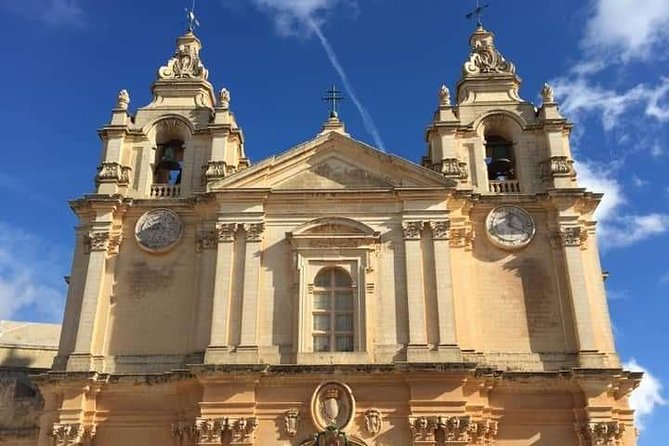
From Mdina, you shift to the Metropolitan Cathedral of Saint Paul, often described as the mother church of the Maltese Islands dedicated to St Paul. You’ll stop for pictures in front, which keeps things efficient and gives you a clear visual anchor for the tour’s theme.
The cathedral stop is only about 10 minutes, and admission is not included. That means you should treat this stop as an orientation moment rather than a full visit. If you’re curious about going in, you’ll likely need to pay separately. Either way, this is still valuable because St Paul is the through-line here; seeing the building from the outside helps you connect the later grotto story to a real place you can recognize.
If you’re the type who likes to ask questions, this is a good point to do it. The guide can usually explain the connection between the sites without sending you into a slow-moving indoor schedule.
St Paul’s Grotto: The Story Behind the Church Over the Cave
Next comes St Paul’s Grotto, where you’ll stop in front of the church that sits above a grotto thought to be the place where St Paul lived during a three-month stay in Malta. Again, it’s about taking in the setting with minimal time pressure, roughly 10 minutes for the stop, and admission is not included.
Why this works: the tour isn’t trying to make you memorize dates. It’s giving you a sense of the setting so the food stops feel grounded in a specific place and era. Once you’ve seen the cathedral outside and then the grotto location, you start to understand how Rabat’s religious identity shows up in daily life.
Consideration: because the grotto admission isn’t included, your experience level depends on whether you choose to add entry. If you’re only doing outside viewing, you’ll get the story and visuals, but not the full time inside.
The Maltese Food Stops: Pastizzi, ħobż biż-żejt, Bragioli, and Rabbit
Here’s where the tour turns into a true food-and-history combo. The tastings include a run of Maltese classics, served across multiple stops so you get variety instead of one long meal.
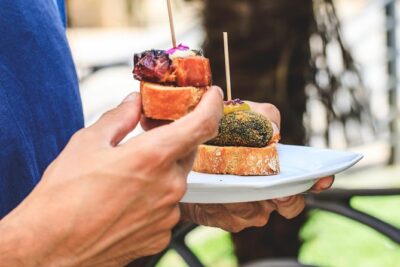
You start with pastizzi, the flaky, savory pastries Malta is famous for. They’re the kind of food you can recognize instantly, but quality can vary a lot. A well-run food tour uses pastizzi as an opening “baseline,” and this one does that early, before you get too full to care.
After that, you move into ħobż biż-żejt, Maltese bread with the sides. This isn’t just bread and toppings for the sake of a snack. It’s a good local-style introduction because it shows how simple ingredients become a whole meal pattern. The idea is to give you something filling and familiar-looking, then expand from there.
Then you’ll taste bragioli and rabbit—two dishes that feel distinctly Maltese. One of the best parts of a tour like this is that it avoids the trap of only serving tourist-friendly items. Bragioli and rabbit help you understand what locals consider comforting and worth cooking.
Finally, you get more sweets and bites, including imqaret (stuffed pastry) and additional elements like Maltese platter-style sampling and sides such as roast potatoes and veggies along with Maltese bread in the rabbit stop sequence. In other words, the food stops add up to a meal-like experience rather than a few decoration bites.
Food reality check: this tour is snack-heavy. If you eat slowly, you’ll still end up full. If you’re the sort of person who wants to keep your appetite for dinner, plan something light later.
Drinks Included: Craft Beer, Wine, and Kinnie
A big value point here is that drinks are included in the excursion price. You get local craft beer and a glass of wine, plus a glass of kinnie, Malta’s local soft drink.
This matters because it changes the math. Many food tours include water or charge for beverages, and suddenly the cost jumps. Here, the drinks are part of what you’re paying for, so you can relax and focus on taste.
Also, kinnie is a smart inclusion. It’s local and it’s different enough that it feels like a real Malta-specific choice. It can also help cut through heavier flavors if you’re sampling multiple savory items in a row.
How the 3.5 Hours Work in Real Life
The tour runs for about 3 hours 30 minutes. Each major stop is brief—often around 10 minutes—so you should expect a steady walking flow and quick photo moments. This style suits people who want structure without feeling herded for hours.
The timeline also keeps the energy up. You’re not waiting too long between the history anchor points and the food tastings. That rhythm is especially helpful in Malta’s warm conditions, because eating keeps you from getting hangry but also helps you pace your sightseeing.
One more subtle benefit of the quick format: you’re less dependent on finding time later for Mdina and Rabat sights. If your Malta trip is short, a tour like this can act as a concentrated sampler of both areas.
Price and Value: What $81.93 Buys You
At $81.93 per person for roughly 3.5 hours, the best way to judge value is what’s included. You’re paying for:
- a fully licensed professional tourist guide
- multiple food tastings across the tour
- craft beer, wine, and kinnie
- snacks tied directly to Maltese staples
Then there are the optional extra costs to keep in mind: admission for the cathedral and St Paul’s Grotto isn’t included. That’s not a dealbreaker, but it can affect total spend depending on whether you add entry.
Still, the included menu plus the drinks is where the price holds up. Pastizzi plus ħobż biż-żejt plus bragioli and rabbit means you’re not just sampling one or two items. You’re doing an actual sequence that feels like it could replace a chunk of your normal day’s eating.
In plain terms: if you want history you can taste, plus drinks included, this is a solid value.
Who Should Book This Tour, and Who Might Skip It
This experience fits best if you:
- want Mdina and Rabat together in one organized morning
- enjoy learning through food rather than only through monuments
- like small groups (up to 12, and sometimes fewer in practice)
- are comfortable with a tour that mixes brief sightseeing stops with tastings
You might skip it if you’re hoping for a long, detailed indoor visit of the cathedral and grotto. The stops are timed for photos and orientation, and admission is not included.
It also works well if you care about comfort and communication. One guest shared that the guide checked allergies ahead of time, and the tour allows service animals.
Should You Book the Mdina and Rabat Food and History Tour?
Yes, if you want your Malta day to feel like a story with food chapters. This tour is especially good for first-time visitors who want to understand why Mdina looks and feels the way it does, then connect that to Rabat and St Paul landmarks without turning the day into a rushed checklist.
I’d book it if you like practical tastings: pastizzi, ħobż biż-żejt, bragioli, rabbit, and imqaret, plus included beer, wine, and kinnie. The small group size also makes it easier to interact with the guide, not just follow along.
Before you go, do one thing: decide if you want to pay for cathedral and grotto entry separately. If the answer is yes, plan your extra budget. If the answer is mostly no, you’ll still get the big visual and story beats, and a lot of good food.
FAQ
Where is the meeting point?
The tour meets at Is-Serkin – Crystal Palace Bar, Triq San Pawl, Ir-Rabat, Malta.
What time does the tour start?
The start time is 10:30 am.
How long is the tour?
It runs for approximately 3 hours 30 minutes.
Is the tour offered in English?
Yes, it’s offered in English.
How much does the tour cost?
The price is $81.93 per person.
What’s included in the tour price?
A fully licensed professional tourist guide, local craft beer, a glass of wine, kinnie, and snacks/food tastings.
What food is included?
The tour includes pastizzi, ħobż biż-żejt with sides, bragioli, rabbit, and additional Maltese treats as part of the tasting stops.
Do I need to buy tickets for the cathedral and grotto?
Admission for the Metropolitan Cathedral of Saint Paul and St Paul’s Grotto is not included.
How big is the group?
The tour has a maximum of 12 travelers.
Can I cancel for free?
Yes. You can cancel up to 24 hours in advance for a full refund.