REVIEW · MEMPHIS
Memphis History & Heritage: Private Half-Day Walking Tour
Book on Viator →Operated by Travel Curious · Bookable on Viator
Memphis tells its story on foot. This private half-day walk stitches together river panoramas and civil-rights landmarks with a guide who keeps it all human.
I especially like the Skyway Roof stop at the Peabody Hotel—high views of the Mississippi River plus a real 1864 escape-story twist—and the included Memphis BBQ taster that gives you a taste of the city between big themes. You’ll also love that the tour ends at the National Civil Rights Museum with an admission ticket included, so your last stop isn’t a hassle.
One consideration: the whole tour is about 3 hours, so it moves at a steady pace. Also, two key buildings (the WDIA-WHRK Radio Building and the Orpheum Theatre) are listed without admission included, so you may want to budget if you plan to go inside.
In This Review
- Key highlights to look for
- Peabody Skyway Roof: where river views meet escape history
- Walking Beale Street the way it was meant to be seen
- WDIA-WHRK Radio Building: hearing history through broadcast power
- Orpheum Theatre: a historic stage with real U.S. landmark status
- Trolley to the Lorraine Motel: the National Civil Rights Museum focus
- Value and price: what $225 buys you in real terms
- Who this Memphis history tour is best for
- Logistics that actually matter (so you’re not guessing)
- What to do after the tour (to keep the momentum)
- Should you book this Memphis History & Heritage private tour?
- FAQ
- How long is the Memphis History & Heritage private walking tour?
- What is the price per person?
- Is this tour private or shared?
- What language is the guide?
- What attractions are included with admission tickets?
- Is transportation included?
- Where do I meet the guide?
- Where does the tour end?
- Is food included?
- What about cancellation and weather?
Key highlights to look for
- Peabody Skyway Roof views paired with General Washburn escape history tied to 1864 Memphis
- Beale Street walking time focused on nearly 200 years of African-American cultural history
- WDIA-WHRK Radio Building story about radio programming for the black community since 1947
- Orpheum Theatre stop featuring a National Register of Historic Places legacy
- Memphis Trolley Pass included to reach the National Civil Rights Museum smoothly
Peabody Skyway Roof: where river views meet escape history
If you only have half a day in Memphis, this tour starts in a smart place: with a high, wide view. You’ll head to the Skyway Roof of the Peabody Hotel for a panoramic look over Memphis and the Mississippi River. It’s the kind of overlook that helps your brain map the city fast.
What makes this stop more than just a view is the story angle. You’ll learn about General Washburn’s Escape Alley, used in 1864 during an attempt to run away from Nathan Bedford Forrest sympathizers. That detail matters because it ties Memphis not just to famous names, but to the risks people took on the ground.
You’ll also pass and/or connect with nearby context as you go—like a stop around the Cotton Museum and walking past the Memphis Music Hall of Fame—so you’re not stuck in a single lane. This is Memphis history with multiple threads, stitched together by your guide.
Tip for you: if you take photos, leave a little extra patience for the view first, then the story. The view helps you understand the rest of what you’ll see.
You can also read our reviews of more tours and experiences in Memphis.

Walking Beale Street the way it was meant to be seen

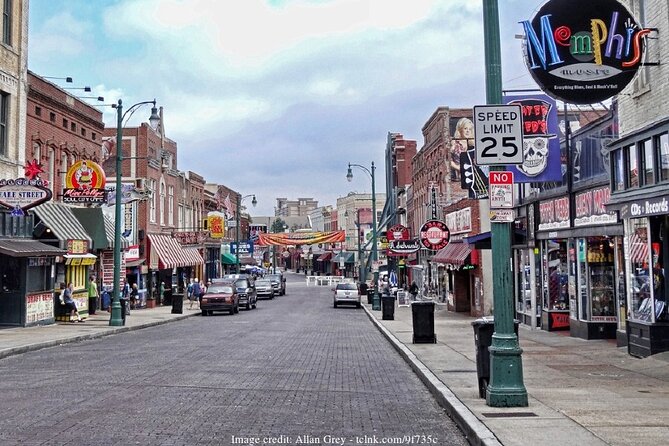
Next comes Beale Street, and this stop is timed for strolling. You’ll walk down Beale Street as an iconic street and one of the historic centers of African-American culture for nearly two centuries. That time range is the key. You’re not just looking at a famous street—you’re seeing layers of the city’s cultural life over a long stretch.
The value here is pacing and focus. In a short tour, Beale Street can turn into a blur of shops and noise. This experience instead gives you a framework—why this street mattered, and why so much of Memphis’ identity is tied to African-American creativity and community life.
One small drawback: Beale Street is active. If you’re sensitive to crowds or noise, plan to take breaks when your guide gives a chance to pause.
Good to know: this segment is designed as walking time rather than a long museum moment. It’s a reset—history in motion.
WDIA-WHRK Radio Building: hearing history through broadcast power

Then you shift from street culture to communications history at the WDIA-WHRK Radio Building. You’ll spend time at a key location tied to one of the earliest and most important radio breakthroughs for black audiences.
The standout fact you’ll hear: since 1947, this was the first radio station in the US programmed entirely for the black community. That’s huge, because it’s not only about entertainment—it’s about voice, audience, and control over what’s heard and who it’s for.
You’ll likely get the most from this stop if you pay attention to the contrast. Radio wasn’t just a hobby back then; it was a mass channel. Learning how WDIA-WHRK served a specific community helps you understand why Memphis radio history belongs in the same conversation as civil rights.
If you want to go inside: admission isn’t included for this building. You can still get a lot from the exterior and guide-led context, but plan ahead if you want full access.
Orpheum Theatre: a historic stage with real U.S. landmark status

The Orpheum Theatre stop brings a different flavor: performing arts heritage and historic preservation. You’ll learn about its background as a historic theater listed on the National Register of Historic Places.
Even if you’re not a theater person, this is worth your time in a short tour because it broadens the meaning of history beyond politics and protest. Memphis history includes music halls, stages, and venues where culture traveled from one neighborhood to another—often before laws and institutions caught up.
As with the radio stop, admission isn’t included for the Orpheum Theatre. Your guide will still set the context, but you may need to decide on the spot whether you want to pay for entry to go further.
Practical advice: if you’re the type who hates paying extra once you’re already on a ticketed outing, treat this stop as a high-value exterior and story moment.
Trolley to the Lorraine Motel: the National Civil Rights Museum focus
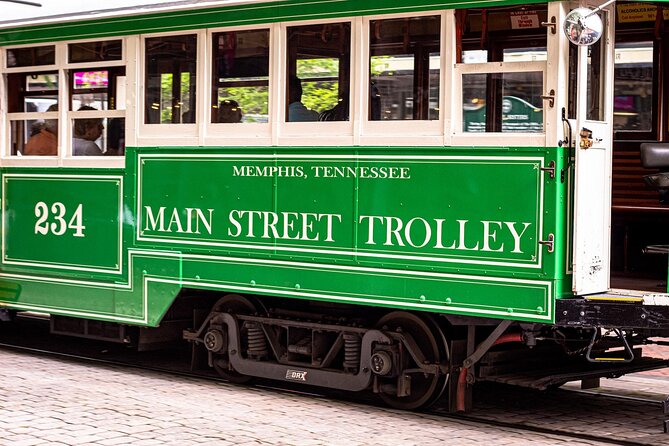
The big finish lands at the National Civil Rights Museum at the Lorraine Motel. Here’s where the tour earns its keep: the museum admission ticket is included, and you’ll also have a Daily Memphis Trolley Pass to make the move to the museum straightforward.
You’ll take the trolley to reach the National Center for Civil Rights for a self-guided visit. That’s an important detail. Your guide sets the scene with local context, then you get time to slow down and read, watch, and process at your own speed. For many people, this is the most meaningful way to experience a heavy subject: guided at the front, self-directed for the rest.
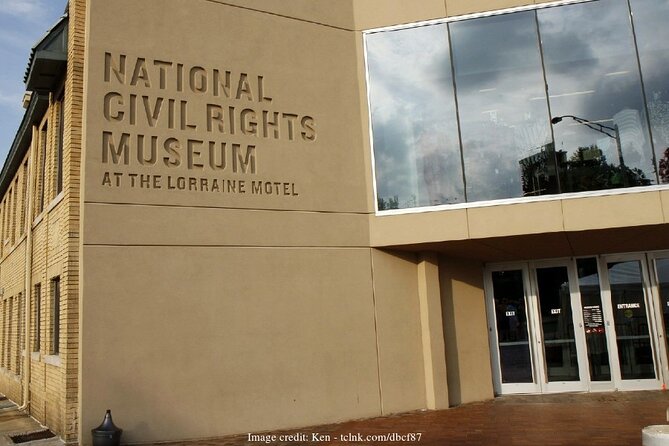
The Lorraine Motel site is the heart of it. You’ll see where Dr King was assassinated in 1968, and you’ll hear how the center continues to play a central role in moving forward the push for civil rights nationwide. Even if you think you know the story, the museum framing tends to hit differently because it anchors the national struggle in Memphis’ specific legacy.
How long to plan for: this museum time is the longest block on the tour—about one hour. That’s not a full day museum visit, so be strategic with what you choose to focus on. If you have limited time, pick one or two exhibition areas to go deep on rather than trying to see everything.
Feel-aware tip: this is powerful material. If you need to step out for a moment, do it. One hour can still feel like a lot when the content is intense.
Value and price: what $225 buys you in real terms
At $225 per person for a private half-day, you’re paying for three main things: a guide who shapes the order and meaning, included access where it counts, and convenience that prevents wasted time.
First, it’s private. That means you’re not squeezed into a big group schedule where you can’t ask questions or adjust to your pace. In a short tour—about three hours—that flexibility matters.
Second, the museum admission ticket is included at the National Civil Rights Museum, plus you get a Daily Memphis Trolley Pass. For you, that’s less money spent on add-ons and less friction moving between stops.
Third, you get a Memphis BBQ taster, which may sound small, but it’s actually a smart value add. History can become too academic if you don’t connect it to local everyday life. A small taste helps shift your body back into the present.
The only price-related watch-out is that some stops don’t include admission (WDIA-WHRK and Orpheum). If you’re the type who wants to go inside every location, you may add extra costs. If you’re fine with a guided story stop plus optional entry, the value is strong for a short, focused itinerary.
Who this Memphis history tour is best for
This tour fits best if you want structure without rushing through everything alone. It’s also a good pick when you’re short on time but still want the major Memphis history anchors: river-level context, Beale Street, and the Civil Rights Museum.
You’ll likely enjoy it most if you:
- like walking tours with story-led pacing
- want a mix of culture (music and radio) and civic history
- prefer a guide to connect the dots quickly
- appreciate museums but also want them framed with local context
If you dislike walking or you expect a slow, leisurely pace, the “moderate physical fitness” note is worth taking seriously. This is not a sit-on-a-bus tour; it’s built around walking segments and timely transitions.
Logistics that actually matter (so you’re not guessing)
Start point is the Memphis Music Hall of Fame at 126 S 2nd St, Memphis, TN 38103. The tour ends inside the National Civil Rights Museum at 450 Mulberry St, Memphis, TN 38103.
The format is straightforward: you’ll meet your guide, follow the route through the city’s key sites, and finish inside the museum. Your ticketing is mobile, and you’ll get confirmation within 48 hours of booking subject to availability.
Tours are offered in English, and you can choose a morning or afternoon option. That helps you match the experience to your day plan—especially if you’re also doing an evening on Beale Street.
Advance planning note: this tour is commonly booked well ahead (on average around 142 days), so if your trip is fixed, don’t wait until the last minute.
What to do after the tour (to keep the momentum)
Once you’re done inside the National Civil Rights Museum, you’re in the right part of town to keep the day moving. If you still have energy, use the ending location as your hub. You can also plan a quieter late meal to decompress. This tour ends on heavy, meaningful ground, so it’s smart to give yourself a calm next step rather than jumping straight into something chaotic.
If you want to revisit Beale Street, this tour gives you the context first. That means you’ll walk it with better eyes afterward.
Should you book this Memphis History & Heritage private tour?
Book it if you want a well-structured half-day that mixes river context, African-American cultural history, and a powerful civil-rights museum finale—without spending your day figuring out transportation and sequencing.
Skip or reconsider if you:
- want long time inside every building (this is about 3 hours total)
- strongly prefer no extra admissions beyond what’s included
- need a very slow pace due to mobility or stamina
If you’re aiming for value, the included museum ticket plus trolley pass do a lot of the heavy lifting. And if you happen to get a guide like Mike—known from one experience for strong stories and sharp local familiarity—you’ll get even more out of the route because the details are the point.
FAQ
How long is the Memphis History & Heritage private walking tour?
It’s about 3 hours.
What is the price per person?
The price is $225 per person.
Is this tour private or shared?
It’s a private tour/activity, meaning only your group participates.
What language is the guide?
The tour includes a friendly, professional English-speaking guide.
What attractions are included with admission tickets?
Admission tickets are included for the National Civil Rights Museum (Lorraine Motel). Other stops list admission as free or not included depending on the site.
Is transportation included?
Transportation is not included, but you do receive a Daily Memphis Trolley Pass.
Where do I meet the guide?
Meet at Memphis Music Hall of Fame, 126 S 2nd St, Memphis, TN 38103.
Where does the tour end?
The tour ends inside the National Civil Rights Museum at 450 Mulberry St, Memphis, TN 38103.
Is food included?
Food and drink are not included, but there is a delicious taster of Memphis BBQ.
What about cancellation and weather?
You can cancel for free up to 24 hours in advance for a full refund. The experience requires good weather, and if it’s canceled due to poor weather, you’ll be offered a different date or a full refund.