REVIEW · ATHENS
“A Day in Ancient Olympia:The Cradle of the Olympics Games”
Book on Viator →Operated by Greece Athens Taxi GAT · Bookable on Viator
A day at Olympia still feels like time travel on concrete. You get round-trip transfers from Athens or Port Piraeus plus a comfy air-conditioned Mercedes-Benz with Wi-Fi, water, and chargers, so the day stays easy even when it’s long. I especially like the way this packs two major stops—Isthmus of Corinth and Ancient Olympia—with museum time, so you don’t lose half your day to getting around. One thing to consider: the Olympia site entrance (and museum tickets) are not included, and the driver is not a licensed guide inside the archaeological areas.
You’ll start with a quick taste of the Peloponnese corridor at the Isthmus of Corinth, then land in Ancient Olympia’s green river valley where the Olympic Games were held every four years for centuries. Expect a full day of walking through stadium space, temples, altars, and museum rooms—without the stress of buses, schedules, or transfers. This is also set up for people who want a private group pace, not a crowded, head-bobbing marathon.
In This Review
- Key Things You’ll Notice Right Away
- Ancient Olympia’s Glow: Why This Day Still Matters
- Getting There Quickly from Athens or Piraeus (Without Turning It Into a Stress Test)
- Isthmus of Corinth Stop: A 15-Minute Break with Big Ancient Purpose
- Ancient Olympia: Stadium, Temples, and the Altar Where the Flame Was Lit
- The stadium: where running turns into legend
- Temple of Zeus: monumental stone and a famous statue
- Hera’s altar: Dorian style and Olympic flame energy
- Philippieion, palaestra, and the daily-life training spaces
- Timing and tickets to plan for
- Olympia Museums: What the Art Explains That the Stones Can’t
- Archaeological Museum of Olympia (about 1 hour)
- Museum of the Olympic Games (about 45 minutes)
- The Driver Setup: Friendly, Helpful, Not a Licensed Site Guide
- Price Check: Is $327.43 Worth It for a Private Olympia Day?
- Who This Tour Fits Best (and Who Might Want Something Different)
- Practical Tips That Make This Day Easier
- Should You Book This Ancient Olympia Day Trip?
- FAQ
- Is pickup available from my Athens hotel or from Port Piraeus?
- How long is the tour?
- What’s included in the private transportation?
- Is there skip-the-line help for tickets?
- Are museum and Olympia site entrances included?
- Do I get a licensed tour guide inside museums and archaeological sites?
- What language is the tour offered in?
- What if plans change and I need to cancel?
- Can I request a different pickup time?
Key Things You’ll Notice Right Away
- Fast, private transportation that handles round-trip pickup from your hotel or directly from Port Piraeus
- A/C comfort with Wi-Fi, water, and chargers, so you can stay sane on a long day
- Skip-the-line ticket help (you pay the ticket cost, but you save time at entry)
- Ancient Olympia highlights on foot: stadium, Temple of Zeus, Hera’s altar, and more
- Two museum stops in the same Olympia area—one focused on artifacts, one on Olympic history
Ancient Olympia’s Glow: Why This Day Still Matters
Olympia isn’t just another set of ruins. It’s tied to a ritual idea that hasn’t really died: competitive excellence with rules, cycles, and public attention. Standing near the stadium and looking toward the monumental temple areas, you get why the ancient world cared so much.
The best part of this tour format is how it treats Olympia as a full-day experience, not a quick photo stop. You get time in the archaeological site where the action happened, then museum time to connect objects, sculpture, and context back to what you saw outside.
You can also read our reviews of more tours and experiences in Athens.

Getting There Quickly from Athens or Piraeus (Without Turning It Into a Stress Test)
This is a private day trip with pickup and drop-off included, offered from your Athens accommodation or from Port Piraeus. If you’re on a cruise, that matters: you meet the driver right outside your ship with a name sign, then you’re rolling instead of hunting for transport.
You ride in a Mercedes-Benz vehicle with A/C, Wi-Fi, and practical perks like bottled water and mobile chargers. That combination sounds small until you’re in transit for hours with heat, phone-battery anxiety, and people who want to stop every ten minutes. Here, the vehicle setup reduces friction—especially helpful when your day includes two museum visits.
It’s also worth noting the tour is “private transportation – tour.” That means it’s just your group, not you mixed into a larger bus crowd. For many people, that’s the real value: less waiting, fewer schedule compromises, and a pace that fits how long you actually want to linger at the stadium or temple remains.
Isthmus of Corinth Stop: A 15-Minute Break with Big Ancient Purpose
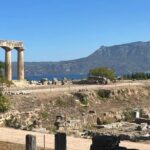
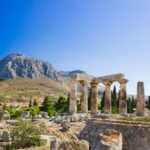
Your first stop is the Isthmus of Corinth, a narrow strip linking Central Greece with the Peloponnese. Even if you only spend around 15 minutes here, it’s a smart opener because it sets up the idea that this corridor mattered—then and now.
A key detail: the canal you’ll hear about connects the Saronic Gulf with the Gulf of Corinth. The canal’s construction era is 1880 to 1893, but the strategic importance goes back much further. There was already a defensive wall built in ancient times by the late 5th century BC, and it was preserved until the Byzantines, often associated with the Hexamilion line of defense.
This stop is mostly about atmosphere and context. It’s short, the admission ticket is free, and it gives you a break before the longer, more walking-heavy Olympia portion. If you’re the type who likes to understand what you’re driving through, you’ll appreciate this warm-up.
Ancient Olympia: Stadium, Temples, and the Altar Where the Flame Was Lit
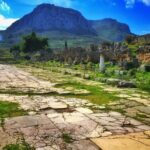
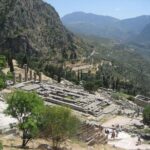
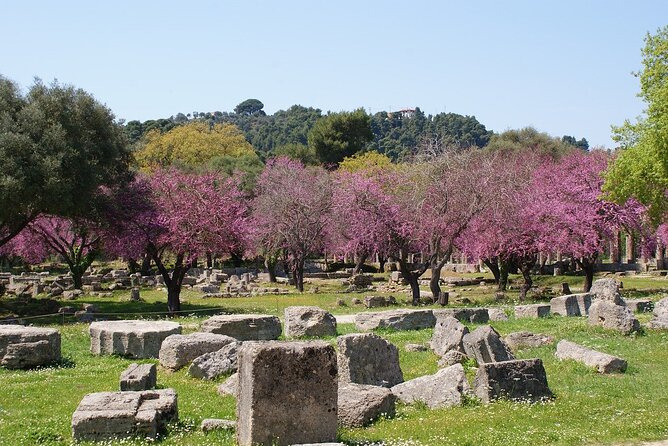
Then comes the main event: the archaeological site of Olympia in Elis, set in the valley of the Alpheios river. The area is dedicated in spirit to Zeus, and it became the key religious and athletic center in Greece.
The Olympic Games were held every four years through Classical antiquity—roughly from the 8th century BC to the 4th century AD. Knowing that time span in advance helps when you’re looking at the stadium and temple foundations. It makes the site feel like a long-running public stage, not a one-time festival space.
The stadium: where running turns into legend
The stadium is the place to start if you want the strongest “I get it” moment. The racetrack is over 200 meters long and nearly 30 to 34 meters wide. Stand where the action would have focused, and you can almost picture how crowds would gather and how the space channeled sound and attention.
Temple of Zeus: monumental stone and a famous statue
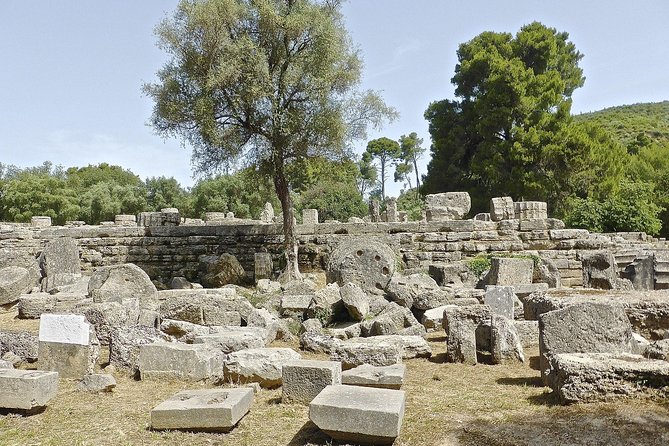
Next, focus on the Temple of Zeus, built in the 5th century BC. It was made of limestone and marble, and historical records describe a giant golden statue of Zeus that was housed inside the temple. Even if you can’t see the statue itself anymore, the scale and placement make the idea believable.
Hera’s altar: Dorian style and Olympic flame energy
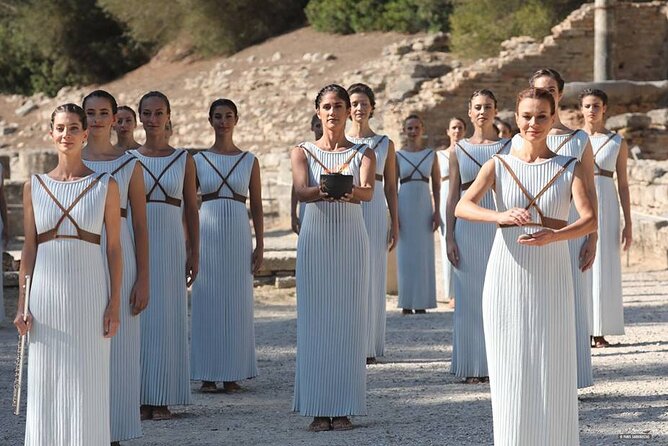
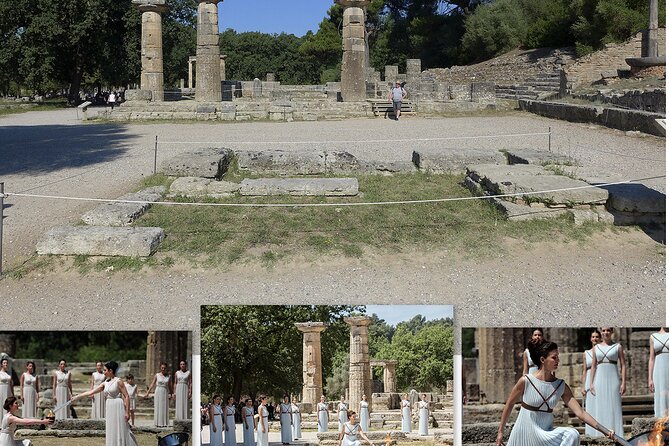
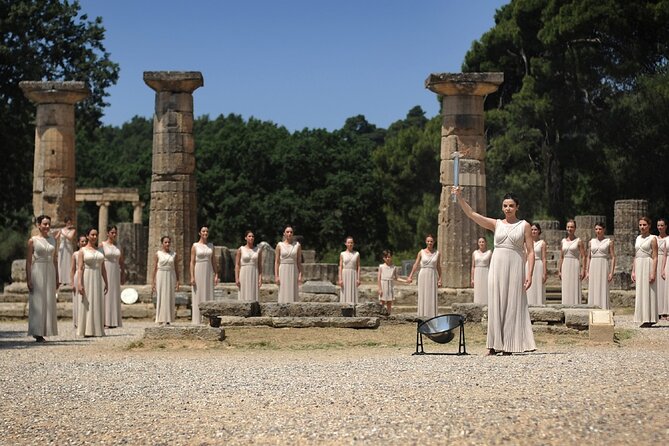
One of the most powerful stops is Hera’s altar. It’s among the oldest temples in Greece, constructed in the 7th century BC in Dorian style. Today, it’s the altar where the Olympic flame is lit before the games—so you’re standing on a point that still carries modern meaning.
Philippieion, palaestra, and the daily-life training spaces
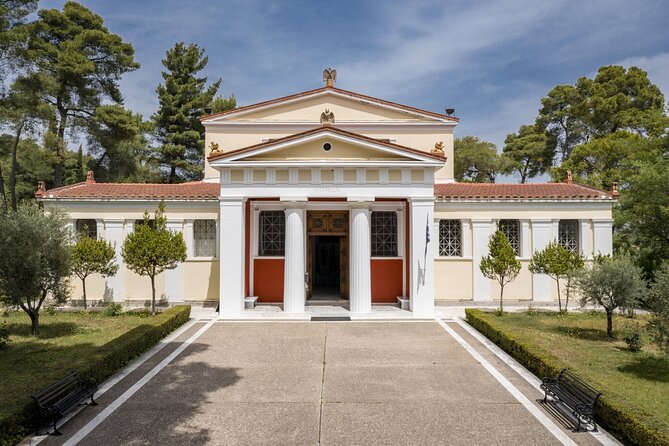
Don’t rush past the other structures just because they’re less famous than Zeus. The Philippieion is the only circular building inside the Altis area. It was dedicated to Zeus by Philip II of Macedon, which gives the site a political layer too—Olympia wasn’t only about athletes.
Nearby, the palaestra (built in the 3rd century BC) was part of the gymnasium complex. It was used for practice for boxing, wrestling, and jumping. This is where Olympia feels more human. You’re no longer just looking at temples; you’re thinking about training rhythms.
Timing and tickets to plan for
The archaeological site admission is not included. The listed entrance fee for the site is €20 per person. Plan on building time for entry and movement between zones, especially if your group wants photos at each landmark.
Olympia Museums: What the Art Explains That the Stones Can’t
After the outdoor site, the tour gives you two museum experiences. The pattern is smart: see the setting first, then learn what mattered inside it through artifacts and sculpture.
Archaeological Museum of Olympia (about 1 hour)
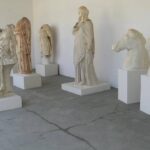
This museum is considered among the best in Greece. Expect well-labeled rooms and a clear layout connecting findings from the ancient site and related excavations in the area.
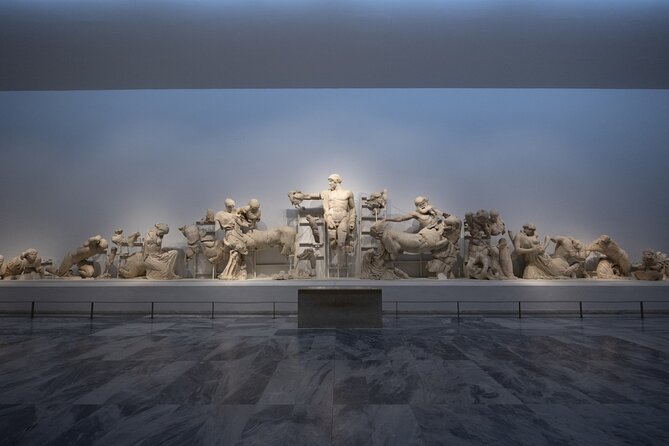
Two exhibits stand out: the Hermes of Praxiteles and the Nike Paionios. Even if you’ve seen photos before, seeing these kinds of works in person can change how you understand athletes and gods. In ruins, you get the architecture. In a museum, you get the human touch—what people admired, made, and carried pride in.
Plan your museum hour like you would any great museum: pick your top two pieces, then let yourself wander through the rest without trying to absorb everything at once. If you try to “see it all,” you’ll end up with blurry attention.
Museum of the Olympic Games (about 45 minutes)
The museum of the history of the Olympic Games is in the old archaeological museum area of Ancient Olympia. It focuses on findings and objects tied to the games themselves across the wider area.
This stop works best as a connector. After you’ve walked past stadium lines and temple remnants, the museum helps stitch together how the games operated culturally and historically, not only physically.
Admissions for both museums are not included, so budget for ticketing on the day.
The Driver Setup: Friendly, Helpful, Not a Licensed Site Guide
This is one of those tours where it helps to know what kind of “guide” role you’re getting. You’ll have an English-speaking driver who knows history and can explain context. However, the driver is not licensed to accompany you inside sites or museums.
What that means in real life: you’ll get drive-time storytelling and on-the-way context, then you’ll explore the archaeological site and museums in your own rhythm once you’re inside.
If you want a fully licensed guide inside the sites, the tour notes that a licensed tour guide can be requested depending on availability. That option can be valuable if you love details and want someone to point out what you might otherwise miss in stonework and layout.
Also, a reassuring point: one customer previously reported an unfortunate electronics problem with the vehicle, and the driver handled it exceptionally well. The trip wasn’t affected. That doesn’t remove every risk in travel, but it does suggest the operation can respond calmly when something goes wrong.
Price Check: Is $327.43 Worth It for a Private Olympia Day?
At $327.43 per person, this tour sits in the higher mid-range, so you should judge it on what you’re buying—not just the headline cost.
Here’s what you’re effectively paying for:
- Private, round-trip transfers from Athens or Port Piraeus
- Comfort perks that matter during a long day: A/C, Wi-Fi, water, chargers
- Time efficiency built into the day’s structure, with a way to see major Olympia highlights plus museums
- Skip-the-line ticket assistance so you’re not stuck waiting in the slow lane (but you do cover the actual ticket costs)
Then, what you’re not paying for:
- Entrance fees for the Archaeological Site of Olympia (€20 per person)
- Museum admissions for both museums
- Lunch (not included)
So the value math is this: if you’re traveling as a couple, a small family, or a group that appreciates comfort and fewer hassles, private transport often becomes cost-effective. If you’re solo and price-sensitive, you might compare against cheaper public options. But if you care about not spending your day on buses and uncertainty, this price can make sense fast.
Who This Tour Fits Best (and Who Might Want Something Different)
This is a great fit if:
- You’re short on time in Athens or on a cruise day and want a structured Olympia experience
- You prefer the privacy of a private group pace
- You want museum context without planning logistics yourself
- You’ll appreciate a vehicle setup with Wi-Fi, A/C, and chargers to keep the day comfortable
It may be less ideal if:
- You’re craving a fully guided, licensed walk-through inside every museum and ruin
- You want a lighter day with lots of downtime—this includes multiple major spaces and museum rooms in an 8 to 10 hour window
- You don’t want to pay additional site and museum admissions on top of the tour price
Practical Tips That Make This Day Easier
A few small moves will help you get more out of the day.
- Wear comfortable shoes you don’t mind getting dusty. Olympia is a ruin site with uneven surfaces.
- Bring a payment method for admissions. The site ticket and both museum tickets are not included.
- Use the charger and Wi-Fi in the vehicle for maps and messaging, but don’t rely on it as your only power plan.
- If you’re starting from Port Piraeus, keep your ship location and meeting point info ready. The driver meets you outside with a name sign.
- Since your driver isn’t a licensed site guide, if you care about deep interpretation, consider requesting a licensed guide (availability varies).
Also, if the day ends at a different location than expected, there may be additional fees. If that matters to you, confirm where drop-off will be before you go.
Should You Book This Ancient Olympia Day Trip?
Book it if you want a high-value, time-efficient way to see Olympia properly: stadium scale, temple areas, the altar with modern flame meaning, plus two museums that explain the objects behind the stones. The private transfers from Athens or Port Piraeus, plus the comfortable Mercedes-Benz ride with Wi-Fi, water, and chargers, make a long day feel manageable.
Skip it or look at alternatives if you’re very price-sensitive, you want entrances and museum tickets fully included, or you expect a licensed guide walking you through every site explanation. In that case, you might prefer a different format where guide services are fully bundled.
FAQ
Is pickup available from my Athens hotel or from Port Piraeus?
Yes. Pickup is offered from your Athens accommodation or from Port Piraeus, and drop-off is included as well. You can also arrange pickup from other locations by providing the exact address or meeting point.
How long is the tour?
The duration is about 8 to 10 hours.
What’s included in the private transportation?
You’ll get a private Mercedes-Benz with A/C, Wi-Fi, bottled water, and chargers/mobile chargers. The tour also includes round-trip transfers with hotel or Port Piraeus pickup and drop-off.
Is there skip-the-line help for tickets?
Yes. The tour includes assistance with purchasing skip-the-line tickets. You still cover the ticket costs yourself.
Are museum and Olympia site entrances included?
No. The Archaeological Site of Olympia has an entrance fee (listed as €20 per person), and admission to both museums is not included.
Do I get a licensed tour guide inside museums and archaeological sites?
Your driver is an English-speaking person with history knowledge, but they are not licensed to accompany you inside sites or museums. A licensed tour guide can be requested depending on availability.
What language is the tour offered in?
The tour is offered in English.
What if plans change and I need to cancel?
Free cancellation is available up to 24 hours before the experience starts for a full refund.
Can I request a different pickup time?
Yes. Pickup times are flexible, and you can customize the pick-up time to suit your schedule.