REVIEW · AHMEDABAD
Morning Heritage Walk – house of mg
Book on Viator →Operated by The House of MG · Bookable on Viator
If you like old streets, this one is for you. The route mixes Islamic architecture with Ahmedabad’s founding era and even a look at Jain-era sights along the way, all in the cooler morning hours. I particularly love the Sidi Saiyed Mosque details and the clear, practical way the walk stitches together how the city grew. One watch-out: this tour is short and walking-heavy for its length, so if you want long stays inside monuments, you may feel a little rushed.
What makes this experience work is the pacing and the small group feel. The tour runs about 2 hours, starts at 8:00 am, and uses a mobile ticket, with admission tickets included for the main stops. The bigger consideration is reliability: I’d keep an eye on confirmation messages and plan to follow up if you don’t hear back, since there have been cases where groups reported no outreach or a guide not showing up.
In This Review
- Key things I found most compelling
- Old Ahmedabad at 8:00 am: when this route feels right
- Price and group size: what $95.85 per group really means
- Where you start matters: the meeting point and walking reality
- Stop 1: Sidi Saiyed Mosque and the magic of stone jali windows
- Stop 2: Bhadra Fort—Ahmed Shah’s power base and Maratha-era elements
- Stop 3: Jama Masjid with 260 pillars and 15 domes
- Stop 4: Ahmed Shah’s Tomb area—short visit, strong context
- Stop 5: Manek Chowk—watch the square change with the day
- Why the mix of faiths and old power centers matters
- Tips to make the most of your 2 hours (and not feel rushed)
- Should you book Morning Heritage Walk – House of MG?
- FAQ
- How much does Morning Heritage Walk – House of MG cost?
- How long is the tour?
- What time does the tour start?
- Where is the meeting point?
- Is the tour private?
- Is a mobile ticket used?
- Are admission tickets included?
- What sites are visited during the walk?
- What fitness level do I need?
- What happens if the weather is poor?
- What is the booking cancellation policy?
Key things I found most compelling
- Sidi Saiyed Ni Jali: stone latticework jalis and geometric panels you can actually study up close
- Bhadra Fort’s layout: palace, Nagina Baugh, Ahmed Shah’s Mosque, plus Maidan-Shah open space
- Jama Masjid scale: 260 pillars and 15 domes, with carved motifs influenced by different cultures
- Ahmed Shah’s tomb area: a compact stop near Manek Chowk and close to the Jama Masjid
- Manek Chowk’s time-based character: morning cow feeding, day silver market, night food market
Old Ahmedabad at 8:00 am: when this route feels right
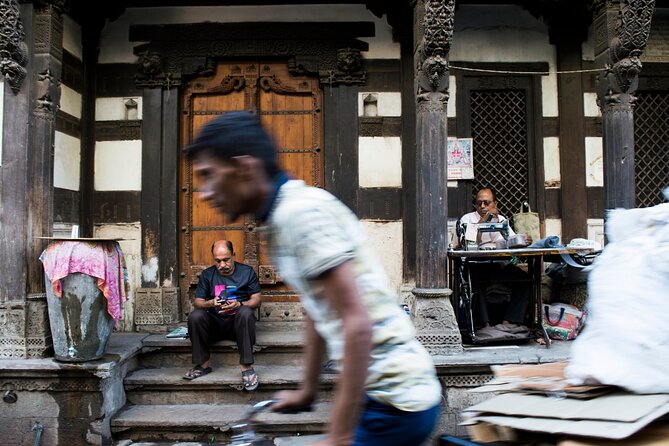
I like starting early in Ahmedabad’s old parts because the day hasn’t warmed up the lanes yet. This walk begins at 8:00 am, which is ideal for moving between monuments without the afternoon heat turning your visit into a shuffle.
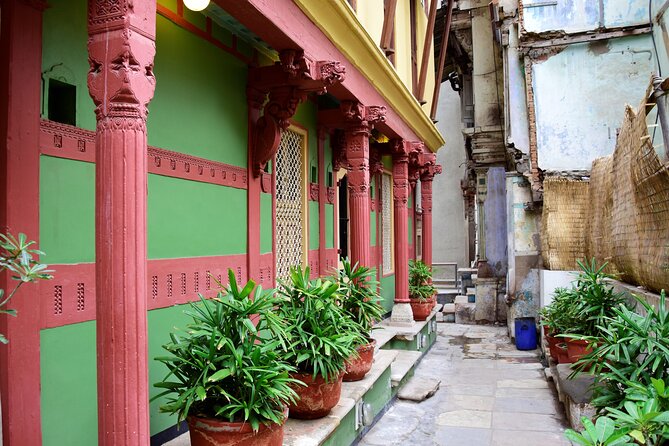
You’ll be in the Old City zone, where streets feel lived-in and religious landmarks sit side-by-side. The overall vibe is part educational, part local wandering. Even if you’re not a “history person,” the tour gives you things to look for: lattice windows, pillar counts, carved door motifs, and the way forts and markets shape daily life.
This also helps you understand Ahmedabad as a city of layers. The stops cover key moments tied to early rulers (Ahmed Shah-era foundations) and later changes, so you end up with a sense of how the city’s power and faith spaces shifted over time.
You can also read our reviews of more walking tours in Ahmedabad
Price and group size: what $95.85 per group really means
The price is $95.85 per group for up to 5 people. That structure is great if you’re traveling with friends or family and want a guided plan without paying per-person guide rates.
Admission is included for the main monument stops you visit, so you’re mostly paying for the guide, the route, and the time spent getting the context right. In a city where it’s easy to get “lost but entertained,” this kind of guided morning walk can be good value because you’re not just seeing stone—you’re learning what each building was for and why it was placed where it was.
Is it cheap? No. But for a small group, two hours, and multiple high-value stops, it’s a sensible spend—especially if your priority is architecture and city layout rather than shopping.
Where you start matters: the meeting point and walking reality
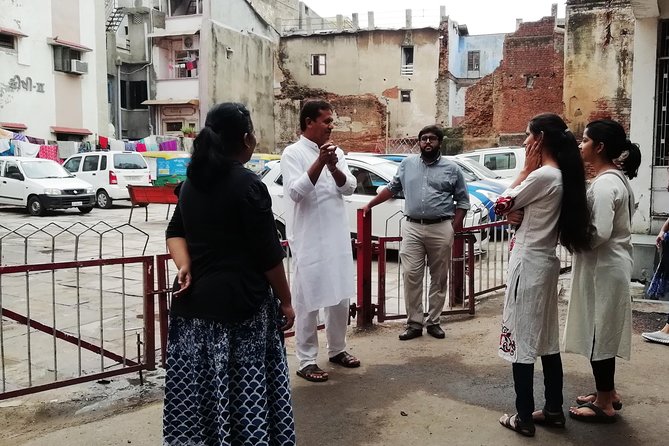
You’ll meet at House of MG, Bhadra Rd, Opp. Sidi, Old City, Gheekanta, Lal Darwaja, Ahmedabad, Gujarat 380001, India. It’s in the Old City, near the heritage core, which keeps the walking route efficient.
The tour lists moderate physical fitness as the baseline, and the route can feel challenging if you’re not used to walking in older, uneven street areas. Expect short transitions between stops, not a lot of long breaks. Wear comfortable shoes. Plan to keep a steady pace and bring water, even if the morning is cooler.
Also, this is a private tour/activity, meaning only your group participates. That usually translates to a better fit for questions and pacing—helpful if your group has different interests (architecture vs. markets vs. faith sites).
Stop 1: Sidi Saiyed Mosque and the magic of stone jali windows
Your first major landmark is the Sidi Saiyed Mosque, known for its Sidi Saiyad Ni Jali stone latticework. The mosque was built in 1572–73 A.D., and the design details are the star.
Look for the jalis—the stone lattice windows—on the side and back arches. These aren’t just decorative. They shape light and airflow while also showing the craft traditions of the period. You’ll also see a back wall packed with square stone cut panels with geometrical designs, which makes the architecture feel like a puzzle you can piece together.
Time is about 15 minutes, and ticket admission is included. That means you’ll want to focus on a few key angles instead of trying to take in every surface. If you like architectural details, this is the stop where you’ll likely feel most rewarded per minute.
Stop 2: Bhadra Fort—Ahmed Shah’s power base and Maratha-era elements
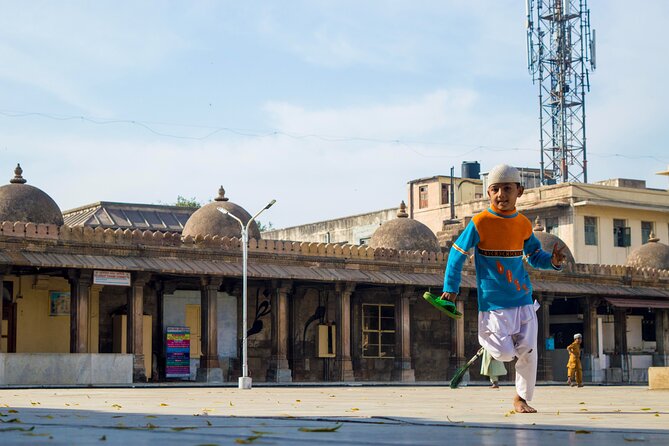
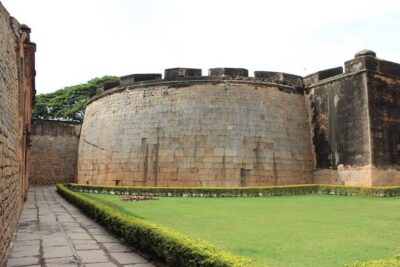
Next up: Bhadra Fort, established by Sultan Ahmad Shah (the founder of the city). The fort dates to 1411 A.D. during the Marathas’ rule, and it’s named after the presence of the Bhadra Kali goddess temple built during that later period.
This is one of those places where the layout helps you understand the politics. Bhadra Fort includes the palace, the Nagina Baugh, and Ahmed Shah’s Mosque on the west. On the east side there’s an wide open area known as Maidan-Shah.
Your visit here is about 20 minutes with admission included. In that time, you may not absorb every structure deeply, but you should be able to spot how fort complexes were planned: built spaces for rule and worship, and open areas for public life and gatherings.
A quick practical note: forts can include areas that feel more exposed. So if your morning is already bright, take a moment to position yourself to see the main parts without squinting.
You can also read our reviews of more historical tours in Ahmedabad
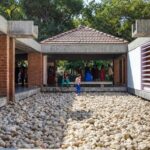

Stop 3: Jama Masjid with 260 pillars and 15 domes
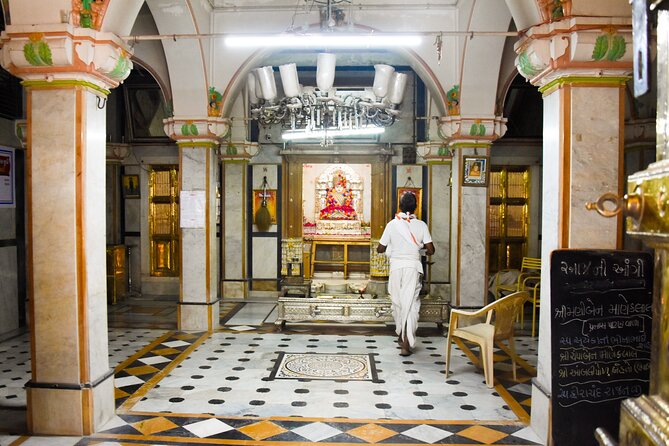
Then you’ll reach the Jama Masjid, erected by Ahmed Shah I between 1411 and 1441. This is the stop that tends to change how you look at the whole city.
The masjid has three side entrances—eastern, northern, and southern. As you move toward the prayer hall entrance, pay attention to the pillars: the carved motifs are influenced by different cultures found in the city. And yes, the building scale is big: 260 pillars and 15 domes.
You’ll have about 20 minutes here, with ticket admission included. With that time, don’t try to count every dome (unless you enjoy that kind of workout). Instead, stand where you can see a cluster of pillars and notice how the structure repeats patterns.
This stop also helps you understand Ahmedabad’s identity as a place where different cultural influences shaped sacred spaces side-by-side. The architecture isn’t one-note; it shows cross-pollination in design.
Stop 4: Ahmed Shah’s Tomb area—short visit, strong context

Next is the Ahmedshah Badshah’s Tomb, also called 4 Ahmed. It’s in the Manek Chowk area, near Jumma Masjid, and opposite Rani no Hajiro.
The mosque/tomb complex includes the tomb of Ahmed Shah I, while the grandson Qut-ud-Din Shah is buried to the right. The mosque is completed in 1414, built by Ahmed Shah’s son Muhammad Shah.
This stop is only about 10 minutes, with ticket admission included. That makes it more of a context moment than a long lingering visit. But it’s valuable because it ties your walk directly to the city’s founding story. You’re not just seeing decorative stone—you’re seeing how rulers and their families anchored legitimacy in physical space.
If you’re the type who likes quick history anchors, you’ll appreciate how tightly this stop connects to the surrounding landmarks.
Stop 5: Manek Chowk—watch the square change with the day
Finally, you’ll land at Manek Chowk, the city square named after Baba Manek Nath, a 15th-century saint who lived on the banks of the Sabarmati River.
This place is famous not just for what you can buy, but for how the square changes by time of day. In the morning, it’s a cow feeding area. In the day, it becomes a silver market. At night, it turns into a food market.
It’s also known for silver jewelers market, and you’ll have about 15 minutes here with free time.
Even if you’re not shopping for silver, this is a great finish because it shows the living rhythm of Old Ahmedabad. Monuments tell you what mattered then; Manek Chowk shows what still matters now.
Why the mix of faiths and old power centers matters
One of the things I like about this kind of morning walk is that it doesn’t treat religious buildings like separate islands. Ahmedabad is a city where different faiths and communities have historically coexisted, and the best way to understand that is by seeing them positioned in the same urban fabric.
This tour is described as a mix of cultures and religions, with Jain temples and market areas woven into the overall route even as the main stops focus on signature Islamic architecture and fort-city planning. That’s the right balance: you get anchor points that are easy to remember, while the surrounding streets give you a sense of the city’s daily complexity.
And because it’s a small group, the guide can tailor explanations to what your group cares about. Some guides can recite facts like a script. This one is more about attention—adjusting pacing and pointing out what you should notice as you walk.
Tips to make the most of your 2 hours (and not feel rushed)
- Bring comfortable shoes for older streets. This walk is short, so your footing matters.
- Pick a focus: if you love architecture, spend your attention on jalis, pillars, and carved motifs. If you care more about city life, save your questions for Manek Chowk.
- Use the guide’s structure. The short stop times are intentional. If you try to “free roam” on your own, you’ll lose the thread.
- Start the morning with clear expectations. You’ll see multiple major sites in a tight window, not one place for a long, slow visit.
One more practical note from real-world experience: booking confirmation can be a weak point for some groups. If you don’t see confirmation reflected in your messages, follow up early rather than waiting until the last minute. And on the day of, give yourself a little extra buffer to reach the meeting point on time.
Should you book Morning Heritage Walk – House of MG?
Book it if you want a well-planned, small-group morning that connects key Old Ahmedabad landmarks into a coherent story. It’s a strong choice for first-time visitors who want structure, clear architecture cues, and a finish in the kind of square where city life still runs on time-of-day rhythms.
Skip it or think twice if you strongly prefer slow, lingering monument visits. The tour is about 2 hours with short site windows—great for seeing many highlights, less ideal if you want deep, uninterrupted time inside each building.
If you do book, I’d treat it like a good day trip: be prompt at the meeting point, confirm your details, wear shoes for uneven streets, and come ready to look closely at stonework and layout. If you do that, this walk can be one of the more satisfying ways to understand Ahmedabad beyond the postcard view.
FAQ
How much does Morning Heritage Walk – House of MG cost?
It costs $95.85 per group (up to 5 people).
How long is the tour?
The duration is approximately 2 hours.
What time does the tour start?
The start time is 8:00 am.
Where is the meeting point?
You meet at House of MG, Bhadra Rd, Opp. Sidi, Old City, Gheekanta, Lal Darwaja, Ahmedabad, Gujarat 380001, India.
Is the tour private?
Yes. It’s a private tour/activity, and only your group participates.
Is a mobile ticket used?
Yes, it includes a mobile ticket.
Are admission tickets included?
Admission tickets are included for the main monument stops listed (Sidi Saiyed Mosque, Bhadra Fort, Jama Masjid, and Ahmedshah Badshah’s Tomb). Manek Chowk time is free.
What sites are visited during the walk?
You’ll visit Sidi Saiyed Mosque, Bhadra Fort, Jama Masjid, Ahmedshah Badshah’s Tomb (4 Ahmed), and Manek Chowk, with the overall route also described as covering Jain temple areas and the Teen Darwaja market.
What fitness level do I need?
The tour requires a moderate physical fitness level.
What happens if the weather is poor?
This experience requires good weather. If it’s canceled due to poor weather, you’ll be offered a different date or a full refund.
What is the booking cancellation policy?
The experience is non-refundable and cannot be changed for any reason.