REVIEW · TBILISI
Mtskheta Tour with All UNESCO Sites & Ancient Ruins
Book on Viator →Operated by SelectGeorgia-For Holiday · Bookable on Viator
Mtskheta can feel like Georgia at the speed of legend—old churches on hilltops, stone details you can actually read, and a guide who helps it all click. This 9-hour Mtskheta tour from Tbilisi is a smart way to hit the big UNESCO-listed religious sites without turning your day into a transportation puzzle.
I especially like the hassle-free hotel pickup and the calm of riding in a private, air-conditioned vehicle. I also love that the stops are time-balanced: you get enough time at each monument to slow down, look closely, and still keep momentum.
One consideration: you will do walking with stairs and uneven terrain in and around the old town and monastery areas. If your feet are sensitive, plan on comfortable shoes and a slower pace.
In This Review
- Key highlights worth your attention
- First stop: Jvari Church on its hilltop
- Svetitskhoveli Cathedral: the Cathedral of the Living Pillar
- Samtavro Church: the quieter monastic stop
- Shio-Mgvime Monastery: a hermit’s cave and plain strict design
- What the 9-hour schedule really gets you
- Why a guide like Giorgi (or George) makes a difference
- Clothing rules inside Georgian Orthodox churches
- Lunch options and how to plan your meal
- Getting your money’s worth: price vs. what’s included
- Who this tour suits best
- Should you book the Mtskheta UNESCO tour?
- FAQ
- How long is the Mtskheta tour?
- What’s included in transportation?
- Is the tour in English?
- Do I need to pay admission tickets at the stops?
- What should I wear for church visits?
- Is lunch included?
- Is this tour private?
- What happens if the weather is poor?
Key highlights worth your attention
- Hotel pickup + private air-conditioned vehicle keeps the day easy from start to finish
- Jvari’s hilltop church views make the history feel physical, not just explained
- Svetitskhoveli Cathedral’s layered timeline gives you a real sense of what Georgia protected and rebuilt
- Samtavro and Shio-Mgvime add different monastic atmospheres beyond the main cathedral
- Free admission at each stop helps the day feel good value for the total package
- Dress rules inside churches are simple but important, and staff usually help with headscarves
First stop: Jvari Church on its hilltop
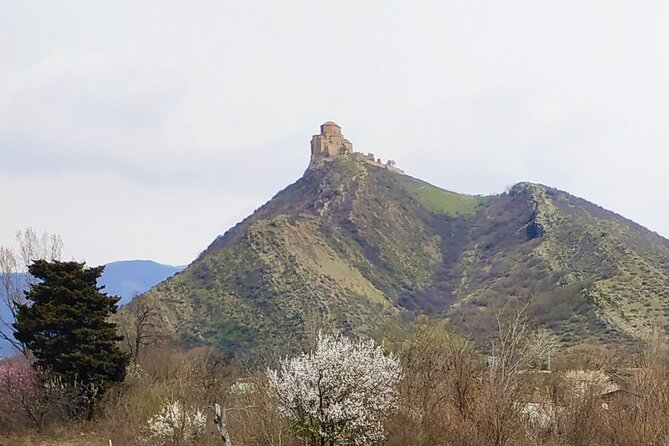
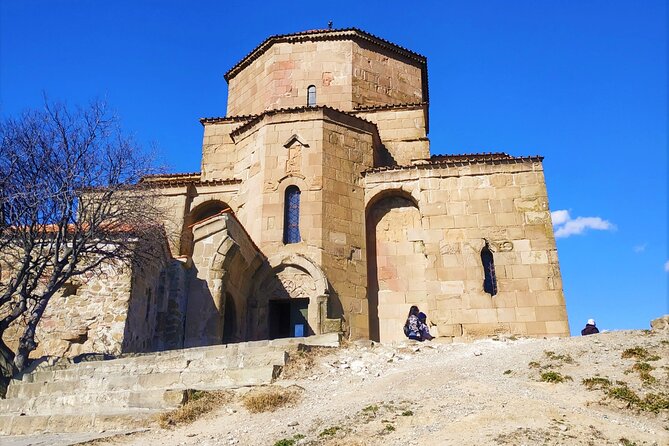
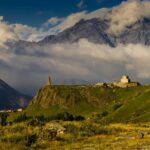
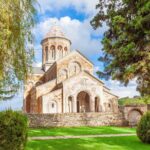
Jvari Church sits above the landscape, and that location matters. You’re not just visiting a building; you’re standing in the kind of place where the view shapes how you understand the architecture. The church and monastery complex are from the Early Medieval period, and Jvari is famous because it survived to the present day with its original character largely intact.
You’ll have about 30 minutes here, which is just enough to get the two big things right: first, look up close at the church itself; second, step back enough to take in how it relates to the surrounding hills and terrain. Jvari is also described as the founder of the Jvari type of Georgian church architecture, a style that became common across Georgia and Armenia. If you like architecture basics—proportions, silhouettes, and why a church shape repeats—that’s where you’ll start noticing patterns.
Practical tip: this site is on a height, so weather and wind can change fast. Bring a light layer even if the morning starts mild.
You can also read our reviews of more tours and experiences in Tbilisi.

Svetitskhoveli Cathedral: the Cathedral of the Living Pillar
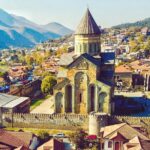
If Jvari gives you the view and the origin story, Svetitskhoveli gives you the weight. This is one of the most revered Orthodox cathedral sites in Georgia, and it’s recognized by UNESCO as part of Mtskheta’s historic core. Expect a full hour at this stop, because the cathedral isn’t a quick photo-and-go. It’s a place where you’ll want a little time to look at exterior details and then shift your attention inward.
Svetitskhoveli is known as the burial place of the claimed Christ’s mantle, which helps explain why the site drew attention for centuries. The building also links to royal history: over time, it served as a burial place for kings. Even if you’re not traveling for religious reasons, that historical layer makes the place feel significant in a broader sense.
The current cross-in-square structure was completed between 1010 and 1029 by the medieval Georgian architect Arsukisdze, but the site history goes back earlier. That means you’re standing in a location with deep roots, and the building you see is part of a much longer story of rebuilding and adaptation.
One detail you might find worth keeping in your mind while you look around: the cathedral’s exterior archature preserves typical 11th-century decorations, but many interior frescoes were lost after Russian Imperial authorities whitewashed them. So when you look at what’s there, you’re also seeing evidence of what time and politics changed.
What makes it feel special: you’ll likely finish Svetitskhoveli with the sense that Georgia’s religious architecture wasn’t just built once—it was protected, revised, and carried forward.
Samtavro Church: the quieter monastic stop

After the main cathedral energy, Samtavro offers a calmer, more intimate feel. You’ll spend about 30 minutes here, and it’s a good pacing break in the day. Samtavro Monastery combines multiple sacred layers: it was founded in the 4th century by King Mirian III, when a small church was built here by Saint Nino.
The main temple’s style is dated to the first half of the 11th century, likely built or rebuilt soon after Svetitskhoveli was completed, associated with King George I and Catholicos-Patriarch Melchizedek I. That connection to the wider Mtskheta religious world is what makes Samtavro more than a smaller stop. It helps you see how these sites relate as a connected religious landscape.
Samtavro is also protected by UNESCO and combines the Transfiguration Church and the Nunnery of St. Nino. In practice, this stop can feel less about grand scale and more about spiritual continuity—an atmosphere you notice when you’re not rushing.
How to get the most out of it: slow down for a few moments before you move on. In a schedule-heavy day, Samtavro rewards a quieter pace.
Shio-Mgvime Monastery: a hermit’s cave and plain strict design
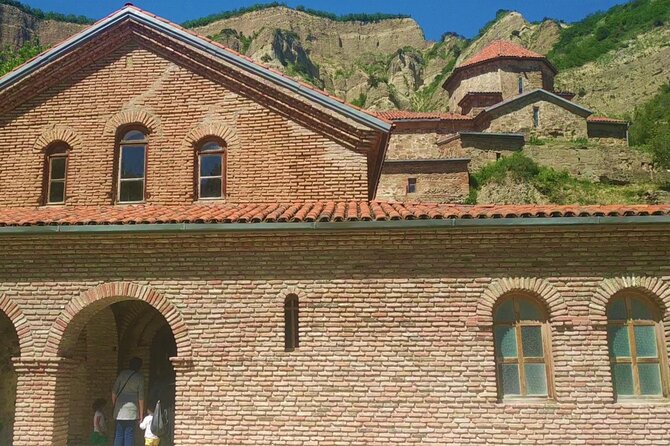
Shio-Mgvime is the stop that often feels like a story you can walk into. The monastery traces back to the 6th-century monk Shio, one of the Thirteen Assyrian Fathers who came to Georgia as Christian missionaries. The idea of Shio spending his last years as a hermit in a deep cave is the kind of detail that instantly changes how you imagine the place while you’re there.
You’ll have about 1 hour here, and it’s built around the monastery’s early church—dating to the 560s–580s. The earliest building, a cruciform church that’s described as plain and strict, is exactly the sort of architecture that makes you pay attention. Even when you don’t know the technical terms, you can feel the design choices: it doesn’t try to impress through ornament. It impresses through clarity.
The church has an octagonal dome covered with a conic roof shape, and it once housed a stone iconostasis now at the Art Museum of Georgia. In other words, the monastery also has a “parts of history went elsewhere” story, which is common for many older sacred sites.
Shio-Mgvime was altered in the 11th and 18th centuries, but the original architecture remained. That mix—change over time without erasing what mattered first—helps you understand how monastic sites functioned as living institutions, not frozen museum pieces.
Practical note: if you’re tired from walking earlier in the day, take your time here. This stop tends to feel easier to enjoy slowly because the setting encourages it.
What the 9-hour schedule really gets you
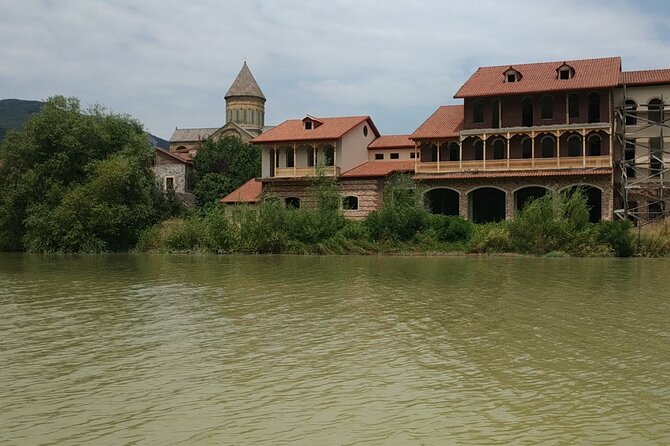
This tour runs about 9 hours starting around 9:00 am, with pickup offered from your hotel area and a private air-conditioned vehicle for the ride between sites. That start time matters. You avoid the late-day crush that can turn churches into a traffic jam.
The best part of the schedule is that the time at each site matches what the place needs:
- Jvari: enough time for the church and the hilltop connection
- Svetitskhoveli: a full hour for exterior and interior attention
- Samtavro: a shorter, restorative stop
- Shio-Mgvime: a longer, story-heavy monastery visit
You’re also walking through parts of Mtskheta’s old town, and the terrain can include stairs and uneven ground. That’s not a reason to skip the tour—it’s just why the right shoes are non-negotiable.


Why a guide like Giorgi (or George) makes a difference
The biggest value in this kind of day trip isn’t only the monuments—it’s the way someone connects details. On this tour, guides focus on history tied to the specific buildings you’re standing in.
I’ve seen how powerful it can be when the guide has a real storytelling rhythm. Names that come up in past experiences include Giorgi and George. Both styles seem to share the same goal: help you understand what you’re looking at, then give you time to breathe rather than racing you from one stop to the next.
If you like learning but hate lectures, this is the sweet spot. You’re not stuck inside a classroom. You’re getting context right where it matters—at the church door, in front of the façade, or in the quiet seconds when you finally notice the architecture detail you’d otherwise miss.
Clothing rules inside Georgian Orthodox churches
This tour includes visits to active Orthodox church spaces. That means dressing right isn’t a formality—it’s part of being allowed inside respectfully.
For ladies, headscarves and dresses are required in Georgian Orthodox churches. For men, short trousers are forbidden. In practice, you’ll usually find headscarves and dresses near some church entrances, so you’re not left scrambling if you forgot.
What I recommend: check what you’ll wear before you leave Tbilisi. Pack a light scarf even in warm months. The last thing you want is to spend your short stop time searching for a solution.
Lunch options and how to plan your meal
Lunch depends on what you book. If you choose a Tour with Lunch option, your needs can be noted—dietary restrictions are collected so the provider can offer lunch accordingly. If you pick a budget tour option, lunch isn’t included, but the day includes a stop at a restaurant for you to eat.
Either way, plan for this to be a full day. You’ll likely want to eat earlier rather than waiting until you’re already tired and hungry.
Getting your money’s worth: price vs. what’s included
At $127.50 per person, this doesn’t feel like a bargain deal where you’re missing key pieces. You’re getting a day trip that includes:
- pickup offered
- private air-conditioned vehicle transport
- a private tour format (only your group)
- mobile ticket
- English-speaking guide
- free admission at each main stop listed
- time at four major UNESCO-listed sites at a pace that doesn’t feel rushed
The value here is the combination of time and convenience. If you try to piece this together yourself—transport, entrance timing, and the right order—you’ll burn energy that’s better spent looking at stonework and views.
Who this tour suits best
This is a great fit if you:
- want a focused UNESCO day trip from Tbilisi without complicated planning
- like early Christian and medieval architecture details, especially Georgian Orthodox church design
- want a private-group experience with a guide who can tailor the pace
- enjoy historical context that you can connect directly to the buildings
It’s less ideal if you:
- struggle with walking stairs and uneven terrain and can’t manage short bursts of movement
- strongly prefer fully guided time-free itineraries where you never have to navigate steps or schedule transitions
Should you book the Mtskheta UNESCO tour?
I’d book this tour if you want one high-quality day that ties together Mtskheta’s most important sacred sites, with a guide who explains what matters and doesn’t crowd your time. The free admission at the stops, the pickup, and the private vehicle make it feel efficient—and Svetitskhoveli plus Jvari alone can justify the day if you enjoy history you can actually see.
I’d think twice only if your mobility is limited, because the day includes old town walking with stairs. If you can handle that with comfortable shoes and a flexible pace, this is a strong way to experience Georgia’s religious heart without wasting half your day figuring out logistics.
FAQ
How long is the Mtskheta tour?
It lasts about 9 hours.
What’s included in transportation?
Pickup is offered, and you travel in a private air-conditioned vehicle.
Is the tour in English?
Yes, it’s offered in English.
Do I need to pay admission tickets at the stops?
Admission tickets are listed as free for Jvari Church, Svetitskhoveli Cathedral, Samtavro Church, and Shio-Mgvime Monastery.
What should I wear for church visits?
Ladies need headscarves and dresses in Georgian Orthodox churches. Short trousers for men are forbidden. Scarves and dresses are available near some church entrances.
Is lunch included?
If you book a Tour with Lunch option, lunch is included based on the information you provide about dietary restrictions. A budget tour option does not include lunch, but you stop in a restaurant to have lunch.
Is this tour private?
Yes. It’s a private tour/activity, so only your group participates.
What happens if the weather is poor?
This experience requires good weather. If it’s canceled due to poor weather, you’ll be offered a different date or a full refund.