REVIEW · DARWIN
Darwin Heritage Walk
Book on Viator →Operated by Walk Darwin Pty Ltd · Bookable on Viator
Darwin’s downtown has stories hiding in the buildings. This Darwin Heritage Walk strings those stories together in a tight loop of landmarks, from pre-Cyclone Tracy reminders to restored government buildings—explained by a local guide with real pride in the city.
Two things I like a lot are the small group size (up to 6) and the way the guide keeps you moving at an easy, photo-friendly pace while sharing the backstory you’d miss if you wandered solo. One possible drawback to plan for: the experience is more about listening and stopping than covering big distances, so if you only want action and constant movement, it may feel slow at times.
In This Review
- Key Highlights You’ll Actually Care About
- Darwin CBD in About Two and a Half Hours
- Price and Value: What $42.32 Gets You in Real Time
- How the Stories Are Told: Old vs New in Tropical Darwin
- Star Village: The Pre-Cyclone Tracy Cinema That Still Holds a Past
- Brown’s Mart Theatre: More Than a Pretty Facade
- The Old Town Hall Ruins: When Pioneers Leave Footprints
- Administrator of the Northern Territory: Restored Buildings and Garden Life
- Parliament House: Self-Government and Darwin Harbour
- Bicentennial Park: Harbour Views and Hidden Little Details
- Practical Tips to Make This Walk Easy (and Enjoyable)
- Who Should Book (and Who Might Want a Different Style of Tour)
- Should You Book the Darwin Heritage Walk?
- FAQ
- How long is the Darwin Heritage Walk?
- What does it cost?
- Where does the tour start and end?
- What kinds of places will I see?
- Is the tour mostly walking or mostly listening?
- What should I bring?
- Does the tour operate in weather?
Key Highlights You’ll Actually Care About
- Pre-Cyclone Tracy history at Star Village, now a modern retail stop but still tied to Darwin’s older fabric
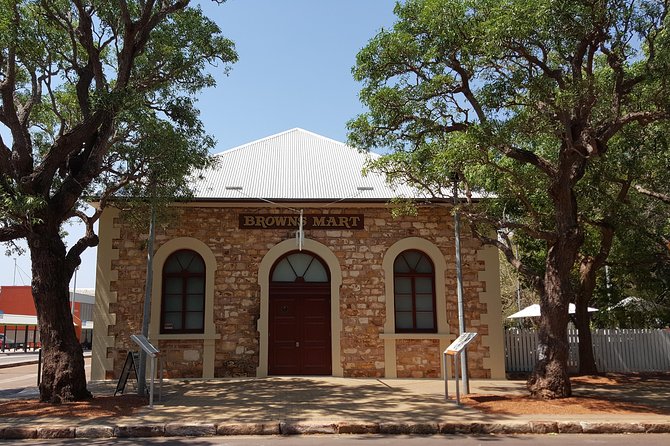
- Brown’s Mart Theatre as a long-running thread through Darwin’s social life (over 100 years)
- Ruins with meaning at Old Town Hall (Palmerston era), showing how the city’s past is visible even now
- Restored heritage buildings and gardens at the Administrator of the Northern Territory offices
- Harbour views and government context at Parliament House and Bicentennial Park
- Guide-led photo stops and shade breaks, including guides like John and Robin who happily pause and answer questions
Darwin CBD in About Two and a Half Hours
This is a compact, central walk that usually takes 2 hours to 2 hours 30 minutes, starting at 8:30 am. With a maximum group size of 6 and a minimum of 2, you’re not stuck in a noisy crowd—more like a focused stroll where questions actually get time.
The route finishes near the waterfront at Lyons Cottage, at the intersection of The Esplanade and Knuckey Street, opposite Lyons Cottage. That matters because you can roll straight into breakfast, coffee, or a harbour-side wander without having to retrace your steps.
You should expect walking and standing for the full experience, so moderate fitness helps. The good news is you’re given lots of opportunities to stop for photos and listen in short bursts instead of being forced to keep moving constantly.
You can also read our reviews of more walking tours in Darwin

Price and Value: What $42.32 Gets You in Real Time
At $42.32 per person, the value here is not about “free stuff.” It’s about paying for interpretation—someone local connecting the dots between Darwin’s past and what you can see today.
You’re also getting a local guide with spoken commentary, plus stops at multiple heritage-linked places. Several of the highlighted stops are free to view from the outside, which keeps your costs predictable: you’re not buying separate admission tickets just to stand there and look.
One thing to be aware of: this tour does not include food or drinks. If you’re starting at 8:30, plan to eat after the walk (or bring a small snack only if your guide’s setup allows it, since the flow is mostly stops and stories).
How the Stories Are Told: Old vs New in Tropical Darwin
This walk is built around the idea of seeing Darwin as a city of layers. You’ll look at “attractive facades” and then get the human history behind them—who used the spaces, what happened to the city, and how Darwin rebuilt after shocks that shaped modern life.
A big theme is Darwin’s resilience. Guides commonly bring up defining events like the bombing of Darwin and Cyclone Tracy, because they’re part of why certain buildings survived, why others changed, and why the city’s identity feels so tough and practical.
The best moments on this kind of tour are the pauses. In the feedback, guests mention guides who are generous with time, stop for photos, and even take comfort into account—like pausing in shade for people who burn easily. That’s a real quality-of-life factor in Darwin’s heat, and it can make the difference between a “walk” and an actual morning you remember.
Star Village: The Pre-Cyclone Tracy Cinema That Still Holds a Past
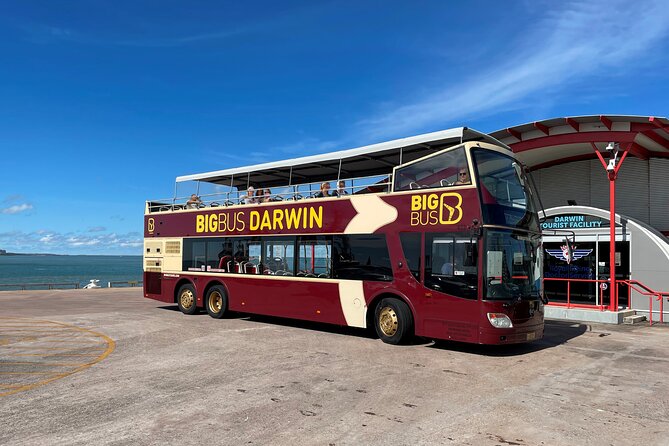
Your first major stop is Star Village, a former open-air cinema and one of the few original buildings dating back to before Cyclone Tracy. Even though it’s now a chic retail hub, the guide’s job is to point out the historic features and tell you why this structure matters.
What I like about starting here is that it sets a clear theme: you’re not just learning dates—you’re learning how places persist through time. You’ll get a quick sense of what “original” meant for Darwin, and why “old” can still sit right next to “new” in the CBD.
Time here is short—about 10 minutes—so keep your camera ready, and use the stop to zoom in on details you might otherwise ignore (doorways, building shape, and anything that looks “built differently” from newer surrounds).
Brown’s Mart Theatre: More Than a Pretty Facade

Next up is Brown’s Mart Theatre, a heritage building that has remained part of Darwin’s social culture for over 100 years. This stop is mainly about the outside and the context—why this place mattered socially, and how Darwin’s public life developed over time.
It’s easy to walk past a theatre building and think it’s just architecture. On this tour, you’ll learn how cultural venues act like “community glue,” especially in a city that has had to reinvent itself again and again.
Like Star Village, the stop is brief at around 10 minutes, so it works best when you keep listening focused. If your brain tends to wander while you take photos, take one good photo first, then switch back to listening for the story thread.
You can also read our reviews of more historical tours in Darwin

The Old Town Hall Ruins: When Pioneers Leave Footprints
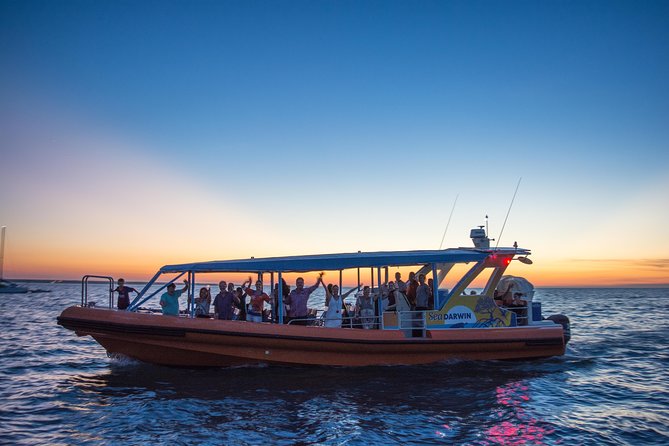
Then you’ll reach the Old Town Hall area. The tour frames this as a reminder of Darwin’s pioneers and notes that it’s now in ruins—specifically the Old Palmerston Town Hall—but still visible enough to give you a concrete link to earlier days.
Ruins can be emotionally tricky on heritage tours if you expect a polished “wow.” Here, the value is more about understanding continuity: the city didn’t just sprout fully formed; it grew, moved through hardship, and kept going.
You’ll have about 10 minutes at this stop, and it’s a good place to slow your pace mentally. Even if you don’t feel dramatic about ruins, the guide’s narration will help you read what you’re seeing as a timeline, not just a broken building.
Administrator of the Northern Territory: Restored Buildings and Garden Life
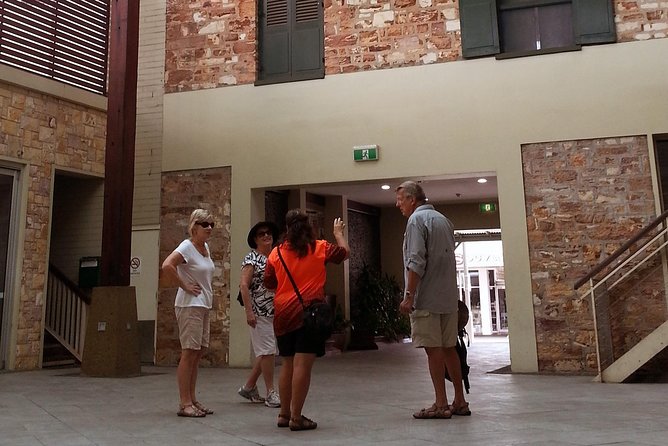
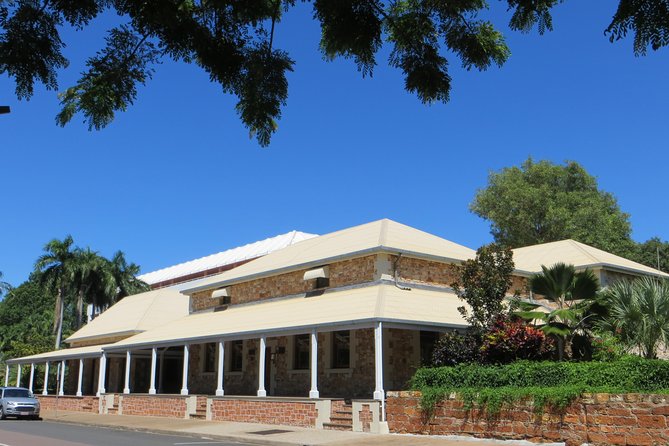
The walk then shifts to a set of beautifully restored buildings and gardens at the Administrator of the Northern Territory. Today, these heritage spaces are used as offices for the Administrator of the Northern Territory, which gives the stop a modern relevance.
This is one of those moments where the tour becomes less about hardship and more about order—how governance, public life, and civic planning show up in architecture and landscaping. If you like places that feel intentional and cared for, you’ll probably enjoy this segment.
Expect another 10-minute stop. Look for how the gardens shape the space, because in a tropical city, outdoor design isn’t a decoration—it’s comfort.
Parliament House: Self-Government and Darwin Harbour
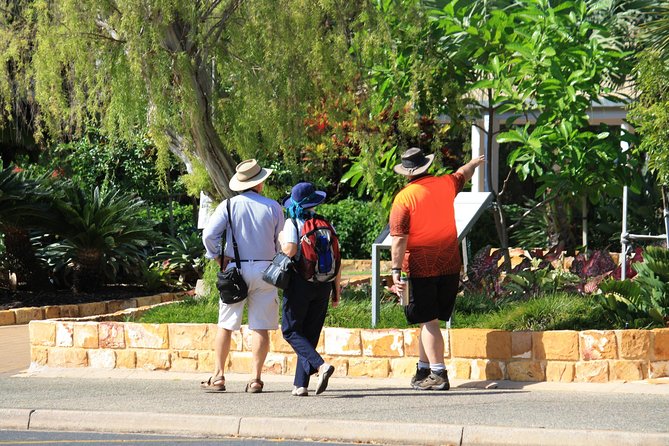
At Parliament House, you’ll connect Darwin’s heritage to the story of the city as a self-governing modern place, with the building presiding over Darwin Harbour.
This stop is especially worth your attention if you enjoy learning how systems evolve. Heritage tours often focus on early settlement and survival, but this one also points toward how the city became an organized political and civic hub.
Time is again around 10 minutes. Use that time to look outward as well as at the building. The harbour setting matters here—you get the feeling of Darwin as both a coastal gateway and a working city.
Bicentennial Park: Harbour Views and Hidden Little Details
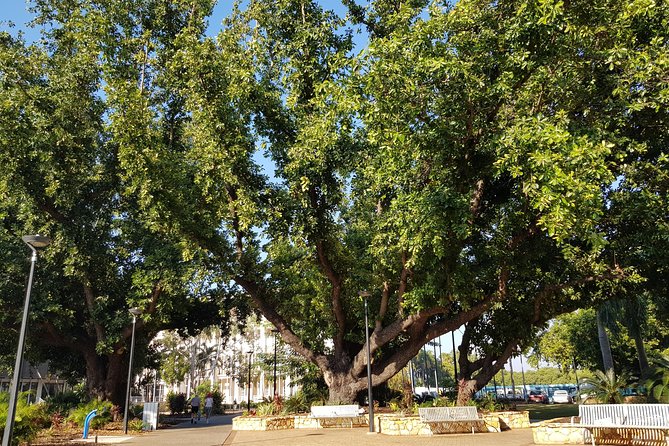
Your final stop is Bicentennial Park, overlooking Darwin Harbour and offering green space for leisure and recreation. The tour notes “hidden treasures” in the area that remind people of early Darwin, so it’s not just a scenic wrap-up—it’s another chance to spot the past in the present.
This segment lasts about 15 minutes, which is longer than most stops, and that extra time can be useful for photos and taking in the breeze off the water.
If you’re the kind of traveler who likes to end a tour with a view, this is a strong choice. It’s also a practical finish: you’re set up to continue your Darwin morning near the Esplanade area without needing rides or backtracking.
Practical Tips to Make This Walk Easy (and Enjoyable)
If you want this to feel smooth instead of tiring, here’s how I’d prep based on what the tour clearly expects from you:
- Wear good enclosed non-slip walking shoes since you’ll be on sidewalks for a couple of hours.
- Bring sunscreen, a hat, and drinking water. Darwin sun is not the time for wishful thinking.
- Bring a camera because the guide builds in photo stops.
- Dress appropriately for all weather conditions, since the tour runs in the weather rather than canceling every time clouds appear.
Two added “quality” hints, supported by guest experiences: first, if you burn easily, mention it on the walk and watch how your guide handles shade stops. Second, ask questions when they naturally come up—guides like John and Robin are praised for answering thoroughly and adjusting to the group mood.
Who Should Book (and Who Might Want a Different Style of Tour)
This is a great fit if you want a local-guided interpretation of Darwin’s city center with minimal planning. It’s also ideal for people who enjoy heritage but don’t want a long museum day—this gives you history you can see with your feet.
It may be less ideal if you’re hoping for a tour that feels like constant sightseeing. One review notes it can feel slow, with some of the most interesting parts arriving later. Another feedback point is that the tour can skew toward big events like bombing and Cyclone Tracy; if you strongly want more on Indigenous history and first contact, you should come ready to ask direct questions of your guide and steer the conversation.
Also note this tour isn’t designed for anyone who wants to move briskly the whole time. If you’re moderately active and fine standing in short chunks, you’ll likely enjoy it.
Should You Book the Darwin Heritage Walk?
Yes, I’d book it if you want a smart, compact way to get your bearings in Darwin—especially on a first visit. For $42.32, you’re buying time with a local storyteller, and the walk format gives you a real sense of how Darwin’s “old and new” sit side-by-side in the CBD.
I’d skip it or pair it with something more hands-on if you prefer fast pacing, lots of “what to do” activities, or a very specific focus on one historical angle. But if you’re happy to trade a bit of speed for meaning—and you like stopping, listening, and taking photos—this is one of the easiest ways to understand Darwin in just a couple of hours.
FAQ
How long is the Darwin Heritage Walk?
It runs for about 2 hours to 2 hours 30 minutes.
What does it cost?
The price is $42.32 per person.
Where does the tour start and end?
It starts at John McDouall Stuart Cnr The Mall & Knuckey St, Darwin City NT 0800 and ends at the intersection of The Esplanade and Knuckey Street, opposite Lyons Cottage.
What kinds of places will I see?
You’ll visit heritage-linked sites in Darwin’s CBD, including Star Village, Brown’s Mart Theatre, the Old Town Hall (Old Palmerston Town Hall), the Administrator of the Northern Territory buildings and gardens, Parliament House, and Bicentennial Park.
Is the tour mostly walking or mostly listening?
It involves walking and standing, but it’s also built around listening to guided commentary while you stop at each site.
What should I bring?
Bring a camera, sunscreen, hat, and drinking water, and wear enclosed non-slip walking shoes.
Does the tour operate in weather?
It operates in all weather conditions, so dress appropriately for conditions.