REVIEW · TBILISI
Ancient Georgia Group Tour: Mtskheta,Jvari, Gori, Uplistsikhe
Book on Viator →Operated by Imperial Tours · Bookable on Viator
Four ancient stops, one long day.
This Tbilisi group outing ties together Jvari, Mtskheta, Gori, and Uplistsikhe into one practical route, so you can see Georgia’s Christian roots and its 20th-century history side by side. Air-conditioned transport and WiFi on board help the day feel manageable even when the drive time adds up.
I like the small-group feel here, with a maximum of 15 people, which makes questions easier and site time more usable. I also appreciate that two major spiritual stops are free to enter (Jvari and Svetitskhoveli), which helps your money go further.
The main thing to watch is timing: it runs about 9 to 10 hours, and if your group ends up doing a dual-language flow, the day can stretch and feel extra long—especially after the walking at Uplistsikhe.
In This Review
- Key highlights to notice before you go
- A Tbilisi-to-Mtskheta circuit that makes history feel close
- Price and logistics: what the $24 covers (and what it doesn’t)
- Jvari Monastery: river confluence views in 40 minutes
- Gori’s Stalin Museum: a tense hour in the birthplace town
- Uplistsikhe cave town: the rock-cut city you should not rush
- Svetitskhoveli Cathedral: relics and the story of early Georgian Christianity
- Guide pace and language: what to expect from an English tour that may switch
- Who should book this day trip (and who should rethink it)
- Should you book the Ancient Georgia group tour with Imperial Tours?
- FAQ
- What is the duration of the Ancient Georgia group tour?
- Where does the tour start?
- What does the $24 price include?
- Is lunch included?
- Do I need to pay for tickets at all the stops?
- Is the tour offered in English?
- How many people are in the group?
- What is the cancellation policy?
- Is this tour good if I have limited mobility?
Key highlights to notice before you go
- Small group (up to 15), so your guide can actually manage the pace
- WiFi + A/C on board, a real comfort upgrade on a long day
- Free admission at Jvari Monastery and Svetitskhoveli Cathedral
- Uplistsikhe is worth the effort, with rock-cut structures from multiple eras
- Stalin Museum in Gori adds an uncomfortable but important chapter of Georgian history
- Uplistsikhe needs traction, and wet weather can make the rocky areas slippery
A Tbilisi-to-Mtskheta circuit that makes history feel close
This tour is built like a day-long story: start with a hilltop monastery viewpoint, move into Mtskheta’s early Christian heart, then head to Gori for a brutally political museum, and end with Uplistsikhe’s cave city carved into the rock.
What you get is contrast. Jvari and Svetitskhoveli help you understand why this region matters to Georgia’s church history. Uplistsikhe shows older layers too, including pagan and Christian space sharing in the same rock-cut complex. Then Gori’s Stalin Museum interrupts the mood with the kind of history that still shapes attitudes and memory.
If you like your day trips to feel organized—without a rushed blur—this route fits well. It’s also a good option if you don’t want to rent a car for a circuit that takes you well beyond central Tbilisi.
You can also read our reviews of more tours and experiences in Tbilisi.
Price and logistics: what the $24 covers (and what it doesn’t)
The tour price is $24 per person, and the value is helped by what’s included on the ground: WiFi on board and an air-conditioned vehicle for the full drive day. For many people, that alone makes the longer 9 to 10 hours feel less draining.
You do need to budget separately for paid admissions. The Stalin Museum is 15 GEL per person, and Uplistsikhe is also 15 GEL per person. Lunch is not included as part of the tour food and drink. Two stops are free: Jvari Monastery and Svetitskhoveli Cathedral.
So the real cost picture is simple:
- Pay $24 for the guided transport and visits
- Add 30 GEL total for the two ticketed sites
- Plan on paying for lunch at the restaurant stop
Jvari Monastery: river confluence views in 40 minutes
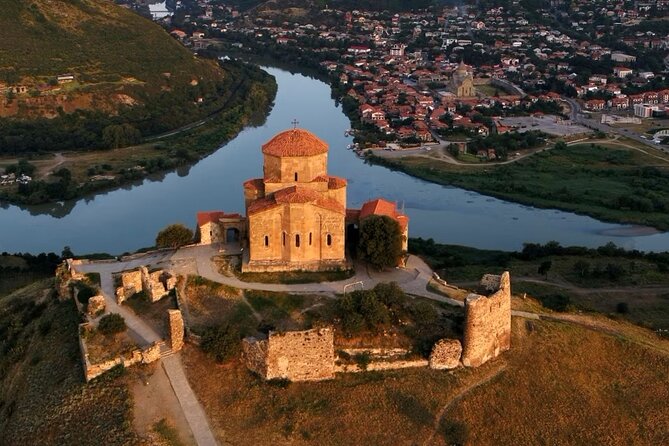
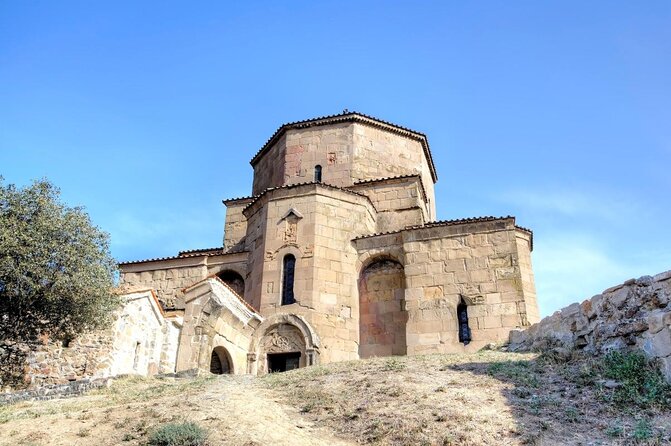
Jvari Monastery is the first stop, and it’s a strong opener. You’ll be looking at the confluence of the rivers Mtkvari and Aragvi, which makes the location feel bigger than the short visit time suggests.
You only get about 40 minutes, and that’s just enough to:
- take in the view and photos
- understand the religious significance without feeling like you’re racing
- walk the immediate areas at a relaxed pace
Admission is free here, so you don’t have to plan money for this part. If your day is already tight, that matters.
One practical note: churches often expect respectful clothing. For women, having a scarf can make entry easier. For men, wearing long pants helps, and if you’re light on leg coverage you may need a scarf or covering on site.
Gori’s Stalin Museum: a tense hour in the birthplace town
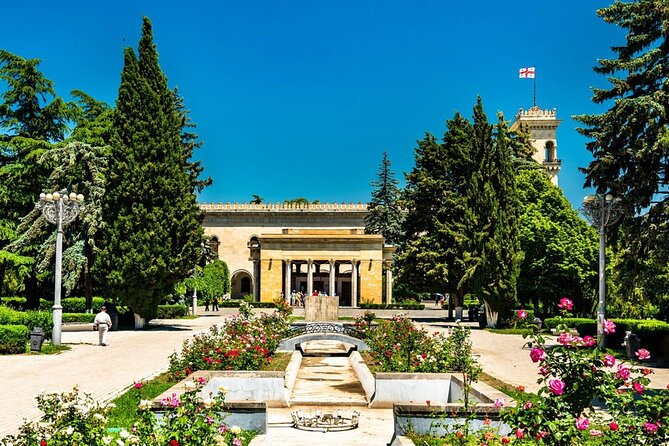
Next comes Gori, and the Stalin Museum is not a light stop. It’s located in the town where Stalin was born. The complex opened in 1957, and the memorial museum inside the birthplace house opened in 1937, while he was still alive.
You’re scheduled for about 1 hour. That’s enough time to see the main exhibits and get the timeline, but not enough to do it like a scholar. The best approach is to treat it like context-setting: learn what the museum is presenting, then think about how this period affected Georgia and its people.
This is also the stop where the tour’s contrast becomes obvious. You go from sacred space to a museum that deals with power, propaganda, and political violence. If you’re sensitive to heavy topics, pace yourself here and give yourself a moment before the next church stop.
Admission is 15 GEL and not included, so have some cash or be ready for on-site payment. One more tip: museum setups can vary, so don’t count on audio options being available.
Uplistsikhe cave town: the rock-cut city you should not rush
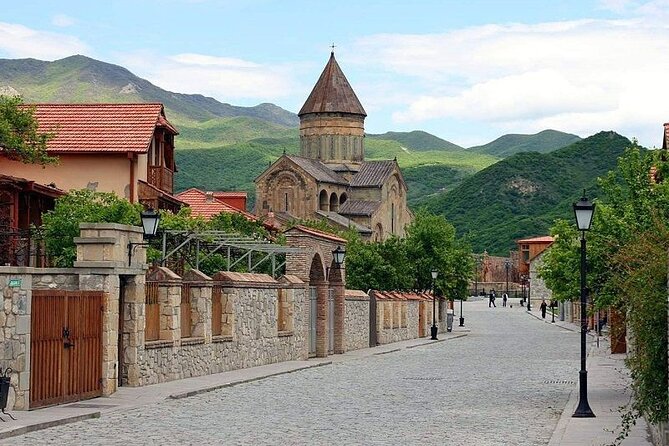
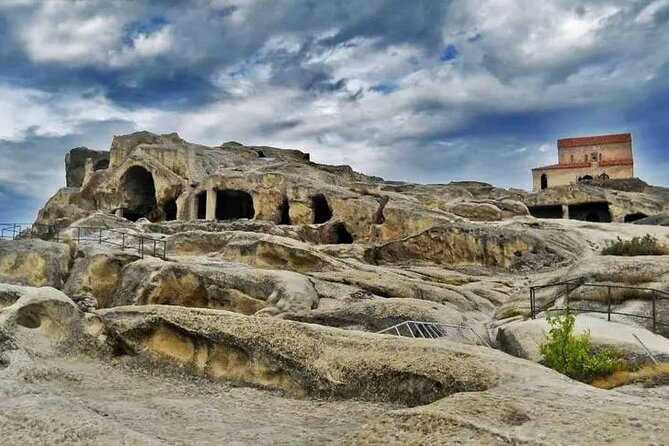
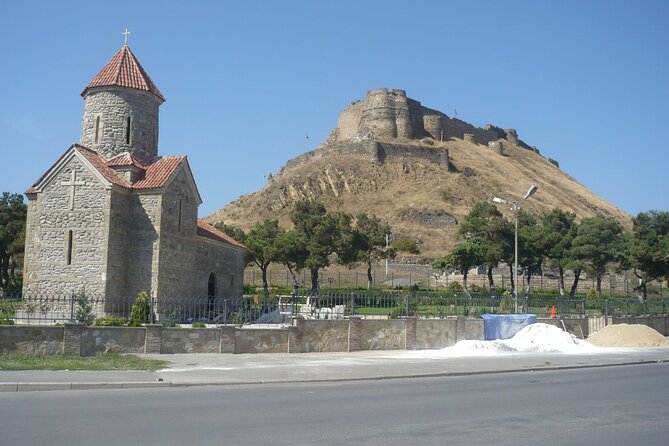
Uplistsikhe is the big physical stop. The cave town sits on a high rocky left bank of the Mtkvari River, and it’s famous for how many layers of time are carved into the same place.
What makes it special is not just the caves. It includes structures dating from the Early Iron Age to the Late Middle Ages, with a unique blend of rock-cut cultural styles linked to Anatolia and Iran. You’ll also see the co-existence of pagan and Christian architecture, which gives the site a layered feel instead of a single-theme visit.
You’ll have time set aside for exploring, and there’s a lunch break at a local restaurant as part of the day. Admission to Uplistsikhe is 15 GEL per person and isn’t included in the tour price.
Here’s the real-world advice: wear shoes with real traction. Uplistsikhe involves climbing and uneven rocky surfaces, and wet conditions can make footing tricky. If you’re visiting after rain—or you’re not confident on steps—take it slow and use railings where provided.
Also, plan your energy. This is the part of the day where people often feel it in their legs. If you can walk steadily for an hour on rough ground, you’ll get the most out of it.
Svetitskhoveli Cathedral: relics and the story of early Georgian Christianity
After the cave city, the tour lands back in spiritual history at Svetitskhoveli Cathedral in Old Mtskheta. It’s scheduled for about 30 minutes, which sounds short until you realize it’s a focused visit: see the key areas, take in the setting, and absorb the significance without a long guided march.
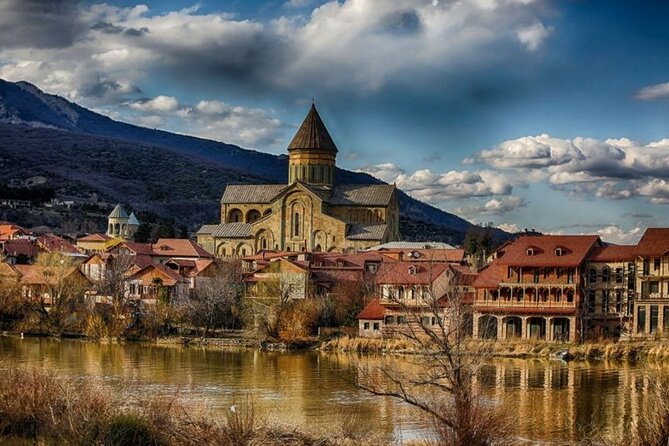
Svetitskhoveli is considered the center of Old Mtskheta and is often described as even more historically significant than Jvari. The tradition places its founding on a spot chosen by Saint Nino. Inside, the cathedral houses dozens of precious relics, including what is believed to be Christ’s Mantle, a 4th-century baptismal font, and a piece of cedar wood said to be salvaged from the original structure.
Admission is free, so your money stays for transport and lunch rather than fees. If you’re traveling in a small group, you’ll usually have enough time to ask your guide what to prioritize so you don’t leave with only generic photos.
Guide pace and language: what to expect from an English tour that may switch
This is offered in English, and the best versions of this tour run smoothly because the guide keeps the group together and explains the story clearly at each stop. In several runs, guides have shown the ability to handle logistics well for groups up to 15 people, including switching language when needed to keep everyone engaged.
That said, one caution shows up: if your group ends up doing a dual-language flow, everything can take longer because you may hear explanations twice or hear segments in another language you don’t understand. That can stretch a 9 to 10 hour schedule into something that feels closer to a full endurance test.
So for your own comfort:
- bring something to drink (your lunch stop is not included)
- plan for a long day physically, especially after Uplistsikhe
- keep a scarf or leg covering handy for church entries
Who should book this day trip (and who should rethink it)
This tour is a good match if you want a single-day sampler of major sites beyond Tbilisi—without the stress of self-driving. It’s also ideal if you like guided context. The mix here isn’t random: religious milestones, a politically charged museum, and an ancient cave city in one route.
It’s less ideal if you:
- have mobility limitations that make rocky climbing difficult
- strongly dislike heavy political history and museums
- hate long, all-day schedules, especially if your group ends up split between languages
If you’re comfortable walking and you pack smart (traction shoes and church-appropriate clothing), you’ll likely find the schedule satisfying rather than exhausting.
Should you book the Ancient Georgia group tour with Imperial Tours?
If you’re trying to hit Jvari, Mtskheta’s Svetitskhoveli, Gori’s Stalin Museum, and Uplistsikhe in one day with small-group comfort, this is a strong value pick. The $24 price works because two key church visits are free and you only pay admissions for the two bigger ticketed stops.
But book with eyes open. Uplistsikhe is the part that demands good shoes and careful steps, and the full day can feel long. If that fits your style, you’ll come away with a Georgia story that spans centuries—some of it inspiring, some of it hard to swallow, and all of it worth seeing in person.
FAQ
What is the duration of the Ancient Georgia group tour?
It runs about 9 to 10 hours, including travel time.
Where does the tour start?
It starts at 15 Abano St, Tbilisi, Georgia at 9:00 am, and returns to the same meeting point.
What does the $24 price include?
It includes WiFi on board and an air-conditioned vehicle.
Is lunch included?
No. You’ll stop at a local restaurant for lunch, but food and drink costs are not included.
Do I need to pay for tickets at all the stops?
Yes for the Stalin Museum and Uplistsikhe (both 15 GEL per person). Jvari Monastery and Svetitskhoveli Cathedral have free admission.
Is the tour offered in English?
It is offered in English, and you should confirm with the operator if your group has multiple languages on the day.
How many people are in the group?
The tour has a maximum of 15 travelers.
What is the cancellation policy?
Free cancellation is available up to 24 hours in advance for a full refund.
Is this tour good if I have limited mobility?
Most travelers can participate, but Uplistsikhe involves climbing on rocky areas, so it may be challenging for anyone with mobility issues.