REVIEW · VELHA GOA
Old Goa: Saga Of Saints, Spices & Sovereigns | Heritage Walk
Book on GetYourGuide →Operated by Origins And Horizons · Bookable on GetYourGuide
Old Goa tells a power story. This 2-hour walk strings together saints, spices, and sovereigns through Portuguese-era churches and convents, with a local storyteller decoding the Indo-Portuguese craft and sacred art. I like how the route puts hidden monastic corners like the Rosary Church and Augustinian ruins into the spotlight, instead of only chasing the most obvious sights. One catch: it’s a fair bit of walking on uneven ground, and the dress rules are strict, so plan for sun and come prepared with hat and water.
I also like the way the guides sound like historians with a warm voice, not lecturers. Names you might hear include Amreen Shaikh and Amreen, and the storytelling style tends to include context first, then the plot clicks into place. The pace has built-in pauses too, with shady spots to sit, and the walk ends with a refreshing local drink.
For $9 per person, the value is real: church entries for the included stops and the storytelling package are part of the price. It’s listed as wheelchair accessible, but it is not suitable for people with mobility impairments or heart problems, so if you’re in either group, take that seriously before you schedule your day.
In This Review
- Key things I’d clock before you go
- Old Goa’s churches aren’t just pretty stones
- Where the walk starts: Santa Monica Convent meeting point
- A first stop shaped by the Portuguese story
- Rosary Church and monastic corners most people skip
- Augustinian ruins: where the stone tells the saint story
- Indo-Portuguese sacred art: how to read the details
- Spices, ships, and salvation: the bigger story behind Old Goa
- End with a local drink and a better sense of direction
- Price and what $9 actually buys you
- Who should book this heritage walk
- Final verdict: should you book Old Goa: Saga Of Saints, Spices & Sovereigns?
- FAQ
- How long is the Heritage Walk?
- What does the tour cost?
- Where do I meet the guide?
- Is the guide available in English?
- What’s included in the ticket price?
- What should I bring?
- What clothing is not allowed?
- Is it suitable for everyone in terms of mobility or health?
- What are the cancellation and payment options?
Key things I’d clock before you go
- Storytelling led by local history specialists: Guides like Amreen Shaikh use clear English and build the story in steps.
- Hidden monastic stops get time: The Rosary Church and Augustinian monastery ruins aren’t treated like quick detours.
- Indo-Portuguese sacred art is explained in plain language: You learn what you’re looking at, not just where to stand for a photo.
- A 2-hour length that works: You cover a lot without losing your attention span.
- Comfort breaks are part of the plan: Expect shady pauses where you can rest and keep listening.
- You end with a local drink: Not a token sip, but a friendly finish after all the stone and stories.
Old Goa’s churches aren’t just pretty stones
Old Goa feels like a place where faith, empire, and trade all shared the same streets. You see it in the churches and convents—big symbols of Christianity alongside the evidence of Portuguese power. The fun part is that the tour doesn’t treat religion like a separate topic. It connects religious life to ships, spices, and political control, so the buildings make more sense fast.
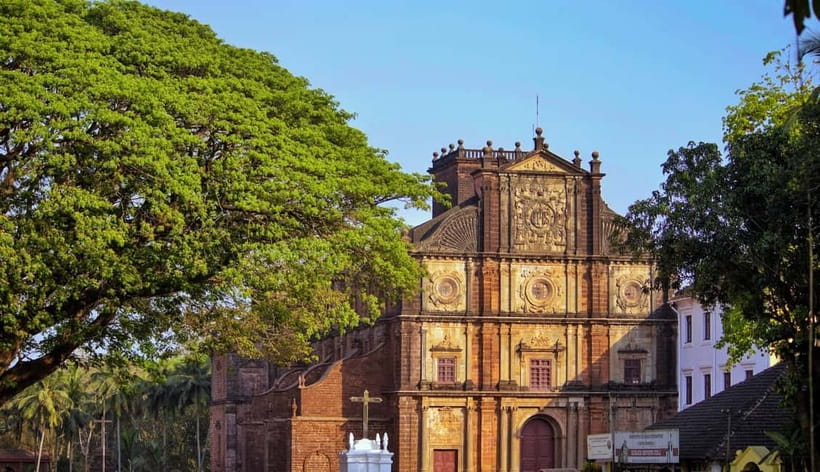
I especially like the tour’s framing: saints aren’t discussed in a vacuum. They’re placed within missionary expeditions and the wider Portuguese push into the region. You’ll hear how Old Goa became a cosmopolitan hub, and how the city’s fortunes shifted enough that it was abandoned in the early 1800s. That arc—rise, influence, change—makes the ruins feel less tragic and more like a real timeline you can follow.
Then there’s the craftsmanship. Indo-Portuguese work shows up in details of sacred art and architectural styles. The guide isn’t just pointing at decorations; they explain what those choices meant and how the style developed. By the time you leave, you’re not only looking at churches. You’re reading them like historical documents.
Where the walk starts: Santa Monica Convent meeting point
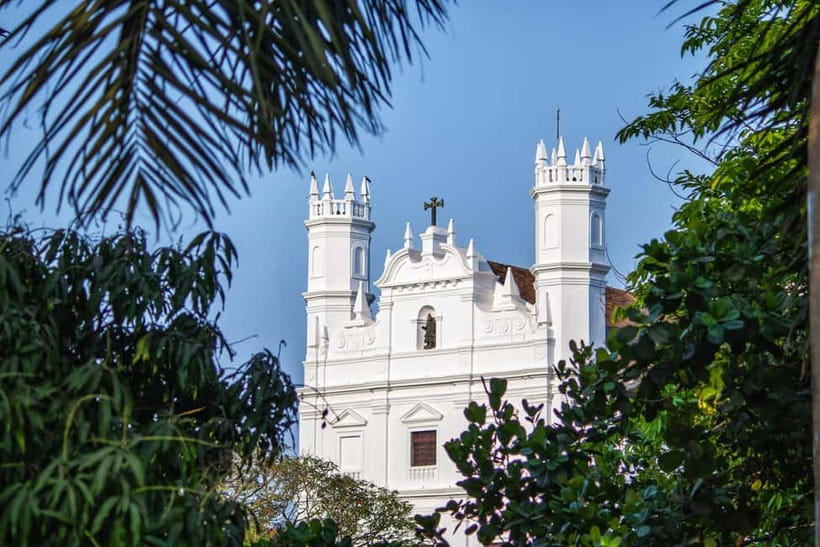
You meet at the entrance/parking area in front of the main entrance to Santa Monica Convent at Old Goa. This matters because it puts you right near the core heritage zone, and it also helps you get your bearings quickly—Old Goa can feel like a maze of lanes and stone walls if you wander in without a plan.
From there, the route is designed as a walking loop through key religious sites and monastic remains. You’ll be on your feet for about two hours total, with stops at churches that are part of the walk. Since entry to those churches is included, you’re not left standing outside while everyone waits for tickets.
Practical note: the pace is storytelling-first, not sightseeing-first. That means you’ll spend some time looking closely at doors, facades, and interiors, then hearing what they signify. If you’re hoping for constant photo breaks and minimal talking, you might find the attention on narrative a bit intense. If you like context, you’ll enjoy it.
A first stop shaped by the Portuguese story
The early Portuguese period is a central thread on this walk. You’ll hear how the Portuguese established the first Christian church in Old Goa at the beginning of the 16th century. It’s the kind of detail that changes the way you see the architecture: it stops being “old church” and becomes evidence of a deliberate effort—missionaries with ships behind them, and trade routes shaping what got built.
As you move between convent spaces and church structures, the guide uses medieval maps as a reference point. That’s a smart trick because it helps you picture how the city’s layout and priorities may have looked centuries ago. Instead of treating each ruin as a standalone, you start connecting them into one system of beliefs, authority, and daily life.
You’ll likely notice that the tour focuses as much on sacred art as on walls and floors. That’s important because religious art is one of the quickest ways to understand what a community wanted people to remember. The guide also explains architectural styles in a way that’s meant for non-experts, so you’re not stuck translating big terms in your head.
How to prepare: comfortable shoes are non-negotiable. Old Goa’s ground can be uneven, and you’ll also need your hands free for listening and taking in small details.
Rosary Church and monastic corners most people skip
One of the most appealing parts of this experience is the attention to lesser-known locations—especially tucked-away monastic sites. The Rosary Church gets a special mention, along with other quiet corners where history feels closer to daily religious practice than to spectacle.
This is where the tour becomes more than a highlights walk. You’re not only told what happened—you learn why it mattered to the people living there. The guide shares lores and beliefs tied to the sites, and then adds the historical layer: how monastic spaces fit into colonial religious life and political control.
I like this approach because it makes Old Goa feel less like a museum and more like a lived environment. The churches and convents aren’t empty. They’re full of intent—how worship was organized, what symbols were used, and how sacred art communicated authority and devotion at the same time.
There can be a downside if you’re expecting loud, dramatic storytelling at every minute. Some moments are quieter, focused on observation and explanation. If you’re okay with that, it’s a real strength. If you need constant action, plan to bring patience—and keep your water handy.
Augustinian ruins: where the stone tells the saint story
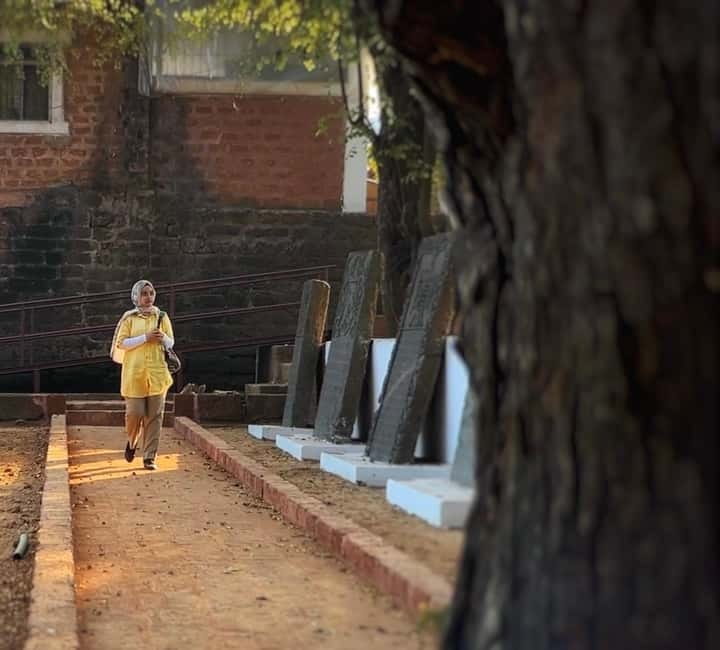
The Augustinian monastery ruins are one of the tour’s anchor stops. You’ll explore crumbling convent structures and see how Portuguese influence played out through religious orders on the ground. This section of the walk helps you understand the full ecosystem: not just the church building, but the religious community systems around it.
The guide also decodes sacred art and architectural style here, which is key. Ruins can look like “random old rock” if nobody explains the logic of the design. With guidance, you start noticing patterns—how religious spaces were arranged, what decoration signaled, and how construction choices supported worship and identity.
From the story angle, this is where the saint thread ties to politics and trade. The tour links missionary expeditions and Portuguese expansion with the city’s position as a trade-connected hub. The message is simple: Old Goa’s religious buildings were part of a bigger power story. Once you understand that, the ruins feel less like broken leftovers and more like the evidence of a major historical project.
A practical consideration: ruins can mean less shade and more sun exposure. The tour handles this well by picking shady spots to pause, but you should still treat the walk as outdoors. Hat and sunscreen aren’t optional here.
Indo-Portuguese sacred art: how to read the details
A lot of heritage tours point. This one explains what the pointing means. Indo-Portuguese craftsmanship is a standout theme, and the guide helps you “decode” sacred art and architectural styles without making it a test.
What you learn matters because sacred art isn’t just decoration. It’s messaging. It can communicate devotion, authority, and cultural blending in one visual package. When you understand the symbolism, church interiors and facades start telling you a story even if you don’t know local language or historical context.
This is also where the tour’s focus on stories beyond the tourist lens pays off. You’ll hear historical context that’s tied to specific elements—how the Portuguese period shaped religious design, how local influences met incoming styles, and how the city’s identity shifted over time. It’s the kind of explanation that sticks, because you’re linking what you see to what you’re told.
One more thing I like: the guides with strong English tend to keep the flow readable. Names you may meet include Amreen and Amreen Shaikh, and the storytelling style described in recent experiences is clear and structured—context first, then the details connect.
Spices, ships, and salvation: the bigger story behind Old Goa
The most meaningful part of this walk is its storyline beyond churches. You learn how spices and trade routes helped make Goa strategically important. And you learn how missionary efforts rode alongside that economic engine.
That connection—spices, ships, and salvation—isn’t just a clever phrase. It’s a way to understand why Portuguese powers invested in religious institutions here in the first place. If trade brought people in, religious missions helped shape culture, education, and authority. That’s also why the tour frames sovereigns and politics alongside saints.
You also hear about Old Goa’s shift and eventual abandonment in the early 19th century. That ending gives shape to the entire experience. You stop thinking of buildings as timeless objects and start seeing them as part of a city that rose on global networks, then faded as circumstances changed.
If you’re the kind of traveler who likes connections between the past and the physical setting, this is your section. It helps you remember what matters when you look at a church wall again later.
End with a local drink and a better sense of direction
The walk concludes with a refreshing local drink. Since it’s included, it feels like a real finish instead of a cash grab. After two hours of stone, symbols, and history, that pause helps you reset—and it gives you time to ask follow-up questions while the stories are still fresh.
It’s also a good moment to plan your next steps in Old Goa. If you want to keep exploring after the walk, you’ll now have a mental map of the timeline: Portuguese expansion in the early 1500s, the rise of Old Goa as a trade-connected city, and the later shift that led to abandonment. Even if you wander on your own afterward, the buildings will make more sense.
Price and what $9 actually buys you
At $9 per person for a 2-hour guided walk, the value is tied to three things: entry to churches on the route, expert local storytelling, and the extra explanation of sacred art and architecture. You’re not paying for someone to walk you past the same places you could find on a map. You’re paying for interpretation—why these sites matter and how to read them.
It’s also short enough to fit into a Goa itinerary without draining the whole day. Old Goa is best enjoyed in focused chunks, and this is exactly that: two hours, clear stops, and a finish with refreshment.
If you prefer ultra-flexible, self-paced travel, you can do Old Goa independently. But if you want the meaning behind the meaning—saints, spices, sovereigns, and the Portuguese imprint—this kind of guided structure tends to pay off quickly.
Who should book this heritage walk
This is a strong fit if you want a history-and-faith story that connects religion to trade and politics. It’s also good for people who enjoy careful explanations and listening to a guide who can answer questions clearly in English.
It may not be the best choice if you:
- Have heart problems (the tour is listed as not suitable)
- Have mobility impairments (even though it’s listed as wheelchair accessible, the activity is not suitable for mobility impairments)
- Don’t want to follow a strict dress code
Dress code is real here: no shorts, short skirts, sleeveless shirts, ripped clothing, or see-through clothing. For the best comfort, wear breathable layers that still meet the rules.
Final verdict: should you book Old Goa: Saga Of Saints, Spices & Sovereigns?
I’d book this if you want your Old Goa time to feel meaningful instead of random. The biggest selling point is the mix: churches and convents tied to Portuguese history, plus the hidden monastic stops and the explanation of Indo-Portuguese sacred art. Add in the shady pauses and the included refreshment, and $9 for two hours feels fair.
I’d skip it if you’re looking for a mostly silent walk, or if your mobility or health needs mean you can’t handle outdoor walking and uneven ground. If you’re comfortable with that, this is one of the better ways to leave Old Goa understanding what you just saw.
FAQ
How long is the Heritage Walk?
The experience lasts 2 hours.
What does the tour cost?
It’s priced at $9 per person.
Where do I meet the guide?
You meet at the entrance/parking area in front of the main entrance to Santa Monica Convent at Old Goa.
Is the guide available in English?
Yes, the live tour guide speaks English.
What’s included in the ticket price?
Entry to the churches that are part of the walk, immersive storytelling by an expert local, lesser-known historical facts, local lores and beliefs, decoding of sacred art and architectural styles, and a refreshment drink to conclude the walk.
What should I bring?
Bring comfortable shoes, a hat, sunscreen, and water.
What clothing is not allowed?
Shorts, short skirts, sleeveless shirts, ripped clothing, and see-through clothing are not allowed.
Is it suitable for everyone in terms of mobility or health?
It is listed as wheelchair accessible, but it is also not suitable for people with mobility impairments or people with heart problems.
What are the cancellation and payment options?
You can cancel up to 24 hours in advance for a full refund, and you can reserve now and pay later to keep plans flexible.