REVIEW · AMSTERDAM
Small-Group Women’s History Tour in Amsterdam
Book on Viator →Operated by Badass Tours · Bookable on Viator
Hidden women stories, right in the city center. This small-group walking tour threads women’s history through Amsterdam’s famous streets, but with facts and characters that usually get skipped. You start by Centraal Station, then move step by step through key city landmarks while your guide connects each place to a story about power, resistance, and culture.
I especially like how the tour stays story-led instead of lecture-style, and how it’s guided by Elyzabeth, an Amsterdam history nerd who keeps details moving. I also like the maximum 12 people setup, which keeps the walk lively and makes it easier to ask questions along the way.
One consideration: this is still a walking route, and it runs best in good weather. If weather is bad, the operator may offer a different date or a full refund, so plan around a forecast with some flexibility.
In This Review
- Key things to know before you go
- Women’s History on Amsterdam streets, not in a museum
- Price and what $47.47 buys you
- Start at Prins Hendrikkade 48 and get oriented fast
- Centraal Station: the tour’s real opening statement
- Beurs van Berlage and the women who answered the market
- Dam Square: where the story gets a little scandalous
- Beurspoortje: motorcycles, a gay bar, and Nazi-era courage
- Nes: theater district energy and a first Black female millionaire clue
- The equestrian statue of Queen Wilhelmina: authority in bronze
- Rokin: Amsterdam’s main waterway and the Women’s Riot connection
- Begijnhof end: a quiet women’s enclave in the middle of traffic
- The guide factor: why Elyzabeth’s storytelling style matters
- Who this tour is best for
- Small practical tips so you enjoy every stop
- Should you book this women’s history walk?
- FAQ
- How long is the Small-Group Women’s History Tour in Amsterdam?
- What is the price per person?
- How many people are in the group?
- Where do I meet the guide?
- Where does the tour end?
- Is this tour ticketed, and do I need to bring anything specific?
- Are admissions required for the stops?
- What happens if the weather is bad?
- Is service animal access allowed?
- What is the cancellation policy?
Key things to know before you go
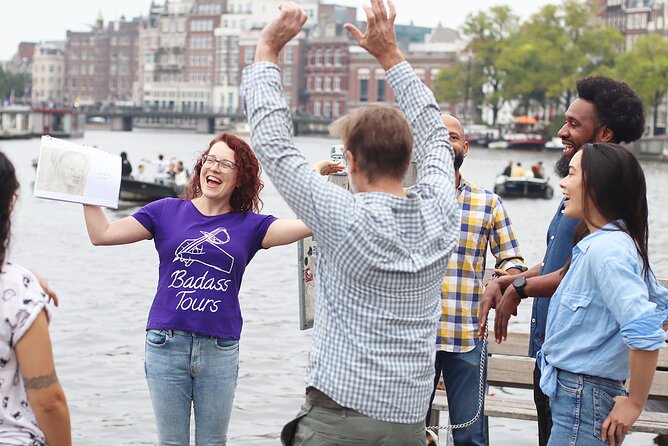
- A small group (up to 12) makes the stories feel personal, not performative
- Elyzabeth leads the walk, mixing local history with memorable character-driven anecdotes
- Eight stops across Amsterdam’s center turn landmarks into plot points
- Admission is free at every listed stop, so your money goes to the guide and storytelling
- The tour is designed for a first-day orientation, especially if you want the city from a new angle
- Begijnhof is a treat if open, otherwise you’ll still end outside its gates
Women’s History on Amsterdam streets, not in a museum

Amsterdam is full of statues and buildings that look like they’re telling one story. This tour nudges you to look closer and ask: who else shaped this city, and how did they do it under pressure? You’ll hear about women whose influence ranged from high-level social change to arts and culture, plus people who pushed back against spiritual and societal forces.
The big win here is pacing. You’re not stuck in one place. Instead, you walk short segments and get a new chapter at each stop, which makes the whole thing easier to remember later when you’re eating fries and trying to place what you just learned.
You can also read our reviews of more historical tours in Amsterdam



Price and what $47.47 buys you
At $47.47 per person for about 2 hours, you’re paying for a guided storytelling format, not a pile of timed entries. What makes the value make sense is that every listed stop is free to access, so you’re not stacking extra costs on top of the ticket.
Also, this is a small group, which matters. Larger tours can feel like you’re watching from the back row. Here, the guide can keep attention and adjust the flow when questions pop up, especially because the walk is designed to connect the dots across the city center.
Start at Prins Hendrikkade 48 and get oriented fast
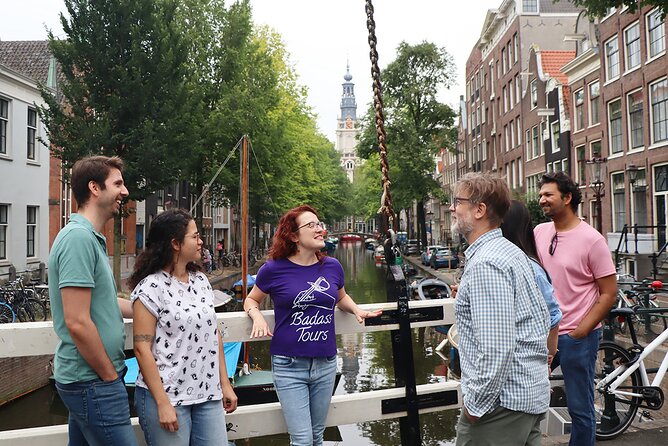
You meet at Prins Hendrikkade 48 (1012 AC), and you’ll finish outside the Begijnhof near Spui (1012 Amsterdam). The start location is close to the old harbor area, and the guide uses that moment to frame what you’ll be seeing.
If it’s your first day in Amsterdam, this opening matters. You get a quick sense of how the city’s major landmarks relate to each other, then you build on that throughout the route. It’s a practical way to stop the city from feeling like random canals and pretty facades.
Centraal Station: the tour’s real opening statement
Your first stop is Centraal Station, across from the old harbor. It’s a smart way to begin because it immediately places you in the Amsterdam that visitors rush past. You’re not starting in a quiet courtyard; you’re starting at the city’s major point of arrival and movement.
The guide gives a foundation, so later stops land better. Instead of memorizing locations, you start understanding why certain places became stages for social power. Even if you only remember half of it at first, it clicks as you continue.
Beurs van Berlage and the women who answered the market
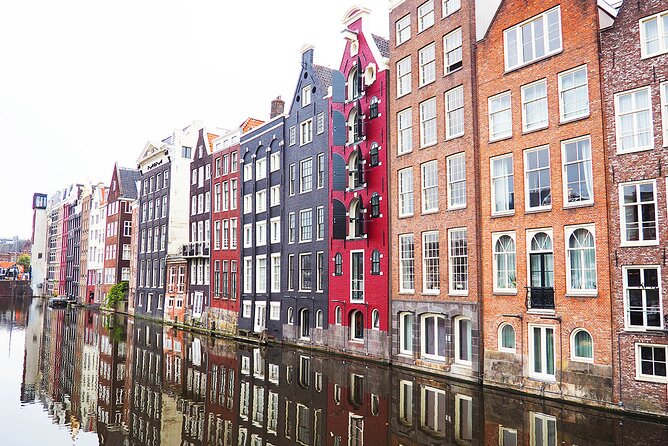
Next up: Beurs van Berlage. This stop is tied to Amsterdam’s stock exchange story, with the tour focusing on women who acted like fighters in a world built on finance and control.
Why I like this angle: it’s not just symbolism. You’re looking at a landmark and hearing how economic structures can shape culture and who gets heard. Amsterdam has long attracted trade and capital, and this walk shows how women didn’t just exist beside that system. They responded to it.
A good note for this part of the walk: pay attention to how the guide contrasts old and new institutions around the exchange hall. You’ll get more out of it if you keep your eyes scanning the surroundings instead of only watching the guide.





Dam Square: where the story gets a little scandalous
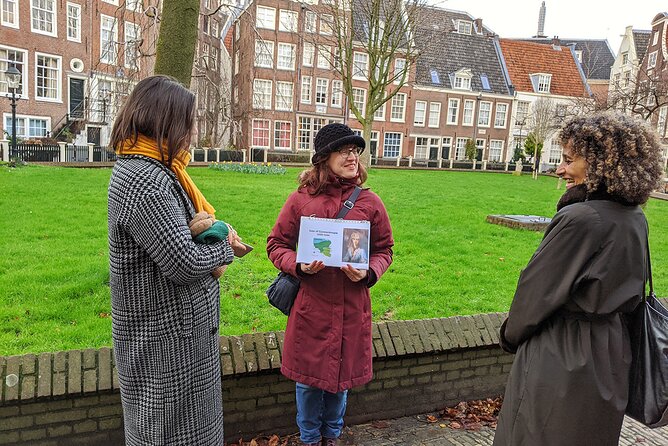
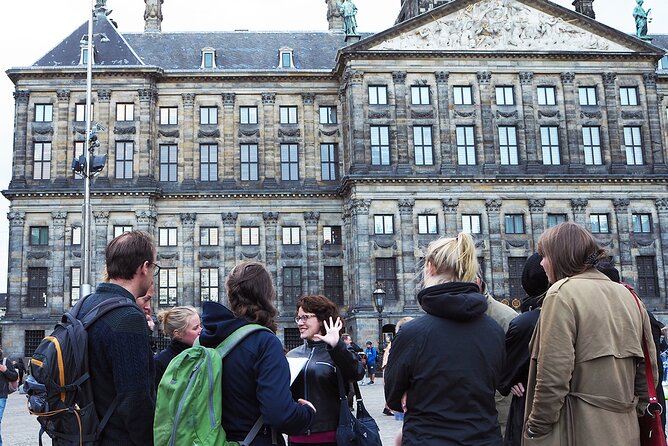
At Dam Square, the tour shifts tone. The setting is public and lively, and the guide shares one of the salacious stories from Amsterdam’s past, described as tasteful rather than crude.
This is where the tour becomes more than facts. It uses the city’s drama. Dam Square is the kind of place where history can feel like a postcard unless someone gives you a human thread. Here, you get that thread, and suddenly you understand why people talked, argued, and pushed boundaries in public spaces.
Beurspoortje: motorcycles, a gay bar, and Nazi-era courage

Beurspoortje is one of the stops that sounds almost too wild to be true, but that’s exactly why it’s memorable. The guide tells the story of one of the tour’s favorite badasses, and the themes include motorcycles, Amsterdam’s first modern gay bar, and the image of drinking Nazis under the table.
This part works because it combines three kinds of rebellion:
- personal freedom
- social identity and community
- political resistance
Even if you only catch the main beats, it’s a powerful reminder that Amsterdam’s history includes people who refused to behave in fear. If you’re the kind of traveler who likes your stories with edge, this is your moment.
Nes: theater district energy and a first Black female millionaire clue
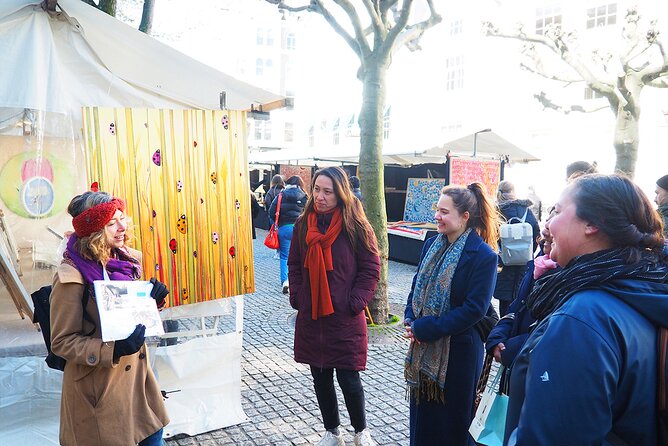
Then you move to Nes, a hub for cutting-edge theater. The story here centers on powerful women, including the first Black female millionaire in the Americas. One key hint is built into the tour framing: she wasn’t in the US.
That hint is more than a trivia line. It nudges you to confront how the word Americas gets used loosely. You leave with a sharper sense that success and power weren’t restricted to one country or one narrative. If you enjoy getting your worldview slightly rearranged by the end of a walk, you’ll like this stop.
The equestrian statue of Queen Wilhelmina: authority in bronze
Next is the equestrian statue of Queen Wilhelmina. This is where you slow down a touch and learn about the Netherlands’ first Queen Regnant.
It’s an important contrast to earlier stops. Instead of focusing only on resistance at street level, you also see formal power. The tour doesn’t ignore the political side of history, and it makes you notice how leadership changes what gets documented and remembered.
If you’re taking photos, this statue is a good one to get right. The guide’s explanation makes the statue feel like a map marker for something bigger than a monarch’s face.
Rokin: Amsterdam’s main waterway and the Women’s Riot connection
At Rokin, the tour leans into place-based storytelling. Rokin is Amsterdam’s first main waterway, and the guide links it to the Miracle of Amsterdam and how that helped lead to the Women’s Riot.
This is the point in the walk where you’ll start recognizing the tour’s pattern: legends and real events aren’t treated as separate worlds. The city’s beliefs, stories, and public reactions all feed into each other.
If you want to get the most from this stop, look at how water routes shaped movement and communication. Even without a long lecture, you’ll feel why a riot or a social clash would spread quickly in a canal-and-street city like this.
Begijnhof end: a quiet women’s enclave in the middle of traffic
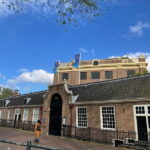
The final stop is Begijnhof, if it’s open during your tour timing. If you’re lucky, you’ll get a glimpse of an idyllic women’s enclave tucked inside the noise of the surrounding city.
Even when it’s not open, ending outside the Begijnhof is still meaningful. It gives the walk a soft landing after the harder-edged stories earlier on. There’s something satisfying about finishing where women’s community life is the focus, not just conflict or politics.
The guide factor: why Elyzabeth’s storytelling style matters
The guide is listed as both passionate and very much an Amsterdam history nerd, and Elyzabeth specifically comes through in how the tour is described. The tone is engaging, and the stories are framed to make you think, not just to entertain.
One thing I appreciate is that the tour is designed to work for more than one type of person. If you’re traveling with a partner who likes practical city time rather than lectures, this format still holds attention because the stories are tied to landmarks you can point at.
Who this tour is best for
This tour is a great match if you:
- want a first-day introduction to Amsterdam’s center that doesn’t stick to the usual male-focused storyline
- like short, character-driven history you can carry into the rest of your trip
- enjoy women’s history that goes beyond one category (work, activism, and culture all show up)
It also makes sense if you’re the kind of traveler who likes to learn while walking. The route hits several recognizable areas, and the guide keeps the connections clear.
Small practical tips so you enjoy every stop
- Wear comfortable shoes. It’s a walking route through central Amsterdam.
- Bring a light layer. Weather can shift quickly, even when the city looks calm.
- If you want a better memory later, pause for a few seconds at each stop before moving on. The tour is built around those moments.
Should you book this women’s history walk?
If your goal is to understand Amsterdam through the lives and choices of women, this is an easy yes. The tour’s format is compact (about 2 hours), the group stays small (up to 12), and the guide’s storytelling approach is built to make the city feel like it has new characters, not just new buildings.
I’d especially recommend it when you’re trying to set the tone for the rest of your trip. One good walk can change how you read the streets afterward. And if you like your history with real personalities, a bit of scandal, and clear connections to the places you’re standing in, you’ll get your money’s worth out of this one.
FAQ
How long is the Small-Group Women’s History Tour in Amsterdam?
It lasts about 2 hours.
What is the price per person?
The price is $47.47 per person.
How many people are in the group?
The tour has a maximum of 12 travelers.
Where do I meet the guide?
You meet at Prins Hendrikkade 48, 1012 AC Amsterdam.
Where does the tour end?
The tour ends outside the Begijnhof, near Spui.
Is this tour ticketed, and do I need to bring anything specific?
The experience uses a mobile ticket.
Are admissions required for the stops?
The listed stops include admission ticket free, so there is no admission cost noted for each location.
What happens if the weather is bad?
This experience requires good weather. If it’s canceled due to poor weather, you’ll be offered a different date or a full refund.
Is service animal access allowed?
Service animals are allowed.
What is the cancellation policy?
Free cancellation is available up to 24 hours in advance of the experience start time for a full refund. If you cancel less than 24 hours before, the amount paid is not refunded.