REVIEW · ATHENS
Pauls Biblical Ancient Corinth by Mini-bus
Book on Viator →Operated by Great Greece Tours · Bookable on Viator
Corinth is Paul’s real-life backdrop. This day trip strings together the big New Testament locations with dramatic viewpoints, plus a comfortable ride in a luxury Mercedes mini-bus with pickup. I like the tight, well-paced route that actually fits a day away from Athens, and I really like how guides such as Nick, Aris, and Kostas connect the stories you read with the stones you see. One thing to plan for: you’ll pay extra for the major monument entry (around €15 per person), and Ancient Corinth is partly on your own since the guide does not go inside with you.
You’re looking at about 6 to 7 hours total with an English-speaking driver/guide, plus WiFi on board and a mobile ticket. The group stays small (max 11), so you can ask questions and adjust when your timing slips, which matters on a long Athens-to-Corinth day. If you’re hoping for a totally hands-off, self-guided museum marathon, this isn’t that. You’ll get guided context first, then targeted free time where it makes sense.
In This Review
- Key highlights you’ll feel on the day
- A Paul-and-Corinth day trip that starts in Athens, ends in the Bible
- Pickup, timing, and the small-group pace (why it matters)
- Corinth Canal: the engineering spectacle that makes the route feel real
- Kechries and Paul’s tentmakers: a story you can stand inside
- Acrocorinth: the castle that turns the region into a map
- Apostolos Pavlos Church: the Paul connection with photo-worthy views
- Ancient Corinth (Archaia Korinthos): where your self-time matters
- Diolkos: the 2700 B.C. boat-transfer road that explains the whole region
- Price and value: what $80.68 really buys you
- Who this tour fits best (and who should consider another option)
- My quick verdict: should you book Paul’s Corinth with a mini-bus?
- FAQ
- How long is the Paul’s Biblical Ancient Corinth tour?
- What is the tour price?
- Is pickup included, and where do we meet?
- Is WiFi available on the vehicle?
- What language is the guide/driver?
- Do I need to buy tickets for the monuments?
- Will the guide enter Ancient Corinth with me?
- Is there a limit on group size?
- What is the cancellation policy window?
- Is the tour open to most travelers?
Key highlights you’ll feel on the day
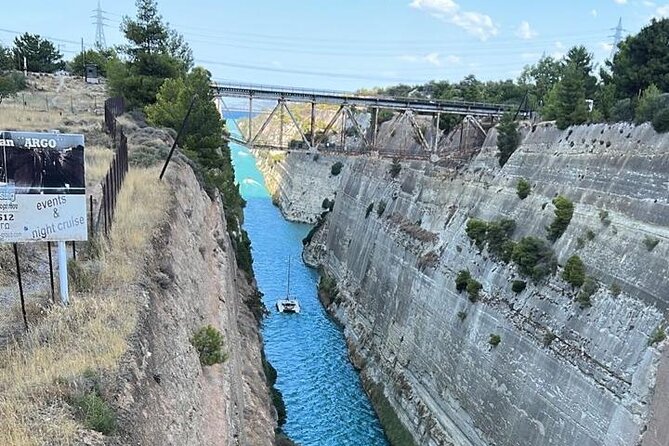
- Corinth Canal’s scale up close: long, deep, and photo-friendly, with real-world engineering history you can grasp in minutes.
- Kechries and the tentmakers story: Priscilla and Akila’s workshop setting connects to Paul’s movements around 51 A.D.
- Acrocorinth fortress views: a high-walled castle site that helps you visualize how Rome-era power and travel routes worked.
- Ancient Corinth on your schedule: you get time at the Temple of Apollo, Agora, and more, without a “follow me every step” feeling.
- Diolkos, the boat-carry road: a short stop that explains how ships moved between seas long before modern canals.
A Paul-and-Corinth day trip that starts in Athens, ends in the Bible
If you’re in Athens and you want to see Corinth without turning it into a logistics project, this is an easy win. You leave Athens and spend your time on the places tied to Paul’s letters and journeys—then you wrap it up back where you started.
What I like most is the way the day moves from “where travel happened” to “where faith happened.” You begin with the Corinth Canal area, then move into the Paul-centered sites around Kechries, Acrocorinth, and Apostolos Pavlos. By the time you reach Ancient Corinth, you can picture not just what the ruins are, but why they mattered to people moving through the region.
And yes, this is partly religious tourism. But it works even if you’re more into history than faith—especially because the guides connect dates and locations to physical sites, not just Bible verses.
You can also read our reviews of more tours and experiences in Athens.

Pickup, timing, and the small-group pace (why it matters)
This is designed as a single, guided day out: about 6 to 7 hours, depending on how the day flows. You’ll get pickup offered, and you meet at Akti Miaouli 85. That matters because it prevents the “where do we start?” scramble that can waste a surprising amount of time in Athens.
Your ride is an air-conditioned vehicle and a luxury Mercedes mini-bus, with WiFi on board. For a day trip that includes multiple stops and some walking around viewpoints, comfort isn’t a luxury here—it’s how you keep your energy for the actual sites.
Group size is capped at 11 travelers, and that smaller headcount is a big part of the experience. You’re not stuck listening to a guide talk into the void while you wait behind a crowd. Instead, there’s room for questions and quick adjustments. One helpful detail: the day is run with flexibility if timing gets thrown off, so you’re less likely to feel rushed through the important parts.
Corinth Canal: the engineering spectacle that makes the route feel real
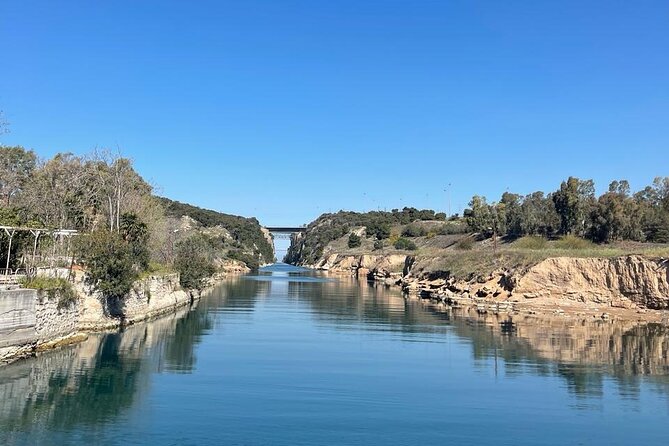
The Corinth Canal stop is your first “wow, okay, this place mattered” moment. The canal is known as the Isthmus Canal, cutting across the Isthmus of Corinth. You’ll get the chance to take photos and look around, and the scale sinks in fast.
Here are the standout facts you’ll hear:
- It runs about 4 miles across.
- It’s roughly 80 meters high and about 27 meters wide.
- King George began excavations in 1886, and the project finished in 1996, after many wars.
Then the guide adds the bigger timeline. The canal’s existence is tied to much older ideas, and boats moving between seas long predate modern excavation. The Romans used a method that involved transferring boats by rolling them in woods. Even if you don’t picture every step of that process, it gives you a mental bridge: people have been trying to solve this travel problem for thousands of years.
Practical tip: bring a phone strap or wear a secure hat if it’s windy. That canal edge can be breezy, and you’ll want both hands for photos.
Kechries and Paul’s tentmakers: a story you can stand inside
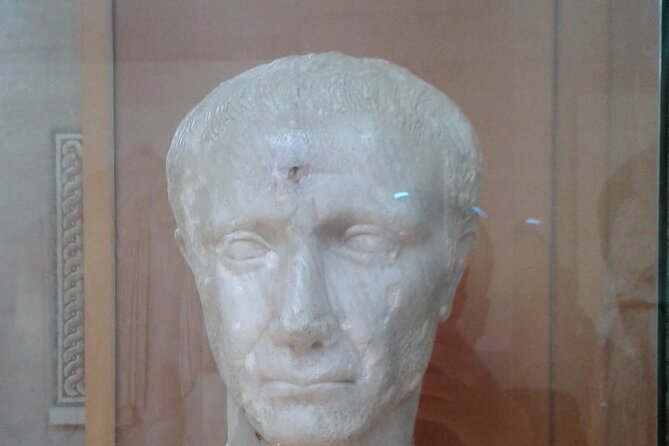
Kechries is where the day gets personal. This is the stop tied to Paul in 51 A.D., where he meets Priscilla and Aquila making tents. You’re also told that Paul stayed here overnight and then left toward Ephesus about 16 months later.
This stop is structured to feel like more than a quick Bible stop. You’ll have time to look around and connect the setting with the characters:
- Priscilla and Aquila are presented as tentmakers working and living here.
- The area includes what’s described as the very first Christian church you can see on the route.
The practical value? It makes Paul’s movement less abstract. When you stand in a place associated with work, lodging, and community, the letters stop feeling like they floated down from a sky of ideas. They feel like conversations between real people in real places.
Time on this stop is around 30 minutes. That’s usually enough to see the core points, take a few photos, and get your bearings before heading up toward the fortress sites.
Acrocorinth: the castle that turns the region into a map
Acrocorinth is the big altitude play—literally. This ancient castle sits around 530 meters high, and it’s framed as a 5th-century B.C. fortress area with later Roman-era importance. You’ll get the winter palace angle for Caesar, which helps connect why rulers cared about this location.
What you’ll hear about during the stop includes:
- A Temple of Aphrodite association, described with 1000 women tied to Corinth’s religious reputation.
- The idea that you’re looking over the same travel logic Paul-era people would have understood.
- The fact that Caesar could watch the Corinth Canal and the boats from up here.
And the viewpoint part is real. From Acrocorinth, you can actually “read” the region. The canal, the movement between seas, and the geography all start clicking together.
Is it a lot for one stop? It can feel like a lot, in a good way. Expect more history and story connections than you can process in a single minute. The best way to handle it is to take photos, then step back and listen once. Don’t multitask too hard.
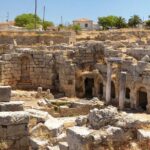
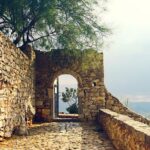
Apostolos Pavlos Church: the Paul connection with photo-worthy views
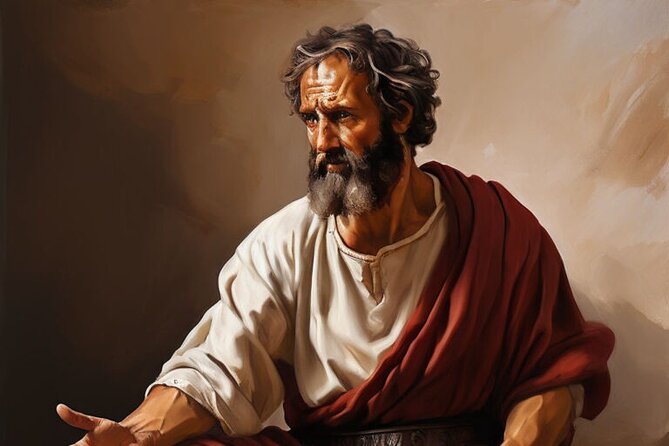
This stop is shorter, around 30 minutes, but it’s a meaningful bridge between the fortress and the bigger archaeological site.
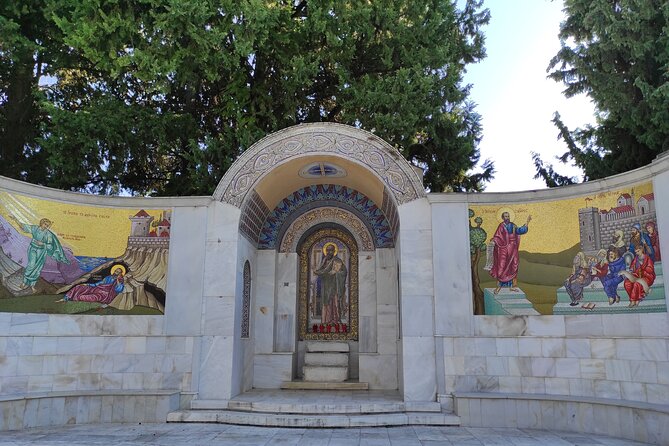
Apostolos Pavlos Church is described as an ancient church of Paul from 51 A.D., and you’ll get great views for photos. This is one of those locations where you can pause, catch your breath, and look out over the same region you’ve been hearing about for hours.
From a pacing standpoint, it also helps you avoid Ancient Corinth fatigue. You’re not thrown directly from Acrocorinth into a huge ruin complex without a break.
Ancient Corinth (Archaia Korinthos): where your self-time matters
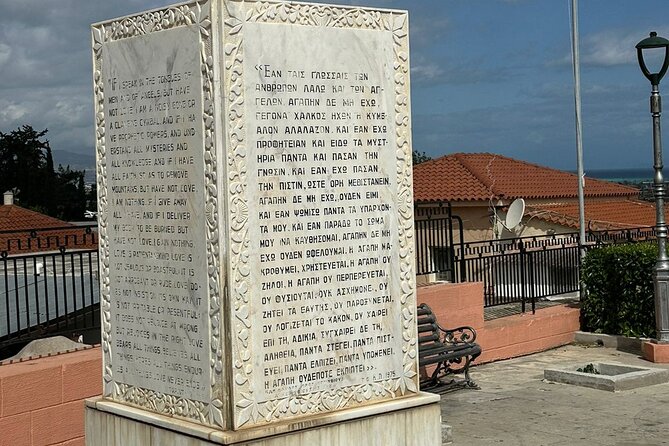
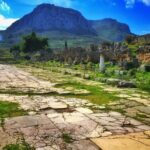
Ancient Corinth is the main event of the day. You’ll spend about 2 hours here, and this is where you’ll want to spend your energy wisely.
The tour gives context so you know where to look. Then here’s the key detail: the guide will not enter with you in Ancient Corinth. So you’ll be self-directed once you’re inside the site.
That’s a drawback if you want constant narration. It’s also a benefit if you like wandering at your own speed. Since the day is about Paul and Corinth, I’d treat this like a choose-your-own highlights moment:
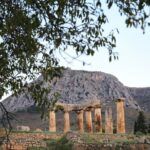
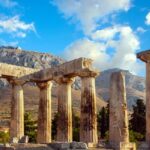
- Temple of Apollo (positioned as the second most famous Temple of Apollo, after Delphi)
- Octavia’s Temple (linked to Caesar’s mom)
- The Agora
- The Oracle of Corinth
- The Ancient Church of Paul
- The museum and more areas on site
There’s also a quick “why it feels important” lesson: Ancient Corinth is described as a long-used center for both Corinthians and Romans, with temples and public spaces that shaped daily life.
One big practical note: monument entry here is not included in the base tour. The listed monument tickets are €15.00 per person. So factor that into your total budget. If you show up without planning for it, you’ll waste time later.
Time strategy I recommend: don’t try to see every ruin. Pick 3-4 anchor spots (like Temple of Apollo, the Agora, and the Oracle area), then use the rest of the time for the museum or the Ancient Church of Paul.
Diolkos: the 2700 B.C. boat-transfer road that explains the whole region
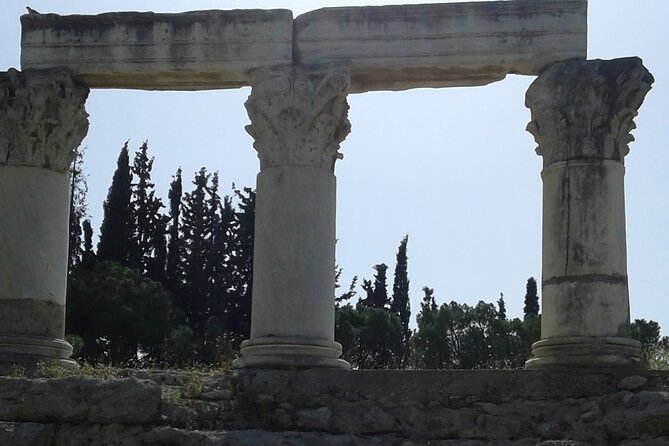
The Diolkos stop is short (about 15 minutes), but it solves a puzzle for many first-time visitors: how ships moved between the Aegean Sea and Ionian Sea before modern canals.
You’ll hear that the Diolkos is an ancient roll way dating back to around 2700 B.C., used to transfer boats between seas. That stop pairs nicely with the Corinth Canal experience earlier in the day. Together, they give you a “then and now” understanding of travel through Corinth’s geography.
If you only do one canal-related explanation on your trip, make it this. It’s quick, focused, and it makes the long-range story easier to hold in your head.
Price and value: what $80.68 really buys you
The tour price is listed at $80.68 per person, and the duration is about 6 to 7 hours. On top of that, you should expect monument tickets of about €15.00 per person for the sites that require entry.
So yes, there’s an extra cost. But the value is in the package:
- Pickup offered from Akti Miaouli 85 area
- Air-conditioned Mercedes mini-bus transportation
- WiFi on board
- English-speaking driver/guide
- A route that hits multiple Paul-linked locations, not just one ruin and a photo stop
What I consider good value here is the small-group size (max 11) combined with the “guided context + time to look” pattern. You get narration at the right moments (canal and fortress viewpoint stops) and then space to explore the big archaeological area yourself.
It’s not a budget hack. It’s a practical way to see the main Corinth highlights with less stress than doing it independently—especially if you don’t want to figure out train schedules, bus transfers, and which sites are open when.
Who this tour fits best (and who should consider another option)
This works best if you:
- Want a single-day Corinth visit from Athens without messy transport
- Like biblical or early Christian settings but also appreciate archaeological context
- Prefer a small-group day with a real guide who can answer questions
- Want a mix of guided stops and self-guided time at the big complex
It may not fit if you:
- Need the guide inside every site (Ancient Corinth is self-directed since the guide does not enter with you)
- Want a long sit-down style tour that stays strictly at one location for hours
My quick verdict: should you book Paul’s Corinth with a mini-bus?
If you want Paul’s Corinth in one day, this is an efficient, comfortable option with a clear route and a guide-led flow. The biggest reasons I’d book are the combination of key Bible-linked stops and the way viewpoints (Corinth Canal, Acrocorinth, Apostolos Pavlos) help you understand the region rather than just memorize names.
Add the fact that the day is run with small-group attention and flexibility, and you get a tour that feels controlled instead of chaotic. Just plan for the monument entry cost and give yourself permission to move through Ancient Corinth at your own pace.
FAQ
How long is the Paul’s Biblical Ancient Corinth tour?
It runs about 6 to 7 hours.
What is the tour price?
The price is $80.68 per person.
Is pickup included, and where do we meet?
Pickup is offered. The meeting point listed is Akti Miaouli 85, and all travelers meet at one pick up point.
Is WiFi available on the vehicle?
Yes, WiFi on board is included.
What language is the guide/driver?
The tour is offered in English.
Do I need to buy tickets for the monuments?
Yes. Tickets for the monuments are not included and are listed at €15.00 per person.
Will the guide enter Ancient Corinth with me?
No. The guide will not enter with you in Ancient Corinth.
Is there a limit on group size?
Yes. The maximum group size is 11 travelers.
What is the cancellation policy window?
You can cancel for a full refund up to 24 hours in advance of the experience’s start time.
Is the tour open to most travelers?
Yes, most travelers can participate.