REVIEW · PONDICHERRY
Pondicherry Heritage Walking Tour of French Quarters
Book on Viator →Operated by 5 Senses Walks · Bookable on Viator
White Town is a smart way to get your bearings fast. This 2-hour Pondicherry Heritage Walking Tour threads through the French Quarter’s colonial-era streets and buildings, mixing architectural styles you can actually see in daylight. You get a guided route that links key landmarks to what they meant during French rule and what remains today.
I especially like the focus on walkable streets and specific sights rather than a vague neighborhood stroll. I also like that many stops are free to enter, so your time stays on the buildings and stories instead of ticket lines.
One thing to consider is that English proficiency can vary by guide. I’d still book if you’re flexible and enjoy visual history, but if your language comfort is crucial, go in with that in mind.
In This Review
- Key highlights you’ll notice right away
- Why the French Quarters in Pondicherry feel different from the rest
- Price, pace, and what $26 buys you (without ticket stress)
- Starting in White Town: Rue Dumas and the street-names you can follow
- Foyer Du Soldat: a French legion hall with living community energy
- Raj Niwas: the Lieutenant Governor’s residence and the building story behind it
- Aayi Mandapam (Park Monument): Greco-Roman style with a human story
- French War Memorial and Eglise de Notre Dame des Anges: monuments by French engineer Louis Guerre
- Old Lighthouse and the Gandhi statue: coastal cues and a big symbol
- Guide quality is the real make-or-break factor (and it can be great)
- Getting the most out of the 2 hours you have
- Who this walking tour suits best
- Should you book this Pondicherry Heritage Walking Tour of the French Quarters?
- FAQ
- How long is the Pondicherry Heritage Walking Tour of French Quarters?
- How much does the tour cost?
- What does the tour include?
- Is there admission included for all stops?
- Are snacks included?
- Where does the tour start and end?
- What group size should I expect?
- What is the cancellation policy?
Key highlights you’ll notice right away
- Rue Dumas and other White Town streets: you’ll connect street names to what the French Quarter became.
- Foyer Du Soldat (French legion hall): a place tied to former soldiers and cultural gatherings.
- Aayi Mandapam (Park Monument): a 19th-century Greco-Roman style memorial tied to a story of selflessness.
- French War Memorial and Eglise de Notre Dame des Anges: you’ll see how French engineers shaped monuments and church design.
- Old Lighthouse and the Bay-of-Bengal edge: the route naturally leads you toward the coast.
Why the French Quarters in Pondicherry feel different from the rest
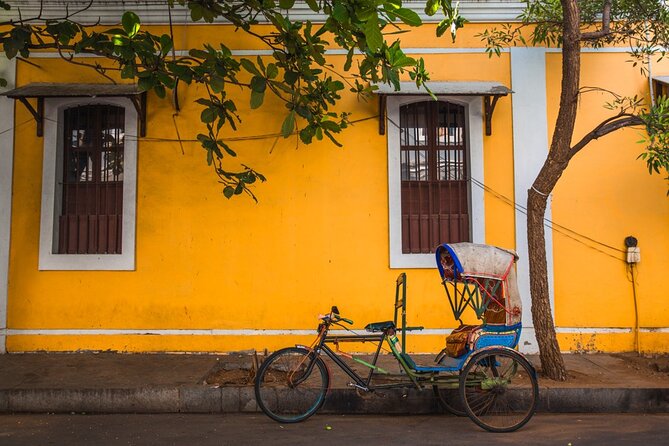
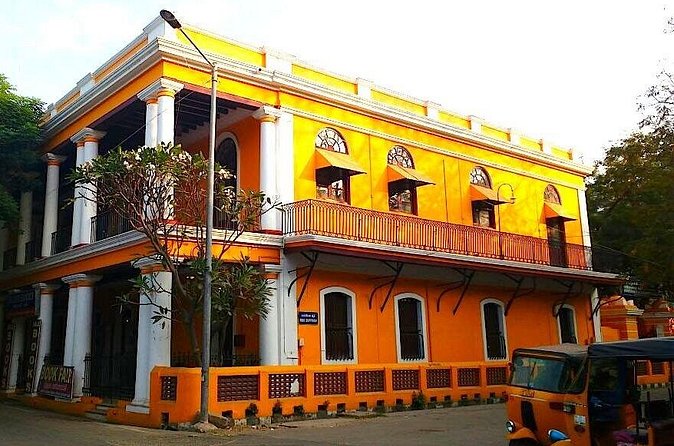
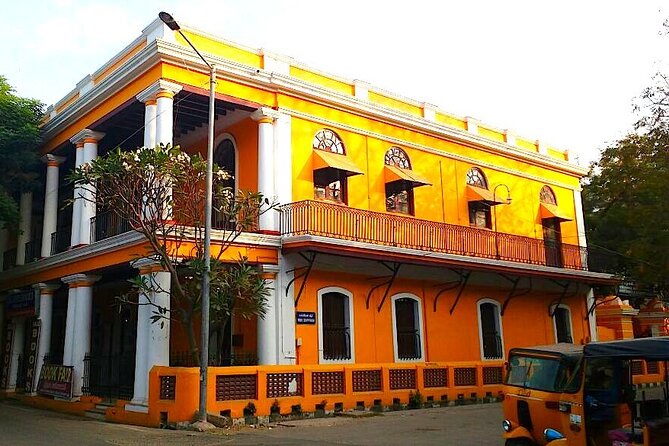
Pondicherry’s French Quarter isn’t just a themed area. It’s a real “mix and match” zone where French colonial design meets Indian details—sometimes in the same building, sometimes block by block. As you walk, the architecture keeps switching modes: Baroque, Rococo, Neoclassical, plus local influences that make it feel layered rather than copied.
That’s the big value of this tour format. A walking route forces you to notice proportions, street layout, and how landmarks relate to one another. From the outside, it’s easy to think colonial history is only museums. Here, it’s on the sidewalks and corners, with a short explanation at each stop so you know what you’re looking at.
Also, you’re not stuck in one type of site. Expect a blend of government-style buildings, church architecture, memorials, and a few “story monuments” that are easy to miss if you’re wandering alone.
Price, pace, and what $26 buys you (without ticket stress)
At $26 per person for about 2 hours, this tour sits in the “excellent intro” category. The math is simple: you’re paying mostly for a guide plus a structured path through multiple highlights, and the schedule keeps moving so you’re not paying for long gaps.
The itinerary is built around short stop-times, which is great if you want your day to stay flexible. You’ll get quick context, then you can linger a bit if something catches your eye—especially around the older buildings where details matter.
A practical bonus: the tour uses a mobile ticket, and it’s capped at a small group size (maximum of 15). That usually means less waiting and more chances to ask questions. Snacks aren’t included, so plan to bring water if you’re out in strong sun, and don’t count on a café stop being built into the route.
Starting in White Town: Rue Dumas and the street-names you can follow
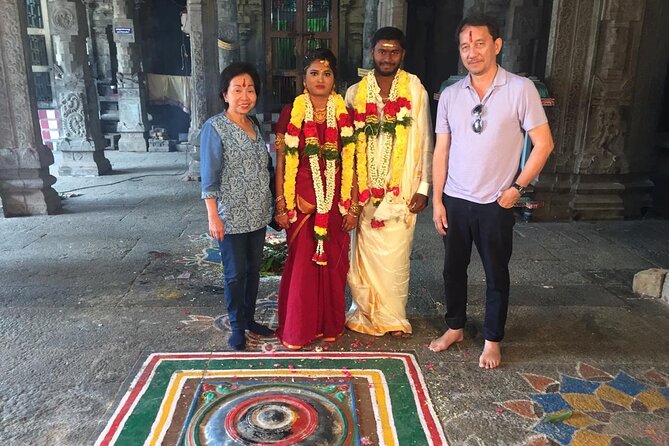
The walk begins at the Chief Secretariat Government of Puducherry area on Goubert Avenue in White Town. It’s a good start because you’re already inside the older urban fabric, not on the outskirts.
From there, the tour moves through streets like Rue Dumas, Rue Romain Rolland, Rue Suffren, and Rue La Bourdonnais. The benefit of this approach is orientation. Instead of hearing random place names, you watch how the street network leads you from one landmark to the next.
One practical thing: these are active streets. Even if the tour pace is easy, keep an eye on traffic and watch your footing if you’re moving quickly between viewpoints. Comfortable shoes really pay off here.
Foyer Du Soldat: a French legion hall with living community energy
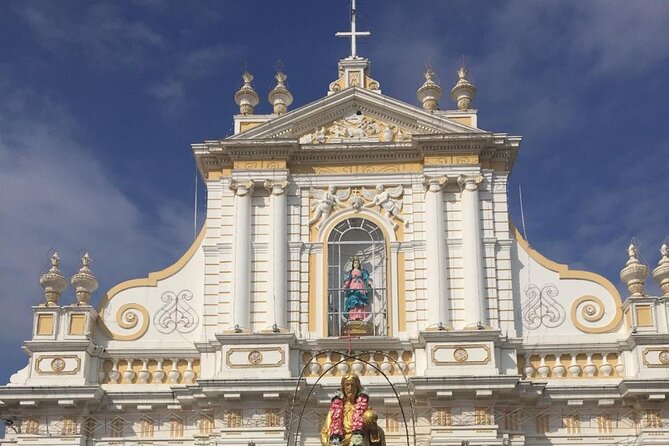
Next up is Foyer Du Soldat, a notable French legion hall. This isn’t a decorative stop. It’s described as a gathering place for former soldiers of the French army who served in various wars, and it hosts cultural events. That matters because it reframes the French Quarter from purely “old buildings” to a place with people and traditions attached.
What I like about stopping here is how it adds human scale to colonial architecture. The French presence in Pondicherry isn’t only about rulers and governors. It also involved soldiers, community institutions, and later cultural activities.
Time here is short (around 20 minutes), so you’ll want to pay attention to what’s in front of you right now rather than planning to read every detail. If the site feels meaningful to you, this is also the kind of stop where a few extra minutes of looking can make the story stick.
Raj Niwas: the Lieutenant Governor’s residence and the building story behind it
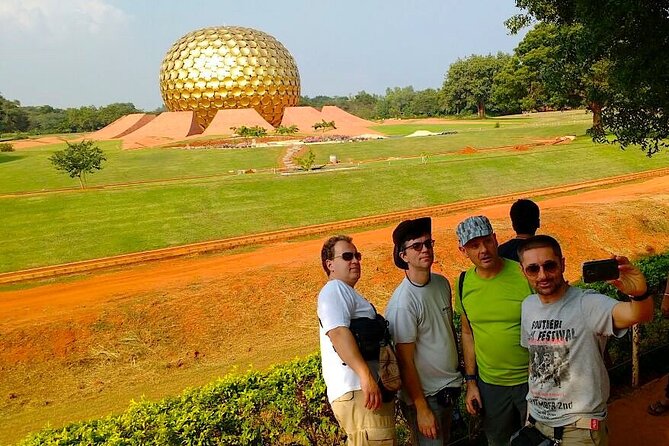
The tour’s third stop is Raj Niwas, the residence of the Lieutenant Governor of Puducherry. Here’s the architectural twist: the building was originally constructed in French Baroque style, then destroyed by the British in 1761, and later rebuilt in the Rococo style.
Even if you only get a brief look, that timeline is powerful. It explains why Pondicherry’s colonial-era architecture can look “both French and altered.” Buildings weren’t just constructed; they were reshaped by conflict and power shifts.
One consideration: admission here isn’t included. That doesn’t make it a bad stop, but it means your experience may depend on what you can see without an extra ticket. If you’re planning to enter, budget time and check whether that access is available on your walking day.
Aayi Mandapam (Park Monument): Greco-Roman style with a human story
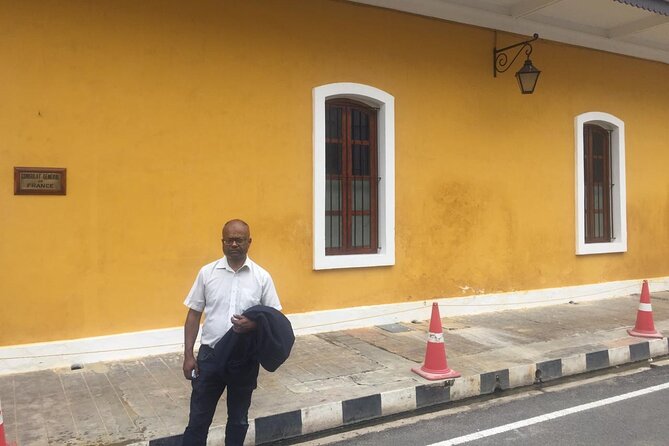
You’ll then reach Park Monument (Aayi Mandapam), built during the reign of Napoleon III in the 19th century. It’s designed in a Greco-Roman architectural style, and it commemorates a courtesan named Aayi, linked to a story about selfless action.
This is the kind of stop that works for different travelers. If you love architecture, the style helps you see European influence in local commemorations. If you prefer stories, the Aayi connection turns it from a “pretty structure” into a moment with meaning.
The stop is about 15 minutes, so use it well: look at the monument’s form, then let the explanation guide how you interpret it. In a short window, you’re not trying to memorize everything—you’re trying to build a mental map of what each landmark represents.
French War Memorial and Eglise de Notre Dame des Anges: monuments by French engineer Louis Guerre
After Aayi Mandapam, the route tackles two stops that connect design with remembrance.
First is the French War Memorial, built in 1835 and designed by French engineer Louis Guerre. The tour notes that it originally used six oil lamps and two reflectors. Later, the light source shifted to electric lamps in 1913, and it was further upgraded in 1931.
That’s a fascinating detail because it shows how technology evolves inside a monument’s purpose. You’re not just seeing a historical object; you’re seeing how it kept being updated to fit later eras.
Next comes Eglise de Notre Dame des Anges, a historic Catholic church built facing the Bay of Bengal. It’s also attributed to Louis Guerre, built in 1855 under Napoleon III, in a Greco-Roman style. The church is known for twin towers and stained glass windows.
This is one of the most visually satisfying parts of the tour because churches tend to reward careful looking. Even if you’re not religious, pay attention to symmetry, how the towers frame the sky, and how the coastal orientation affects the sense of place.
One quick practical note: church sites can have specific rules about movement and behavior. Keep your pace respectful and quiet.
Old Lighthouse and the Gandhi statue: coastal cues and a big symbol
You’ll finish the “French engineer thread” at the Old Lighthouse, also tied to Louis Guerre and built in 1835. Like the war memorial, it began with oil lamps and reflectors, converted to electric in 1913, then upgraded in 1931.
This stop is short (about 10 minutes), but it’s useful. It ties together the idea of French influence beyond buildings—into navigation, coastline identity, and practical coastal infrastructure.
Then the tour moves to the Statue of Gandhi, a tall monument (about 13 feet) created by Roy Choudhary from the Madras School of Art and Crafts. It’s surrounded by eight carved figures, which gives it a sculptural feel rather than just a single standing statue.
Why this matters in your mental map: the French Quarter route ends with an Indian national symbol. It subtly reinforces the transition from colonial-era dominance to India’s own narrative in public space.
Guide quality is the real make-or-break factor (and it can be great)
This tour includes a guide, and the best part is how much easier it is to read the area when someone explains the “why” behind what you see. In particular, guides like Vanaraj and Prasanth have been described as helpful and informed, and one guide even adapted the pace when traveling with a child.
That adaptability is important. The walking route has multiple short stops, so a guide who can adjust timing without rushing you makes the whole experience smoother.
Still, there’s a warning sign you should respect: English proficiency can be uneven. If you rely on detailed narration to enjoy history, plan to use the visual cues too—architecture, memorials, and street names still do a lot of the work even when explanations are brief.
Getting the most out of the 2 hours you have
Here’s how I’d approach it to maximize value:
- Wear shoes you don’t mind walking in for an hour or two. The route includes several street segments.
- Bring water. Snacks aren’t included, and the tour doesn’t promise a food stop.
- Use your questions early. If language is strong, ask about the architectural styles (Baroque vs Rococo vs Greco-Roman). If language is weaker, you can still get a lot from the building clues.
- Treat each stop as a snapshot. Each one is short by design. Your goal is to connect them into a single story of how Pondicherry’s French-era landscape was built, damaged, rebuilt, and remembered.
If you’re combining this with beach time later, the route’s proximity to the Bay of Bengal-facing church and the lighthouse makes it easy to transition without a separate transfer plan.
Who this walking tour suits best
This is a great fit if you want:
- an intro to Pondicherry’s French Quarter without a full-day commitment,
- a route that connects street names to landmark meaning,
- lots of outdoor viewing with quick stops rather than a museum-heavy day.
It’s also a smart choice if you’re short on time but still want structure. A DIY walk is possible, but a guide helps you avoid the “I saw it, but I don’t know why” problem—especially at places tied to specific people like Aayi and to specific engineers like Louis Guerre.
Consider skipping or pairing differently if:
- you need long time inside buildings (the stops are brief),
- you rely on very detailed narration in English (language quality can vary).
Should you book this Pondicherry Heritage Walking Tour of the French Quarters?
If your goal is to get oriented quickly and see the strongest French Quarter landmarks in about two hours, I think this one is worth it. The price is reasonable, the group is small, and the stop list hits the essentials: White Town streets, a legion hall, Raj Niwas’s rebuilding story, key memorials, a major church, the old lighthouse, and finally the Gandhi statue.
My advice: book it if you like architecture, street-level history, and short guided stops that keep your day flexible. Bring water, wear comfy shoes, and use the guide time wisely—then you’ll leave with a clear picture of how Pondicherry’s colonial footprint shaped what you can still see today.
FAQ
How long is the Pondicherry Heritage Walking Tour of French Quarters?
It lasts about 2 hours.
How much does the tour cost?
The price is $26 per person.
What does the tour include?
It includes a guide.
Is there admission included for all stops?
Admission is free for most stops. Raj Niwas is listed as admission ticket not included.
Are snacks included?
No, snacks are not included.
Where does the tour start and end?
It starts at the Chief Secretariat Government of Puducherry area on Goubert Avenue (Beach Rd, White Town) and ends at the Mahatma Gandhi Statue area on Beach Rd, White Town.
What group size should I expect?
The tour has a maximum of 15 travelers.
What is the cancellation policy?
Free cancellation is available. You can cancel up to 24 hours in advance for a full refund. If you cancel less than 24 hours before the start time, the amount paid won’t be refunded.