REVIEW · ROME
The Labyrinth of Rome between catacombs and ancient quarries
Book on Viator →Operated by Underground Rome · Bookable on Viator
Rome goes underground in a way you’ll feel. This small-group experience mixes Caffarella Park walking with Roman subterranean tunnels, then carries you into catacombs by lamp-light and ends in a pagan space tied to early Christianity.
I like how the tour is built around tangible details: chisel marks on tunnel walls and the contrast of light and shadow underground. I also like that it’s not rushed sightseeing; with a maximum of 10 people, you get time to look and listen.
One possible drawback to keep in mind: you should plan for damp, cool air below ground and a decent walk before you reach the entrance, which can feel long in hot weather.
In This Review
- Key things to know before you go
- Caffarella Park to the underground entrance: the walk you shouldn’t skip
- Sotterranei di Roma: quarries, chisel marks, and why the ground matters
- A note on expectations
- Catacombs by lamp-light: early Christian burial corridors
- What you’ll notice underground: damp air, modern scents, and real textures
- The pagan temple stop and the Mithraeum angle
- Guides, group size, and timing: why 2.5 hours feels right
- Price and value: does $114.14 make sense?
- Who should book this underground labyrinth?
- Final call: should you book?
- FAQ
- How long is the Labyrinth of Rome tour?
- Where do I meet the guide?
- Is the tour in English?
- Do I need a printed ticket?
- How big are the groups?
- Is there a long walk before you go underground?
- Does this tour include an admission ticket?
- Is it ever canceled due to weather?
- Can I cancel for a full refund?
Key things to know before you go
- Small group size (max 10) keeps the pace human and the guide’s focus on the space itself.
- Caffarella Park warm-up: about 1 km through nature before you enter the underground.
- Roman lamp moment: you’ll cross darker corridors using an ancient-style lamp rather than just a standard flashlight.
- Multiple layers of time: Roman quarries, catacombs, and even WWII-era remnants show up in the same underground system.
- A pagan temple stop rounds out the story of how religious life shifted in ancient Rome.
Caffarella Park to the underground entrance: the walk you shouldn’t skip
Your tour starts above ground with a calm breather in Caffarella Park, a regenerating walk of roughly 1 kilometer (just over half a mile). This matters more than you might think. Rome can feel loud and packed up top, and that park segment gives your brain a quick reset before you hit the damp, echoing tunnels.
It’s also your first practical timing checkpoint. Even though the distance is short on paper, the day can still feel long if it’s hot, because you’re walking through open areas before going underground. Wear comfortable shoes. I’d also bring something that can handle sun up top and chill below—your body will feel the change once you start descending.
The meeting point is on Via Amedeo Crivellucci, 8 (00179 Roma), and the activity ends back there. So you’re not dealing with a complicated drop-off. Just give yourself a little extra time to find the group at the start—several guides lead these tours, including names like Riccardo, Giuseppe, Daniela, Roberto, and Maurizio, and they don’t always meet in the exact same crowd spot.
You can also read our reviews of more tours and experiences in Rome.
Sotterranei di Roma: quarries, chisel marks, and why the ground matters
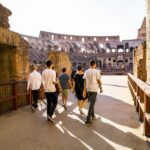
Once you’re underground, the big “wait, wow” moment is that you’re stepping into a working industrial world from Roman times. Beneath Rome there are miles of tunnels dug for materials used to build the imperial city. What’s neat is that you’re not just hearing about history—you’re seeing the scars of the work.
You’ll notice chisel marks on the walls, the kind of physical evidence that makes the story feel real. The tour frames these tunnels as places dug by ancient slaves, often at extreme cost. Whether you’re a hardcore archaeology fan or you just like “how did they do this,” that wall-level detail pulls you in.
There’s also a sense of reuse. The underground system doesn’t stay frozen in one era. Parts connect to other uses over time. In at least one part of the experience, you’ll see what used to be quarry space later used as a mushroom farm—a reminder that underground spaces keep getting repurposed when people find a constant need for cool, stable conditions.
A note on expectations
If you’re imagining a single, perfectly curated tunnel with one style of art the whole time, you might get an “it’s all underground, but it’s different underground” experience instead. Some people find repeating textures when you’re deep underground and the walls look similar. If that sounds like you, go with a mindset of “look for the small differences”—there are plenty.
Catacombs by lamp-light: early Christian burial corridors
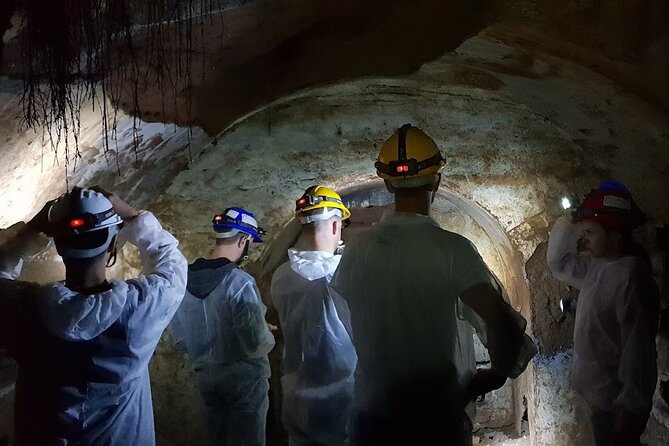
Next comes the catacombs—tunnels used by early Christians for burial, stretched across dozens of kilometers. This is where the tone shifts. The mood becomes quieter, the space feels more ceremonial, and the guide’s storytelling starts to feel less like a lecture and more like a guided walk through a human timeline.
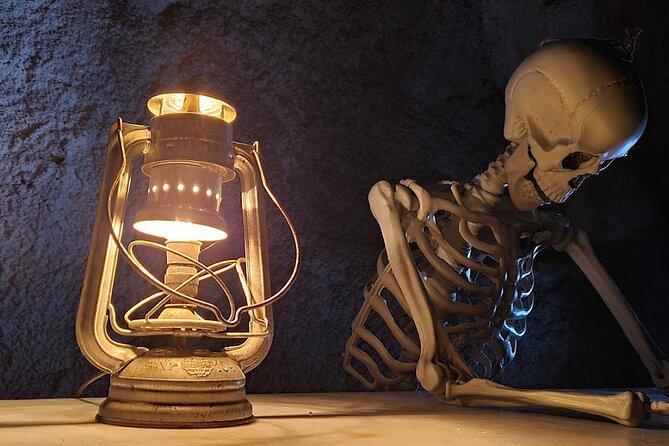
You’ll cross darker sections with an ancient Roman lamp experience. That detail helps you understand the darkness wasn’t just a vibe—it was part of how people moved through these spaces. One of the most memorable moments is when you turn off modern lights and stand in the pitch dark while the guide explains Roman burial traditions. It’s not just spooky for fun. It’s practical empathy: you start to feel what “visibility” meant back then.
You may also see how later history intersects with older layers. The tour includes a stop at what remains of a fungus dating back to World War II, which sounds odd until you remember the underground is cool and stable—perfect conditions for things like food production and other underground activities. That WWII connection gives the catacombs a living afterlife, not just a “then and forever” story.
What you’ll notice underground: damp air, modern scents, and real textures
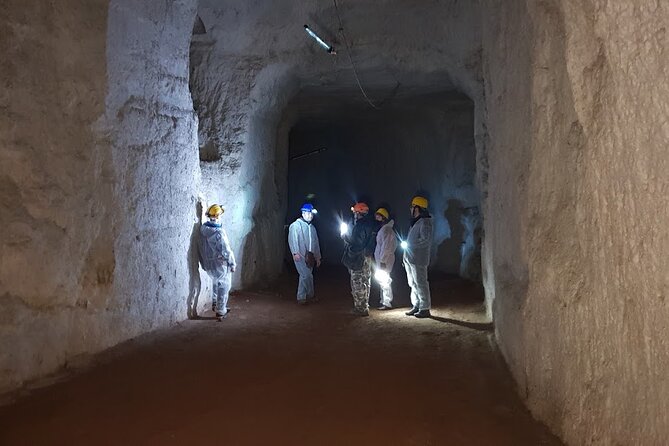
Underground in Rome is not like the clean, dry caves you might be used to elsewhere. Expect cool, damp conditions. In fact, bringing a light jacket or jumper is a smart move even on a warm day—people often realize halfway through they need an extra layer.
Air quality can be another consideration. One common complaint is that the air can feel heavy or not very fresh, which isn’t surprising when you’re in enclosed corridors for a couple hours. You don’t need to panic, but you should go in knowing it’s not a breezy stroll.
The good news: the tour is built around pauses and guidance. You’re not just walking through dark tunnels without context. The guide points out what you’re seeing—collapsed wall sections, niche-like spaces, and how the structure was shaped by human needs.
And the little “wow” details keep coming. Roman burial traditions, the way spaces were formed for the living and the dead, and the transition between different underground zones help prevent the experience from feeling like one long sameness.

The pagan temple stop and the Mithraeum angle
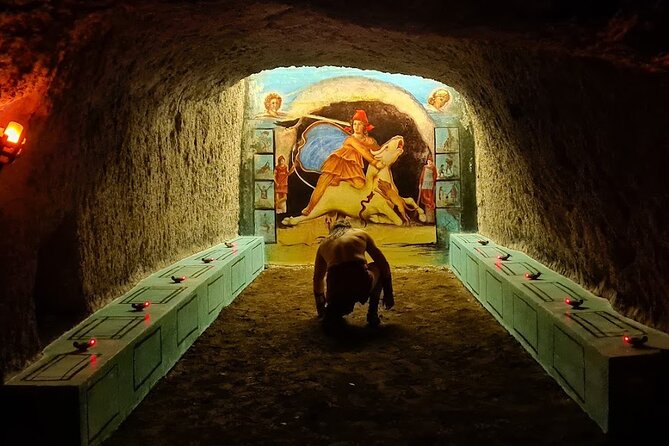
The final phase moves from burial and darkness into a pagan space: a pagan temple dug into the ground. The guide ties this to the larger story of how Christianity spread in ancient Rome, which helps you connect the underground locations to shifts in belief and ritual.
In one of the standout moments from the experience, you may also encounter a Mithraeum element—something that fits the broader theme that underground spaces hosted more than one kind of religious life. Seeing these spaces in person gives you better context for why early Christian burial occurred where it did and how underground ritual areas overlapped across time.
There’s also a tasting component linked to Roman life. Several guides include a sip of mulsum, a Roman wine with honey and spices. It’s not a full meal, and it shouldn’t replace hydration needs above ground, but it’s a fun way to connect the flavors of antiquity to the setting you’ve just walked through.
Guides, group size, and timing: why 2.5 hours feels right
This tour runs for about 2 hours 30 minutes and is offered in English with a mobile ticket. Group size is capped at 10 travelers, which is a big deal in a tight, underground setting. Fewer people means less crowding at entrances, more time for questions, and a smoother pace in narrow corridors.
The experience also has a clear structure: park walk, Roman tunnels, catacombs, then back to an end point at the start address. Because it’s organized this way, you don’t feel stuck wondering what comes next.
Guide style is a major factor. Names that show up with this experience include Riccardo, Giuseppe, Daniela, Roberto, and Maurizio. The common thread is that the storytelling focuses on what you’re seeing, including explanations about how the spaces were dug and used. That’s how you end up remembering details like chisel marks, the “light and shadow” feeling, and the way underground spaces were reused across centuries.
Price and value: does $114.14 make sense?
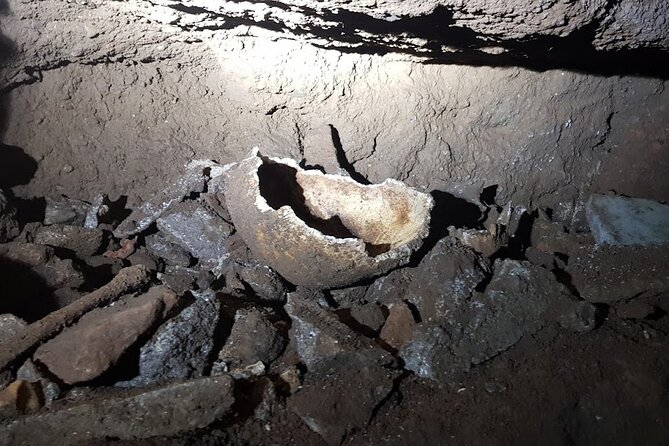
At $114.14 per person for roughly 2.5 hours, you’re paying for three things at once:
- Access to underground spaces that aren’t part of the standard Rome checklist
- Guided interpretation that turns tunnels and burial corridors into a coherent story
- Included admission, so you’re not stacking extra ticket fees at the last moment
For me, this is the kind of tour where the value comes from the rarity of the setting. Rome has plenty of famous highlights, but you won’t get this same mix of quarries + catacombs + pagan underground space + WWII-era remnants in a typical “big sights” day.
If you’re the type who likes broad historical context, you might still enjoy it, but you’ll get the most out of it if you’re comfortable being curious about stone, layers of time, and small physical details. If that sounds like you, the price feels more fair.
Who should book this underground labyrinth?
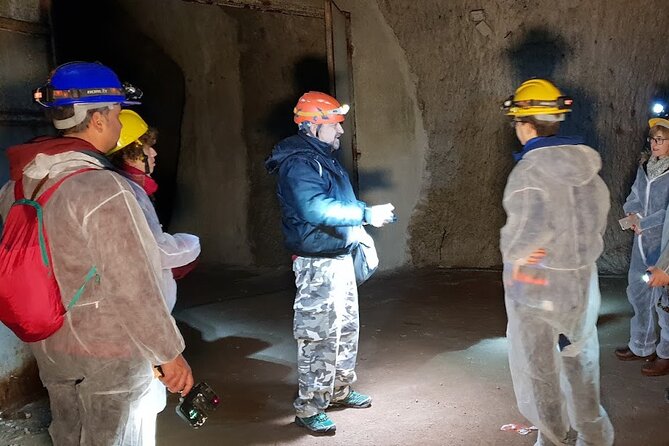
This is a strong fit if you want Rome off the main rails and you like experiences where the setting does the work. You’ll likely enjoy it if:
- You like archaeological sites where you can still see construction marks and structure
- You’re comfortable walking and spending time in damp, cooler conditions
- You want a guided story that connects multiple eras rather than one single famous monument
It may be less satisfying if you expect a perfectly varied route with lots of dramatic, different-looking rooms every few minutes. Underground spaces often feel repetitive in texture, even when the history is changing. The difference is in what your guide points out.
It’s also a good day when Rome is hot. The park walk is above ground, but once you go under, the temperature shift becomes part of the appeal.
Final call: should you book?
I’d book this if your ideal Rome day includes real subterranean spaces, small-group guidance, and the chance to stand in near-darkness while someone explains how people lived, worked, and worshiped underground. The mix of Roman quarries, catacombs, WWII remnants, and a grounded pagan temple makes it feel like a whole underground chapter, not a quick stop.
I’d think twice if you’re very sensitive to damp air, hate enclosed spaces, or you need lots of variety in what you see every few minutes. In that case, you might prefer a more open-air focus.
FAQ
How long is the Labyrinth of Rome tour?
The tour lasts about 2 hours 30 minutes (approx.).
Where do I meet the guide?
You meet at Via Amedeo Crivellucci, 8, 00179 Roma RM, Italy. The tour ends back at the meeting point.
Is the tour in English?
Yes, the tour is offered in English.
Do I need a printed ticket?
No. You’ll have a mobile ticket.
How big are the groups?
The maximum group size is 10 travelers.
Is there a long walk before you go underground?
Yes. You start with a regenerating walk through Caffarella Park of about 1 kilometer (just over half a mile) before reaching the underground portion.
Does this tour include an admission ticket?
Yes. Admission ticket is included.
Is it ever canceled due to weather?
Yes. The experience requires good weather, and if it’s canceled due to poor weather, you’ll be offered a different date or a full refund.
Can I cancel for a full refund?
Yes. You can cancel up to 24 hours in advance for a full refund. If you cancel less than 24 hours before the start time, the amount paid isn’t refunded.