REVIEW · PRAGUE
Prague: World War II and Communist History Tour
Book on GetYourGuide →Operated by Discover Prague Tours sro · Bookable on GetYourGuide
Prague turns political history into street scenes. This 2.5-hour walking tour threads together Nazi occupation and the Velvet Revolution through real places you can stand in. It’s history you can read on stone and iron, not just in a book.
I love that the tour doesn’t stop at World War II. You get the Czech experience of occupation and resistance, including the story tied to the assassination of the Nazi security chief, and why it mattered so much to the locals. I also like how it follows the timeline through communist takeover, the high point of the Prague Spring, the trauma of the Warsaw Pact invasion, and the later cracks that led to dissent.
One drawback to consider: the themes are heavy, and you’ll walk for 150 minutes while hearing details that can feel brutal. If you prefer light sightseeing only, this might be too much.
In This Review
- Key things you’ll get from this Prague WWII and Communist history tour
- From Týnská Street into a real timeline of occupation and resistance
- Municipal House and Prague’s Jewish Quarter: where power and fear show up in plain sight
- Dancing House and Wenceslas Square: how modern Prague holds older wounds
- Operation Anthropoid and the Cyrill Church crypt: the resistance story you can feel
- Prague Spring, the Warsaw Pact invasion, and the “then what?” feeling
- Normalization, culture under pressure, and why Charta 77 mattered
- Velvet Revolution streets: how Václav Havel and dissidents changed everything
- How tough is the walk, and what to bring?
- Why the guides make (or break) this kind of tour
- Value: what $34 buys you in 150 minutes
- Who should book this tour, and who might not
- Should you book? My quick decision guide
- FAQ
- Where is the meeting point?
- How long is the tour?
- Is the tour in English?
- What does the tour cover?
- Which sites are included?
- Is there a cancellation option?
- Can I reserve without paying right away?
Key things you’ll get from this Prague WWII and Communist history tour
- A clear 20th-century storyline from Nazi rule to Velvet Revolution
- Important central-city stops like the Municipal House, Dancing House, and Wenceslas Square
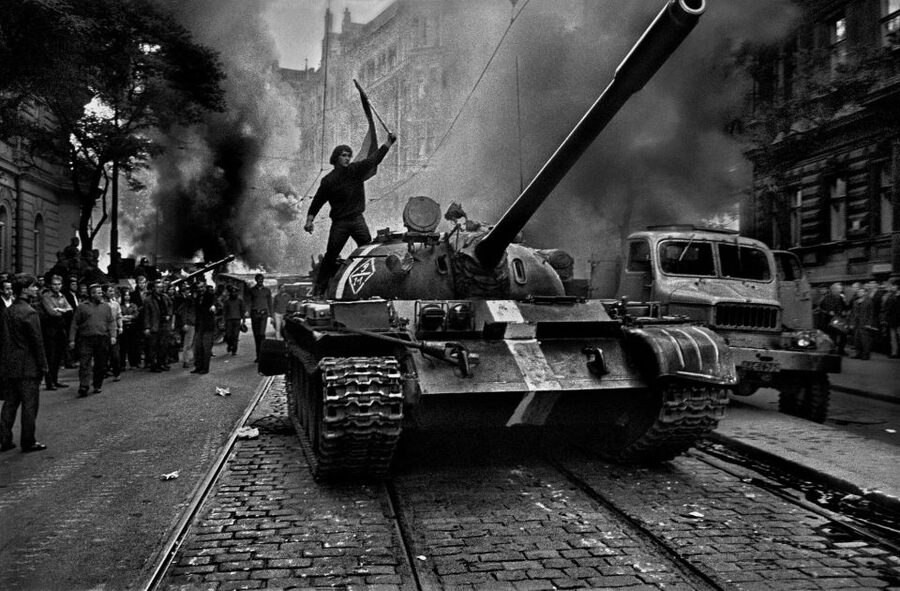
- Context for the Prague Spring and the 1968 invasion so it doesn’t blur together
- Resistance history you can connect to places, including the Cyrill Church crypt
- Dissent and culture under communism, from the Plastic People to Charta 77
- A guide who tells it like a local story, with humor mixed in at the right moments
From Týnská Street into a real timeline of occupation and resistance
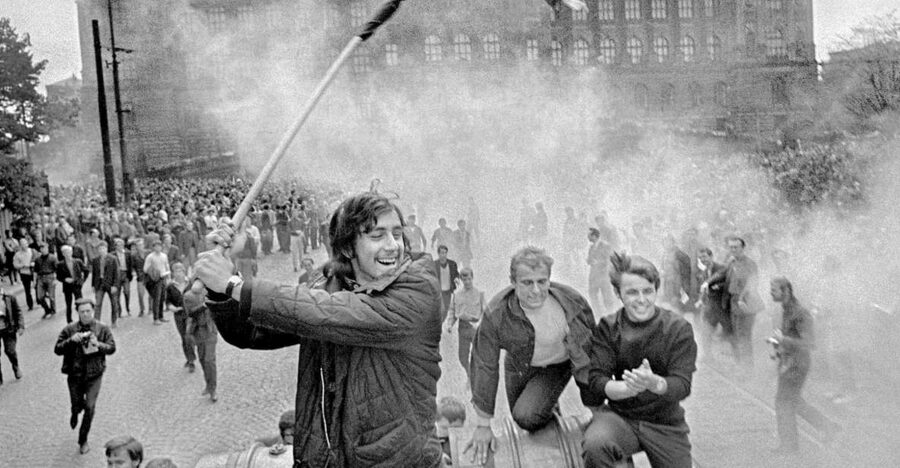
The tour starts at Týnská 639/4 in Staré Město, which is a great choice because you’re already in the historic heart of Prague. From step one, the experience is built like a timeline—one that connects street-level views to big political decisions. You’re not just looking at landmarks. You’re learning why those same streets became dangerous, then hopeful, then dangerous again.
What I appreciate here is the balance between the big picture and the human scale. The Nazi occupation period is covered in a way that explains how an industrial and progressive society was forced into a nightmare. Then the tour moves into resistance and uprising, and later into communist takeover—so you can see that these eras weren’t separate. They were linked, one set of pressures stacking on the next.
If your goal is a smarter visit to Prague’s center, this tour is a strong match. It helps you get bearings fast: which events led to which reactions, and why the city’s public spaces became stages for politics.
You can also read our reviews of more historical tours in Prague

Municipal House and Prague’s Jewish Quarter: where power and fear show up in plain sight
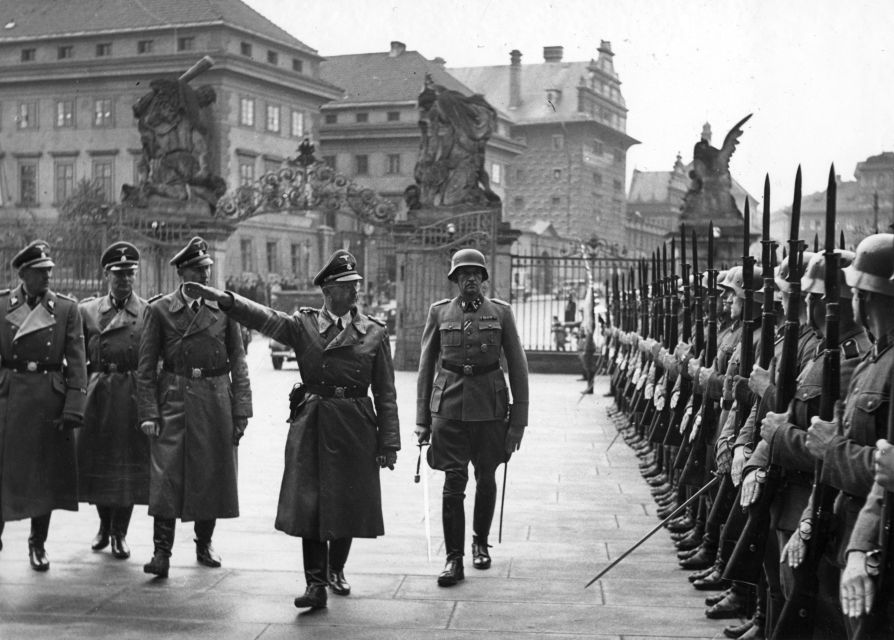
You’ll spend time around the Municipal House and the area associated with the Jewish Quarter. Even if you’re not going inside every building, these stops matter because the architecture and location tell a story: Prague’s central institutions sat close to the places where communities suffered most.
In practical terms, this is where the tour becomes especially useful if you like understanding the social geography of history. Nazi occupation didn’t just happen in paperwork. It moved through neighborhoods, institutions, and daily routines. By the time you reach the Jewish Quarter areas, the tour framing makes it easier to connect what you see today with what happened back then.
One thing to keep in mind: the Jewish Quarter can be emotionally intense. The tour doesn’t sanitize the era, and it doesn’t treat tragedy like a quick stop on a checklist. If you’re traveling with people who want only light material, it’s worth setting expectations in advance.
Dancing House and Wenceslas Square: how modern Prague holds older wounds
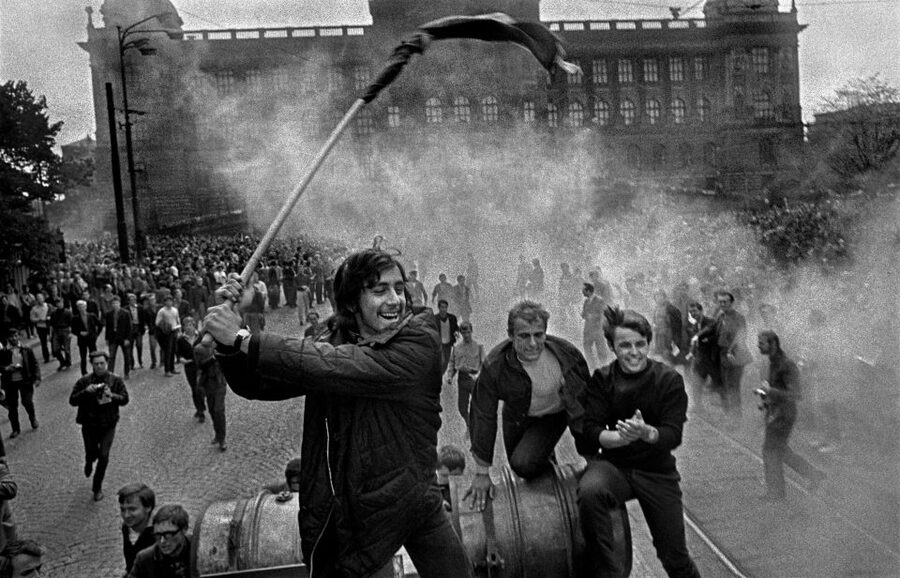
Two of the most recognizable central landmarks in the tour are the Dancing House and Wenceslas Square. This pairing works because it forces your brain to do something tourists often skip: it makes you notice the layers. Prague looks modern in places, but the political story isn’t old news. It’s written into who controlled the city—and how people learned to survive under shifting regimes.
Wenceslas Square is especially important in the tour concept. It’s one of Prague’s main public stages, and the city’s 20th-century story includes confrontations over public space—where crowds gather, where messages spread, and where authorities try to control the narrative.
The Dancing House offers a different kind of contrast. You get a chance to see how architectural style and city planning can reflect what a society values in a given era. In a walking tour like this, those visual contrasts help the history stick.
If you’re the type who likes to photograph everything, slow down here. Look at the square like you’re imagining it crowded and tense, not just open and scenic.
Operation Anthropoid and the Cyrill Church crypt: the resistance story you can feel
One of the most memorable parts of this tour focuses on the assassination connected to Operation Anthropoid—plus the aftershocks of what the Nazis did in retaliation. This is where the tour often feels most “alive,” because it links a known act of resistance to a specific kind of place: a church setting where resistance soldiers were hidden.
You’ll also hear about the chilling pattern that follows major resistance actions: arrests, punishment, and collective fear. This is exactly the sort of context that makes it easier to understand why people made those decisions despite the odds.
A highlight worth calling out is the mention of the Operation Anthropoid museum and moments tied to the church/crypt setting at the Cyrill Church. Even if you’re not a hardcore history buff, this section helps you see how resistance wasn’t only about bravery. It was also about logistics, secrecy, and high-stakes sacrifice.
Practical tip: if you’re visiting Prague in rainy weather, this tour can still work well. People describe the guides as strong storytellers even when conditions are rough, and the pacing tends to keep things moving.
Prague Spring, the Warsaw Pact invasion, and the “then what?” feeling
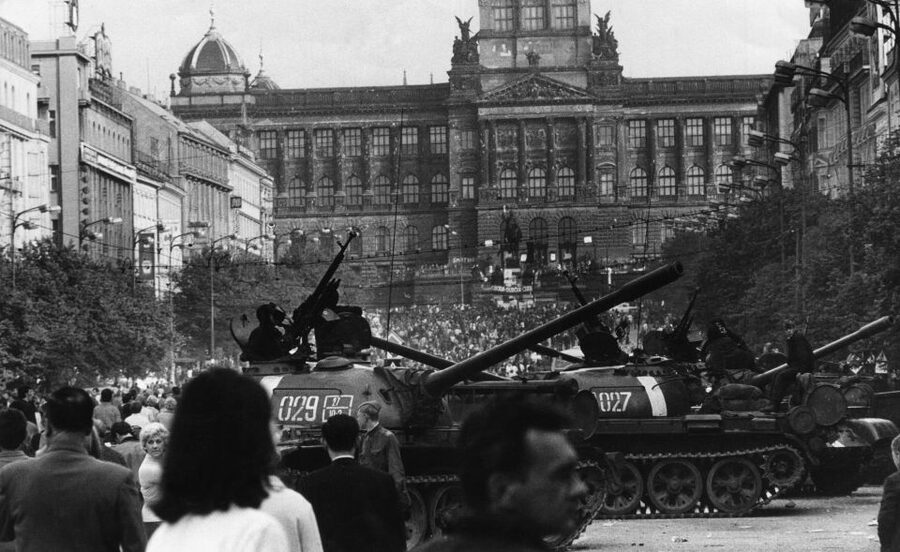
The tour doesn’t treat 1968 like a single event with an easy ending. It shows the “then what” that matters. You’ll hear about the euphoria of the Prague Spring—and then the sudden turn as the Warsaw Pact invasion ends hope and brings trauma back to daily life.
This section is valuable because it teaches you to listen for cause-and-effect. The Prague Spring isn’t just a romantic idea. It’s a moment of possibility that then triggers a crackdown, not a clean reset. When you understand that shift, you start noticing how later communist policies and limits on speech make more sense.
If you’re traveling with family members or friends who don’t usually care about political history, this is often where they start caring. The story becomes more human: hope, then fear, then learning how to live with restrictions.
Normalization, culture under pressure, and why Charta 77 mattered
As you move deeper into the communist era, the tour focuses on the years of Normalization, including the persecution of cultural dissent like the Plastic People of the Universe and the emergence of Charta 77.
What I like about this part is that it doesn’t reduce communism to slogans. It shows how control reached into culture, speech, and everyday belonging. That’s why the Plastic People detail lands. It’s not just about a band. It’s about what happens when creative life refuses to stay silent.
Charta 77 also gets explained in a way that makes it clear why documents and public statements were powerful under censorship. When you hear the reasons behind the movement, it becomes easier to understand why dissidents kept pushing even when the system was built to punish them.
This is also one of the sections that tends to feel emotionally challenging. If you prefer a lighter pace, you might want to carry a water bottle and be ready to pause mentally when the stories get dark.
Velvet Revolution streets: how Václav Havel and dissidents changed everything
The tour ends by bringing you to the energy of 1989 and the Velvet Revolution. You’ll learn how Václav Havel and a group of dissidents helped drive the political shift, and how that change didn’t appear from nowhere. It grew out of long pressure, long repression, and stubborn refusal to accept the status quo.
This portion helps you connect earlier parts of the tour to the final outcome. When you’ve heard about Normalization and censorship, the Velvet Revolution doesn’t feel like a sudden miracle. It feels like the final chapter of a story that had been building for decades.
If you want a memorable last impression, pay attention here to how the guide talks about turning points. Several guides named in this tour’s history—people like Daren, Adam, Tony, Zac, Sean, Analisa, and Amanda—share a similar strength: they’re good at making cause-and-effect feel personal, not academic.
It’s also common to leave with a bigger interest in follow-up viewing. One of the best takeaways is the film trail suggested alongside the tour, including Anthropoid and Munich, which pair well with what you hear on the streets.
How tough is the walk, and what to bring?
The tour runs 150 minutes—so call it a solid 2.5-hour stroll, not an extended all-day hike. It’s still a walking tour, so comfy shoes matter more than you might expect. Prague’s center has uneven sections and lots of stops, which means you spend time standing as well as walking.
Timing is also worth planning. You start at a fixed meeting point, and the tour finishes on time. People often say the hours fly by, but that’s usually because the guide keeps the story moving and the group stays engaged.
Weather can matter. The tour can still work in rain, and guides have handled that with enthusiasm and humor. Still, bring a light rain layer if you’re going in shoulder season.
Why the guides make (or break) this kind of tour
This is a history-heavy walking tour, so the guide’s delivery really matters. The standout detail from this experience is that guides often tell the story with energy and clear structure—enough depth to satisfy a history lover, without turning it into a lecture.
You’ll likely hear stories like the Czech plan to assassinate a high-ranking Nazi SS officer and the brutal retribution that followed—plus how the city’s political life evolved from WWII occupation into communist rule and beyond. Several guides known from this tour include Daren (praised for passion and knowledge), Adam (praised for a huge knowledge base and engaging delivery), Tony (praised for storytelling and organization), and Zac (praised for gradually building a connected narrative). The names differ, but the effect is similar: the history is tied to place, and place becomes easier to remember.
One extra practical bonus that sometimes comes up: the operator may provide a tram ticket to save time from walking. And in at least one instance, a museum stop connected to the operation was added. Don’t count on extra stops every time, but it’s a sign the experience isn’t rigidly stuck in only outdoor sightseeing.
Value: what $34 buys you in 150 minutes
At $34 per person for a 2.5-hour walking tour, the value is strong if your main goal is historical understanding. Many Prague tours either skim the surface or focus on only one era. This one moves across WWII and communist rule in a single connected arc, which means you pay for story structure, not just for a list of sites.
The tour also helps you avoid a common money trap: reading about events later when you’ve already forgotten where you were standing. Here, the places—Municipal House, areas connected to the Jewish Quarter, Dancing House, and Wenceslas Square—act like anchors. Once you’ve heard the narrative, those buildings start to mean something.
Even better, the experience tends to leave you with usable follow-up ideas—like films—to refresh what you learned without needing another guidebook deep dive (and yes, that matters when your vacation is busy).
Who should book this tour, and who might not
Book this tour if you want history that connects. It’s ideal for you if you like political stories, resistance movements, and seeing how ordinary streets played roles in extraordinary events. It also fits well as a second or third Prague day, after you’ve gotten your bearings, because it adds meaning to the center.
Skip it if you want mostly carefree sightseeing. This tour includes persecution and repression, and some facts are harrowing. Also, because it’s an active walk through central neighborhoods, you’ll want to be comfortable standing and walking for 150 minutes.
If you’re unsure, think about your goal. If your goal is to understand Prague’s 20th century in a way that sticks, this tour is a smart use of time. If your goal is only photos and views, you might prefer a lighter theme.
Should you book? My quick decision guide
I think you should book this tour if you’re curious how Prague went from hope to fear and back again—and if you’d like the story told with clear structure and real places like Wenceslas Square and the Municipal House in the mix. It’s also a good value when you compare the scope: WWII occupation, resistance, communism, Prague Spring, Normalization, and the Velvet Revolution all get covered in one walk.
I’d pass if heavy political content would ruin your mood or if walking for 2.5 hours sounds like a burden. For most people who want context, though, this is one of the most efficient ways to make Prague’s center understandable.
FAQ
Where is the meeting point?
The tour meets at Týnská 639/4, Staré Město, 110 00 Praha-Praha 1, Czechia.
How long is the tour?
It lasts 150 minutes (about 2.5 hours).
Is the tour in English?
Yes, it’s a live English tour with a guide.
What does the tour cover?
It covers World War II and the Nazi occupation, the Czech uprising and resistance, and the later communist era, including the Prague Spring and the Velvet Revolution. It also touches on Normalization, Plastic People of the Universe, and Charta 77.
Which sites are included?
Stops include the Municipal House, Jewish Quarter areas, Dancing House, and Wenceslas Square.
Is there a cancellation option?
Yes. You can cancel up to 24 hours in advance for a full refund.
Can I reserve without paying right away?
Yes. There is a reserve now & pay later option, so you can book your spot and pay nothing today.