REVIEW · PRAGUE
Wars and Totality History tour in Prague
Book on Viator →Operated by Spectrum Tours · Bookable on Viator
Prague can feel like it stops and starts. This tour strings together 20th-century turning points in a way that’s hard to notice when you’re wandering alone. I especially like the way it focuses on the places tied to independence, World Wars, and communism, so today’s city makes more sense.
Two things I’m really drawn to: the route keeps you moving through the actual “decision” areas of Prague, and the small group size (max 15) supports real Q&A and personal stories. One thing to consider: guide quality can vary, and one recent experience flagged an unprofessional guide moment—so arrive a bit early and be ready to manage expectations if the group energy feels off.
In This Review
- Key highlights worth planning for
- Why this Prague walk beats doing it on your own
- Price and logistics: the value of a $34.39, 3-hour route
- Stop 1: Municipal House area and the independence declaration moment
- Stop 2: New Town streets that connect WWI, WWII, and the communist years
- Stop 3: Wenceslas Monument and the history hub of Wenceslas Square
- Stop 4: Narodni Trída hands-on-the-wall and the Velvet Revolution trigger place
- Guide quality: what you’ll want to know before you go
- Walking pace, meeting points, and how to fit it into your Prague day
- Who this tour is best for (and who might not love it)
- Should you book Wars and Totality History in Prague?
- FAQ
- How long is the Wars and Totality History tour in Prague?
- How much does the tour cost?
- Is there a limit on group size?
- What stops does the tour include?
- Where does the tour start and end?
- How do I get tickets?
- Is the tour suitable for families and people using public transport?
- What is the cancellation policy?
Key highlights worth planning for
- A 3-hour walking route packed with 20th-century Prague sites, not just old-stone sightseeing
- Small group size (up to 15) for a calmer pace and more direct attention
- Four focused stops tied to independence, World Wars, and communist-era events
- Wenceslas Square and Narodni Trída covered as real political stages, not just landmarks
- Mobile ticket for easier check-in and less time fussing
Why this Prague walk beats doing it on your own
If you’ve ever visited Prague and thought, I get the beauty, but the rest is fuzzy—you’re exactly who this tour helps. The streets show layers. But without context, it’s easy to see only architecture and miss the human drama: decisions made in public, repression and resistance, and the moments that helped reshape the country.
This tour is built around the 20th century—World War I, World War II, and the communist period from 1948–1989—and it aims to connect what you see to what it meant. That difference matters. When you understand the why behind a building or square, the city stops being a postcard and starts acting like a timeline.
The format also helps. It’s a walking tour with a professional guide and a local guide, and it’s capped at 15 people. That smaller group size is a practical advantage in Prague’s central areas: you can hear explanations, keep up without sprinting, and still pause for questions instead of getting swept along.
You can also read our reviews of more historical tours in Prague

Price and logistics: the value of a $34.39, 3-hour route
At about $34.39 per person for roughly 3 hours, this is the kind of tour that makes sense if you want meaning per minute. You’re paying mostly for interpretation: someone tying Prague’s modern political history to the exact corners and monuments where it happened.
Also, the tour doesn’t drag. It’s not a full-day “see everything” plan. You’ll get a tight circuit through central New Town and key squares, then you’re done. That’s useful if you’ve only got a day or two in Prague and don’t want to commit your whole sightseeing block to history.
A couple of small practical perks make life easier. You use a mobile ticket, and there’s a choice of time slots, so you can match the walk to your schedule. The tour starts near Na Příkopě (Nové Město) and ends in central Prague at Národní / Narodni Trída area, which is convenient for continuing on your own afterward.
Stop 1: Municipal House area and the independence declaration moment
You start at Na Příkopě 864/28, near the Municipal House area, with a stop described as the Modernista Art Shop Municipal House and a declaration of independence place. This first stop is short—about 10 minutes—and it’s smart to kick off with independence because it sets the emotional and political baseline for everything that follows.
Even if you’re not a hardcore timeline person, the idea here is clear: modern Prague isn’t just medieval streets and towers. It’s a city that repeatedly fought for its identity and later paid for it. This early “place of declaration” moment gives you the lens to watch for later themes—public crowds, power shifts, and the way political messages get embedded in physical space.
Why this stop is worth your attention even in a quick 10 minutes:
- It frames later sites so they don’t feel like random monuments.
- It helps you listen for the story beats, not just the building features.
- It puts you in central Prague where major events cluster.
If you’re the type who likes to read a plaque on your own, you’ll still benefit here—because the guide’s job is to translate what you’re seeing into why it mattered.
Stop 2: New Town streets that connect WWI, WWII, and the communist years
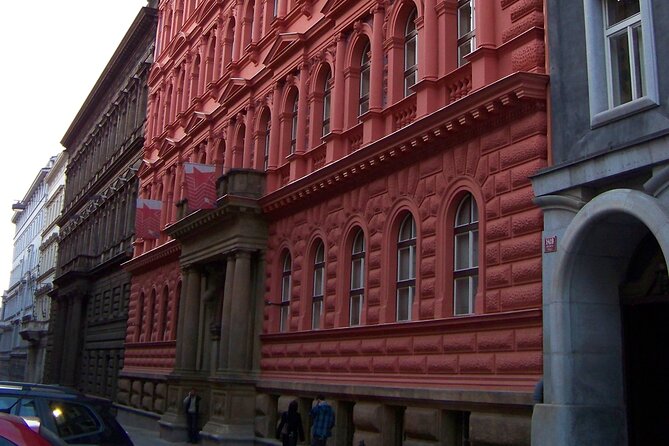
The tour’s longest stretch is based around Nove Mesto (New Town)—about 2 hours—and that’s where the walking does most of the work. Since the whole tour concept is 20th-century political history, New Town is the right area: it’s where so many public-facing events and state actions played out.
This portion is where you’ll likely feel the biggest payoff. The guide’s explanations are the glue between locations. Instead of bouncing from one photo spot to the next, you get a sequence—how the city moved through World War I, then later World War II, and finally life under the communist era from 1948 to 1989.
What to expect in this chunk:
- Frequent story connections between the street environment and the political reality behind it.
- Listening for recurring themes: control, resistance, public messaging, and people living their daily lives under pressure.
- A pace that’s meant to keep you present. This is not a sit-and-watch tour.
A practical tip: wear comfortable shoes. Even with a “walking tour” label, Prague centers can include uneven patches and short transfers between points. This leg is long enough that comfort affects whether you actually enjoy it.
Stop 3: Wenceslas Monument and the history hub of Wenceslas Square
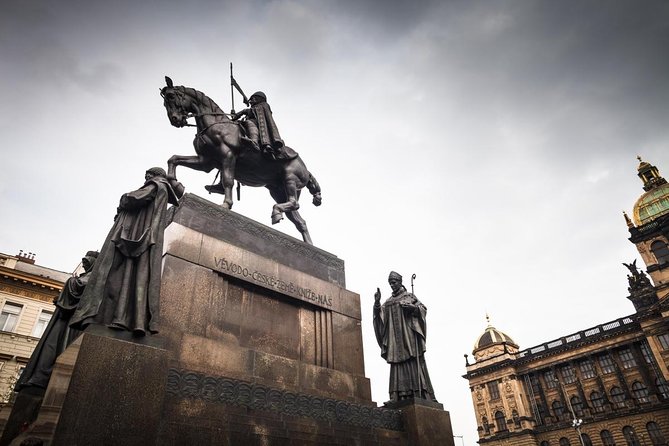
Next up is Wenceslas Monument and Wenceslas Square, which the tour description calls a neuralgical point of Czech history. This stop takes about 20 minutes, and that time matters. A square isn’t just a wide open space; it’s where politics becomes visible—crowds gather, statements happen, and the energy of the city concentrates.
The key idea the guide is pushing here: major Czech events repeatedly happened in this area. When you learn that, your brain starts re-reading what you see. You may spot how the monument and the square’s layout fit into the way public power is displayed. You also get the sense that history here isn’t safely behind glass. It’s built into the places you can still stand in.
This stop is a good “pause point.” Even if you’re not the type who loves monuments, the explanation helps you see the square as a stage—one that shifted meaning over the decades as the country’s political situation changed.
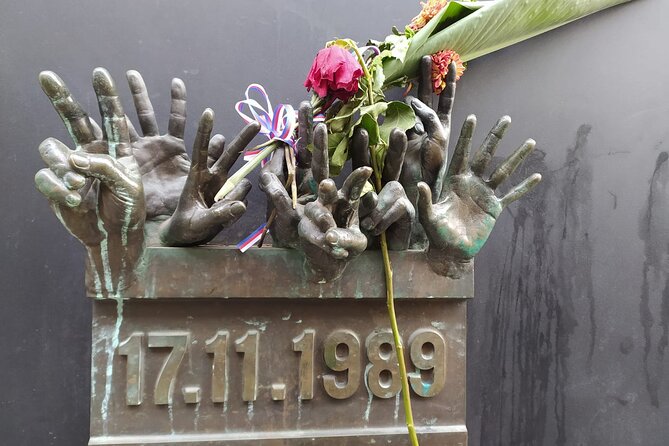
Stop 4: Narodni Trída hands-on-the-wall and the Velvet Revolution trigger place
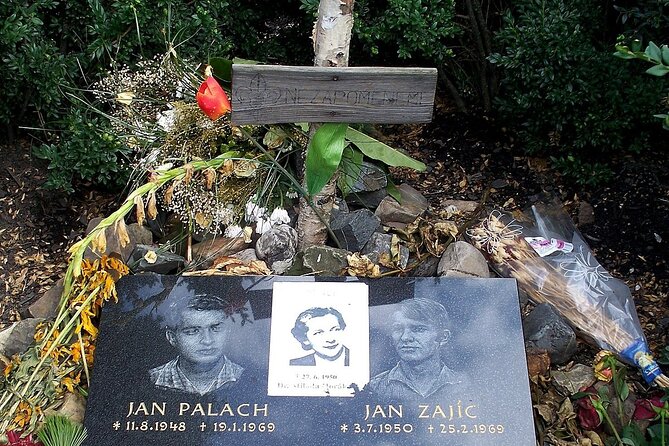
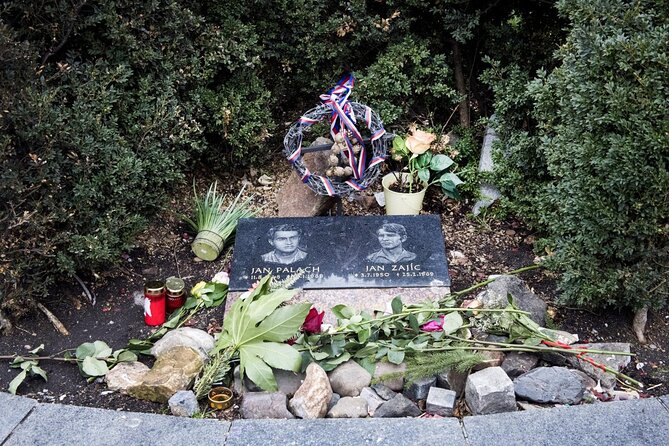
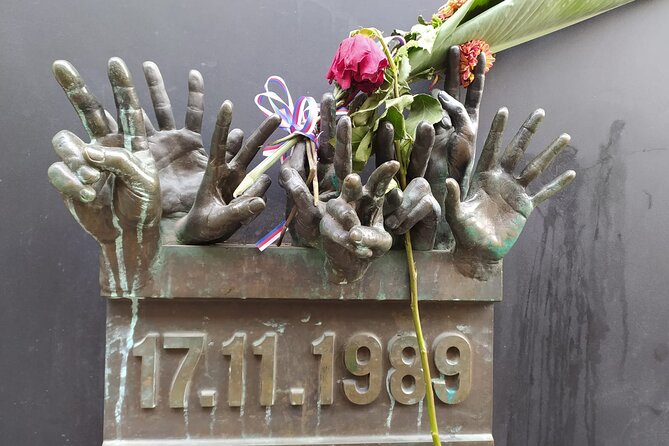
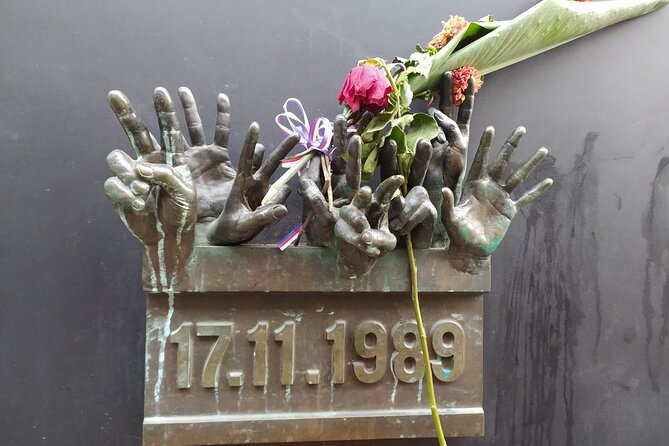
The last stop is one of the most memorable on the route: Hands reaching out of the wall on Narodni Trída. It includes a memorial desk tied to the Velvet Revolution, described here as a trigger location for the end of the communist era. This is only about 10 minutes, but it’s a powerful ending.
Ending here works because the tour doesn’t stop at the heavy years; it points to a turning point—how change finally moved from pressure and dissent into public transformation. A memorial desk tied to the Velvet Revolution helps you connect abstract political history to a specific site you can locate in your head later.
Why this stop lands well at the end:
- It gives you closure after the 20th-century timeline.
- It connects the communist era (and the tension of that time) to the moment it ended.
- It turns a street corner into something you’ll remember after you leave.
If you like your history with a human face, this is likely the stop that feels most real. The guide’s storytelling style can make a big difference here.
Guide quality: what you’ll want to know before you go
This tour lives or dies on the guide’s delivery. The best-case experience described here includes personal attention and even family history connections that make the Nazi and communist-era locations feel weighty and specific. That’s the kind of guiding that turns a city walk into a story you carry for weeks.
The caution flag from another experience is that guide behavior wasn’t ideal in one case—arriving late, smoking during the tour, walking ahead without waiting, and being rude to others in a way that made the group uncomfortable. That doesn’t mean every tour is like that, but it’s worth treating this as a “pay attention on the day” situation.
What you can do to protect your experience:
- Show up at the meeting point on time (and if possible 5–10 minutes early).
- If the guide isn’t keeping the group together, look around—make sure you can still hear and follow.
- If something is truly disruptive, it’s reasonable to adjust your pace so you’re not constantly behind.
A quick reality check: on any walking tour, you’re trusting another person’s style. With this one, the location and subject are strong. Just don’t assume every performance will match the highest-rated version.
Walking pace, meeting points, and how to fit it into your Prague day
The tour starts at Na Příkopě 864/28, Nové Město, 110 00 Praha-Praha 1, and it ends at Národní, Praha-Praha 1 area. The meeting area is described as near the tram and subway station Národní třída—so even if you’re using transit, you’re headed toward an easy-to-find central hub.
The time commitment is small enough to slot into a half-day plan:
- Morning option if you like to get context early.
- Afternoon option if you want history behind you before dinner plans.
Also, the group limit of 15 helps you plan mentally. You’re not squeezed shoulder-to-shoulder the whole time. You still should expect normal walking on sidewalks and a few transitions between points, but the tour is designed to be manageable for most participants.
If you’re traveling with kids, note that children must be accompanied by an adult. The tour is also described as generally suitable for most people, and service animals are allowed. It’s near public transportation, which is handy if you need to get there quickly or regroup after.
Who this tour is best for (and who might not love it)
This is ideal if you want Prague to mean something. If you enjoy learning how a country went through war and state ideology, and you like standing in the places where those shifts were felt, you’ll likely enjoy the structure.
It also works well for:
- People who like guided interpretation instead of self-reading everything
- Travelers who want a short, high-impact history block
- Anyone who’s curious about how the communist era ended and how that story fits the city today
You might be less into it if:
- You mainly want scenic highlights and minimal listening
- You don’t enjoy walking for about 3 hours in central areas
- You prefer broad, general sightseeing rather than a tightly focused 20th-century theme
Should you book Wars and Totality History in Prague?
I’d book it if you care about Prague as a living political story, not just a beautiful backdrop. The best versions of this tour lean into personal attention and make the locations feel specific, not generic. For the price, you’re buying a guided timeline you can’t easily reconstruct on your own without a lot of pre-reading.
I’d think twice if you’re very sensitive to guide behavior or you know you dislike walking tours. In that case, you might still enjoy the route, but your enjoyment will depend heavily on how the day’s guide runs the group.
If you do book, show up early, wear good shoes, and go in ready to listen. This isn’t about finding hidden doors. It’s about learning how Prague’s central squares and streets carried the weight of the last century.
FAQ
How long is the Wars and Totality History tour in Prague?
It lasts about 3 hours.
How much does the tour cost?
The price is $34.39 per person.
Is there a limit on group size?
Yes. The tour has a maximum of 15 travelers.
What stops does the tour include?
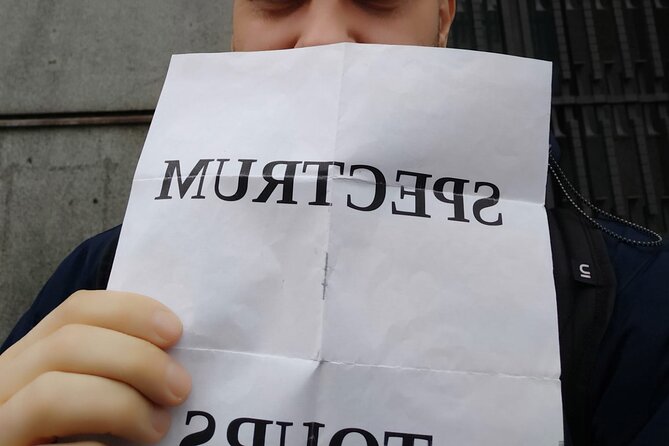
The tour includes: the Municipal House area/Modernista Art Shop with a declaration of independence place, New Town (Nove Mesto), Wenceslas Monument at Wenceslas Square, and the Hands reaching out of the wall on Narodni Trída with a Velvet Revolution memorial desk.
Where does the tour start and end?
Start: Na Příkopě 864/28, Nové Město. End: Národní (in central Prague, near Narodni Trída).
How do I get tickets?
You’ll receive a mobile ticket.
Is the tour suitable for families and people using public transport?
It’s near public transportation. Children must be accompanied by an adult, and service animals are allowed. The tour is described as suitable for most travelers.
What is the cancellation policy?
You can cancel for free up to 24 hours in advance for a full refund.