REVIEW · ATHENS
Ancient Corinth, Mycenae, Epidaurus, Nafplio full day private tour from Athens
Book on Viator →Operated by My Athens Transfers · Bookable on Viator
Three myth-tied ruins start your day. This private route strings together Corinth Canal views, Ancient Corinth, Mycenae, Epidaurus, and the seaside town of Nafplio, with a comfy air-conditioned car, Wi‑Fi, and hotel pickup.
I especially like the way the day mixes big-ticket sights with real-world context from your local driver in fluent English (you may hear names like Panos, George, Michael, Notis, or Spiros in recent trip stories). I also like that lunch is handled for you if you choose the traditional Greek option, so you’re not hunting down food while everyone else is rushing for the next ruins.
One possible drawback: it’s a long, active day with plenty of walking on uneven ground and steep areas, plus extra steps if you choose Palamidi Castle. Add in that some major sites have entrance fees, so budget a bit extra beyond the tour price.
In This Review
- Key highlights worth planning for
- How this day trip pieces together Greek history (without feeling random)
- Price and value: what’s included vs what you’ll pay at the gates
- Private car comfort: the Athens-to-Peloponnese advantage
- Corinth Canal: short stop, big visual payoff
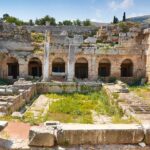
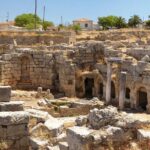
- Ancient Corinth: a major city-state with layers still visible
- Museum stop: small enough to read, long enough to make sense
- Temple of Apollo: quick classic moment (and free)
- Mycenae: Cyclopean walls and the feeling of real power
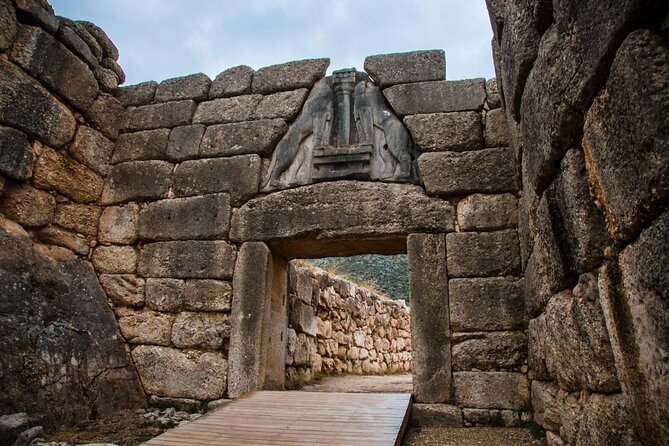
- Lion Gate: Bronze Age sculpture with serious presence
- Archaeological Museum of Mycenae: practical and fast
- Treasury of Atreus: the beehive tomb that still hits hard
- Epidaurus: theatre acoustics plus the Asklepios sanctuary
- Museum and sanctuary: the healing-rules vibe
- Nafplio free time: coffee, views, and a real walkable town
- Bourtzi: the harbor “water castle”
- Acronauplia: the oldest fortress layer
- Palamidi Castle: worth it if you can handle steps
- Who this tour suits best (and who should plan differently)
- Practical planning tips before you go
- Should you book this Ancient Corinth, Mycenae, Epidaurus, and Nafplio private day tour?
Key highlights worth planning for
- Hotel pickup and drop-off in a private, air-conditioned car with Wi‑Fi and bottled water
- Corinth Canal from above for the best look at ships threading the cut through the isthmus
- Ancient Corinth + its on-site museum at a relaxed pace (long enough to actually read)
- Mycenae’s Bronze Age drama: Lion Gate, Cyclopean walls, and the Treasury of Atreus
- Epidaurus theatre and Asklepios sanctuary in the same historic zone
- Nafplio free time to wander Venetian streets, grab coffee, and decide if you want the Palamidi climb
How this day trip pieces together Greek history (without feeling random)
This tour works because the stops talk to each other. Corinth gives you the setting: the narrow land bridge that links Athens to the Peloponnese and made the region a crossroads for centuries. Then Mycenae shifts you into the Bronze Age—walls, gates, power—before Epidaurus slows the pace with a sanctuary focused on healing and ritual. Finally, Nafplio brings you back to a living town with Venetian-era vibes and sea views.
That mix matters if you’re only in Athens for a few days. Instead of doing one site well and missing the rest, you get a broad sweep of the Peloponnese in a single day—built for first-timers who want a strong overview and enough time to notice the details.
You can also read our reviews of more private tours in Athens
Price and value: what’s included vs what you’ll pay at the gates
The tour price is $265.70 per person, and it’s positioned as a private full-day outing from Athens. That’s not cheap, but it’s not just “a car and a route,” either. You’re paying for door-to-door pickup/drop-off, an air-conditioned private vehicle with Wi‑Fi and bottled water, and a driver who provides commentary in English.
What to budget for separately:
- Ancient Corinth (including its Archaeological Museum of Corinth): €15 per person
- Mycenae (including the Archaeological Museum of Mycenae and the Treasury of Atreus): €20 per person
- Epidaurus (including the Epidaurus Archaeological Museum): €20 per person
That’s about €55 per person in entrance fees if you visit all the ticketed museums/sites. Lunch is handled if you choose the traditional Greek option, which is a real time-saver. If you’re deciding between tours, that entrance-fee math can help you compare apples to apples.
Private car comfort: the Athens-to-Peloponnese advantage
The practical win here is simple: you’re not coordinating trains, buses, or transfers. Your driver meets you at your Athens hotel lobby (or at your apartment entrance, airport arrival hall with your name sign, or the port gate), then you head out in a private vehicle.
Inside, you’ll have:
- Air conditioning (this matters more than you think on warm days)
- Wi‑Fi on board
- Bottled water during the ride
Because your driver stays with you and doesn’t accompany you inside each site, you get flexible time on the ground while still having someone to explain what you’re seeing, answer questions, and help keep the day moving.
Corinth Canal: short stop, big visual payoff
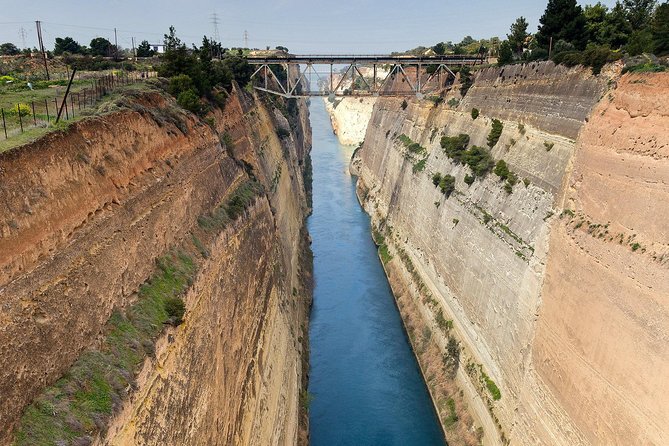
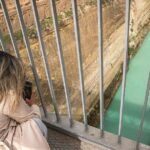
You start with the Corinth Canal, the narrow cut that joins the Gulf of Corinth (Ionian Sea) to the Saronic Gulf (Aegean Sea). It’s only 6.4 km long and 21.4 m wide at the base, and because it’s at sea level, there are no locks—so it’s more “surgical passage” than big shipping hub.
The best part is the vantage point. From higher ground, you can see the isthmus, the steep limestone walls, and vessels navigating through the cut. It’s not a long stop—about 15 minutes—but it sets up the day’s theme: control of land routes and how geography shapes power.
Ancient Corinth: a major city-state with layers still visible
Ancient Corinth (Archaia Korinthos) was a huge, important city-state on the isthmus—roughly halfway between Athens and Sparta. The ruins here connect to Greek history and also to later Christian references (especially Saint Paul’s letters and Acts). Even if you know the names already, the site helps you understand why Corinth mattered.
You’ll spend about one hour at Ancient Corinth. That’s enough time to walk the main areas without feeling like you’re sprinting. The modern city sits just a few kilometers away, so the contrast between today and the ancient landscape becomes part of the story.
A few more Athens tours and experiences worth a look

Museum stop: small enough to read, long enough to make sense
The Archaeological Museum of Ancient Corinth sits within the archaeological site area. It’s a focused stop—about 30 minutes—but it’s useful because it anchors the ruins with finds from the excavations. You’re not stuck in a giant building; you can connect the objects to what you saw outside.
Also, it helps to spot the site layout clues as you move around—things like the Fountain of Peirene, the Lechaion Road, and the Basilica zone—so your brain files everything into a coherent map.
Temple of Apollo: quick classic moment (and free)
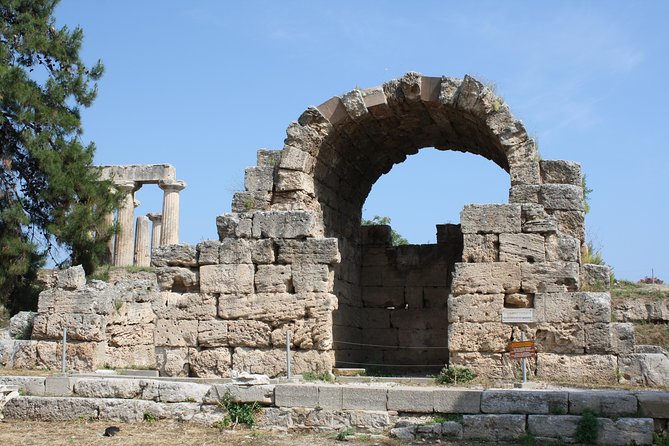
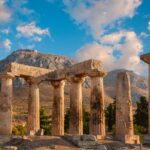
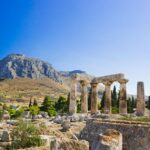
After Corinth, you make a short photo-and-stroll stop at the Temple of Apollo. This temple dates to around 550 BC, and it’s a satisfying little reset: big stone forms, strong sense of place, and an easy win if you like quick stops with clear historical labels.
It’s about 15 minutes, and the admission is listed as free, so it works well even if you’re tired from the morning drive.
Mycenae: Cyclopean walls and the feeling of real power
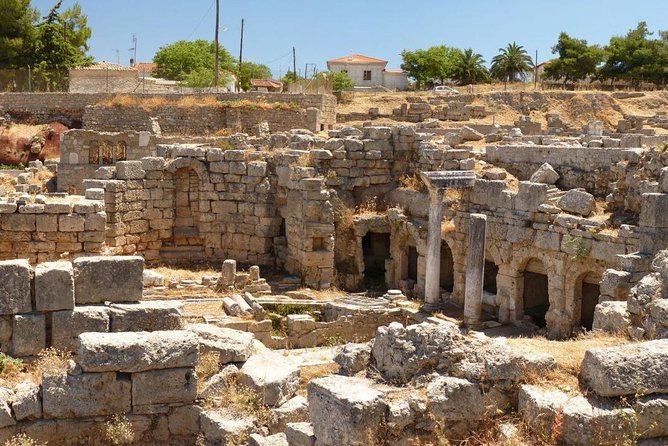
Then comes the star for many people: Mycenae. This is the fortified citadel linked to the mythical King Agamemnon, and it’s also the place that gave its name to the Mycenaean civilization.
You’ll spend about 15 minutes on the Mycenae area highlights, with additional time on the archaeological site. The key visual here is the fortification system:
- Cyclopean walls (massive stone construction)
- The dramatic Lion Gate
- The sense that the place was built to impress and intimidate
Even if myths aren’t your thing, the architecture is. This isn’t a set of scattered columns; it’s a complete power statement in stone.
Lion Gate: Bronze Age sculpture with serious presence
Lion Gate is the main entrance of the citadel. It dates to the 13th century BC (around 1250 BC), and it’s named for the carved relief of two lions (often described as lionesses) set above the entrance.
The relief is famous for a good reason: it’s described as the sole surviving monumental piece of Mycenaean sculpture and the only relief image from Bronze Age Greece that was known in classical-era literature before modern archaeology. Translation: you’re standing in front of a rare survival, not just another ruin.
It’s a quick stop—about 15 minutes—but it’s worth using that time to look up. The gate is all about that visual moment.
Archaeological Museum of Mycenae: practical and fast
Right near the Lion Gate, the Archaeological Museum of Mycenae gives you context for what you just saw. It’s about 30 minutes, and it’s set up so you can connect artifacts and explanations to the nearby structures.
If you’re the type who likes ruins but also wants the “why” behind them, this is the stop that helps your mental timeline click.
Treasury of Atreus: the beehive tomb that still hits hard
The Citadel and Treasury of Atreus (the Tomb of Agamemnon) sits on Panagitsa Hill. This is a tholos or beehive tomb built around 1250 BC. The doorway lintel is described as weighing about 120 tons, with extremely large dimensions—so even from a short viewing time, the scale registers.
You’ll likely spend about 15 minutes here. That’s enough for one big look and a quick read-through of the tomb significance (including how it was mentioned by Pausanias and how it was visible later in the 1800s when discoveries were made nearby).
Epidaurus: theatre acoustics plus the Asklepios sanctuary
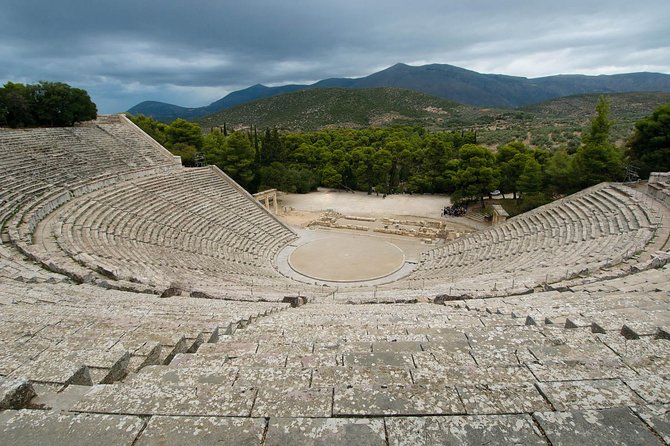
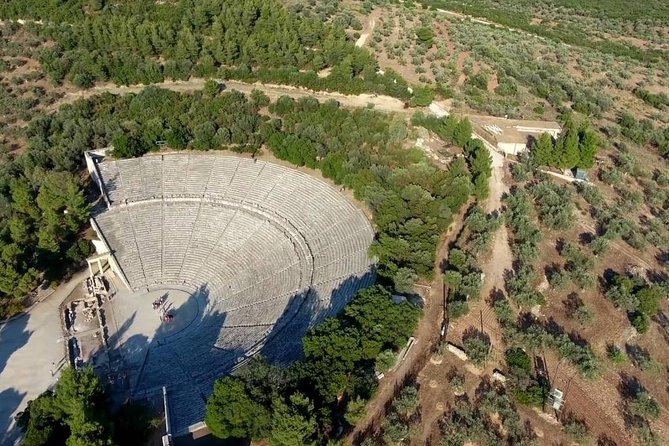
Epidaurus is where the day shifts from walls and gates to awe and calm. The Ancient Theatre of Epidaurus is famous for its near-perfect acoustics and aesthetics. It belongs to the sanctuary dedicated to Asclepius, the ancient Greek god of medicine.
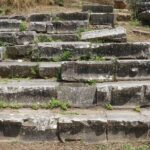
You’ll spend about 30 minutes at the theatre area. Even if you don’t hear anything special the moment you visit, the design is the point: the theatre keeps the classic structure (theatron, orchestra, skene). It’s also noted as being remarkably well preserved, and that’s a big part of why it still feels different than many other ruins.
Museum and sanctuary: the healing-rules vibe
Nearby, there’s the Epidaurus Archaeological Museum (about 30 minutes, with ticketed admission). It includes reconstructions and displays tied to the broader sanctuary complex, and it can help you understand what you’re looking at in the larger site area.
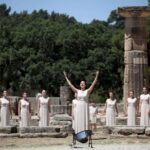
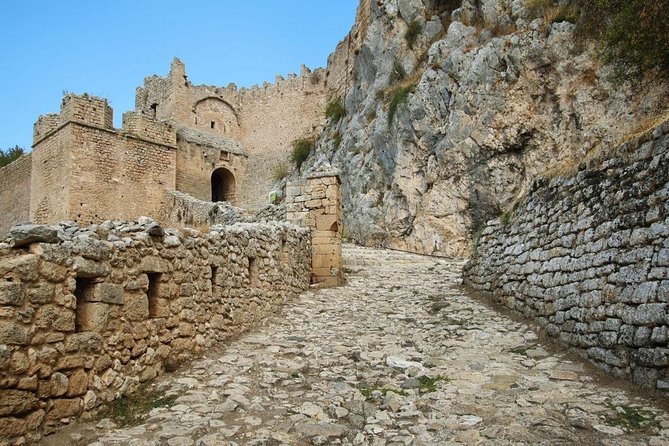
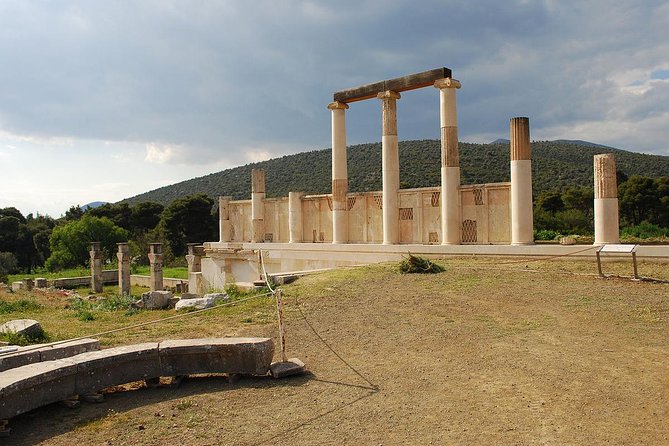
Then you’ll visit the Sanctuary of Asklepios, with the Temple of Asclepius built in the early 4th century BC. The site is described as rivaling other major cult locations like Olympia and Delphi. You’ll get around 15 minutes here—enough to connect the temple to the idea of healing as a ritual, not just a building.
Nafplio free time: coffee, views, and a real walkable town
After Epidaurus, you get a breather in Nafplio. This is where the day becomes more human-scale. You’ll have about 1 hour 30 minutes for lunch, coffee, shopping, and wandering the streets.
Nafplio is often described as Venetian in feel, with cobbled squares and commanding views over the Argolic Gulf. It also carries heavy historic weight: it was a capital during the Greek Revolution period and later served as part of modern Greek state history (as noted in the tour info).
Practical tip: if you want maximum atmosphere, pick a direction and let the streets do the work. You’ll naturally come across views, small lanes, and the kind of spots where you can stop for photos without feeling like you’re “wasting” time.
Bourtzi: the harbor “water castle”
If you like photos, you’ll appreciate the stop for Bourtzi, the Venetian castle sitting in the middle of Nafplio’s harbor. You’ll spend about 10 minutes, mostly for the view and picture-taking from the harbor side.
Acronauplia: the oldest fortress layer
Next, you’ll pass the Acronauplia area, the oldest part of Nafplion. It was its own town until the 1200s, then the Venetians and Franks shaped it into part of the fortifications. The area later served as a prison, and the view helped turn it toward tourism, including a hotel complex described as still standing.
Palamidi Castle: worth it if you can handle steps
Finally, Palamidi Castle rises on a hill above Nafplio. It was built by the Venetians during 1686–1715 and offers big panoramic views over the gulf and town. You’ll have about 30 minutes, with entry listed as not included.
Here’s the caution: there are 913 steps (locals also say 999), and reaching the fortress involves a lot of uphill climbing. If you like viewpoints and you’re steady on your feet, it can be a highlight. If not, you can still enjoy Nafplio without chasing the full climb.
Who this tour suits best (and who should plan differently)
This is ideal for:
- First-time visitors who want a broad Peloponnese hit in one day
- People who love the arc from city-states (Corinth) to Bronze Age power (Mycenae) to sacred sites (Epidaurus)
- Travelers who value door-to-door pickup and a driver who explains what you’re seeing in English
Plan carefully if:
- You have mobility issues or fatigue with uneven ground and steep areas. The day involves walking at multiple sites, and Palamidi has major stairs.
- You prefer slower museum time. There are museums, but the overall format is “see a lot,” so you’ll want to read on-site rather than expect long, deep sessions.
If your group is flexible and you like structure (with breathing room at Nafplio), this day works well.
Practical planning tips before you go
A few small choices can make the day much easier:
- Wear shoes with grip. Some areas can be rocky and uneven, and you’ll be walking on outdoor surfaces.
- Bring a layer. Even on warm days, theatre areas and open sites can feel cooler in shade.
- Eat strategically. Nafplio is your main free time buffer, so go easy on snacks earlier and save your appetite for lunch or a proper coffee break.
- Use your driver’s questions time. Even though the driver doesn’t enter sites with you, the commentary component is part of the value—ask about what to look for at the gate, in the theatre design, or inside the tomb area.
Should you book this Ancient Corinth, Mycenae, Epidaurus, and Nafplio private day tour?
If you want a one-day snapshot of the Peloponnese’s most famous ancient anchors, this private tour is a strong pick. The combination of Corinth Canal, Mycenae’s fortress drama, Epidaurus theatre and sanctuary, and Nafplio’s real town time hits the “high value for limited days” goal.
I’d book it if you like structure, can handle a full day of walking, and you’re comfortable paying for a few site tickets on top of the tour price. If you’re hoping for a very slow pace, minimal steps, or fully guided entry into every museum, you may want to consider a different format.