REVIEW · ENNIS
Private Ennis Essential History Tour with Dr Jane O’Brien
Book on Viator →Operated by Jane O'Brien · Bookable on Viator
History walks with you in Ennis. This private Ennis Essential History Tour with Dr Jane O’Brien strings together medieval origins, Catholic emancipation moments, and everyday town life using historical sources, all while you move through the center. If you want, she can also use an amplification device so you don’t have to strain your ears on the move.
I love how the tour turns ordinary street corners into clear stories instead of a list of dates. I like that it’s paced for real sight-seeing in about 70 minutes, and the stops are essentially no-fuss, with free entry noted at each main stop.
One consideration: with about 5 minutes per stop, it’s a fast, walking-friendly format. If you prefer to linger in one place for a long time, you may wish you had more time in the town afterward.
In This Review
- Key highlights you’ll feel right away
- What this private Ennis Essential History Tour is really about
- Meet at Ennis Tourist Information Centre: practical details that matter
- Clare Museum and the medieval roots of Ennis (Convent site to 13th-century town)
- Daniel O’Connell Monument: Catholic emancipation in the town’s center
- Abbey Street bow-ways and Ennis Friary: lanes, faith, and the Fergus connection
- Francis Street and Arthur’s Row: O’Brien power, stained glass calm, and orphanage records
- Parnell Street’s timber house and Chapel Lane’s penal-era market pain
- Market Place and Gallows Green: how trade turned into conflict
- Cathedral of Saints Peter and Paul: the walking tour’s finishing line
- Price and value: is $270.32 per group worth it?
- Listening comfort: the amplification device option
- Who this Ennis history walk suits best (and who might want something else)
- Should you book the Private Ennis Essential History Tour with Dr Jane O’Brien?
- FAQ
- How long is the Private Ennis Essential History Tour with Dr Jane O’Brien?
- How many people are in a group?
- What language is the tour offered in?
- Where do we meet for the tour?
- Does the tour include admission tickets?
- Is an amplification device available?
- Is it free to cancel?
Key highlights you’ll feel right away
- Dr Jane O’Brien’s story-driven explanations focused on what daily life looked like
- Optional amplification for easier listening
- Town-centre route with free entry marked at each stop
- A sweep through major turning points from medieval Ennis to later Irish history
- Private group format for up to 6 people, so questions fit naturally
- Ending near the Cathedral, with an easy finish back at O’Connell Street
What this private Ennis Essential History Tour is really about
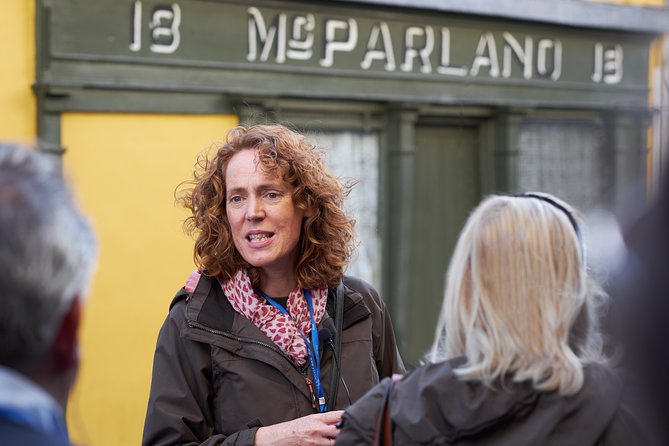
This is a focused walk through Ennis, built for people who want context without spending the day chasing bus connections or museum hours. You’re not just looking at old buildings—you’re learning what those places meant in real lives, from market day noise to political milestones and religious life.
The tour is run by Dr Jane O’Brien, which matters because the storytelling comes from historical sourcing rather than vague impressions. You get the sense that each stop is chosen to explain why Ennis formed the way it did, and how the town changed over centuries.
It’s also the kind of tour that works when you’ve got only a small window in town. At about 1 hour 10 minutes, you’ll cover a lot of ground on foot, then you can keep wandering on your own afterward—especially since the route typically finishes near the Cathedral and the pedestrian shopping stretch.
Meet at Ennis Tourist Information Centre: practical details that matter
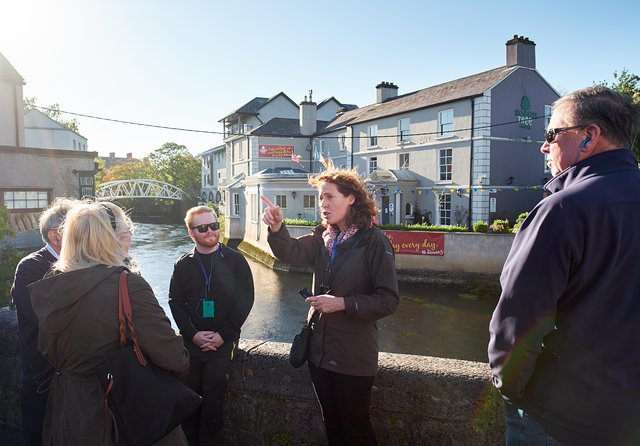
You’ll start at the Ennis Tourist Information Centre on Arthur’s Row, O’Connell Street, Clonroad Beg, in Ennis (Co. Clare). The tour ends back at the meeting point, so you’re not left figuring out a new pickup location.
You’ll receive a mobile ticket, and the tour is offered in English. It’s also a private experience, meaning only your group participates, capped at up to 6 people for the group price.
One practical win: the stops are largely in the town center, and many are listed with free admission. That makes it easier to plan because your time stays focused on the walk and the guide’s explanations, not on extra ticket lines.
Also worth noting: service animals are allowed, and the tour is marked as suitable for most travelers. If you’re traveling with kids or family, the short duration helps keep the energy manageable.
Clare Museum and the medieval roots of Ennis (Convent site to 13th-century town)
Your first stop is by Clare Museum, at the site of the old Convent building for the Sisters of Mercy. Even if you’ve never visited before, the location gives you a sense of Ennis as a layered town—religious life, education, and civic identity all overlapping on the same ground.
This is where the guide frames the bigger idea: Ennis as a medieval market town that began in the 13th century. That’s a useful foundation because later stops make more sense when you understand that the town’s power and daily rhythm grew around trading, gathering, and community life.
Because you start with that long view, the rest of the walk feels less like “random famous spots” and more like a line of cause and effect. You’ll be looking at the street plan differently by the time you reach the next monument.
Daniel O’Connell Monument: Catholic emancipation in the town’s center
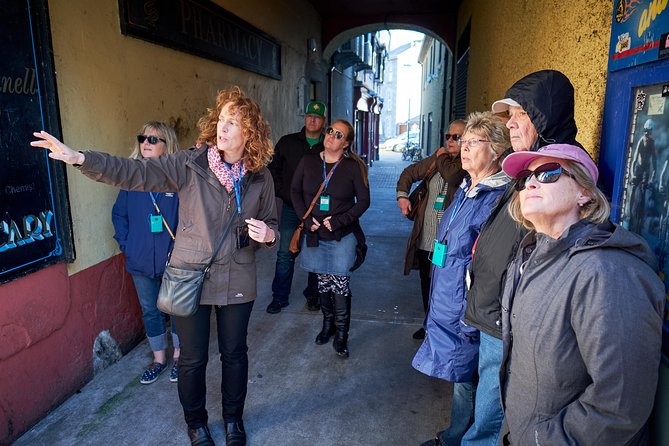
A quick hop brings you to the Daniel O’Connell Monument in the centre of Ennis. This spot isn’t just about who O’Connell was—it connects directly to major public moments, including the milestone of Catholic Emancipation.
This stop works well if you like Irish history that’s not stuck in textbooks. Instead of learning in the abstract, you’re placing politics into a real town setting: the sort of central location where events, crowds, and speeches could happen.
And because it’s brief, it won’t bog you down. You get a key political anchor, then you’re back out on the lanes and streets where daily life would have played out around these wider events.
Abbey Street bow-ways and Ennis Friary: lanes, faith, and the Fergus connection
Next you move to Abbey Street, one of Ennis’s atmospheric bow-ways—small laneways that connect the main streets to what were once the poorer tenement areas. This is one of the best sections for understanding the town as a social system, not just a set of landmarks.
Then you reach Ennis Friary by the Old Ennis Abbey (circa 1280s). Here the guide connects the Franciscan Friars to the development of Ennis town, which helps explain why religious institutions were so central to medieval urban life.
You also get a scenic, practical moment: the pretty view over the River Fergus as it flows through Ennis. That matters because it gives you a mental map of where people lived, moved, and traveled, long before cars and routes made everything look linear.
Finally, this stop also points to memorials related to the 1916 uprising against British rule, which adds a later layer of history right alongside the medieval roots. It’s a reminder that towns keep rewriting their meaning over time.
Francis Street and Arthur’s Row: O’Brien power, stained glass calm, and orphanage records
On Francis Street, you’ll walk the oldest street in Ennis leading to what was once associated with the palace of the O’Brien Kings, founders of the town. Even if you don’t know the O’Briens already, the guide’s framing makes it clear why this family name matters in Ennis’s origins.
In the same area, you’ll visit the Friary (originally built in the 1850s) to experience the stained glass windows and the peaceful atmosphere. This is a nice contrast after the more outward-facing streets, because it gives your brain a moment to slow down and absorb the visual side of faith.
Then you continue to Arthur’s Row, where the tour connects the old convent building to archived experiences of children from an orphanage and industrial school that once stood on this site. This part is heavier in tone, and that’s important: you don’t just get medieval romance. You also see how communities dealt with hardship and how institutions shaped children’s lives.
If you’re sensitive to social history that includes difficult themes, this stop is the one to mentally prepare for. The good news is that it’s still handled as part of a short, guided walking route, not a long documentary session.
Parnell Street’s timber house and Chapel Lane’s penal-era market pain
On Parnell Street, you’ll stop at McParland House (circa 1620), described as the only known surviving timber framed house in Ireland. It’s also noted as the oldest house of the town to be in continuous use without major structural alteration.
Look closely at the details the guide points out—like the original shopfront and half-door—and you’ll start to understand how Ennis functioned as a working market space, not just a place where people visited for sightseeing.
Then you head to Chapel Lane, beside the building housing the Chapel Lane market. This spot connects to a church built in 1735 during penal times, and lane-ways like this saw overcrowding during the Great Famine period in Ireland.
That’s one of the most powerful sections because it links architecture to lived experience: narrow spaces, dense populations, and the social shock of famine. Even when you only stand for a few minutes, you leave with a sharper sense of how geography affects human vulnerability.
Market Place and Gallows Green: how trade turned into conflict
At the Market Place, the guide frames Ennis as the main market town for Co Clare, with markets running for hundreds of years. Here you’re reminded that markets weren’t only for buying and selling livestock and produce—they were also social spaces.
The tour covers how people met, socialized, and even how matchmaking played out in that setting. And then comes the less comfortable note: faction fighting could happen, too. It’s a real-world reminder that crowds can bring both community and conflict.
Next is Barrack Street, tied to the old “Gallows Green” of the town. The guide points to crimes and punishments documented in the Ennis corporation manuscript (1660), and the details can feel shocking through a modern lens.
This isn’t the kind of stop that’s meant to thrill you. It’s meant to help you understand how justice and authority operated in town life—how public punishment was part of the visible order of the community.
Cathedral of Saints Peter and Paul: the walking tour’s finishing line
The route typically ends at the Cathedral of Saints Peter and Paul, the main Catholic Church of the region, built between 1830 and 1870. The guide’s framing helps you connect the building to the wider town story, especially because it stands opposite the Old Ground Hotel, once the site of the town jail.
There’s also a fascinating historic detail included in the tour description: the Cathedral incorporates a haunted towerhouse dating to the 1500s. Whether you’re into ghost stories or not, that kind of layered building history is exactly what makes a short walking tour feel like more than its duration.
After the tour finishes near the Cathedral, you have options. You can visit the Cathedral itself if you want, or return at your own pace via O’Connell Street, the main pedestrianized shopping street.
Price and value: is $270.32 per group worth it?
The price is $270.32 per group, up to 6 people, for about 1 hour 10 minutes. That can sound like a “tour company cost” until you break it down by group size.
For a couple, it’s usually a good deal if you want private attention and an efficient route. For small families or a small group of friends, it can be excellent value because you’re paying for one guide while splitting the cost across people.
The biggest value isn’t just that it’s private. It’s that the guide is actively shaping how you interpret Ennis, including hard-to-guess details like lane social history and the significance of specific local sites such as McParland House. When a tour does that—without adding museum ticket costs at each stop—you usually feel the time was well spent.
Also consider the booking behavior: this tour is typically booked about 48 days in advance on average. If your travel dates are fixed, earlier booking can help you lock in your preferred time.
Listening comfort: the amplification device option
One of the small-but-important features is that the guide can use an amplification device for easier listening. That’s a big help on any walking tour where you’re moving between lanes and streets, where background sound can drown out quiet explanations.
If you’re hard of hearing, you’ve got hearing aids, or you just don’t want to keep asking people to repeat themselves, this option can make the tour feel effortless. It also helps when you’re trying to follow names and dates tied to each stop.
And because it’s private, you can ask for what you need. A quick note before you start often makes a difference in how comfortable the whole hour-and-change feels.
Who this Ennis history walk suits best (and who might want something else)
This tour fits best if you:
- want an Ennis town-centre experience instead of an all-day drive
- like historical storytelling tied to real places
- enjoy walking at a brisk pace for short stops
- want private time with a guide who can answer questions as you go
It may feel less ideal if you:
- prefer long museum sessions and quiet indoor time
- want a lot of time at only one site
- are looking for hands-on activities rather than interpretation
If you’re also hungry for food moments, keep an eye out for the Gourmet History Tour, where snacks and local food tastings are mentioned as part of that experience. This Essential History version is about walking and learning, not dining.
Should you book the Private Ennis Essential History Tour with Dr Jane O’Brien?
If you’re spending a limited amount of time in Ennis and you want the town to make sense fast, I think this is a strong choice. You’re getting a guided sweep through the medieval-to-modern story of Ennis with a guide who clearly connects daily life, politics, and religious institutions into something you can actually picture.
With a 5-star rating and 34 reviews, plus a 100% recommendation rate shown for this experience, it’s also one of those tours that people consistently feel was worth the time. Just go in knowing it’s a short walk with a quick pace, not a deep linger-at-one-place day.
FAQ
How long is the Private Ennis Essential History Tour with Dr Jane O’Brien?
The tour runs for about 1 hour 10 minutes.
How many people are in a group?
It’s a private tour, and the group size is up to 6 people.
What language is the tour offered in?
The tour is offered in English.
Where do we meet for the tour?
You meet at the Ennis Tourist Information Centre on Arthur’s Row, O’Connell Street, Clonroad Beg, Ennis, Co. Clare (V95 RX78).
Does the tour include admission tickets?
Admission tickets are listed as free for the tour stops.
Is an amplification device available?
There is an option for the guide to use an amplification device to make listening easier.
Is it free to cancel?
Yes. You can cancel for a full refund up to 24 hours in advance.