REVIEW · ANURADHAPURA
Anuradhapura Heritage Mountain bike / bicycle Tour
Book on Viator →Operated by Rides Hub · Bookable on Viator
Pedal through ancient Sri Lanka with a guide. This 10 km loop mountain bike tour in Anuradhapura mixes major UNESCO monuments with calmer side routes, so you get movement, views, and time to actually look. I especially like the slow, comfortable pace and the way the route favors quiet moments—temples, tanks, and the everyday rhythm outside the busiest paths.
One thing to plan for: the UNESCO ticket isn’t included, so you’ll want to budget for entry fees, plus bring a wraparound cloth if your knees aren’t covered for temple visits.
In This Review
- Key highlights at a glance
- Why Anuradhapura by mountain bike feels different
- Route basics: 10 km, about 4.5 hours, and a pace you can handle
- Bikes and guides: what you should expect on the day
- Stop-by-stop: what each monument adds to the story
- Stop 1: Jetavanaramaya (the big stupa)
- Stop 2: Samadhi Statue (Mahamevnāwa Park)
- Stop 3: Abayagiriya Stupa (monastery ruins)
- Stop 4: Twin Baths (Kuttam Pokuna)
- Stop 5: Eth Pokuna (the Elephant Pond reservoir)
- Stop 6: Moonstone (Sandakada pahana)
- Stop 7: Basawkkulama Tank (ancient irrigation system)
- Stop 8: Main Refectory of Abayagiri Monastery (food for thousands)
- Stop 9: Ruwanweli Maha Seya (a royal stupa)
- Stop 10: Sri Maha Boodhi Temple (the sacred fig tree)
- Lunch at hela bojun, and why meals are part of the value
- Price and value: $25 plus the UNESCO ticket reality
- What you’ll learn besides dates and names
- How to plan your day for comfort and respect
- Who this Anuradhapura mountain bike tour suits best
- Should you book this tour?
- FAQ
- How long is the Anuradhapura Heritage mountain bike tour?
- How far do you cycle?
- What’s included in the price?
- Are the UNESCO entrance fees included?
- What should I wear for the temples?
- What type of bike will I ride?
- Is this tour private?
- Where does the tour start and end?
Key highlights at a glance
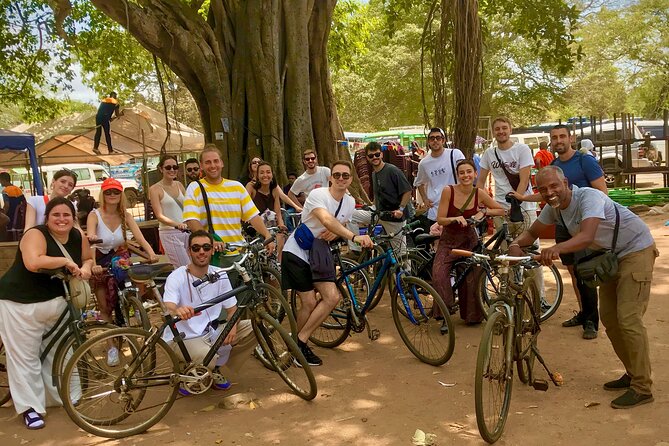
- Private ride with your group: only your group participates, so it feels personal rather than crowded.
- Top bike brands: you use mountain cycles from trusted names like Giant, Trek, and Louis Garneau.
- Designed for history and breathing room: stops are timed for you to pause, look closely, and get context from Saranga.
- Temple architecture in the details: you’ll see iconic features like the Moonstone (Sandakada pahana) used on staircases and entrances.
- Ancient water systems get equal attention: Kuttam Pokuna, Eth Pokuna, and Basawkkulama Tank show how the old irrigation world worked.
- Simple, included fuel: bottled water and a local vegetarian meal at hela bojun keep you going.
Why Anuradhapura by mountain bike feels different
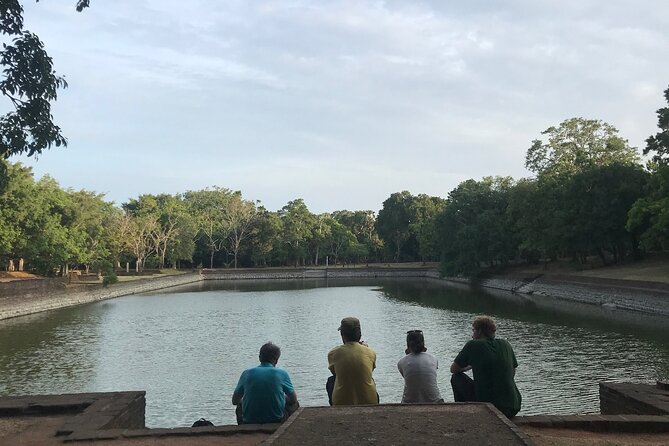
Anuradhapura isn’t just “see a few ruins and move on.” It’s an entire UNESCO heritage landscape of stupas, monastery sites, sacred trees, and old water engineering—spread out enough that rushing would mean missing what makes it meaningful.
Cycling changes the math. Instead of hopping between distant spots, you glide through the area at human speed. That gives you time to notice things that don’t show up in quick photos: the way stone elements are placed at entrances, how ponds and reservoirs sit in a wider system, and how Buddhist sites share architectural language even when the names change.
I also like that the tour doesn’t pretend you’ll sprint through the past. It’s built for a comfortable rhythm, with plenty of short stops that add up to a full circuit experience.
You can also read our reviews of more tours and experiences in Anuradhapura.
Route basics: 10 km, about 4.5 hours, and a pace you can handle
The ride is a 10 km loop and runs around 4 hours 30 minutes (approx.). The idea is an even balance of exercise and exploration. If you have a moderate fitness level, you should feel comfortable—especially because the itinerary is stop-and-look, not stop-and-race.
You’ll get to see a “full package” of the key Anuradhapura sights without it turning into a long slog. Each stop has its own time window, which matters because the best ruins aren’t the ones you sprint past. They’re the ones you can actually stand in front of and read with your feet.
Also, because this is a private tour, you’re not dealing with constant group-speed changes. That usually makes the stops feel smoother and more relaxed.
Bikes and guides: what you should expect on the day
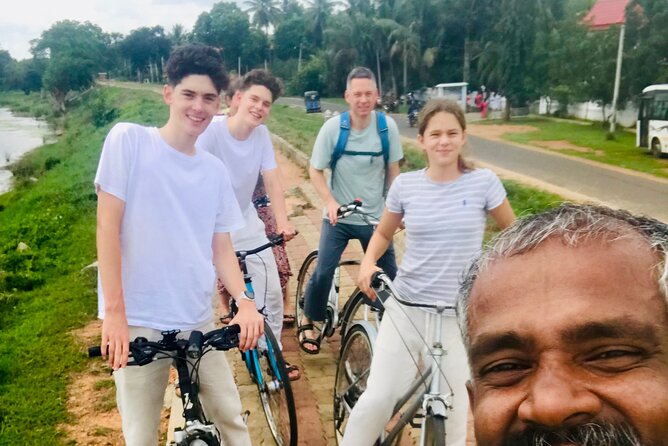
Your guide is Saranga, an English-speaking guide from the Anuradhapura area. That local connection matters here because the tour isn’t only facts—it’s also how people interpret these sites through Buddhism and daily practice.
For the bike itself, you’ll ride a mountain cycle from brands including Giant, Trek, and Louis Garneau. You’re also provided bottled water and you get parking fees covered. The tour comes with a mobile ticket, and it’s set up as a private activity, ending back at the starting point.
Meeting point is Rides Hub, at Wathwandana Rd in Anuradhapura (Garage waththa near old car park, No:116/1 Watawandana Rd). Since the meeting point is listed as near public transportation, it’s easier to plan your approach if you’re not already staying right beside it.
Stop-by-stop: what each monument adds to the story
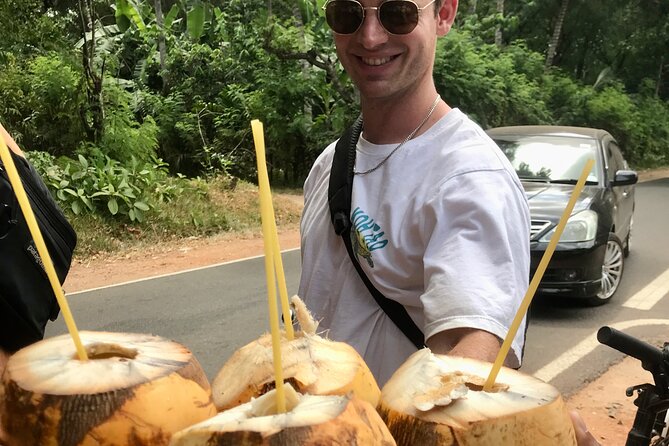
This tour is structured like a loop through the core heritage highlights. Below is what you’ll see and what to look for at each stop.
Stop 1: Jetavanaramaya (the big stupa)
You start at Jetavanaramaya, a stupa tied to the reign of King Mahasena (273–301). The site is noted for being 122 meters (400 ft) and described as the world’s tallest stupa at the time it was built, plus the third tallest structure in the world during that era.
What to look for: Don’t only check the size. Take a moment to notice how stupas dominate the site’s layout. Even without climbing anything, the structure gives you a sense of where people once gathered and how power and faith showed up in stone.
Entrance here is free, and the stop is about 15 minutes.
Stop 2: Samadhi Statue (Mahamevnāwa Park)
Next is the Samadhi statue at Mahamevnāwa Park. It depicts the Buddha in Dhyana Mudra, the meditation posture linked to his first period of meditation.
What to look for: Spend a few extra seconds on the posture. This stop works well as a “reset” from the big stupa scale, because it shifts the focus from monument size to the idea of practice and calm.
Time here is around 20 minutes, and the admission is included.
Stop 3: Abayagiriya Stupa (monastery ruins)
You’ll then reach Abayagiriya Stupa / Abhayagiriya Vihāra, described as a major monastery site connected to Mahayana, Theravada, and Vajrayana Buddhism. It’s also noted as one of the most extensive ruins in the world.
What to look for: Ruins are easiest to understand when you let them be ruins. Look for the way the space suggests communal living: areas that would have held gatherings, worship, and daily routines. Your guide helps connect those patterns to the religious history.
Stop time is about 20 minutes, with admission included.
Stop 4: Twin Baths (Kuttam Pokuna)
Kuttam Pokuna—also called twin ponds or pools—is one of the well-preserved bathing tank pairs in Sri Lanka. This stop is part of the old Anuradhapura Kingdom heritage, built for bathing and water use.
What to look for: Treat it like a practical engineering site, not only a pretty relic. The fact that these pools still “read” as ponds you could use tells you a lot about how long-lasting the design was.
Expect about 20 minutes, admission included.
Stop 5: Eth Pokuna (the Elephant Pond reservoir)
Eth Pokuna, or Elephant Pond, is described as a massive ancient reservoir built in the Anuradhapura Kingdom. It’s approximately 159 meters in length.
What to look for: Stand where you can take in the pond’s scale. Even if you don’t know the exact layout, you can feel the planning: a reservoir that likely supported more than just decoration.
Stop time is about 20 minutes, admission included.
Stop 6: Moonstone (Sandakada pahana)
Sandakada pahana—also called Moonstone—is a distinctive semi-circular carved stone slab, usually placed at the bottom of staircases and entrances.
What to look for: This is one of those details you’d miss if you were just rushing for the “main photo.” Look for the carving style and placement. It’s architecture as a threshold, marking entry into a sacred or ceremonial space.
This is a longer stop for a detail moment—about 25 minutes—with admission included.
Stop 7: Basawkkulama Tank (ancient irrigation system)
Basawkkulama Tank is where the tour shifts further into water management. The information you get here highlights irrigation systems among the most complex in the ancient world. The earliest examples are said to date back to around 430 BCE during King Pandukabhaya’s reign, with continuations over time.
What to look for: You’re not touring a single structure so much as an idea: how water networks shaped where communities could live, farm, and worship. If you like engineering, this stop is a satisfying payoff.
Stop time is about 20 minutes and admission is free.
Stop 8: Main Refectory of Abayagiri Monastery (food for thousands)
Here you’ll visit the main refectory of the Abayagiri monastery. It’s linked to the 5th-century traveler monk Fa-Hien, described as saying the monastery housed up to 5,000 monks, and that meals were organized for that community.
What to look for: This is a great place to zoom out mentally. A stupa teaches you where people prayed; a refectory teaches you how they lived.
Stop time is about 10 minutes, admission included.
Stop 9: Ruwanweli Maha Seya (a royal stupa)
Ruwanweli Maha Seya is described as being built by King Dutugamunu (137 BC – 119 BC) and completed by his younger brother (name not specified in the provided details).
What to look for: Watch how the site feels in your body. Stupas tend to create a center point. Even from a distance, you’ll sense where people would have oriented themselves for worship.
Stop time is about 30 minutes, admission included.
Stop 10: Sri Maha Boodhi Temple (the sacred fig tree)
The tour ends at the Sri Maha Boodhi Temple area, featuring the Jaya Sri Maha Bodhi, a sacred fig tree (Ficus religiosa) in the Mahamewna Gardens. The information here emphasizes it as a sacred, living link to Gautama Buddha.
What to look for: Don’t treat this as a generic tree stop. This one is about living sacred space—how reverence works when the “monument” is alive.
Stop time is about 30 minutes, admission included.
Lunch at hela bojun, and why meals are part of the value
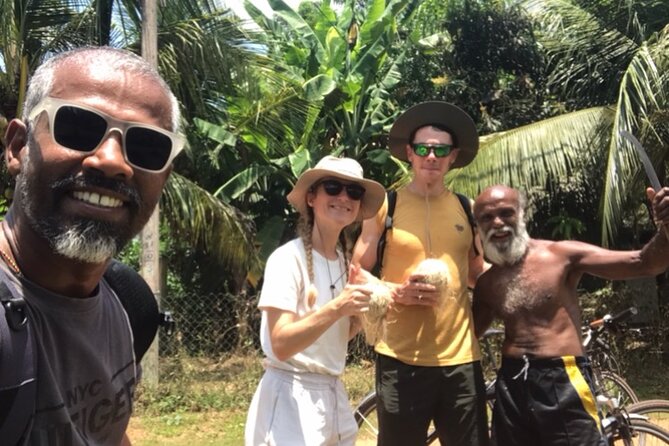
You’ll get a local vegetarian meal cooked at hela bojun, and it’s included. You also get bottled water.
That matters more than it sounds. When you’re cycling between sites, hunger turns your brain into a checklist machine. A proper break keeps you in sightseeing mode, not survival mode. Vegetarian food also fits the setting of the day, where you’re surrounded by Buddhist sites and temple etiquette.
If you have dietary needs beyond vegetarian, you might want to ask ahead of time. The details provided only confirm vegetarian meals.
Price and value: $25 plus the UNESCO ticket reality
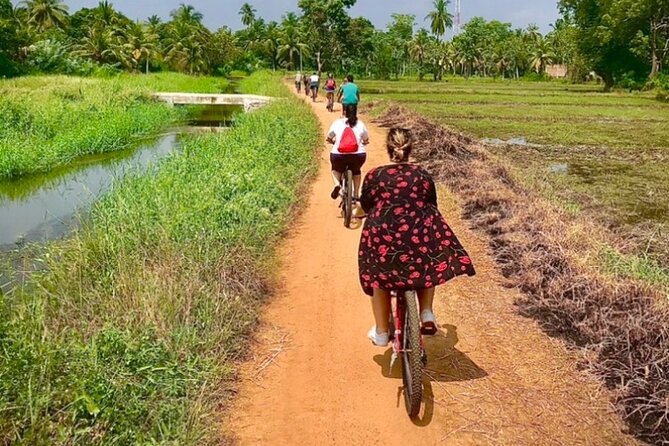
The tour price is $25.00 per person, which is low compared to many bike tours in other countries. But here’s the part you should price into your planning: entrance fees are not included in the $25. The UNESCO ticket is listed as 30 USD for a person (and 15 USD for under age 13).
So the real cost is $25 plus the UNESCO entrance ticket. If you already plan to visit these core sites anyway, the bike tour package still looks like good value because you’re paying for the transport (bike use), guide time, bottled water, parking fees, and the meal.
If you’re the type who wants to wander without structure and skip some stops, then a guided loop might feel more “organized” than you need. But if you want the guide’s context and a full circuit experience, you’re buying convenience and interpretation, not only movement.
What you’ll learn besides dates and names
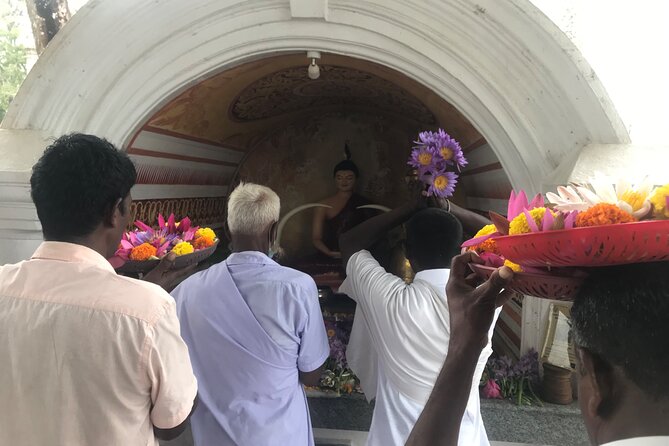
This tour is stronger than a basic stop list because you get cultural explanations tied to Buddhism and how these places function. The guide experience is a standout theme—especially the way Saranga frames what you’re seeing so the architecture doesn’t feel random.
You also spend time at points where Buddhism meets everyday life: meditation posture at the Samadhi statue, living sacred space at the Sri Maha Boodhi, and community rhythm hinted through monastic facilities like the refectory.
You’ll also learn through the city’s water story. Twin ponds, reservoirs, and tanks aren’t just “old stuff.” They connect to how people sustained daily life and religious communities over long periods.
And yes, the pace helps. At a human cycling speed, you can take in more than a quick glance, and that makes the explanations land better.
How to plan your day for comfort and respect
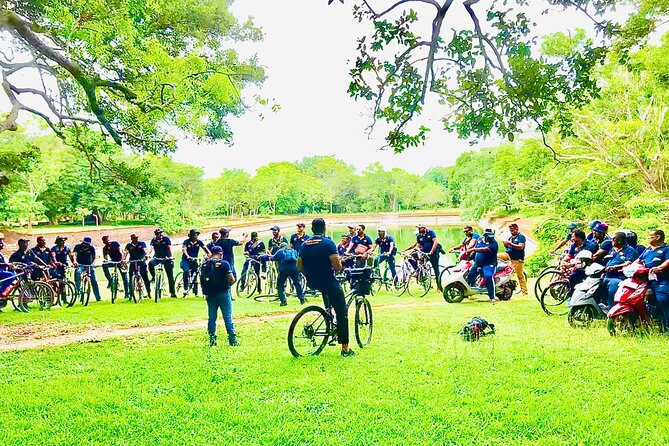
A few practical tips make the experience smoother:
- Bring a wraparound cloth if your knees aren’t covered for temple visits. This tour explicitly asks for it.
- Bring simple sun protection. Sri Lanka sun can be strong, and you’ll be outside during the whole circuit.
- Go in with moderate fitness expectations. The ride is a loop and not a hardcore endurance challenge, but it is still cycling for 10 km.
Also note that the tour is described as requiring good weather. If weather is poor, you’ll be offered a different date or a full refund. If you care about timing, keep an eye on forecast the day before.
Who this Anuradhapura mountain bike tour suits best
This is a good fit if you:
- want UNESCO sites plus quieter side routes rather than only the easiest roads
- enjoy cycling but don’t want a full-day, high-intensity ride
- like history with real-world context, especially Buddhism and sacred spaces
- prefer a guide who can explain what you’re looking at while you move
It might not be the best match if you:
- want a fully self-paced tour with no structure
- strongly dislike cycling on any uneven surfaces
- have tight budget limits once you factor in the UNESCO entrance ticket
Should you book this tour?
If you’re visiting Anuradhapura and you want a bike-powered way to see the main UNESCO hits without rushing, I think this is a smart booking. The $25 base price is attractive, and the included guide time plus bottle water, parking coverage, and a real included meal at hela bojun make it feel complete.
Book it if you value context as much as the monuments—and if you’re okay planning for the UNESCO ticket and temple dress basics. Pass if you’d rather skip guided stops and build your own route.
If you do book, show up ready to pedal, bring that knee-cover cloth, and give yourself the full 4½ hours. In this part of Sri Lanka, slowing down is how the city actually clicks.
FAQ
How long is the Anuradhapura Heritage mountain bike tour?
The tour lasts about 4 hours 30 minutes (approx.).
How far do you cycle?
It’s a 10 km loop tour.
What’s included in the price?
The package includes bottled water, parking fees, use of a mountain bicycle, a guide tour, and a local vegetarian meal at hela bojun.
Are the UNESCO entrance fees included?
No. Entrance fees are not included. The UNESCO ticket is listed as 30 USD per person, and 15 USD for under age 13.
What should I wear for the temples?
If your knees aren’t covered, bring a wraparound cloth for temple visits.
What type of bike will I ride?
You’ll ride a mountain cycle from brands such as Giant, Trek, and Louis Garneau.
Is this tour private?
Yes. It’s described as a private tour/activity, and only your group will participate.
Where does the tour start and end?
It starts at Rides Hub (Hubwela mada gedara, Garage waththa near old car park, No:116/1 Watawandana Rd, Anuradhapura) and ends back at the same meeting point.