REVIEW · SIGIRIYA
Private Polonnaruwa Sightseeing Day Tour from Sigiriya
Book on Viator →Operated by Sinhagiri Tours · Bookable on Viator
Polonnaruwa feels big when you’re rushing. This private day tour from Sigiriya keeps you moving at your pace with a private vehicle, plus a written guide to use on-site. The main catch: entrance fees and lunch are extra, and you may want to budget time to pay them before you start.
I like that this is built for real-world visiting. You get pickup from Sigiriya, Dambulla, and Habarana, and you’ll tour key ruins inside Polonnaruwa at times that make sense rather than ticking off a rigid checklist. You also get a mobile ticket, and if you want deeper stories, you can add a professional site guide for an extra fee.
This is a great fit if you want an easy, low-stress way to see UNESCO-listed Polonnaruwa without getting stuck in the logistics maze. Most stops are short, so come with good walking shoes and a camera that’s ready to go.
In This Review
- Key highlights at a glance
- How the Sigiriya pickup and private ride work
- Price and logistics: what the $71.43 covers (and what it doesn’t)
- Museum first: using the Polonnaruwa Archaeological Museum to orient yourself
- Parakramabahu I’s granite statue: the quick photo stop that anchors the day
- Pothgul Viharaya: sacred text preservation in a calmer 15 minutes
- Royal Palace of Polonnaruwa: where power meets brick architecture
- Vatadage: the stone shelter that frames sacred image culture
- Siva Devalaya (Suva Devala): temple variety beyond one religious style
- Rankoth, Manik, and Kiri Vehera: dagobas you can’t rush
- Lankathilaka Image House: towering brick walls and big Buddha scale
- Gal Vihara: the rock-cut statues that make your camera earn its keep
- Getting more from the written guide (and when to pay for a real guide)
- Timing, pacing, and what to pack for a 3–6 hour ruin run
- Who should book this Polonnaruwa day tour from Sigiriya
- Should you book it? A quick decision check
- FAQ
- What’s the price for the Polonnaruwa tour from Sigiriya?
- How long does the tour take?
- What’s included in the tour price?
- Where does the pickup happen?
- Is a tour guide included?
- Are entrance fees included?
- Will I have a mobile ticket?
- Which sites do we visit during the day?
- What if weather is bad?
- Can I cancel and get a full refund?
Key highlights at a glance
- Private vehicle for a smoother Polonnaruwa route (pickup from Sigiriya, Dambulla, Habarana)
- Written guide included so you can self-tour when you don’t want a full-time guide
- Smart stop order: museum context first, then the monuments and temples
- Plenty of photo targets like Parakramabahu I’s statue and the rock-cut Gal Vihara
- Optional professional guide if you want extra detail (extra cost)
How the Sigiriya pickup and private ride work
The tour starts from Sinhagiri Tours on Thalkotta Rd in Sigiriya, and you get picked up from your location in the Sigiriya-area towns (including Sigiriya, Dambulla, and Habarana). It’s a private experience for your group, up to 4 people, which matters because Polonnaruwa ruins are scattered enough that you don’t want to burn energy on transport shuffles.
Once you’re in the car, you’re not stuck trying to figure out routes on a short day. The driving also helps with pacing: you can slow down for viewpoints, step back to take a photo, or pause when a site feels crowded. This is one of the bigger quality-of-life wins of hiring a private vehicle here—less time spent guessing, more time spent looking.
You’ll also receive a mobile ticket, which is convenient if you don’t want to manage paper tickets while you’re walking between sites. Bottled water is included, so you’re not starting the day dehydrated.
Practical tip: wear shoes you can trust on uneven ground. Even when you’re only at each stop for 15–30 minutes, Polonnaruwa’s surfaces can be rough and dusty.
Price and logistics: what the $71.43 covers (and what it doesn’t)
The listed price is about $71.43 per group (up to 4 people). That’s for the private vehicle, pickup, and bottled water. On paper, that’s a decent deal because entrance fees, transport, and a driver can easily add up if you piece it together yourself.
But you do need to plan for the extras:
- Entrance fees are not included. The Polonnaruwa museum stop includes a note that admission tickets aren’t included.
- Lunch isn’t included. You’ll need to sort your own meal during the day.
- A site guide is optional, not automatic. If you want a professional guide, there’s an extra fee of 5000 LKR.
So the best value depends on how you like to travel. If you’re happy with self-guided ruins and use the written guide, the core tour price is where you get your value. If you want the stories explained out loud at every major stop, add the professional guide and think of this as more of a guided history circuit.
Museum first: using the Polonnaruwa Archaeological Museum to orient yourself
Most days at Polonnaruwa work better when you start with context. Here, you begin at the Archaeological Museum with about 30 minutes on the clock. Admission isn’t included, so grab your tickets there and use the time to get your bearings before you walk into the ruins.
Why I think this matters: Polonnaruwa isn’t just one temple. It’s a cluster of monuments tied to kings, religion, and building styles from different eras. A museum stop helps you connect what you’re seeing later to names and purposes, so you don’t leave feeling like you saw a bunch of stones without the why.
If you’re photographing, this is a useful warm-up. You can spot themes—brickwork, statues, religious iconography—so when you reach the outdoor sites, your camera is chasing the right details.
Parakramabahu I’s granite statue: the quick photo stop that anchors the day
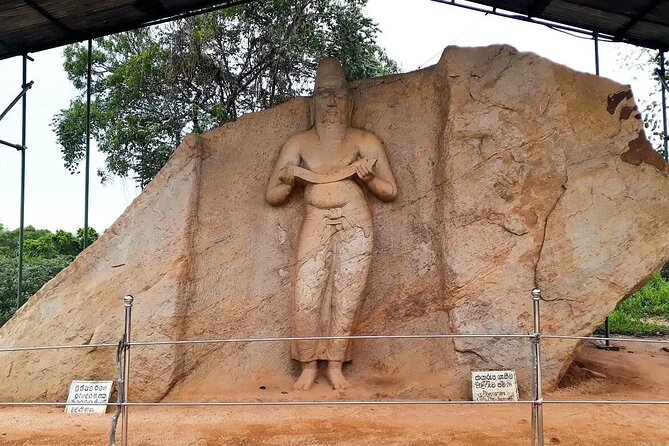
After the museum, you’ll head to the Statue of Parakramabahu I, with about 15 minutes here. The standout detail is that the statue is carved from a single block of granite and is roughly 12 feet tall—a colossus you can’t really miss.
This stop is short, but it functions like a visual headline. If you only have a few minutes at a time, seeing a major named figure like this gives the rest of the city a clearer story thread. It’s also a strong photo target from different angles because of the height and material.
Tip: move a little around the edges before you commit to the best shot. At this kind of scale, tiny changes in your position can make your photo look twice as dramatic.
Pothgul Viharaya: sacred text preservation in a calmer 15 minutes
Next is Pothgul Viharaya, also about 15 minutes. This stop is different from the big monumental views. It’s described as a place dedicated to safeguarding sacred Buddhist texts, sutras, and commentaries—so it’s more about the religious purpose than the size.
That makes it a good pace-break. After faster, bigger stops, you get a quieter moment to slow down and look for the spiritual atmosphere rather than only the architecture. Even with limited time, it helps you understand how Polonnaruwa’s religious life wasn’t just about statues—it was also about writing, teaching, and preserving teachings.
If you’re the kind of traveler who likes to notice what a site is trying to protect or teach, this is one of the stops you’ll remember.
Royal Palace of Polonnaruwa: where power meets brick architecture
Then you’ll visit the Royal Palace area for about 30 minutes. The description you’ll be given highlights it as a prime example of the architecture of the time, built using a mix of materials including brick.
A palace stop always feels good when you treat it like a reading exercise. Look at layout cues: how the space might have worked, where entrances likely were, and how the buildings would have supported daily governance. With only half an hour, you won’t “complete” a palace the way you would in a museum, but you can still walk away with a solid visual understanding.
Photo note: palace ruins can look flat if you only shoot from one spot. If the light is harsh, consider stepping back to capture the structure shapes and then re-approach for close details.
Vatadage: the stone shelter that frames sacred image culture
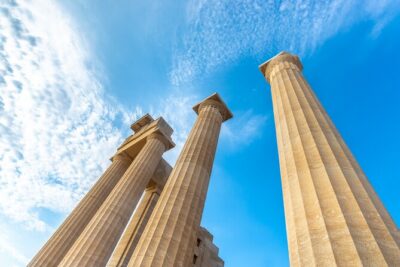
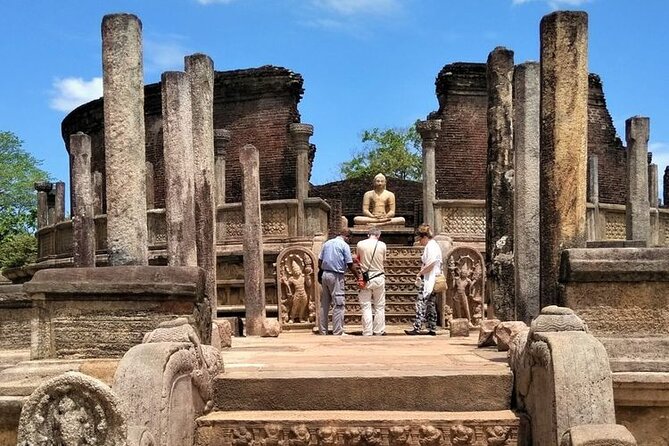
The next stop is Polonnaruwa Vatadage, about 15 minutes. This site is presented as a mark of the island’s cultural and architectural heritage, with the focus on how these structures were designed to house or protect sacred elements.
Even if you’re not an architectural expert, Vatadage tends to make sense quickly because it’s built to contain and frame. It’s the kind of stop that clicks when you think about why the builders cared about sheltering religious objects.
I like keeping this near the middle of the day because it gives your eyes a different kind of pattern to read—less about big statues, more about structure and sacred function.
Siva Devalaya (Suva Devala): temple variety beyond one religious style
You’ll also visit Siva Devalaya, dedicated to Lord Shiva, around 15 minutes. In a city known for Buddhist monuments, this kind of stop reminds you that Polonnaruwa’s religious landscape wasn’t single-note.
The value here is variety. You’re not only collecting one visual style of ruin. You’re seeing how temple traditions showed up in different forms across the same historical period and region.
If you want a balanced day, don’t skip the smaller temples. They help the city feel real rather than like a highlight reel.
Rankoth, Manik, and Kiri Vehera: dagobas you can’t rush
You’ll spend about 15 minutes at each of these major dagoba sites:
- Rankoth Vehera, noted for grandeur and cultural/religious significance.
- Manik Vehera, described as a strong example of enduring spirituality and architectural skill.
- Kiri Vehera, known as the Milk White Dagoba.
This is a cluster of shorter visits, and it works well because dagobas reward slow looking. Even in 15 minutes, you can pay attention to surface color, symmetry, and how the structures sit within their grounds.
Practical approach: pick one “favorite” and spend your energy there. For example, Kiri Vehera’s milk-white look is a natural photo magnet, so give yourself permission to linger there with your camera.
Also, keep an eye on your energy. Three dagoba stops in a row can be tiring if you try to treat each one like a full museum-level experience.
Lankathilaka Image House: towering brick walls and big Buddha scale
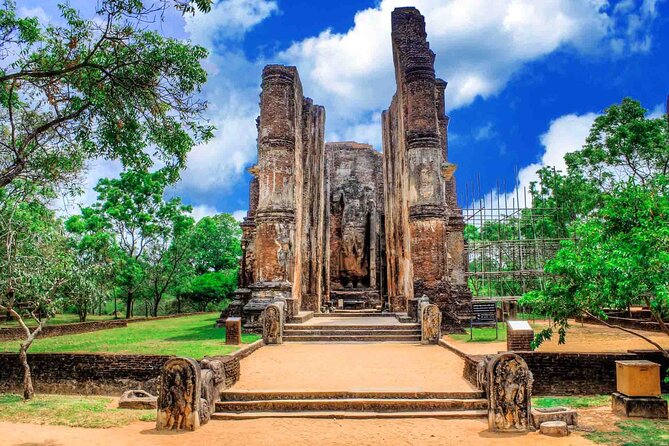
Next is the Lankathilaka Image House for about 15 minutes. The description focuses on towering brick walls, a colossal Buddha statue, and exquisite frescoes.
This stop is often where people realize Polonnaruwa isn’t only “old” but also skilled. The brickwork and scale are the point. When a Buddha statue is described as colossal, that changes your photo strategy—close-ups won’t tell the whole story, so capture both the statue and the wall framing it.
If the fresco area is accessible, look for color and patterns even if you can’t read anything. Frescoes are about visual storytelling, and you can often get that effect even with limited time.
Gal Vihara: the rock-cut statues that make your camera earn its keep
The day ends with Gal Vihara for about 30 minutes. This is described as a journey through time where history, art, and spirituality meet, and it’s presented as a highlight for artistic excellence and devotion.
Why this one typically hits: rock-cut sculpture tends to feel more intense than freestanding statues because it’s part of the hillside and shaped into the stone. Even if you’re not a sculpture expert, you can feel the effort and planning in the forms.
Give yourself a bit of breathing room here. With 30 minutes, you can do a “wide shot first, then detail shots” routine without feeling rushed.
Getting more from the written guide (and when to pay for a real guide)
One of the smartest parts of this tour is that you get a written guide free of charge if you’re touring without a professional site guide. That’s a big deal if you prefer learning at your own speed.
You’ll still be guided by the logistics of the driver—getting you between sites and pointing you where to go—so you’re not fully on your own. And if you decide you want extra depth, you can hire a professional guide for 5000 LKR, who can share stories and insights to bring the sites to life.
I’ve found this balance works well for many independent travelers:
- Use the written guide to understand the basics at each stop.
- Use your driver as a quick helper for navigation and timing.
- Add a paid guide only if you feel you’re missing the narrative thread.
Example: drivers associated with Sinhagiri Tours, including Shahiru, have a reputation for being professional and flexible with timing, and they’ll help you stay comfortable while you walk and look. That kind of “in-between” support can be the difference between a stressful day and an enjoyable one.
Timing, pacing, and what to pack for a 3–6 hour ruin run
The total duration is listed as about 3 to 6 hours. That wide range is normal here: it depends on how you pace, how long you spend photographing, and how the sites feel that day.
The key is that the structure is practical—short stops (often 15 minutes) plus a couple of longer ones (museum and Gal Vihara). It’s not trying to force you to “complete” everything in an unrealistic way.
What to bring:
- Comfortable shoes for uneven surfaces.
- A light layer for shade and dust.
- A camera and extra battery, because stone sites are photo-friendly.
- Sun protection and water. Bottled water is included, but don’t skip personal comfort items.
Weather matters. If poor weather cancels the experience, you’ll be offered a different date or a full refund. So if you’re planning around another day in the area, keep your schedule flexible when possible.
Who should book this Polonnaruwa day tour from Sigiriya
This is a strong pick if you want:
- A private day trip that reduces logistical stress.
- A driver who handles the route while you explore.
- The option to go self-guided with a written guide, and add a professional guide only if you want it.
It’s also great for small groups up to 4 people, especially families or couples who share costs and still want flexibility. If you’re traveling with someone who doesn’t want a long guided lecture, the mix of short stops and self-reading works well.
Should you book it? A quick decision check
Book it if:
- You want easy pickup from Sigiriya, Dambulla, or Habarana.
- You like the idea of a written guide and freedom to set your own pace.
- You’re comfortable paying for entrance fees and using your own lunch plan.
Consider a different approach if:
- You want fully included admissions and meals with no extra planning.
- You prefer long guided time at fewer sites rather than many quick stops.
- You’re expecting a guide included in the base price (here, the professional guide is optional).
If you’re aiming for an efficient, comfortable Polonnaruwa day that still lets you look closely, this tour makes a lot of sense.
FAQ
What’s the price for the Polonnaruwa tour from Sigiriya?
The price is about $71.43 per group, for up to 4 people.
How long does the tour take?
The duration is listed as approximately 3 to 6 hours.
What’s included in the tour price?
You get a private vehicle and bottled water. You also receive a mobile ticket and a written guide for self-guided exploring.
Where does the pickup happen?
You can be picked up from locations in the Sigiriya area, including Sigiriya, Dambulla, and Habarana.
Is a tour guide included?
A written guide is included. A professional site guide is available for an extra fee of 5000 LKR.
Are entrance fees included?
No. Entrance fees are not included, including museum admission.
Will I have a mobile ticket?
Yes, the tour includes a mobile ticket.
Which sites do we visit during the day?
You’ll visit the Archaeological Museum, Statue of Parakramabahu I, Pothgul Viharaya, Royal Palace, Vatadage, Siva Devalaya, Rankoth Vehera, Manik Vehera, Kiri Vehera, Lankathilaka Image House, and Gal Vihara.
What if weather is bad?
The tour requires good weather. If it’s canceled due to poor weather, you’ll be offered a different date or a full refund.
Can I cancel and get a full refund?
Yes. You can cancel up to 24 hours in advance for a full refund.